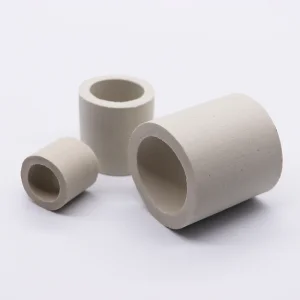
Direct OEM mass transfer media manufactured under strict metallurgical and dimensional tolerances for distillation, absorption, and environmental scrubbing columns.
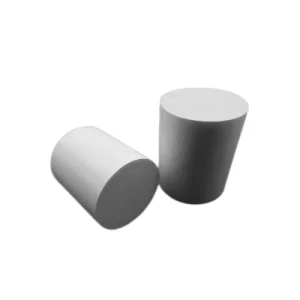
Random packing columns are the foundational workhorses of continuous chemical, petrochemical, and environmental process separation. Understanding hydraulic capacities and phase equilibrium dynamics ensures cost efficiency and plant uptime.
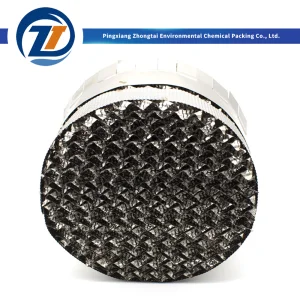
Modern packed columns demand superior vapor-liquid contact without premature hydrodynamic flooding. The evolution from historical 1st generation Raschig rings to 4th generation low-aspect-ratio rings (such as Super Raschig and CMR) has systematically slashed bed dry pressure drops by over 45% while lifting systemic throughput by up to 35%.
Our Pingxiang-engineered metal pall rings and saddle geometries deliver consistent liquid redistribution, optimizing the Sherwood-Leva-Eckert (GPDC) correlations and preventing adverse liquid wall channeling in deep bed sections.
Chemical processing environments present complex acid and halide stress profiles. While 304 and 316L austenitic stainless steels excel in petrochemical fractionation, highly corrosive environments—such as 98% concentrated sulfuric acid absorption towers, wet chlorine scrubbing, and hydrodesulfurization quench columns—mandate specialized materials.
Pingxiang Zhongtai utilizes dense, non-porous chemical-grade porcelain with acid resistance exceeding 99.8% (ASTM C279), alongside specialized fluoropolymers (PVDF, PTFE, ETFE) and exotic alloys (Hastelloy C-276, Monel 400, Titanium Grade 2) to eliminate downtime from bed collapse.
Operational expenditure (OPEX) in chemical separation accounts for roughly 40% to 70% of a plant's overall thermal and mechanical electrical footprint. Higher Height Equivalent to a Theoretical Plate (HETP) directly inflates reboiler heat duty and reflux pump loads.
By engineering random packings with ultra-thin wall tolerances, optimal open area (>92%), and exceptional geometric surface wetability, Zhongtai packing minimizes HETP down to 350–500 mm in standard services, delivering payback within the first 6–12 months of turnaround operation.
From large-scale refining trains to clean-tech carbon capture facilities, our random and structured packing architectures resolve challenging phase separation and heat transfer bottlenecks.
Revamping atmospheric fractionation, crude stabilization, and sour gas amine treating columns. Metal Intalox Saddles and CMR minimize foaming while maintaining resistance to polythionic acid stress cracking.
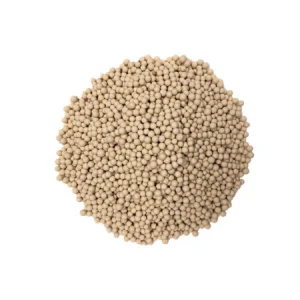
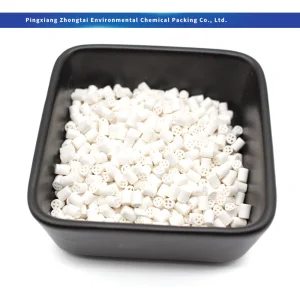
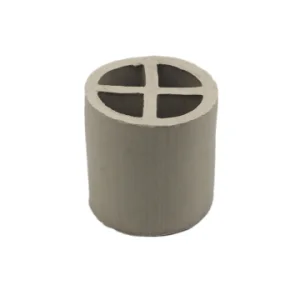
Intermediate and final absorption towers handling oleum and 98% hot acid. Ceramic cross partition rings, ceramic Intalox saddles, and high-purity catalyst support balls eliminate silica contamination downstream.
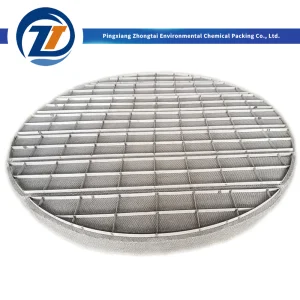
CO₂ and H₂S stripping under high system pressures (up to 120 bar). Packed beds paired with specialized high-efficiency wire mesh demister pads prevent amine carryover into cryogenic liquefaction trains.
Engineered scrubbing systems using high-void plastic Tri-Pak and hollow ball packing to neutralize chlorine, sulfur dioxide, and mercaptans without bio-fouling or sediment scaling.
Transparent volume pricing directly from our Pingxiang manufacturing base. All quoted costs reflect standard seaworthy packaging, batch PMI metallurgy reports, and full dimensional inspection compliance.
| Packing Media Family | Common Materials | Standard Sizes | Surface Area (m²/m³) | Void Fraction (%) | Bulk Density (kg/m³) | Indicative Price Range (FOB) |
|---|---|---|---|---|---|---|
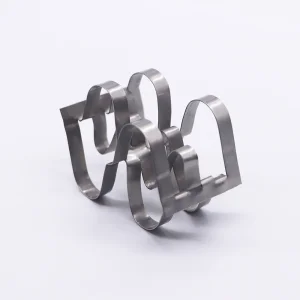
| Metal Pall Ring | SS304, SS316L, Carbon Steel | 16mm, 25mm, 38mm, 50mm, 76mm | 110 – 350 | 90 – 96% | 230 – 480 | $1,450 – $3,200 / m³ |
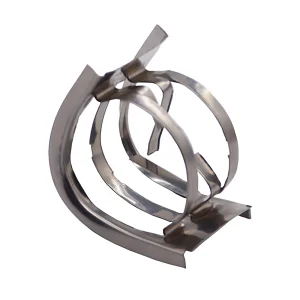
| Metal Intalox Saddle | SS304, SS316L, 321, Duplex 2205 | #25, #38, #50, #70 | 120 – 320 | 92 – 97% | 210 – 420 | $1,600 – $3,800 / m³ |
| Metal Super Raschig Ring | SS304L, SS316L, Hastelloy C-276 | No. 0.7, No. 1.0, No. 1.5, No. 2.0 | 130 – 380 | 95 – 98% | 190 – 390 | $1,850 – $4,600 / m³ |
| Ceramic Intalox Saddle | Chemical Porcelain (Al₂O₃ 23–30%) | 1/2", 1", 1.5", 2", 3" | 110 – 450 | 68 – 78% | 540 – 720 | $380 – $650 / m³ |
| Ceramic Raschig Ring | Standard Acid-Proof Stoneware | 25mm, 38mm, 50mm, 76mm, 100mm | 85 – 220 | 65 – 74% | 580 – 760 | $320 – $580 / m³ |
| Plastic Pall Ring | PP, RPP, HDPE, PVDF, PTFE | 16mm, 25mm, 38mm, 50mm, 76mm | 105 – 330 | 88 – 92% | 65 – 115 | $290 – $850 / m³ |
| Plastic Tri-Pak Spherical | Polypropylene, PVDF, CPVC | 1" (25mm), 2" (50mm), 3.5" (95mm) | 120 – 280 | 90 – 95% | 55 – 95 | $340 – $920 / m³ |
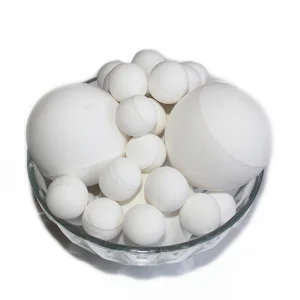
| Inert Alumina Ceramic Ball | Al₂O₃ 17% up to 99% Purity | 1/8", 1/4", 3/8", 1/2", 3/4", 1", 2" | N/A (Hold-down Bed) | 38 – 42% (Inter-ball) | 1,350 – 2,050 | $420 – $1,950 / Metric Ton |
| Metal Wire Mesh Demister | SS304, SS316L, Monel, Nickel | Standard Density 144–168 kg/m³ | 280 – 450 | 97 – 99% | 120 – 220 | $180 – $450 / m² (Panel) |
How the next decade of separation technology is redefining random packing manufacture, hydraulic design calculations, and environmental compliance standards.
Post-combustion CO₂ capture using amine solvents requires towers with massive cross-sections (exceeding 8–12 meters in diameter) operated under ultra-low pressure drop limits. Even an extra 1 mbar/m of resistance severely penalizes flue-gas blowers.
Our R&D center is leading test programs for advanced high-void random packings coupled with high-efficiency 316L structured sheet configurations, optimizing mass transfer transfer rates for sterically hindered amines (e.g., AMP, PZ, piperazine blends).
Moving past empirical Sherwood charts, Pingxiang Zhongtai employs 3D multiphase Volume-of-Fluid (VOF) and Eulerian-Eulerian CFD models to simulate micro-scale droplet breakup, film rivulets, and gas recirculation eddies.
Process engineers can leverage our internal sizing algorithms to accurately model HETP under non-ideal, foaming, or high-viscosity hydrocarbon conditions before steel is cut or kilns are fired.
As part of our commitment to Scope 1 & Scope 2 decarbonization, our Pingxiang ceramic sintering lines are shifting to natural gas recovery systems and high-efficiency recuperative tunnel kilns, reducing embodied carbon per metric ton of ceramic packing by 28%.
Metallic scrap generated during sheet stamping is recycled within an on-site closed loop, delivering an environmentally verified mass transfer supply chain to international buyers.
Eliminating procurement risk for global EPCs. All products undergo comprehensive third-party testing, mechanical certification, and localized documentation support.
Ceramic random packings undergo standardized testing for water absorption (under 0.5%), compressive crushing strength, and cold acid solubility per ASTM C279 and HG/T 4369 guidelines.
Every heat of stainless steel, duplex, or nickel alloy is tested via handheld X-ray Fluorescence (XRF) to verify Cr, Ni, and Mo chemistry, backed by EN 10204 3.1 Mill Test Certificates.
High-density anti-UV jumbo bags, reinforced wooden crates on ISPM-15 heat-treated fumigated pallets, or sealed steel drums. Clear labeling matches EPC bills of lading to ensure smooth laydown on site.
Located in the Pingxiang Industrial Park, our facilities welcome international technical inspectors (SGS, TÜV, DNV, Bureau Veritas). Audited by Korean, European, and South American engineering partners.
Detailed engineering guidance covering selection criteria, pressure drop modeling, logistics, and material integrity for column revamps and greenfield designs.
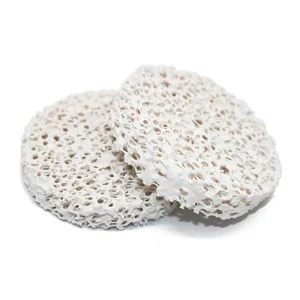
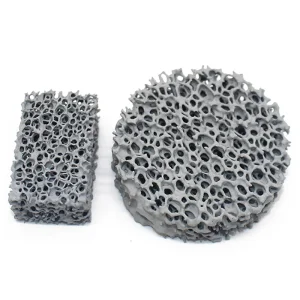
Complete your column and reactor specifications with our industrial-scale molecular sieves, foundry ceramic filters, and structured ceramic support blocks.