Explore factory-certified random tower packing, high-surface catalyst supports, and advanced separation internals engineered for global petrochemical, gas scrubbing, and mineral processing facilities.
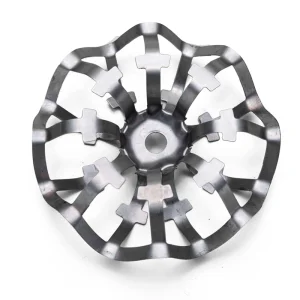
Plastic Rosette Rings (widely classified across international process literature as Tellerette packing or toroidal rosette filaments) represent a generational leap in open-structure random packing, engineered specifically to overcome the liquid maldistribution and excessive drag common to legacy cylinder packing.
In classical mass transfer theory, random packing geometries such as Raschig rings or standard Pall rings rely heavily on hollow tubular walls to induce gas-liquid interaction. However, in low-pressure scrubbing applications, these configurations suffer from large interior dead zones, high liquid holdup ($h_L$), and localized channeling. The Plastic Rosette Ring radically shifts this paradigm through its toroidal array of radial loops and interstitial contact nodes. Rather than collecting liquid into thick laminar sheets, the interconnected polymeric spokes continuously divide, collide, and re-atomize descending liquid droplets.
Unlike rigid walled packings where liquid forms boundary layer flows, rosette rings employ an array of radial loops. Liquid droplets repeatedly impact intersecting spokes, continually exposing fresh surface film for enhanced solute absorption without stagnating in packed pockets.
Because open rosette rings achieve a void volume surpassing 92% to 96%, gas pathways remain virtually unobstructed even at high volumetric velocities. This dramatically curbs operating power consumption for forced-draft blowers in high-throughput scrubbing towers.
In scrubbers treating dust-laden, slurry-bearing, or bio-reacting vapors (such as municipal odor control or lime-based Flue Gas Desulfurization), the non-sheltered, non-planar filaments prevent slurry scale from establishing anchorage, maintaining continuous uptime.
Process failures in wet absorption towers almost never stem from macroscopic mechanical crushing—they stem from chemical embrittlement, thermal creep, and environmental stress cracking (ESC). Sourcing from vetted Chinese suppliers requires meticulous validation of base polymer compounding.
At Pingxiang Zhongtai Environmental Chemical Packing Co., Ltd., every batch of Plastic Rosette Rings is manufactured utilizing 100% prime virgin polymers devoid of unreacted low-molecular fillers. Depending on the thermodynamic operating envelop and chemical constituents of the tower feed, engineering teams must evaluate thermal deflection temperatures under load (HDT), oxidation induction times (OIT), and oxidative chemical corrosion resistance.
| Polymer Classification | Continuous Temp. Limit | Acid / Halogen Resistance | Alkali / Hydroxide Resistance | Creep & Mechanical Rigidity | Target Chemical Duty |
|---|---|---|---|---|---|
| Polypropylene (PP) | Up to 100°C (212°F) | High (HCl, Dilute H2SO4) | Excellent (NaOH, KOH) | Moderate (Subject to creep >80°C) | Standard Flue Gas Scrubbers, Municipal Odor Control |
| Reinforced PP (RPP - 20% GF) | Up to 125°C (257°F) | High (Non-Hydrofluoric) | High | Very High (Glass fiber matrix) | Deep-Bed Absorption Columns, High Packed Bed Heights |
| High-Density Polyethylene (HDPE) | Up to 80°C (176°F) | High | Excellent | High Impact / Low-Temp Ductility | Cryogenic Gas Scrubbing, Low-Temperature Strippers |
| Polyvinyl Chloride (PVC) | Up to 60°C (140°F) | Superior (Wet Cl2, Hypochlorite) | High | Rigid, Self-Extinguishing | Chlor-Alkali Plants, Bleach Generation Systems |
| Chlorinated PVC (CPVC) | Up to 90°C (194°F) | Superior (Strong Mineral Acids) | High | Enhanced Thermal Rigidity | Hot Acid Pickling Exhaust, Fertilizer Phosphoric Scrubbing |
| Polyvinylidene Fluoride (PVDF) | Up to 150°C (302°F) | Ultimate (Conc. HNO3, Wet Cl2, HF) | Limited (Attacked by strong bases) | Exceptional Tensile & UV Stability | Semiconductor Wet Benches, Nuclear Waste Gas Stripping |
| PFA / ETFE Fluoropolymers | Up to 200°C (392°F) | Inert across total pH (0-14) | Inert | Supreme Chemical Invariance | Extreme Ultra-Pure Chemical Synthesis, Specialty Pharmaceuticals |
Engineering Advisory Note: When operating near the upper boundary of a polymer's continuous working temperature, random packing undergoes accelerated mechanical relaxation under the cumulative gravity of liquid holdup and irrigated weight. For bed depths exceeding 4.5 meters without intermediate support plates, specifying Glass-Reinforced Polypropylene (RPP) or utilizing staggered wall thicknesses prevents bottom-tier packing compression.
Procurement leaders from North America, Europe, the Middle East, and Southeast Asia have transitioned their mass transfer asset strategies toward direct factory partnerships in China. Understanding the industrial clustering in Pingxiang, Jiangxi reveals the economic and technical foundations of this shift.
Industrial mass transfer components are subject to acute volume-to-weight ratios. In conventional European or American supply routes, high domestic labor, escalating injection molding energy tariffs, and lengthy tooling setup times result in prohibitive lead times and inflated capital costs ($/m³). In contrast, Pingxiang City, Jiangxi Province functions as the world's most consolidated cluster for industrial ceramics, mass transfer packings, and separation internals.
Raw petrochemical resin supply, multi-cavity precision toolmakers, hot-runner injection systems, and testing facilities all operate within a 30-kilometer manufacturing perimeter in Pingxiang. This tight supply radius eliminates intermediate transit steps and guarantees rapid mold turnarounds for custom ring diameters.
Established Chinese manufacturers operate robust quality assurance ecosystems matching Western ISO standards. Pingxiang Zhongtai’s production facilities undergo recurrent audits by foreign EPC contractors, Korean industrial consortia, and third-party agencies such as SGS, Bureau Veritas, and TÜV.
Random packing transport carries high volumetric freight costs if improperly managed. Pingxiang suppliers have perfected compression-safe automated jumbo-bag packaging, palletized stretch-wrapping, and container space nesting that reduces ocean container footprint by 15-22% over loose boxed shipments.
Plastic Rosette Rings provide mission-critical performance where aggressive corrosive chemistry meets severe particulate loading. Below are four macro-industrial process environments where rosette media yields proven thermodynamic and operational advantages.
In municipal waste-to-energy plants, metallurgical smelting exhausts, and coal-fired boiler flue gas scrubbers, caustic solutions (NaOH or Ca(OH)2) neutralize acidic gas phases (SO2, HCl, HF). Rosette packing's high void ratio prevents gypsum and calcium sulfite scaling while preserving maximum contact area.
Industrial effluent from landfill leachate, fertilizer synthesis, and refinery sour water contains high levels of dissolved ammonia (NH3) and volatile hydrocarbons. Rosette rings in counter-current stripping columns achieve low HETP values at low air-to-water ratios, minimizing electrical power draw for air blower trains.
In electrolysis chlorine plants and commercial sodium hypochlorite synthesis systems, packed beds encounter warm, saturated wet chlorine gas combined with strong caustic scrubbing. PVC and PVDF Rosette Rings resist extreme oxidative embrittlement where metals and polyolefins disintegrate.
Emerging point-source carbon capture facilities utilize amine-based solvents (MEA, piperazine) to extract CO2 from high-volume flue streams. Rosette packing's dynamic droplet generation constantly breaks the surface boundary layer, accelerating gas absorption into viscous liquid solvents at low pressure drop.
The future of mass transfer media is shifting from empirical geometric trial-and-error to digital twin simulations, micro-textured fluid mechanics, and bio-circular polymer synthesis.
Leading manufacturing plants in Pingxiang are pioneering algorithmic multi-physics simulations to re-engineer standard rosette filaments. By integrating Computational Fluid Dynamics (CFD) with Volume of Fluid (VOF) multiphase tracking, tool designers simulate micro-scale droplet breakup along spoke junctions before physical steel mold tooling begins.
Unmodified polyolefins (PP/HDPE) are naturally hydrophobic, leading to water contact angles of 90°-102°. This causes aqueous scrub liquids to bead up rather than wet the packing. Modern manufacturing applies gas-phase fluorination or plasma surface texturing, lowering the contact angle to under 45° for superior effective surface coverage.
To prevent micro-voids, flash defects, and internal stress cracking in radial rosette spokes, production cells utilize closed-loop electric injection molding machines equipped with real-time cavity pressure transducers. Ultrasonic wall thickness monitoring maintains dimensional tolerances within ±0.05 mm.
Under global ESG regulations, industrial facilities require verifiable circular lifecycles. Next-generation rosette packing utilizes certified post-industrial circular polyolefins and bio-PP polymers, enabling 100% mechanical regrinding and recycling after multi-year tower turnaround decommissioning.
How do process engineers verify that random packing delivered to a remote refinery or overseas chemical plant meets stated hydraulic and physical benchmarks? Adherence to standardized testing protocols separates qualified Chinese manufacturers from trading brokers.
At Pingxiang Zhongtai, internal inspection follows a strict five-tier verification matrix covering every production cycle from resin raw feed intake through container departure:
Polymer resin beads undergo Melt Flow Index (ASTM D1238) and pycnometer density tests (ASTM D792) to verify absence of low-cost fillers like calcium carbonate, which can embrittle rings under acidic conditions.
Rings undergo compressive load deflection tests at 20°C and 80°C. Individual rings must withstand targeted radial loads without fracture, ensuring bottom-tier rings survive deep beds under full liquid irrigation.
Random sample lots are packed into calibrated 400 mm pilot air-water test columns to verify dry and irrigated pressure drop curves against computational predictions prior to volume manufacturing release.
Laser micrometers audit outer diameters, spoke junctions, and wall thickness. Pieces-per-cubic-meter counts and dry bulk density (kg/m³) are recorded for strict correlation with engineering vessel mass balances.
Packed jumbo bags and fiber drums undergo transit drop simulations to guarantee zero filament breakage during maritime container transit, crane hoisting, and tower manway chute loading.
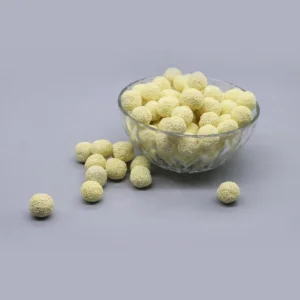
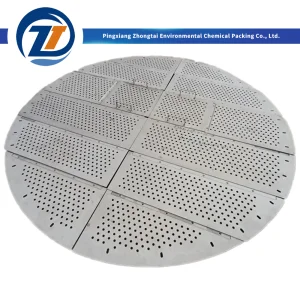
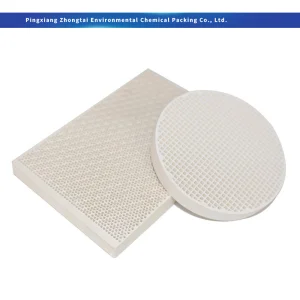
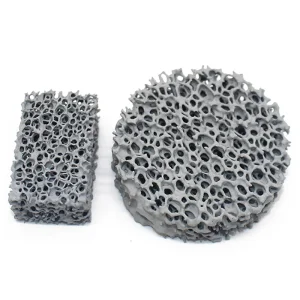
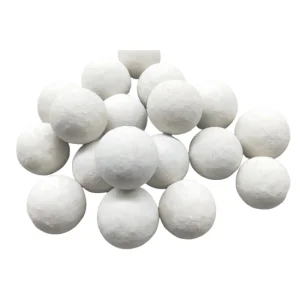
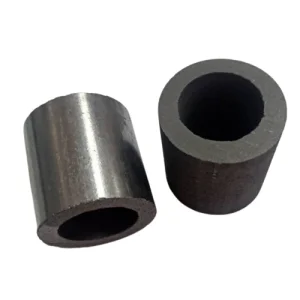
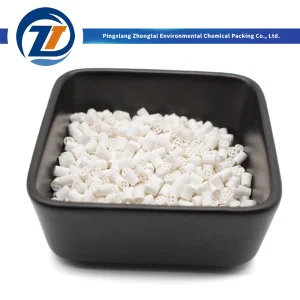
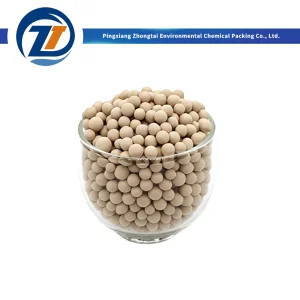
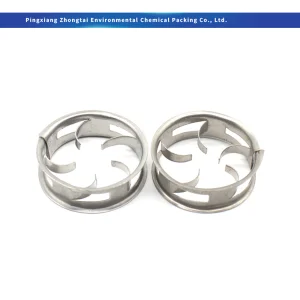
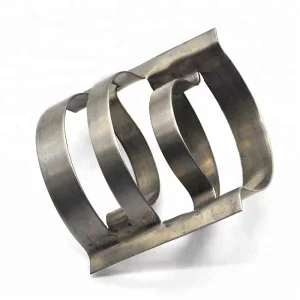
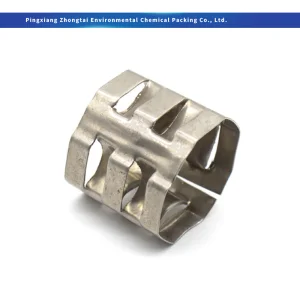
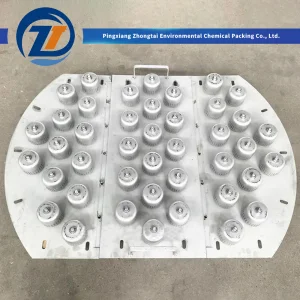
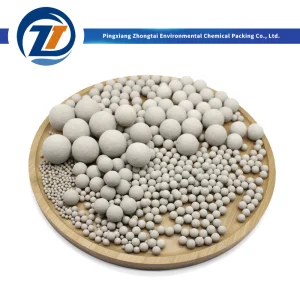
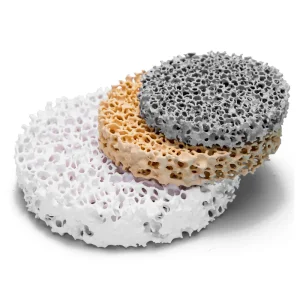
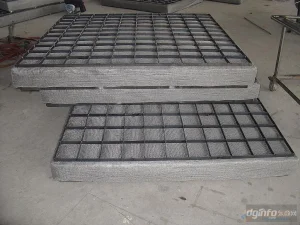
In addition to Plastic Rosette Rings, our Pingxiang manufacturing base produces a full portfolio of ceramic support balls, metal distillation internals, molecular sieves, and foundry filtration media.
Essential technical, operational, and commercial insights compiled by our lead process engineering group for global EPC contractors, plant operators, and procurement specialists.
Connect directly with Pingxiang Zhongtai's application engineering group. Send us your column diameter, design flow rates, operating temperature, and gas composition for comprehensive hydraulic packing selection and rapid factory-direct quotation.
