Factory-direct components precision-manufactured by Pingxiang Zhongtai Environmental Chemical Packing Co., Ltd. for extreme chemical purity, high thermal stability, and maximum mass transfer efficiency.
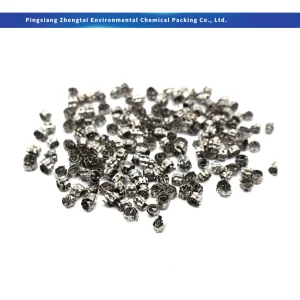
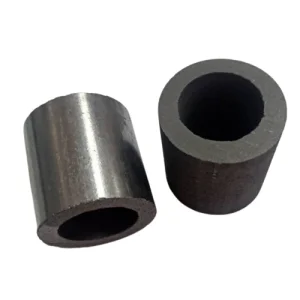
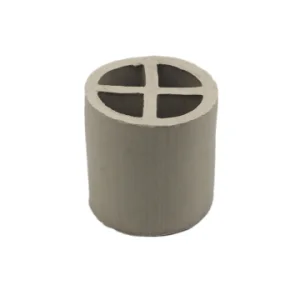
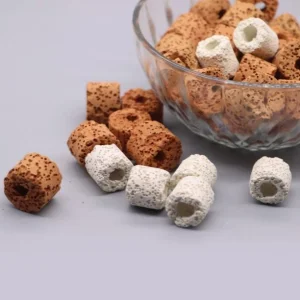
A Molecular Sieve Unit (MSU) is the core operational barrier against hydrate formation, equipment corrosion, and catalyst poisoning across hydrocarbon processing facilities.
As natural gas reservoirs age and unconventional extraction methods expand globally, inlet fluid streams exhibit volatile water saturation levels, sour gas (H₂S, CO₂) co-migration, and heavy hydrocarbon condensation. Pingxiang Zhongtai manufactures complete, customized molecular sieve units engineered to deliver water dew points down to -100°C (< 0.1 ppmv H₂O), safeguarding downstream liquefaction trains, cryogenic turbo-expanders, and isomerization reactors.
Eliminates water and trace benzene prior to Main Cryogenic Heat Exchangers (MCHE). Ice crystallization at -162°C causes catastrophic tube rupture. Our 4A and 13X zeolite skids ensure run-lengths exceeding 36 months without breakthrough.
Separates CO, CO₂, and H₂O from raw steam methane reformer (SMR) effluent. Utilizing Type 5A and Carbon Molecular Sieve (CMS) technology, our packages generate 99.999% fuel-cell grade hydrogen with minimized off-gas recompression energy.
Selective co-adsorption of moisture and trace mercaptans (RSH) from cracked gas and liquid propane/butane streams. Preserves downstream catalyst beds in ethylene cracking units from hydrolytic degradation.
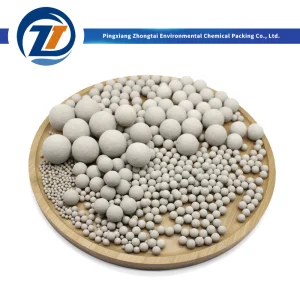
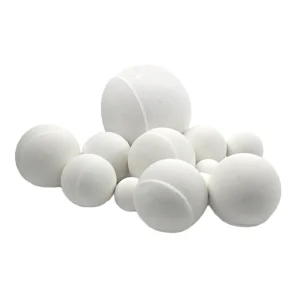
A turnkey Molecular Sieve Unit fabricated by Pingxiang Zhongtai is built on a modular steel skid frame, encompassing dual or tri-tower pressure vessels (ASME Section VIII Div. 1/2), an indirect gas-fired or electric regeneration gas heater, fin-fan air coolers, a regeneration gas knockout separator, and high-integrity actuated switching valves with zero-leakage stellite seats. The internal adsorption vessel is structured with graduated ceramic ball support layers (17-23% and 99% high-purity inert alumina ceramic balls), followed by a protective guard bed of silica gel or activated alumina to capture free liquid droplets, topped by synthetic crystalline zeolite molecular sieve spheres (types 3A, 4A, 5A, or 13X-HP).
Technical parameters governing Mass Transfer Zones (MTZ), Breakthrough Curves, and Regeneration Heat Budgets.
| Adsorbent Grade | Nominal Pore Aperture | Crystalline Framework | Target Kinetic Diameter | Bulk Density (g/ml) | Dynamic H₂O Capacity (wt%) | Regeneration Temp Range | Primary Industrial Service |
|---|---|---|---|---|---|---|---|
| Type 3A Potassium-A | ~3 Å (0.3 nm) | K₁₂[(AlO₂)₁₂(SiO₂)₁₂]·xH₂O | < 3.0 Å (Excludes C₂H₄, C₂H₆) | 0.68 – 0.74 | ≥ 19.5% | 180°C – 240°C | Cracked gas, ethylene, propylene, ethanol dehydration |
| Type 4A Sodium-A | ~4 Å (0.4 nm) | Na₁₂[(AlO₂)₁₂(SiO₂)₁₂]·xH₂O | < 3.8 Å (H₂O, CO₂, SO₂, H₂S) | 0.66 – 0.72 | ≥ 21.5% | 200°C – 280°C | Natural gas pipelines, associated gas, closed-loop air drying |
| Type 5A Calcium-A | ~5 Å (0.5 nm) | Ca₄.₅Na₃[(AlO₂)₁₂(SiO₂)₁₂]·xH₂O | < 4.9 Å (n-Paraffins, O₂, N₂) | 0.68 – 0.73 | ≥ 21.0% | 220°C – 300°C | Iso/normal paraffin separation, PSA hydrogen purification |
| Type 13X Sodium-X | ~10 Å (1.0 nm) | Na₈₆[(AlO₂)₈₆(SiO₂)₁₀₆]·xH₂O | < 10.0 Å (Mercaptans, Aromatics) | 0.62 – 0.68 | ≥ 24.0% | 240°C – 320°C | Cryogenic air separation (ASU pre-clean), LPG sweetening |
| 13X-HP / APG Modified X | ~10 Å (High Purity) | Faujasite (FAU) Low Si/Al | H₂O, CO₂, N₂O trace trapping | 0.64 – 0.70 | ≥ 26.5% | 180°C – 260°C | Ultra-clean cryogenic ASU, green hydrogen, syngas polishing |
Overcoming Capex Inflation Through Vertical Integration: Ceramic Bed Supports, Structured Mass Transfer Packings, and Skid Assembly Within One Hub.
Procuring modular skid units from North American or European EPCs currently faces lead times of 16–22 months and prohibitive baseline costs due to fragmented subcontractor chains, specialized labor shortages, and high material surcharges.
Located in Pingxiang, Jiangxi—China's recognized capital of chemical packing and technical ceramics—Zhongtai houses kilns, wire-mesh stamping, and automated zeolite synthesis within a single production zone, reducing skid delivery cycles to 16–20 weeks.
Unlike pure packaging integrators who purchase random media from secondary brokers, Zhongtai engineers synthesize both the internal support balls (17% to 99% Al₂O₃) and zeolite beds, ensuring zero chemical cross-contamination and single-source warranty.
From remote high-temperature desert gas fields to offshore floating LNG facilities, our skid units are customized to local metallurgy, wind load, and seismic codes.
Operating Challenges: 55°C ambient temperatures, 12% H₂S, 8% CO₂, high fine sand entrainment.
Engineering Formulation: NACE MR0175/ISO 15156 compliant sour-service alloy steel (HIC/SSCC tested). Heavy-duty dual-bed TSA with acid-resistant ceramic ball hold-down layers and hydrophobic 4A/13X blended beds to suppress COS formation.
Operating Challenges: Marine wave-motion forces, space/weight restrictions, salt spray corrosion.
Engineering Formulation: Compact footprint skid with structural FEA analysis for marine accelerations. Internal spring-loaded hold-down screens prevent bed fluidization during pitch-and-roll movements. 3-coat marine epoxy/polyurethane paint systems.
Operating Challenges: Strict low-carbon grid feed-in directives, intermittent bio-gas feedstock flows.
Engineering Formulation: Automated VPSA (Vacuum Pressure Swing Adsorption) unit utilizing high-selectivity carbon molecular sieves (CMS) to remove CO₂, paired with Type 3A polishing to guarantee dry, grid-compliant biomethane.
Every skid-mounted molecular sieve package is fully tested, certified, and documented for seamless site commissioning.
Full compliance with ASME BPVC Section VIII Division 1 & 2 (U / U2 Stamps), CE-PED (2014/68/EU), EAC TR-CU 032/2013, and GB150 pressure vessel standards.
Explosion-proof electrical instrumentation certified to ATEX, IECEx, and NEC Class I, Division 1/2, Groups B, C, and D for global offshore/onshore installations.
WPS/PQR certified per ASME Section IX. 100% Radiographic (RT), Ultrasonic (UT), Magnetic Particle (MT), and Positive Material Identification (PMI) inspections.
Comprehensive cold-loop checks, pneumatic valve stroke tests, helium leak detection, and hydro-testing at 1.5× design pressure witnessed by DNV, BV, or SGS.
Anticipating energy-transition requirements through zero-emission regeneration, structured monoliths, and AI-assisted adsorption monitoring.
Conventional TSA designs combust a fraction of process gas or vent flash gas during hot regeneration sweeps. Zhongtai’s next-generation e-TSA packages employ closed-loop electric heaters with mechanical vapor recompression (MVR), cutting flaring and fugitive methane emissions to zero.
Integrating distributed fiber-optic temperature sensors across the zeolite bed enables real-time dynamic tracking of the Mass Transfer Zone (MTZ). Embedded neural-network algorithms dynamically shift cycle times based on incoming moisture flux, reducing parasitic regeneration energy by 22%.
R&D partnerships at our Pingxiang facilities focus on coating Metal-Organic Frameworks (MOFs) onto ultra-high surface cordierite honeycomb substrates. This eliminates fluidization channeling, cuts bed pressure drop by 40%, and enables low-temperature desorption below 120°C.
Detailed technical responses prepared by our lead process chemical engineers for EPC contractors and plant operators.
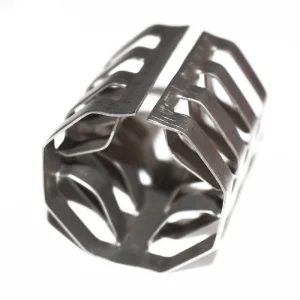
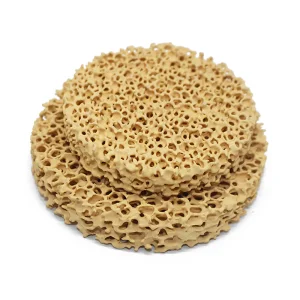
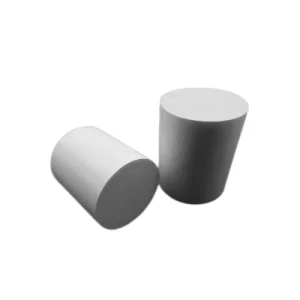
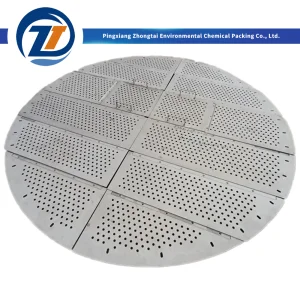
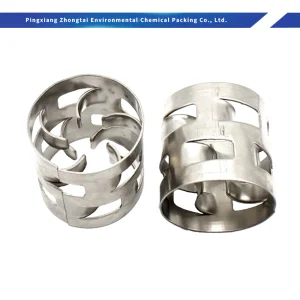
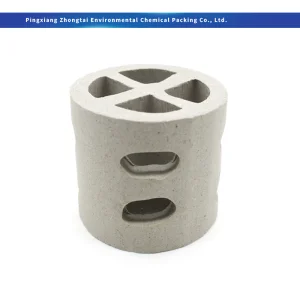
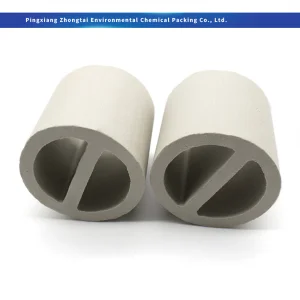
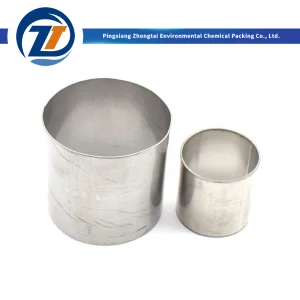
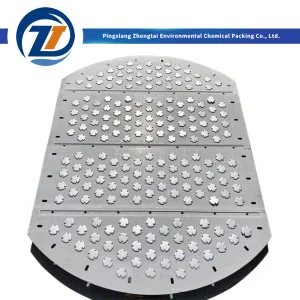
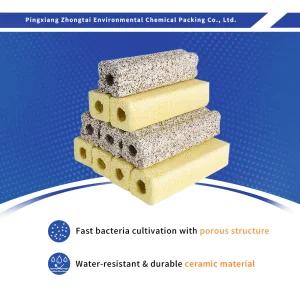
Complementary mass transfer trays, packing rings, honeycomb blocks, and biological filtration media direct from our ISO-certified manufacturing base.
Provide your gas composition stream, operating pressure, inlet temperature, and target dew point. Our process engineering team in Pingxiang will run dynamic adsorption simulations (HYSYS / ProMax) and issue a complete preliminary P&ID, vessel sizing sheet, and competitive skid quotation.
