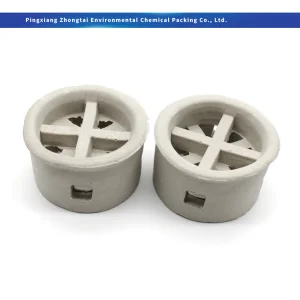
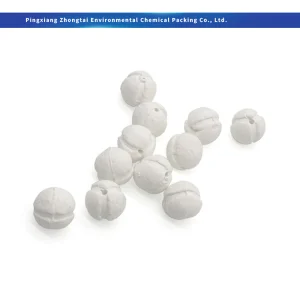
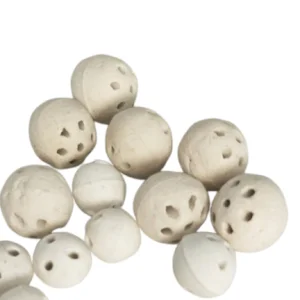
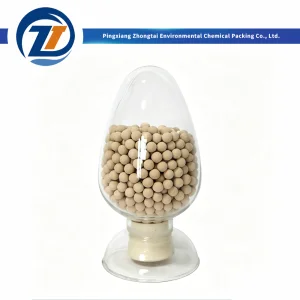
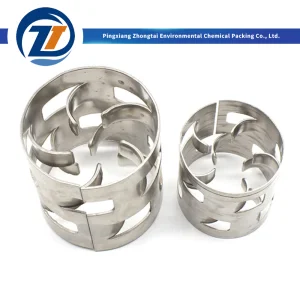
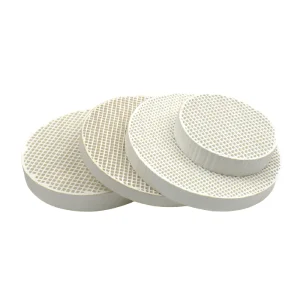
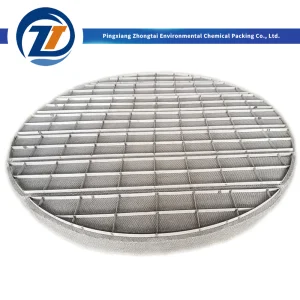
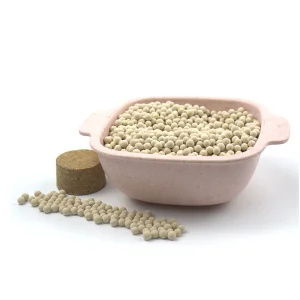
Explore our export-grade chemical tower packing, mass transfer distributors, honeycomb ceramics, and specialized zeolite media engineered for severe industrial conditions.
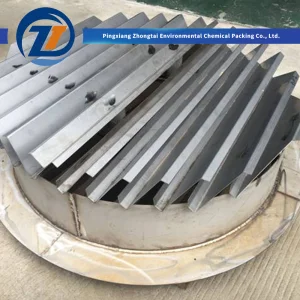
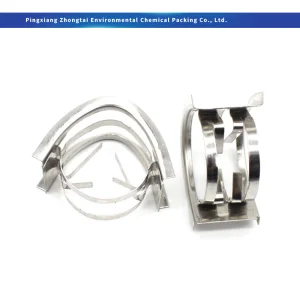
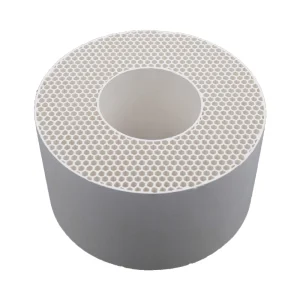
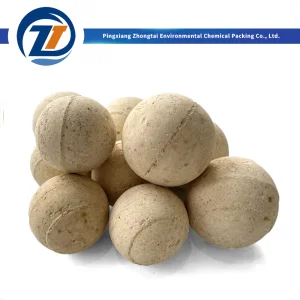
Synthetic zeolites, universally categorized in process engineering as molecular sieves, represent the foundational catalyst support and selective adsorption technology across global petrochemical refining, natural gas treatment, air separation, medical oxygen generation, and environmental abatement. Characterized by uniform crystalline pore structures, ultra-high internal surface areas (frequently exceeding 700 to 800 m²/g), and engineered cation-exchange sites, molecular sieves achieve molecular discrimination based on kinetic diameter, polarity, and degree of unsaturation.
As global decarbonization mandates intensify and energy efficiency standards tighten across Europe, North America, and the Asia-Pacific region, chemical process industries require adsorbents with superior crush strength, reduced mass transfer zone (MTZ) length, and exceptional hydro-thermal stability. Pingxiang Zhongtai Environmental Chemical Packing Co., Ltd., headquartered in Pingxiang City, Jiangxi Province—China's world-renowned manufacturing cluster for industrial ceramics and chemical mass transfer media—stands at the forefront of this industrial transition.
Information Gain Key Insight: Unlike conventional clay-heavy molecular sieves that suffer from structural attrition and high pressure drop (ΔP) during cyclic thermal swing adsorption (TSA) or pressure swing adsorption (PSA), modern Chinese synthetic zeolites utilize advanced binderless crystallizing techniques and nano-scale binder dispersion, delivering up to 25% higher dynamic water/CO₂ adsorption capacity and significantly longer operational lifespans.
By leveraging vertically integrated synthesis infrastructure—ranging from hydrothermal sodium silicate/aluminate gel crystallization to high-precision bead extruding and automated calcination kilns—Chinese manufacturers deliver world-class molecular sieve solutions that strictly adhere to international engineering benchmarks, including ASTM D3802 (Ball-Pan Attrition Resistance), ASTM D2854 (Apparent Density), and ISO 9001:2015 quality frameworks.
Procurement managers and lead process engineers face complex decision matrices when selecting molecular sieves for industrial adsorption columns. The choice depends on target molecule kinetic diameter, co-adsorption competitive kinetics, operating temperature profiles, and column regeneration heat requirements. Below is an engineering overview of primary synthetic zeolite classifications:
Effective Pore Size: ~3 Å. Formed by replacing sodium cations in Type 4A with potassium ions. Excludes molecules larger than 3 Å (such as alkanes, olefins, and alcohols) while selectively adsorbing water (2.65 Å). Essential for cracked gas drying, ethanol absolute dehydration, and insulating glass units.
Effective Pore Size: ~4 Å. The standard sodium form of the Type A crystalline structure. Adsorbs water, carbon dioxide, hydrogen sulfide, sulfur dioxide, and light hydrocarbons. Widely utilized in closed-loop air drying systems, refrigerant purification, and static desiccation.
Effective Pore Size: ~5 Å. Calcium cation exchange provides strong co-adsorption of polar molecules. Separates normal-paraffins from iso-paraffins via shape-selective adsorption and performs pressure swing adsorption (PSA) for hydrogen enrichment and natural gas sweetening.
Effective Pore Size: ~10 Å. Features a large faujasite cage structure capable of co-adsorbing water, CO₂, Mercaptans, and heavy hydrocarbons. Critical for cryogenic Air Separation Unit (ASU) prepurification and natural gas mercaptan removal.
Effective Pore Size: ~9-10 Å. Formed via high-degree lithium exchange. Demonstrates extremely high N₂/O₂ separation factors and nitrogen adsorption capacity under low partial pressures. Standard media for medical and industrial VPSA oxygen generators.
Effective Pore Size: 3-5 Å (Slit-like). Carbonaceous adsorbent synthesized via precise micropore modification. Utilizes kinetic rate differences between oxygen and nitrogen diffusion to produce high-purity nitrogen gas in PSA systems.
The following performance data table outlines key physical and dynamic adsorption parameters critical for engineering bed sizing and lifecycle estimation:
| Zeolite Type | Cation Form | Nominal Pore (Å) | Bulk Density (g/ml) | Crushing Strength (N) | Static Water Adsorption (≥%) | Primary Application Duty |
|---|---|---|---|---|---|---|
| Molecular Sieve 3A | K⁺ / Na⁺ | 3.0 | 0.68 – 0.74 | ≥ 35 (Spheres 3-5mm) | 21.5% | Olefin Drying, Ethanol Dehydration, Insulating Glass |
| Molecular Sieve 4A | Na⁺ | 4.0 | 0.66 – 0.72 | ≥ 40 (Spheres 3-5mm) | 22.0% | Compressor Air Drying, Closed-loop Refrigerant Systems |
| Molecular Sieve 5A | Ca²⁺ / Na⁺ | 5.0 | 0.65 – 0.71 | ≥ 45 (Spheres 3-5mm) | 21.5% | n-Paraffin Separation, PSA H₂ Purification, Dewpoint Reduction |
| Molecular Sieve 13X | Na⁺ (Faujasite) | 10.0 | 0.64 – 0.70 | ≥ 38 (Spheres 3-5mm) | 24.0% | ASU Prepurification (CO₂/H₂O Removal), Desulfurization |
| 13X-HP / Li-X | Li⁺ / Ca²⁺ / Na⁺ | 10.0 | 0.62 – 0.68 | ≥ 30 (Spheres 1.6-2.5mm) | 25.5% | VPSA Oxygen Concentrators (93%–95% O₂ Purity) |
Integrating molecular sieves into multi-bed fixed-column contactors requires precise control over pressure drops, hydrodynamic gas distribution, fluidization prevention, and regeneration energy. Leading EPC firms and chemical facility managers utilize Chinese zeolite products across several core industrial applications:
In LNG processing plants, raw natural gas stream water concentrations must be continuously reduced to sub-ppm levels (< 0.1 ppmv H₂O) to eliminate ice formation and hydrate freeze-outs inside cryogenic heat exchangers operating at temperatures below -160°C.
On-site oxygen generation eliminates heavy reliance on liquid oxygen bulk deliveries or high-pressure gas cylinders. Industrial Vacuum Pressure Swing Adsorption (VPSA) plants require specialized zeolites to achieve rapid adsorption-desorption kinetics.
Azeotropic distillation of bio-ethanol cannot exceed ~95.6% purity by weight. Achieving fuel-grade anhydrous ethanol (>99.9% purity) requires selective water removal through vapor-phase molecular sieve adsorption.
Ethylene, propylene, and butadiene cracker gas streams contain reactive unsaturated hydrocarbons that readily polymerize inside desiccant beds if thermal conditions spike or pore dimensions allow olefin penetration.
The global molecular sieve manufacturing industry is undergoing a paradigm shift driven by advanced material science, binderless granule processing, and low-carbon thermal calcination technologies. Chinese manufacturing research institutes and production hubs have pioneered several key technological milestones:
Traditional molecular sieves incorporate 15%–20% inert clay binders (attapulgite or kaolin), which add dead weight without contributing to adsorption capacity. In-situ hydrothermal conversion transforms clay binders directly into active zeolite crystals, yielding near 100% active adsorbent material.
By integrating mesoporous channels (2–50 nm) into traditional microporous crystalline zeolites (< 2 nm), intracrystalline mass-transfer resistance is significantly reduced. This allows faster adsorption-desorption dynamics, enabling shorter cycle times in rapid PSA units.
Innovations in low-temperature regeneration protocols and waste heat capture during manufacturing calcination reduce total greenhouse gas emissions per ton produced by over 18%, helping global procurement partners meet ESG compliance goals.
Looking forward to 2030, Chinese molecular sieve technological development focuses on direct carbon capture zeolites (CCUS), metal-organic framework (MOF) hybrid adsorbents, and ultra-high-selectivity lithium-doped crystals for high-altitude medical aviation breathing equipment.
Establishing a reliable global procurement supply chain requires complete transparency regarding quality verification, product testing protocols, and export shipping security. China's industrial chemical cluster in Pingxiang offers direct factory sourcing advantages while upholding strict international standards.
Every production batch manufactured by Pingxiang Zhongtai Environmental Chemical Packing Co., Ltd. undergoes rigorous quality assurance testing in accordance with international standard operating procedures prior to packaging and dispatch:
Because synthetic zeolites are extremely hygroscopic, moisture intrusion during international transit must be completely prevented. Factory-direct export shipments utilize heavy-duty air-tight steel drums (150 kg capacity) equipped with inner double-layer hermetically sealed polyethylene bag liners, or 1,000 kg UV-resistant super sacks featuring aluminum-foil moisture barriers.
Expert engineering insights regarding molecular sieve selection, regeneration conditions, bed loading, and factory direct ordering.
Complete your plant design with our broad array of ceramic tower packing, catalyst supports, molecular sieve adsorbents, and high-temperature honeycomb materials.