Industrial Engineering Whitepaper

China Hollow Polypropylene Balls Suppliers & Factory

Comprehensive Technical Procurement & Engineering Guide for Polypropylene (PP) Hollow Floating Media: Optimizing Evaporative Emission Control, Chemical Scrubbing Efficiency, Thermal Blanket Insulation, and Mass Transfer Operations across Global Process Plants.

Featured Industrial Mass Transfer & Support Media Range (1-8)

Engineered chemical packing solutions developed by Pingxiang Zhongtai Environmental Chemical Packing Co., Ltd. for harsh industrial environments, offering high thermal stability and corrosion resistance.
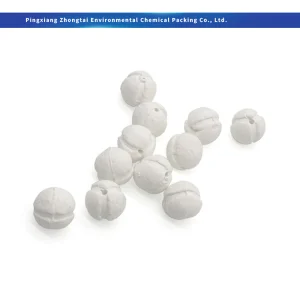
Perforated Ceramic Ball Porous Catalyst Support Media
Wholesale High Performance Perforated Ceramic Ball Porous Catalyst Support Media for Chemical Reactor Manufacturer
View Product Specs
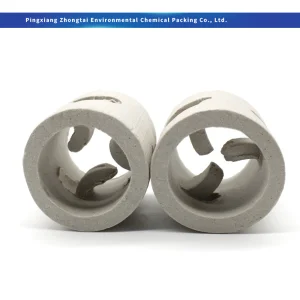
Ceramic Pall Ring Random Tower Packing
Wholesale Acid & Heat Resistant Ceramic Pall Ring High Voidage Random Tower Packing 25mm 38mm 50mm 80mm for Chemical Absorption
View Product Specs
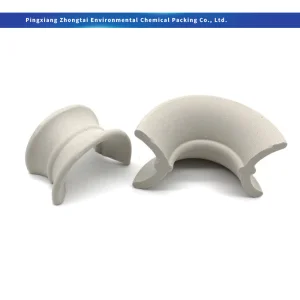
Ceramic Intalox Saddle Ring Tower Packing
China Acid & Heat Resistant Ceramic Intalox Saddle Ring Random Tower Packing 16mm 25mm 38mm 50mm 76mm
View Product Specs
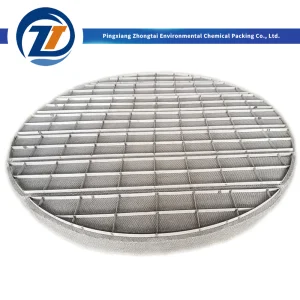
Stainless Steel Wire Mesh Mist Eliminator Demister Pad
China 304 316L Stainless Steel Metal Wire Mesh Mist Eliminator Demister Pad for Chemical Scrubbing & Distillation
View Product Specs
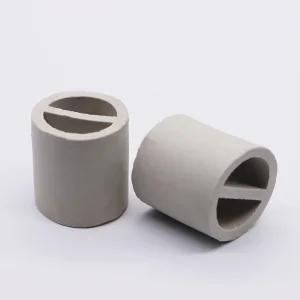
Ceramic Mini Lessing Ring Tower Packing
China Ceramic Mini Lessing Ring Tower Packing Supplier, Quotes & Technical Specifications
View Product Specs
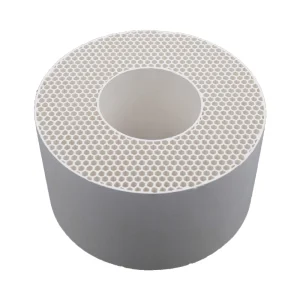
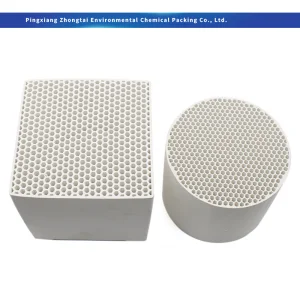
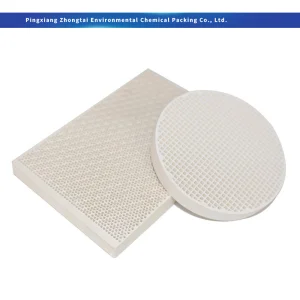
RTO RCO Honeycomb Ceramic Catalyst Converter
China Thermal Storage RTO/RCO Honeycomb Ceramic as Catalytic Converter for Heat Recovery Manufacturers
View Product Specs
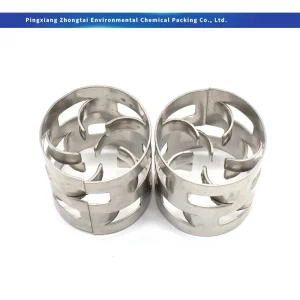
Metal Pall Ring Tower Packing
Wholesale Metal Pall Ring 16mm 25mm 38mm 50mm High Efficiency Metal Tower Packing for Chemical Processing
View Product Specs
Cordierite Honeycomb Ceramic Substrate Catalyst Carrier
Wholesale Cordierite Honeycomb Ceramic Substrate (Catalyst Carrier/Monolith) for Automotive Exhaust & VOC Purification
View Product Specs

Executive Overview: Industrial Fundamentals of Hollow Polypropylene (PP) Floating Balls

Decoding the thermodynamic, fluidic, and chemical properties that make hollow plastic spheres the premier choice for process liquid blanket insulation and VOC mist containment.

Material Architecture & Physical Mechanics

Hollow Polypropylene Balls (also designated as PP hollow floating spheres or plastic float beds) are engineered thermoplastic spheres characterized by a high strength-to-weight ratio, near-zero liquid absorption, and exceptional chemical inertness. Manufactured primarily through advanced continuous blow molding or precision hemispherical ultrasonic welding, these hollow spheres achieve an optimal balance between structural wall thickness and buoyant buoyancy dynamics.

By floating seamlessly on liquid surfaces to form a cohesive, self-healing interlocking layer, hollow PP balls create a dynamic physical barrier that drastically curtails heat transfer, vapor escaping, and atmospheric oxygen dissolution without obstructing dipping equipment, continuous pumps, or fluid level probes.

User Intent & Global Procurement Intelligence

Global procurement teams across North America, Europe, the Middle East, and Asia-Pacific routinely source hollow polypropylene balls from China to address key plant operational challenges: reducing energy overheads in heated process tanks, minimizing acid mist exposure in metal finishing bays, and suppressing volatile organic compound (VOC) odors in petrochemical collection sumps.

To ensure high Total Cost of Ownership (TCO) efficiency, buyers evaluate suppliers based on virgin resin grade (avoiding degraded regrind material), sphericity tolerances, seam tensile strength under continuous thermal agitation, and regulatory compliance certificates including FDA 21 CFR 177.1520, REACH, and RoHS.

85% - 92%
Vapor Loss Reduction
30% - 45%
Thermal Energy Savings
110°C
Max Continuous Operating Temp
>10 Years
UV-Stabilized Lifespan

Technical Material Matrix & Manufacturing Engineering

Analytical comparison of Polypropylene material variants, molding methodologies, physical parameters, and chemical resistance thresholds.

Nominal Diameter (mm) Wall Thickness (mm) Specific Gravity (g/cm³) Free Void Volume (%) Number per m² (Single Layer) Primary Industrial Applications
10 mm – 15 mm 0.6 – 0.8 mm 0.85 – 0.90 ~88% ~4,600 – 11,500 Laboratory baths, small-scale chemical reagent tanks, precise fluid level control.
20 mm – 25 mm 0.8 – 1.1 mm 0.88 – 0.92 ~90% ~1,850 – 2,900 Metal electroplating, acid pickling lines, anodizing baths, PCB etching machines.
38 mm – 50 mm 1.2 – 1.6 mm 0.89 – 0.93 ~92% ~460 – 800 Scrubber tower floating packed beds, chemical storage tanks, wastewater sumps.
70 mm – 100 mm 1.8 – 2.5 mm 0.90 – 0.94 ~94% ~120 – 240 Solar evaporation ponds, outdoor municipal reservoirs, mining leaching lagoons.

Chemical Compatibility & Resistance Spectrum

Polypropylene demonstrates near-total resistance to aqueous solutions of inorganic salts, mineral acids, and alkalis. It remains unaffected by strong acids such as Hydrochloric Acid (37%), Sulfuric Acid (up to 70%), Phosphoric Acid, and Nitric Acid (up to 40% at moderate temperatures).

However, process engineers must note that PP is susceptible to halogen attack (e.g., liquid bromine, chlorine gas) and strong oxidizing agents like fuming nitric acid or concentrated hydrogen peroxide at elevated temperatures (>80°C). For aromatic hydrocarbons (benzene, toluene) or chlorinated solvents, modified fluoropolymer media (PVDF/PTFE) may be recommended.

Ultrasonic Welding vs. Continuous Blow Molding

The structural integrity of a hollow float sphere depends on its production route. Precision Blow Molding yields a seamless sphere with uniform wall thickness and zero join stress lines, rendering it ideal for dynamic gas scrubbing beds where mechanical impact occurs.

Ultrasonic Hemispherical Welding fuses two injection-molded halves using high-frequency vibrational energy. Modern automated welding systems enforce 100% seam fusion checks, ensuring the joint withstands internal pressure expansion when floating on boiling solutions up to 105°C without leaking or cracking.

Macro-Industry Solutions & System Integration

How engineering plants deploy hollow polypropylene floating beds to solve environmental, thermal, and chemical process challenges.

1. Electroplating & Surface Finishing

In hot acid pickling (HCl, H₂SO₄) and chromium electroplating tanks, heavy acid mist bubbles burst violently at the liquid-air interface, releasing hazardous corrosive vapors into the workplace environment.

Deploying a 2 to 3-layer floating blanket of 20mm or 25mm hollow PP balls traps up to 90% of these gas bubbles beneath the sphere matrix. The liquid droplets condense and drain back into the bath, preserving chemical bath chemistry, preventing infrastructure corrosion, and protecting personnel health.

2. Scrubbing & Degassing Columns

Hollow floating PP balls serve as moving bed random packing in dynamic wet scrubbers, flue gas desulfurization (FGD) absorbers, and air stripping towers.

The lightweight floating bed fluidizes under upwards gas flow and liquid irrigation, offering high surface contact area (m²/m³) while avoiding channeling or severe pressure drops. Self-cleaning motion prevents solid particulate scaling and bio-fouling, making it superior to fixed packing beds in turbid wastewater scrubbing.

3. Thermal Insulation & Power Preservation

Open process tanks holding heated fluids (e.g., degreasing baths, municipal sludge digesters, hot water storage) dissipate immense thermal energy through evaporative surface cooling.

A single layer of hollow PP spheres cuts liquid surface heat loss by up to 75%, while a double layer achieves over 85% thermal retention. Plant operators report rapid ROI (often under 4 months) driven directly by reduced electricity and gas consumption for tank heating.

4. Water Conservation & Algae Control in Solar Ponds

In arid regions, large open reservoirs, tailing ponds, and agricultural water holdings suffer massive volume losses due to solar evaporation. Furthermore, sunlight exposure triggers rapid algae blooms that clog filtration membranes.

By covering raw water surfaces with UV-stabilized black hollow polypropylene balls (compounded with Carbon Black and HALS additives), solar irradiance penetration is reduced by 98%, virtually eliminating photosynthetic algae growth and drastically reducing water evaporation losses under ambient temperatures up to 50°C.

5. Odor Containment in Municipal Wastewater

Industrial effluent sumps, anaerobic lagoons, and municipal sludge holding tanks emit offensive hydrogen sulfide (H₂S), ammonia (NH₃), and volatile mercaptans that trigger severe environmental compliance penalties.

Hollow PP ball blankets form a flexible, self-adjusting seal over fluid basins regardless of fluctuating liquid levels. The barrier restricts gaseous mass transfer across the liquid-air boundary, confining foul odors beneath the floating layer where exhaust systems can capture and route them to central bio-scrubbers.

R&D Roadmap & Next-Generation Materials Outlook

Tracking breakthroughs in polymer chemistry, nanocomposite fortification, and green circular manufacturing for industrial plastic media.

Phase I: High-Flow Precision Blow Molding & Automated Ultrasonic Fusion
Transitioning from manual rotational molding to fully automated high-speed multi-cavity blow molding machines. Integrating inline machine vision inspection to verify sphere wall uniformity, eliminating micro-pinholes and structural stress points.
Phase II: Nano-Silica & Graphene Reinforced PP Matrices
Compounding virgin polypropylene with surface-modified nano-silica and graphene nanoplatelets. This technology raises tensile strength by 35%, improves long-term thermal deformation temperatures to 125°C, and imparts static-dissipative capabilities required for explosive hydrocarbon storage zones (ATEX compliance).
Phase III: Bio-Based Polypropylene (Bio-PP) & Closed-Loop Circularity
Adopting ISCC PLUS certified bio-based polypropylene derived from second-generation organic waste streams (used cooking oils and forestry residues). Establishing industrial take-back programs to regrind and re-process spent chemical balls into non-critical structural packing elements, reducing net carbon footprint by 60%.
Phase IV: Smart Floating Beds with Embedded Micro-Sensors (IoT Integration)
Developing pilot-scale floating spheres embedded with micro-pH, temperature, and liquid level telemetry nodes. Distributed across large chemical ponds, these floating sensor matrices transmit real-time fluid quality data directly to plant Distributed Control Systems (DCS).

Global Commercial Footprint, Quality Assurance & Regulatory Compliance

Enforcing strict quality standards, traceable batch certifications, and international trade compliance for seamless global logistics.

Comprehensive Quality Management Protocol

Every manufacturing run of hollow PP balls undergoes multi-stage laboratory testing prior to dispatch: resin melt flow index (MFI) analysis, hydrostatic burst pressure testing, ultrasonic seam shear testing, and continuous thermal immersion trials in concentrated acid solutions.

All shipment lots include an official Certificate of Analysis (CoA) documenting batch density, average wall thickness, crush strength, and raw resin lot traceability under our ISO 9001:2015 certified quality system.

International Standards & Regulatory Matrix

To support effortless customs clearance and compliance for international process plants, our products conform to key regional safety guidelines:

  • REACH & RoHS 3 Compliance: Guaranteed free of SVHCs (Substances of Very High Concern), heavy metals, phthalates, and polybrominated diphenyl ethers.
  • FDA 21 CFR 177.1520: Food-contact grade virgin PP options suitable for pharmaceutical process water, beverage tank insulation, and food processing applications.
  • Export Packaging Standards: UV-resistant woven jumbo bags, heavy-duty seaworthy cartons, or sealed steel drums mounted on ISPM-15 compliant fumigated or plastic pallets.

Pingxiang Zhongtai Environmental Chemical Packing Co., Ltd.

Established in 2003 and situated within the West Section Hi-Tech Industry Park of Pingxiang City, Jiangxi Province—China's world-renowned industrial ceramics and chemical packing hub—Zhongtai delivers factory-direct engineering excellence. With over two decades of specialized manufacturing, our multi-material platform produces ceramic, metal, and plastic random and structured tower packings, RTO honeycomb ceramics, molecular sieves, and high-performance hollow floating media for buyers across more than 60 countries.

ISO 9001:2015 Certified 20+ Years Manufacturing Expertise Global Export Traceability

Featured Industrial Mass Transfer & Support Media Range (9-16)

High-efficiency structured packings, tray columns, desiccants, and specialized grinding media engineered for high-throughput process installations.
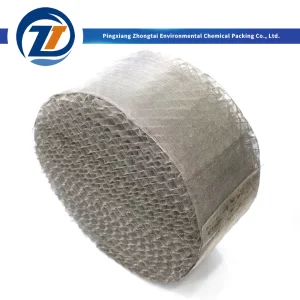
Metal Wire Gauze Structured Packing
Wholesale High Efficiency 304 316L Metal Wire Gauze Structured Packing BX DX CY Type for Fine Chemical Distillation
View Product Specs
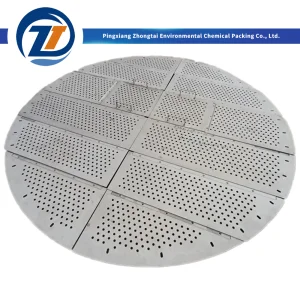
Stainless Steel Metal Sieve Tray
China High Efficiency 304 316L Stainless Steel Metal Sieve Tray for Distillation, Absorption & Stripping Columns
View Product Specs
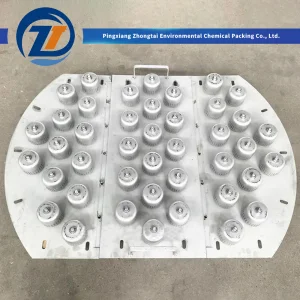
Stainless Steel Metal Bubble Cap Tray
China 304 316L Stainless Steel Metal Bubble Cap Tray for High Turndown Distillation & Absorption Columns
View Product Specs
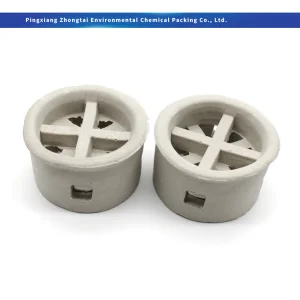
Ceramic Cascade Ring Random Tower Packing
Wholesale Acid & Heat Resistant Ceramic Cascade Ring (Cascade Mini Ring) Random Tower Packing for Chemical Scrubbing
View Product Specs
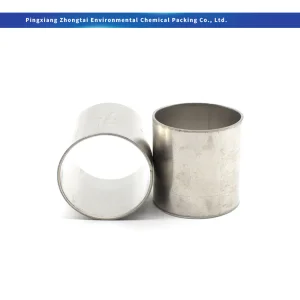
Metal Raschig Ring Tower Packing
Wholesale Metal Raschig Ring 25mm 38mm 50mm High Temperature Resistant Metal Tower Packing for Chemical Processing
View Product Specs
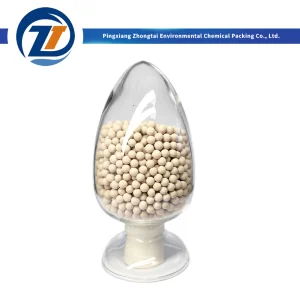
3A Molecular Sieve Zeolite Desiccant
China High Performance 3A Molecular Sieve Zeolite Desiccant for Ethanol and Ethylene Dehydration Manufacturer
View Product Specs
Cordierite Infrared Industrial Heater Plate
Wholesale 400 CPSI Cordierite Heater Plate | High-Temp Infrared Industrial Heater Supplier, Factory
View Product Specs
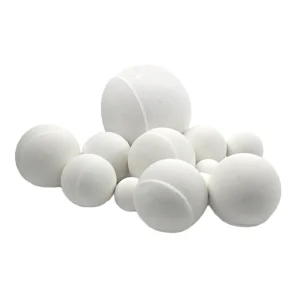
Alumina Grinding Ball for Ball Mill
Wholesale Alumina Grinding Ball used in ball mill Suppliers, Factory & Price Specification Data
View Product Specs

Frequently Asked Questions (Technical & Procurement FAQ)

Engineering answers to the most common technical inquiries regarding hollow polypropylene floating ball sizing, coverage calculations, and fluid dynamics.

How do I calculate the exact quantity of hollow polypropylene balls required per square meter or square foot?
To achieve a theoretical single-layer close-packed hexagonal floating array (91% surface coverage), use the formula:
N = 1.1547 / (D²), where D is the outer sphere diameter in meters.

For example:
  • 20 mm (0.02 m) Balls: 1.1547 / (0.02²) ≈ 2,886 balls per m² (single layer).
  • 25 mm (0.025 m) Balls: 1.1547 / (0.025²) ≈ 1,847 balls per m² (single layer).
  • 50 mm (0.05 m) Balls: 1.1547 / (0.05²) ≈ 462 balls per m² (single layer).

For acid mist suppression or thermal blanket insulation, process engineers recommend deploying a 2-layer layer multiplier (2.0x) or 3-layer layer multiplier (2.8x) to ensure complete overlap during agitation.
What is the expected continuous operating temperature limit for standard Polypropylene floating balls?
Standard virgin homopolymer Polypropylene (PP) hollow balls perform continuously in liquid baths up to 100°C – 105°C (212°F – 221°F) without dimensional softening or seam failure. For short surge durations, they withstand exposure up to 110°C. If process fluids exceed 115°C continuously, high-density polyethylene (HDPE, max 80°C) is unviable, and higher performance polymers such as PVDF (max 150°C) or PFA should be specified.
How do hollow PP floating spheres handle heavy outdoor wind forces on large water reservoirs?
On open municipal water reservoirs, tailing ponds, or solar evaporation lagoons, wind speeds exceeding 45 km/h (28 mph) can cause light, large-diameter hollow balls to stack or drift toward downwind banks. To prevent wind displacement, outdoor floating ball networks utilize larger 70mm to 100mm spheres formulated with heavy UV black compounding (2.5% Carbon Black) and slightly increased wall thickness. The ball bed dynamically locks together as a cohesive mass, riding wave action while maintaining 90%+ surface coverage.
What is the difference between hollow PP balls and solid plastic balls in mass transfer columns?
Hollow polypropylene balls possess a very low specific weight (0.85 – 0.92 g/cm³ when floating), enabling fluidization in liquid beds with minimal hydraulic drag. In scrubbing towers, hollow spheres float dynamically under low gas velocities, generating fluid turbulent contact interfaces while dramatically reducing power consumption for gas blowers. Solid balls are far heavier, prone to setting, and generate excessive hydraulic resistance (high pressure drop per meter of packing depth).
How does Pingxiang Zhongtai guarantee that welded hollow balls will not leak liquid into their inner cavity?
Zhongtai employs fully automated, computerized ultrasonic welding machines with precise energy-displacement feedback. Weld seam joint geometry features an engineered tongue-and-groove shear joint that melts and fuses uniformly across 100% of the circumferential wall. Each production batch undergoes vacuum immersion pressure leak tests: sample spheres are submerged under 0.2 MPa hydrostatic pressure in heated dye baths to ensure zero pinhole penetration or micro-fracturing.
Can hollow PP floating balls be used in food processing or potable water contact?
Yes, provided they are manufactured exclusively from 100% pure virgin food-grade polypropylene resin without color masterbatches, recycled regrind, or heavy-metal catalyst residues. Zhongtai offers dedicated production lines for FDA 21 CFR 177.1520 compliant hollow balls designed for use in food processing heating tanks, cooking oil reservoirs, and municipal drinking water filtration systems.