Explore our top-tier industrial ceramic spheres, mass transfer tower packings, and molecular sieves engineered for extreme operational environments.
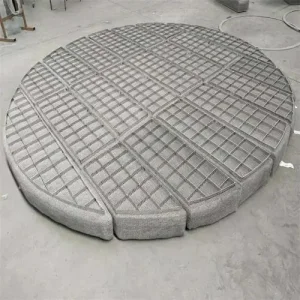
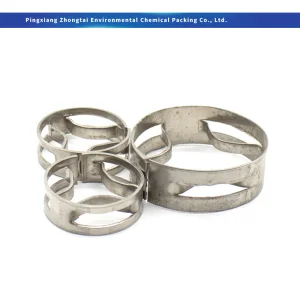
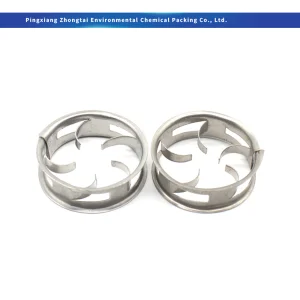
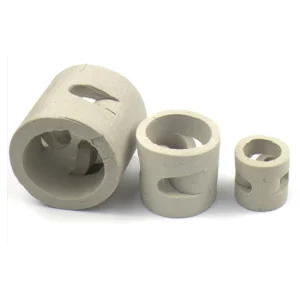
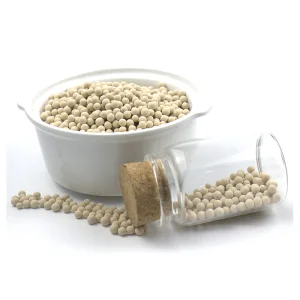
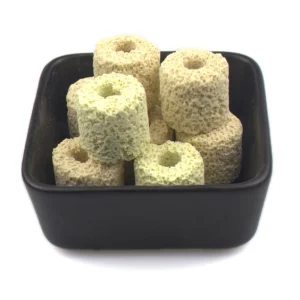
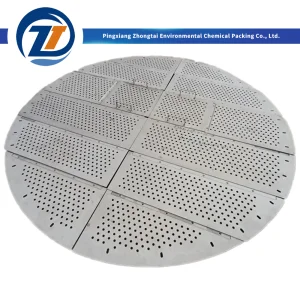
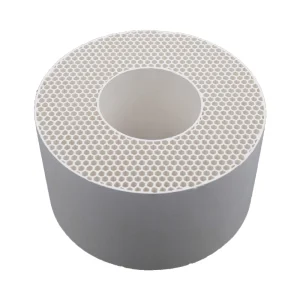
Strategic breakdown of China's dominance in ceramic filter ball manufacturing, raw material pricing drivers, and global market integration.
The global ceramic water filter media market is projected to reach $3.85 Billion by 2030, growing at a CAGR of 7.4%. Industrial demand for zero-liquid discharge (ZLD) systems drives adoption across Asia-Pacific, North America, and EMEA.
Pingxiang City, Jiangxi Province, produces over 65% of global chemical ceramic packings and water filtration media. Integrated raw material supply chains reduce production overhead by 18-25% compared to international competitors.
Leading Chinese suppliers now adhere stringently to NSF/ANSI Standard 42 & 61, ISO 9001:2015, REACH, and RoHS standards, ensuring safe deployment in potable municipal water systems and pharmaceutical processes.
In modern water treatment engineering, selecting the right filtration medium is paramount to operational uptime, biological oxygen demand (BOD) mitigation, and chemical oxidation reduction. Over the past decade, Chinese ceramic ball manufacturers have transitioned from high-volume commodity suppliers into sophisticated material science innovators. By utilizing advanced ultra-high-temperature sintering kilns (operating at up to 1650°C) and automated isostatic pressing technology, Chinese suppliers deliver ceramic spheres with unmatched mechanical crush strength, controlled porosity, and custom chemical releasing kinetics.
When procuring ceramic filter media, international buyers must navigate a vast array of technical parameters including Alumina concentration ($\text{Al}_2\text{O}_3$), Far-Infrared emission rates, Negative ORP (Oxidation-Reduction Potential) capacity, and mineral dissolution rates. Working directly with specialized Pingxiang manufacturers provides engineering teams direct access to custom mineral formulations, rapid OEM prototyping, and scalable pricing structures.
Comprehensive pricing matrix derived from direct Pingxiang factory benchmark data. Prices vary based on raw material purity, mesh size, sintering density, and order volume.
| Ceramic Ball Category | Primary Composition / Active Materials | Standard Sizes (mm) | FOB China Price Range (USD / Ton) | MOQ (Tons) | Primary Application Duty |
|---|---|---|---|---|---|
| Inert Alumina Ceramic Ball (17-23% Al₂O₃) | SiO₂ + Al₂O₃ Silicate Matrix | Φ3 - Φ50 mm | $280 - $450 / Ton | 5 Tons | Catalyst bed support, physical pre-filtration, coarse sediment traps |
| Inert High-Alumina Ball (92-99% Al₂O₃) | $\alpha$-Al₂O₃ Corundum Phase | Φ1.5 - Φ60 mm | $1,150 - $2,200 / Ton | 2 Tons | High-temperature, severe thermal shock, acid/alkali steam filtration |
| Tourmaline / Negative Ion Ball | Tourmaline, Kaolin, Rare-Earth Mineral Powder | Φ2 - Φ10 mm | $850 - $1,400 / Ton | 1 Ton | Water ionization, micro-clustering, shower filters, drinking water bio-activation |
| ORP Hydrogen-Rich Ball | Magnesium Alloy, Zinc, Tourmaline Sintered Compound | Φ3 - Φ8 mm | $2,400 - $3,800 / Ton | 0.5 Ton | Negative ORP generation (-200mV to -500mV), alkaline water filters |
| Maifan Stone Mineralizing Ball | Natural Maifanite Powder (SiO₂, Al₂O₃, Fe₂O₃, Ca, Mg) | Φ3 - Φ15 mm | $420 - $780 / Ton | 2 Tons | Trace mineral releasing (Sr, Se, Ca, K, Mg), commercial mineralizers |
| Far-Infrared Ceramic Ball | Bioceramic Far-Infrared Radiating Compounds | Φ3 - Φ12 mm | $750 - $1,250 / Ton | 1 Ton | Aquarium bio-filtering, residential water purification, metabolic activation |
| Dechlorination Ball (CaSO₃) | 98% Calcium Sulfite ($\text{CaSO}_3$) Sintered Base | Φ3 - Φ8 mm | $1,800 - $2,900 / Ton | 1 Ton | Instant residual chlorine removal (>99%), shower & kitchen purification |
| Nano-Silver Antibacterial Ball | Silver Nano-Particles on Inorganic Porous Ceramic Substrate | Φ2 - Φ8 mm | $3,200 - $5,500 / Ton | 0.5 Ton | Bacterial inhibition (E. coli, S. aureus), point-of-use (POU) drinking systems |
Orders exceeding 20 Metric Tons (Full Container Load - 20ft FCL) typically qualify for a 5% to 12% price reduction directly from Tier-1 Pingxiang factories.
Standard packaging includes 25kg PP woven bags. Super sacks (1 Metric Ton Jumbo Bags) or sealed steel drums add $15-$40/Ton depending on moisture control specs.
Specialty ceramic sphere blends requiring custom mineral ratios, specific dissolution rates, or unique pore diameters incur a $500-$1,500 R&D and tooling charge for small batches.
Understanding the thermal dynamics, pore architecture, and chemical reactivity of ceramic filter media.
Inert ceramic spheres act as protective hold-down beds for active catalysts and physical bed filters. Formulated with high-grade kaolin, feldspar, and alumina, these balls exhibit exceptionally low water absorption (<1%), high chemical resistance against strong acids and alkalis, and tremendous mechanical crush strength (up to 12 kN/particle for 50mm spheres).
Utilizing micro-electrolysis mechanisms, ORP spheres combine sub-micron magnesium powder with natural mineral catalysts. Upon contact with water, a subtle reaction occurs: $\text{Mg} + 2\text{H}_2\text{O} \rightarrow \text{Mg(OH)}_2 + \text{H}_2 \uparrow$. This releases micro-bubbles of molecular hydrogen ($\text{H}_2$), shifting the ORP into negative ranges and neutralizing hydroxyl free radicals.
Calcium Sulfite ($\text{CaSO}_3$) ceramic spheres provide fast dechlorination kinetics, reacting with free chlorine within 0.2 seconds. The reduction pathway ($\text{CaSO}_3 + \text{HClO} \rightarrow \text{CaSO}_4 + \text{HCl}$) prevents toxic chloramine formation, making it the preferred media for hot water shower cartridges and high-flow commercial pre-filters.
Quality ceramic ball production in Pingxiang follows a rigorous 6-stage engineering process designed to eliminate structural micro-cracks and guarantee batch consistency:
Raw minerals (Kaolin, Alumina, Tourmaline) are wet ball-milled into sub-325 mesh slurries to ensure atomic homogeneity.
Slurries are spray-dried into spherical micro-granules with precise moisture control (2-4%) for optimal moldability.
Automated roll-forming or cold isostatic pressing (CIP) shapes green ceramic spheres under extreme pressure (up to 200 MPa).
Green balls undergo computer-controlled firing at 1050°C to 1650°C for 24-36 hours, forming dense crystalline phase bonds.
Optical sorting separates off-spec sizes, followed by batch crush strength testing and ICP-MS heavy metal leaching analysis.
Tailored ceramic ball filtration configurations engineered for specific municipal, commercial, and industrial challenges.
Challenge: Biofouling and silt density index (SDI) spikes on reverse osmosis (RO) membranes in Middle Eastern desalination plants.
Solution: Layered inert alumina ceramic beds ($\text{Al}_2\text{O}_3$ 23%) combined with porous bioceramic spheres provide high turbidity removal, dropping SDI < 2.5 while resisting high-salinity corrosion.
Challenge: High concentrations of $\text{Pb}^{2+}$, $\text{Cd}^{2+}$, and $\text{Cr}^{6+}$ in electroplating and mining effluent across Southeast Asia.
Solution: Titanium-doped porous ceramic filter spheres functioning via ion-exchange and surface complexation. Achieves heavy metal removal efficiencies exceeding 98.4% under continuous flow regimes.
Challenge: Ammonia ($\text{NH}_3$) and nitrite ($\text{NO}_2^-$) toxicity in high-density commercial aquaculture in North America and Europe.
Solution: Far-Infrared Porous Bacterial House Media. Offers an enormous specific surface area ($1200 - 1800 \text{ m}^2/\text{m}^3$) for rapid nitrifying bacterial colonization ($\textit{Nitrosomonas}$, $\textit{Nitrobacter}$).
How Tier-1 Chinese ceramic ball suppliers eliminate risk through batch verification and internationally accepted test standards.
| Test Parameter | Standard Range | Typical Factory Batch Result |
| Al₂O₃ Content | 92.0% - 95.0% | 92.45% (PASS) |
| Water Absorption | ≤ 1.0% | 0.35% (PASS) |
| Mohs Hardness | ≥ 8.0 | 8.5 (PASS) |
| Crush Strength (10mm) | ≥ 2500 N/ball | 2850 N/ball (PASS) |
| Acid Resistance (10% HCl) | ≥ 99.5% | 99.82% (PASS) |
Where Chinese ceramic material science is heading over the next decade: Smart, self-cleaning, and targeted contaminant destruction.
Integration of nano-structured Anatase $\text{TiO}_2$ onto porous ceramic shells for solar-assisted degradation of PFAS ("forever chemicals") and pharmaceuticals.
Transition from traditional roll-forming to 3D printed ceramic lattice architectures, providing 300% lower pressure drop and optimized hydrodynamics.
Incorporation of graphene oxide (GO) nanosheets into ceramic matrices for ultra-fast electrosorption of heavy metal ions and microplastics.
Advanced alloy-ceramic hybrids that resist surface passivation, extending hydrogen-releasing lifespans from 6 months to over 3 years in continuous flow systems.
Full industrial transition of Pingxiang ceramic manufacturing clusters to green hydrogen and electric induction kilns, lowering scope 1 & 2 carbon footprints by 90%.
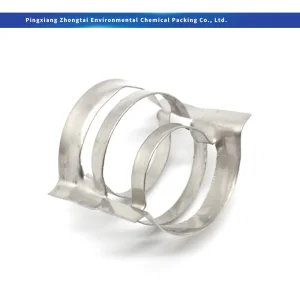
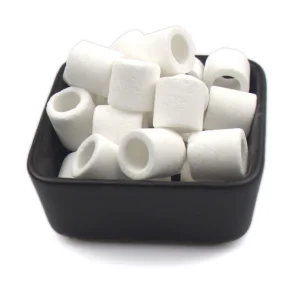
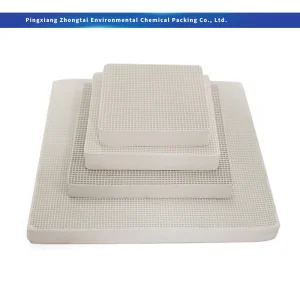
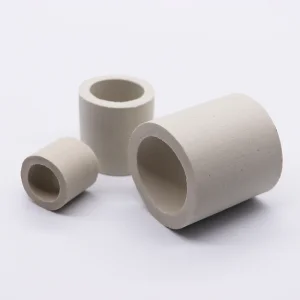
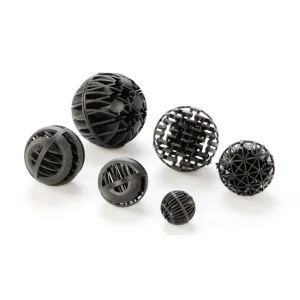
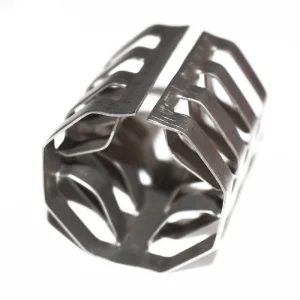
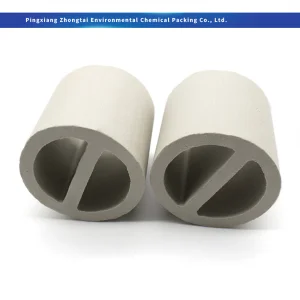
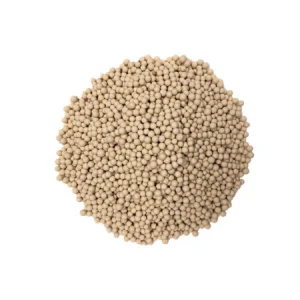
Explore our full line of specialized packing rings, bio-media, and high-efficiency zeolites engineered for chemical processing and industrial filtration.
Clear, authoritative responses covering chemical selection, logistics, custom manufacturing, and engineering parameters.
