
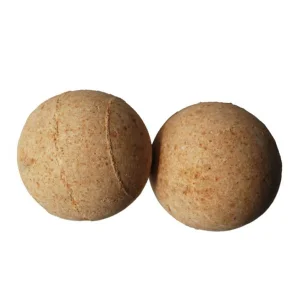
High Temperature Resistance Ceramic Refractory Ball
View Specifications
Manufactured under strict batch metallurgical and chemical controls at our Pingxiang production base, serving downstream chemical refining, environmental oxidation, and separation towers.
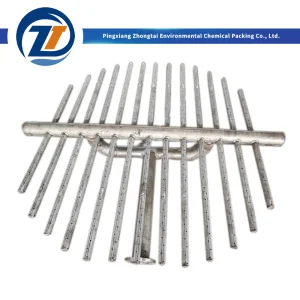
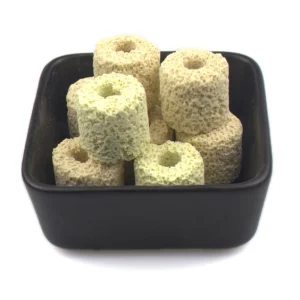
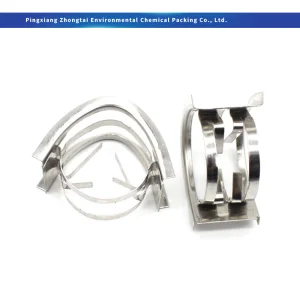
Decarbonization mandates, soaring hydrocarbon gas pricing, and stringent volatile organic compound (VOC) emission standards have forced modern heavy industry to reconsider thermal efficiency limits.
In Regenerative Thermal Oxidizers (RTO) and Regenerative Catalytic Oxidizers (RCO), honeycomb ceramic monoliths serve as high-density heat accumulation engines. By cyclically capturing thermal energy from exhausted flue gases ($>800^\circ\text{C}$) and preheating the incoming volatile stream, our alumina blocks yield fuel self-sufficiency at concentrations as low as 1.5 g/Nm³.
Thermal Efficiency > 95%Located in Pingxiang, Jiangxi Province—China's historical and contemporary epicenter for industrial chemical packing—Zhongtai benefits from integrated supply access to ultra-pure calcined alumina powder, synthetic mullite raw clays, automated extrusion tooling, and high-capacity natural-gas tunnel kilns within an immediate 30-kilometer logistical radius.
30% Cost-to-Performance RatioOperational thermal cycling in reversing valve manifolds subjects the ceramic bed to brutal rapid thermal gradients ($150^\circ\text{C}$ switching every 60 to 90 seconds). Our engineered phase matrix balances $\alpha\text{-Al}_2\text{O}_3$ micro-crystallites within a low-expansion cordierite-mullite interlocking backbone, resisting spalling, micro-fracturing, and premature channeling failure.
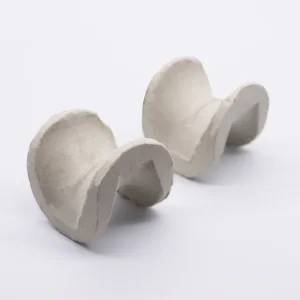
> 50 Rapid Air-Quench CyclesSenior Engineering Insight (E-E-A-T): Random ceramic packing like Intalox saddles or Raschig rings typically suffer from excessive pressure drop ($\Delta P > 180\text{ Pa/m}$) when flue gas face velocities exceed 1.8 m/s. Transitioning to straight-channel monolithic alumina honeycombs (40 to 50 CPSI) reduces hydraulic flow resistance by up to 68%, substantially downsizing forced-draft fan electrical ratings and reducing plant life-cycle carbon footprint.
A rigorous examination of sintering parameters, high-temperature creep dynamics, and chemical resistance profiles required for severe industrial gas scrubbing and combustion services.
The structural longevity of honeycomb ceramics in high-sulfur, alkali-laden gas streams is dictated by mineral purity and sintering maturity. Incomplete solid-state reaction creates unreacted glassy phases ($SiO_2$) that suffer rapid chemical fluxing when exposed to sodium, potassium, or halogen vapors at elevated temperatures.
| Parameter (Unit) | Cordierite-Mullite | High Alumina (90%) | Ultra-Purity (99%) |
|---|---|---|---|
| Al₂O₃ Content (%) | 45.0 – 52.0 | 88.0 – 92.0 | ≥ 99.2 |
| Bulk Density (g/cm³) | 1.90 – 2.15 | 2.60 – 2.95 | 3.10 – 3.35 |
| Specific Heat ($J/kg\cdot K$) | 1050 – 1150 | 1080 – 1180 | 1120 – 1220 |
| Axial Crushing Strength (MPa) | ≥ 15.0 | ≥ 22.0 | ≥ 30.0 |
| Thermal Expansion ($10^{-6}/K$) | 2.2 – 2.8 | 5.8 – 6.4 | 7.2 – 7.8 |
| Continuous Limit (°C) | 1250 | 1500 | 1650 |
*Certified according to ASTM C133 (Cold Crushing Strength) and ASTM C20 (Apparent Porosity & Bulk Density) protocol test procedures.
Comprehensive cost breakdown designed for global EPC engineering directors, plant maintenance procurement teams, and original equipment manufacturers (OEMs).
Pricing Mechanism Transparency: Ceramic honeycomb blocks are manufactured via precision vacuum extrusion dies, cut by automatic CNC wire cutters, dried via microwave/humidity tunnels, and sintered at high temperatures. Prices vary fundamentally based on: (1) Raw Al₂O₃ mineral commodity indices, (2) Extrusion die cell density (CPSI), (3) Block geometry tolerances, and (4) Order volume.
| Material Formulation | Cell Density (CPSI) | Standard Dimensions (mm) | Specific Surface Area ($m^2/m^3$) | Free Opening Area (%) | Indicative Price (USD / Piece) | Price Index (USD / m³) |
|---|---|---|---|---|---|---|
| Cordierite-Mullite (45% Al₂O₃) | 25 × 25 (Standard) | 150 × 150 × 150 | 580 – 620 | 68 – 72% | $7.80 – $9.50 | $2,300 – $2,800 |
| Cordierite-Mullite (45% Al₂O₃) | 40 × 40 (High Efficiency) | 150 × 150 × 150 | 840 – 890 | 64 – 67% | $9.20 – $11.40 | $2,700 – $3,350 |
| Cordierite-Mullite (48% Al₂O₃) | 43 × 43 (Optimized) | 150 × 150 × 300 | 880 – 920 | 63 – 66% | $17.50 – $21.00 | $2,550 – $3,100 |
| Mullite-Corundum (65% Al₂O₃) | 40 × 40 | 150 × 150 × 150 | 850 – 900 | 62 – 65% | $12.80 – $15.50 | $3,750 – $4,550 |
| Mullite-Corundum (75% Al₂O₃) | 50 × 50 (Ultra Dense) | 150 × 150 × 150 | 980 – 1050 | 58 – 62% | $16.00 – $19.80 | $4,700 – $5,800 |
| High Corundum (92% Al₂O₃) | 25 × 25 / 40 × 40 | 150 × 150 × 150 | 600 – 860 | 55 – 60% | $24.50 – $29.00 | $7,200 – $8,500 |
| Ultra-Pure Alumina (≥99% Al₂O₃) | Custom Tooling (10–60) | Custom Block / Cylinder | Application Driven | 50 – 58% | RFQ Custom Sintered | Consult Engineering |
*Terms: FOB Shanghai / Shenzhen / Ningbo port. Pricing based on MOQ of 1 full 20ft container ($\sim 24 \text{ m}^3$). Volume discounts apply for long-term supply framework agreements. Currency: USD.
Trial batch (1–5 m³): List +15% setup tolling.
Standard FCL (20–60 m³): Standard baseline pricing.
Major Revamp (>100 m³): Tier-1 direct OEM contract discount.
Standard dies ($150 \times 150$, $100 \times 100$) carry zero tooling charges. Custom profile shapes, cylindrical automotive cores, or hexagonal monoliths require a one-off die charge ($1,200–$2,800).
Direct factory loading from Pingxiang under FOB, CIF, CFR, or DDP. Sea transit to Rotterdam: 28 days; Long Beach: 18 days; Busan/Tokyo: 5–7 days. Complete bill of lading and export clearance documentation guaranteed.
Cross-industry deployments proving operational durability, thermodynamic optimization, and emission reduction in demanding environments.
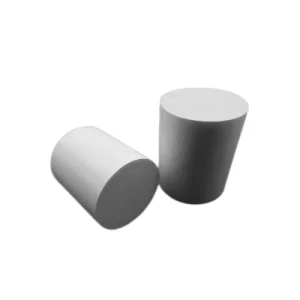
Treatment of massive exhaust volumes with ultra-dilute organic solvents (PGMEA, IPA, Acetone). High cell-density (43×43 and 50×50 CPSI) cordierite blocks allow footprint-constrained cleanroom facilities to deploy high-velocity RTO systems without exceeding structural floor vibration or fan static pressure constraints.
Sulfur recovery units (Claus processes), tail-gas incinerators, and reforming reaction stages where stream vapors contain aggressive acid mist ($SO_2, SO_3, HCl$). High-alumina ($>85\%$) honeycomb configurations prevent silicate leeching and chemical spalling under intermittent steam purging regimes.
Used in regenerative ladle heaters and walking-beam steel reheat furnaces. Ceramic honeycomb heat accumulators preheat incoming combustion air up to $1000^\circ\text{C}$ utilizing dirty, particulate-laden blast furnace gas (BFG), delivering fuel conservation rates exceeding 28%.
Rotary kiln secondary combustion chambers handling complex medical and halogenated chemical wastes. 65% Mullite-corundum matrices resist particulate accumulation and heavy metal vapor fouling while providing continuous bed structural integrity up to $1350^\circ\text{C}$.
Every metric ton of alumina ceramic exiting our Pingxiang kilns undergoes empirical verification to prevent premature plant downtime and ensure seamless EPC acceptance.
Standardized laboratory batch testing before dispatch:
Full alignment with worldwide chemical and trade directives:
Zero-breakage ocean shipping protection:
Addressing emergent challenges in hydrogen combustion, micro-cell extrusion, and catalytically active thermal storage monoliths.
Refining extrusion die rheology to reduce honeycomb wall thicknesses from standard 0.8 mm down to 0.45 mm for 60 CPSI architectures. Delivers 25% lower pressure drop with 35% enhanced geometrical surface contact area.
As plants switch to $H_2$ fuels, combustion water vapor partial pressures spike dramatically. We are developing zero-silica $\alpha\text{-alumina-zirconia}$ composite blocks that eliminate hydrothermal degradation and grain boundary softening at $1400^\circ\text{C}$.
Direct wash-coating and internal matrix impregnation of precious metals ($Pt, Pd, V_2O_5-WO_3/TiO_2$) inside the heat-storage block walls, merging high-capacity thermal recovery and catalytic SCR NOx abatement into a single compact chamber.
Functionalized macro-porous ceramic honeycomb structures optimized as solid structured contactors for Direct Air Capture (DAC) and industrial post-combustion $CO_2$ adsorption with zero structural dusting.
Detailed technical responses straight from our lead chemical engineers and Pingxiang production specialists.
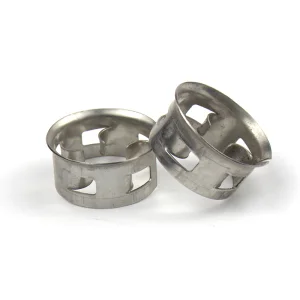
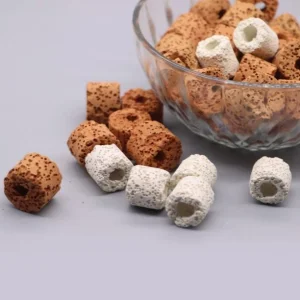
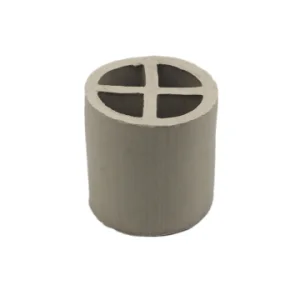
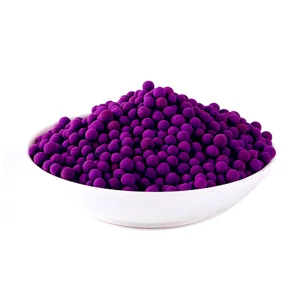
Complementary mass-transfer equipment engineered for scrubbing towers, distillation columns, gas drying systems, and environmental water processing.
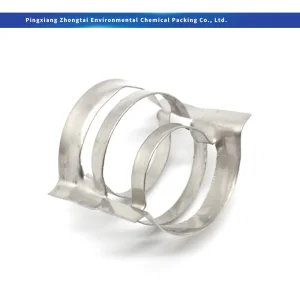
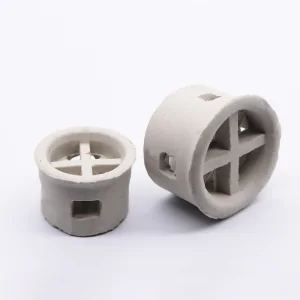
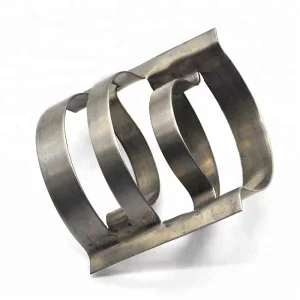
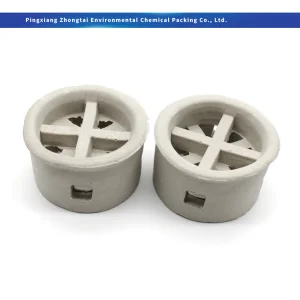
Provide your process vessel internal dimensions, operating face velocity, gas composition, and thermal duty. Zhongtai's chemical engineers will return an optimized technical proposal, pressure-drop curves, and competitive FOB/CIF pricing within 24 hours.
Factory Base: West Section Hi-Tech Industry Park, Pingxiang, Jiangxi, China
Executive Office: No. 905 Global Business Center, Economic Development Zone, Pingxiang
Email Contact: [email protected]
Direct Engineering Line: +86 139 7992 2265