Direct factory supply of certified mass transfer internals, random packing, and catalyst support spheres manufactured in Pingxiang, China's premier industrial ceramics cluster.
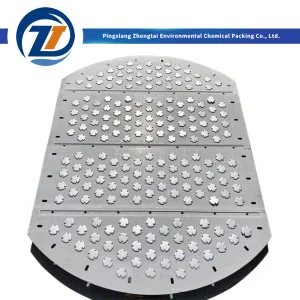
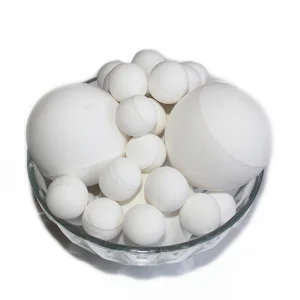
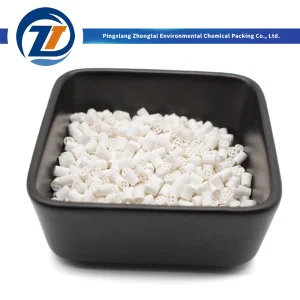
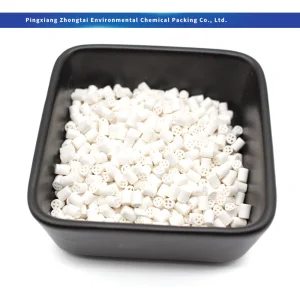
Why modern mega-refineries, ammonia synthetics, and syngas reformers require ultra-pure alpha-corundum (>99% α-Al2O3) catalyst bed support media under extreme partial pressures.
Under steam-rich atmospheres above 900°C, silica (SiO2) readily converts into gaseous silanol [Si(OH)4], migrating downstream to coat catalyst pores, blind heat exchangers, and ruin waste heat boilers. Our ≥99.5% Al2O3 formulation holds SiO2 strictly under 0.2%, mitigating fouling risks completely.
By firing calcined alumina beyond 1650°C, transition phases (γ, θ) transform irreversibly into high-density α-corundum. This close-packed hexagonal lattice achieves near-zero apparent porosity (≤1%), exceptional crushing strength, and unyielding resistance to thermal shock cycles.
Tested in reducing atmospheres containing high-pressure hydrogen, carbon monoxide, steam, and trace hydrogen sulfide. 99% high alumina spheres eliminate catalyst poisoning caused by transition metal leaching (Fe2O3 ≤ 0.1%, TiO2 ≤ 0.05%), ensuring unbroken catalyst campaign lifespans.
| Property / Technical Metric | Standard Inert (17-23% Al2O3) | Medium Alumina (23-30% Al2O3) | High Alumina (90-92% Al2O3) | Super High Purity (99.5% Al2O3) |
|---|---|---|---|---|
| Al2O3 Content (wt%) | 17.0 – 23.0% | 23.0 – 30.0% | 90.0 – 92.5% | ≥ 99.5% |
| SiO2 Content (wt%) | 70.0 – 75.0% | 65.0 – 70.0% | 6.0 – 7.5% | ≤ 0.20% (Ultra-Low) |
| Fe2O3 Content (wt%) | ≤ 1.0% | ≤ 0.8% | ≤ 0.3% | ≤ 0.10% |
| Bulk Density (g/cm³) | 1.35 – 1.45 | 1.40 – 1.50 | 1.90 – 2.10 | 2.05 – 2.25 |
| Specific Gravity (g/cm³) | 2.30 – 2.40 | 2.40 – 2.50 | 3.50 – 3.65 | 3.75 – 3.90 |
| Water Absorption (wt%) | ≤ 3.0% | ≤ 2.5% | ≤ 1.5% | ≤ 1.0% (Near Vitrified) |
| Max Operating Temp (°C) | 1100 °C | 1200 °C | 1450 °C | 1650 – 1800 °C |
| Cold Crushing Strength (Ø19mm) | > 4.5 kN/particle | > 5.5 kN/particle | > 12.0 kN/particle | > 18.0 kN/particle |
| Primary Risk Factor | High silica volatility in steam | Silica volatilization at >450°C | Moderate cost, intermediate trace silica | None (Optimal Critical Service) |
Evaluating modern macro-trends across mega-refining complexes, blue ammonia corridors, and synthetic gas infrastructures driving the demand for high-spec corundum balls.
Decarbonization projects deploying Steam Methane Reforming (SMR) and Autothermal Reforming (ATR) with Carbon Capture operate at elevated steam-to-carbon (S/C) ratios. Only 99% high alumina spheres eliminate downstream boiler tube scaling.
Global refineries upgrading heavy, sour residues require ultra-high pressure (up to 20 MPa) Hydrocrackers. Bed hold-down media must withstand crushing hydraulic forces, gas velocity surges, and severe catalyst de-coking runs.
Operating philosophies now target unbroken 4- to 6-year reactor campaigns. Catalyst degradation from fragmented ceramic balls causes premature bed differential pressure (ΔP) spikes, forcing multimillion-dollar premature plant shutdowns.
Highly sensitive silver-based catalysts utilized in Ethylene Oxide (EO) and Vinyl Chloride Monomer (VCM) syntheses demand total absence of leachable alkaline or heavy metal impurities, establishing 99% alumina as the non-negotiable benchmark.
How Pingxiang Zhongtai leverages industrial agglomeration, automated isostatic pressing, and digital kiln thermodynamics to assure batch-to-batch physical conformity.
Unlike conventional rolling techniques that leave internal voids and laminations, our automated Cold Isostatic Pressing (CIP) ensures homogenous green body compaction. This isotropic density guarantees unvarying omnidirectional compressive resistance.
Firing cycles are governed by 64-zone SCADA-controlled natural gas tunnel kilns. A strictly regulated 72-hour heating, soaking, and annealing schedule permits complete corundum phase crystal growth while eliminating micro-fracture residual stresses.
Established in Pingxiang, Jiangxi since 2003, our production sits adjacent to high-purity alumina suppliers, specialized kiln tooling fabricators, and export transit routes. We offer scalable surge capacities with 10-15 day manufacturing lead times.
Specific reactor locations where 99% high alumina ceramic spheres prevent catastrophic channel formation, minimize bed pressure drop, and physically protect expensive catalysts.
Position: Top hold-down bed and bottom support grid.
Severity: Temperatures exceeding 1250°C, steam atmosphere.
Outcome: Eliminates silica migration into the downstream waste heat boiler; retains precious nickel catalyst intact.
Position: Bottom catalyst bed discharge support.
Severity: 15–20 MPa pressure, dynamic liquid-gas downward flow.
Outcome: Prevents bed migration and fines slippage into outlet collector baskets; maintains uniform flow distribution.
Position: Magnetite/Ruthenium catalyst bed support.
Severity: 150 bar, severe reducing hydrogen environment.
Outcome: Zero metal carbonyl formation, zero trace poisons, sustaining Haber-Bosch catalytic equilibrium for multi-year runs.
Position: Thermal stage and catalytic converter hold-down.
Severity: Acidic SO2/H2S cycles, sudden thermal swings.
Outcome: Unmatched acid corrosion resistance, zero spalling, safeguarding activated alumina and titania catalysts.
A structured 5-layer size graduation principle must be strictly maintained to prevent catalyst ingress, bed interlocking failure, and hydraulic channeling.
Size: 50mm (2")
Directly seats upon the reactor bottom support screen (mesh opening 10-15mm). Provides mechanical bridging and base flow channels.
Size: 25mm (1")
Forms the primary intermediate transition layer. Height is calculated at 2x the base layer particle diameter to stop downward migration.
Size: 13mm (1/2")
Bridges the gap between larger support spheres and smaller catalyst retainer beads. Ensures laminar hydraulic boundary layer transition.
Size: 6mm (1/4")
Direct boundary interface matching typical 1.5mm – 3.0mm extruded catalyst particles, completely preventing fines slippage downward.
Size: 13mm – 25mm
Positioned over the top catalyst surface to distribute incoming inlet gases evenly and counter fluid velocity vortex lifting forces.
Specific, data-driven answers addressing reactor design limits, testing protocols, and international shipping standards.
Under elevated partial pressures of steam at temperatures exceeding 900°C, any free or unreacted silica reacts hydrothermally to form volatile gaseous silicon hydroxide: SiO2 + 2H2O(g) ↔ Si(OH)4(g). As syngas cools downstream in the waste heat boiler (WHB), the silanol condenses into solid glassy amorphous silica, fouling heat exchanger tubes, dropping thermal duty, and contaminating downstream shift catalysts. 99% high alumina ceramic balls maintain SiO2 ≤ 0.2%, eliminating this reaction pathway.
Crush strength testing conforms to ASTM C515 and HG/T 3683.1-2014 standards. A calibrated hydraulic press applies uniaxial mechanical compression to a single sphere positioned between hardened steel platens at a controlled loading rate of 1.0 kN/sec until failure. Testing is performed across a statistical cross-section of 20 random spheres per batch. A certified 19mm (¾") 99% ball must register an average fracture force ≥ 18.0 kN (> 4,000 lbf).
Specimens are heated in an electrical furnace to 1000°C, soaked for 60 minutes to reach internal core equilibrium, and dropped within 3 seconds into ambient water (20°C). After three consecutive cycles, spheres are examined under magnification using liquid dye penetrant. High alumina balls must display zero micro-cracking, zero surface spalling, and retain >85% of their baseline crush strength.
No. While high alumina ceramics exhibit exceptional immunity to inorganic and organic acids (including concentrated H2SO4, HCl, and HNO3), pure alumina is an amphoteric oxide that slowly reacts with hot, concentrated alkaline solutions (>10% NaOH or KOH above 80°C) forming soluble aluminates [Al(OH)4]−. For strong hot caustic scrubbers, specialized carbon Raschig rings or plastic packings are recommended.
The bulk density of 99% high alumina inert ceramic balls typically ranges from 2.05 to 2.25 g/cm³ (128 – 140 lb/ft³) depending on the specific ball diameter (smaller spheres exhibit slightly higher packing density due to lower interstitial void fraction). Fill weight (metric tons) = Reactor Volume (m³) × Bulk Density (t/m³) × 1.05 (allowing a standard 5% settling and safety factor).
Export orders are packed in heavy-duty woven polypropylene jumbo bags (1,000 kg capacity) fitted with waterproof polyethylene inner liners, or in heavy-gauge 200L steel drums hermetically sealed for extended outdoor plant laydowns. Palletized loads utilize heat-treated, fumigated ISPM-15 certified wooden pallets, reinforced with stretch wrap and multi-ply corner edge boards for container ocean transit.
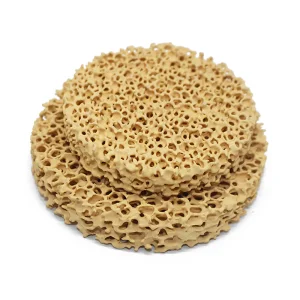
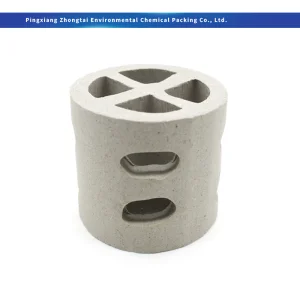
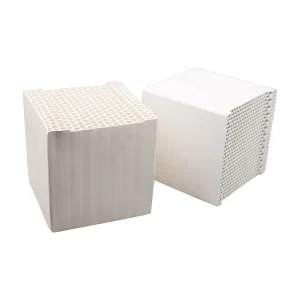
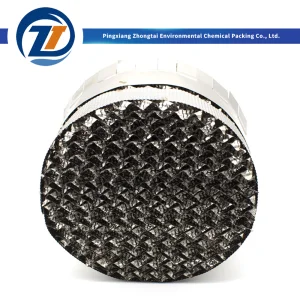
Engineered ceramic components, metal structured corrugations, and foundry filtration media designed for comprehensive industrial plant revamps.
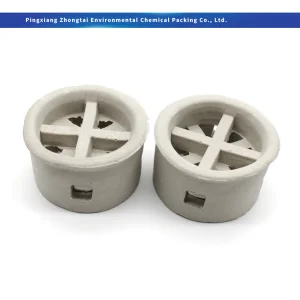
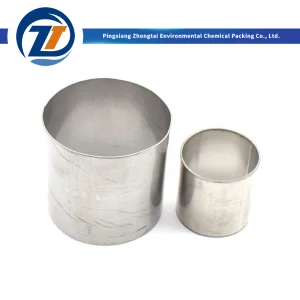
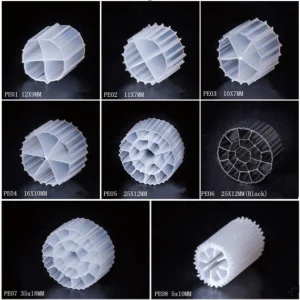
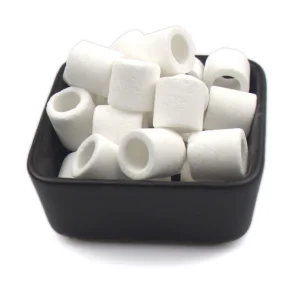
Submit your reactor dimensions, operating temperature profiles, process gas compositions, or request complete physical samples with factory batch inspection certificates (XRF, XRD, CCS).
