Explore our premium OEM products engineered for high-performance chemical towers, air separation units, and environmental filtration systems.
Analyzing the technological transition from conventional air separation techniques to high-efficiency Pressure Swing Adsorption (PSA) molecular sieves.
The global industrial and medical oxygen sector is undergoing an unprecedented technological evolution. Historically reliant on energy-intensive cryogenic distillation units, global enterprise buyers, hospital engineering boards, and industrial plant operators are rapidly transitioning to decentralized Pressure Swing Adsorption (PSA) and Vacuum Pressure Swing Adsorption (VPSA) systems. At the core of this transformation lies synthetic zeolite molecular sieve technology.
Synthetic zeolites—crystalline aluminosilicates characterized by uniform pore networks and localized electrical charge fields—act as the selective adsorption engine in modern oxygen concentrators. By preferentially co-adsorbing nitrogen ($N_2$) molecules over oxygen ($O_2$) under positive pressure, zeolite beds facilitate continuous high-purity (93% ± 3% to 95.5%) oxygen gas generation directly from atmospheric air.
The global market is shifting decisively from legacy Sodium-X (13X) to Lithium-exchanged Low Silica X (Li-LSX) zeolites. Li-X offers nearly triple the nitrogen adsorption capacity, enabling a 50% reduction in concentrator footprint and lower energy consumption per $\text{Nm}^3$ of $O_2$.
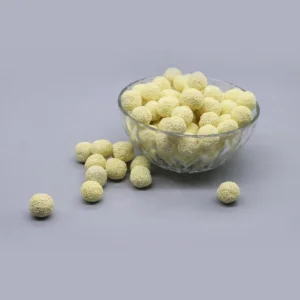
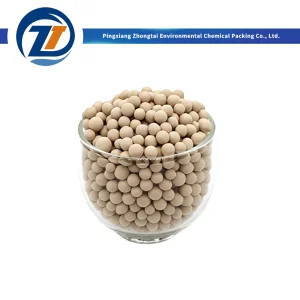
Miniaturization in healthcare has driven the demand for ultra-precise micro-bead zeolite spheres (0.4mm – 0.8mm). High attrition resistance and fast adsorption kinetics permit ultra-rapid PSA cycling in portable medical oxygen concentrators (POCs).
Severe environmental regulations have expanded the commercial use of oxygen in oxy-fuel combustion, gold mining leaching, and industrial ozone production, accelerating wholesale bulk procurement of $N_2/O_2$ separation media worldwide.
Understanding quadrupole interaction, pore structure dimensions, and ion-exchange dynamics for enhanced $N_2$ retention.
The fundamental separation mechanism of zeolite oxygen concentrators relies on the difference between the quadrupole moment of atmospheric nitrogen ($1.52 \times 10^{-26} \text{ esu} \cdot \text{cm}^2$) and oxygen ($0.4 \times 10^{-26} \text{ esu} \cdot \text{cm}^2$). When air passes through an activated zeolite column, nitrogen molecules interact strongly with the exposed extra-framework cations ($Li^+$, $Na^+$, $Ca^{2+}$) inside the Faujasite (FAU) crystal lattice framework, trapping $N_2$ inside the supercages while letting $O_2$ pass through unhindered.
| Zeolite Parameter / Grade | Sodium-X (Na-X / 13X-HP) | Calcium-X (Ca-X / 5A Special) | Lithium Low-Silica X (Li-LSX) |
|---|---|---|---|
| Crystal Structure | FAU (Si/Al ratio ≈ 1.25) | LTA / FAU hybrid | FAU (Si/Al ratio = 1.00) |
| Primary Exchanged Cation | $Na^+$ (Sodium) | $Ca^{2+}$ (Calcium) | $Li^+$ ($\ge 98\%$ Lithium Exchanged) |
| Nominal Pore Diameter | ~ 9 Å (0.9 nm) | ~ 5 Å – 8 Å | ~ 10 Å (1.0 nm) |
| $N_2$ Adsorption Capacity ($\text{cm}^3/\text{g}$) | 8.5 – 11.0 $\text{cm}^3/\text{g}$ | 10.0 – 12.5 $\text{cm}^3/\text{g}$ | 20.0 – 26.0 $\text{cm}^3/\text{g}$ |
| $N_2/O_2$ Separation Selectivity | ~ 2.2 : 1 | ~ 2.6 : 1 | ~ 6.0 : 1 |
| Attrition / Crush Strength | $\ge 15 \text{ N/bead}$ | $\ge 18 \text{ N/bead}$ | $\ge 25 \text{ N/bead}$ |
| Optimal Cycle Speed | Standard (30s – 60s) | Moderate (20s – 40s) | Rapid / Micro-cycle (< 10s) |
| Primary Application Area | Standard Medical & Industrial PSA | High-Pressure Industrial Gas | Portable Oxygen Concentrators (POCs) & VPSA |
By engineering the Si/Al ratio down to a perfect 1.00 ratio (Low-Silica X), the number of aluminum tetrahedra—and consequently the charge balancing exchange sites—reaches its theoretical maximum. When exchanged with high-charge-density $Li^+$ cations, the electrostatic field gradient inside the ~10 Å cavities increases drastically, resulting in unprecedented nitrogen retention power at ambient pressures.
All zeolites possess a high affinity for polar water molecules ($H_2O$). Moisture contamination drastically degrades $N_2$ capacity. Advanced Chinese manufacturing lines implement integrated pre-drying and specialized binder systems (such as attenuated clays) to maintain pore access and mechanical stability over millions of pressure swing cycles.
How state-of-the-art synthetic chemical clusters yield superior batch-to-batch consistency and competitive wholesale pricing.
China's industrial chemical landscape has undergone a revolutionary shift towards Industry 4.0 smart manufacturing. Factory hubs in specialized zones (such as Pingxiang, Jiangxi) have unified raw material refining, hydrothermal synthesis, automated bead formation, high-temperature activation, and automated vacuum packaging under one seamless roof. This vertical integration provides overseas enterprise procurement leads with unmatched supply chain stability and quality assurance.
Computer-controlled hydro-thermal synthesis ensures 99.5%+ phase purity, eliminating un-reacted amorphous silica contaminants that reduce sieve performance.
Advanced centrifugal granulators produce spherical beads with tight size distributions ($\pm 0.05 \text{ mm}$), ensuring uniform bed packing without channeling.
Continuous rotary kilns operating at $600^\circ\text{C}+$ drive residual moisture below 0.5% wt, locking in maximum kinetic adsorption capacity.
Robotic lines vacuum-seal activated zeolites into airtight steel drums with inner foil liners immediately after thermal cooling.
Critical metrics that B2B purchasing agents and process engineers must evaluate before issuing a RFQ for zeolite molecular sieves.
Purchasing wholesale zeolite molecular sieves for oxygen concentrator production involves more than comparing initial price per metric ton. Sourcing teams must perform a comprehensive Total Cost of Ownership (TCO) assessment. Low-grade zeolites with poor attrition resistance generate internal dust, clogging downstream valves, corrupting oxygen purity sensors, and forcing costly system shutdowns.
Detailed field-use briefs detailing how specific zeolite formulations solve sector-specific gas separation challenges.
Requirement: Continuous supply of 93% ± 3% USP medical-grade oxygen under fluctuating ambient humidity and varying flow rates (1 L/min to 10 L/min for home care; 50–500 $\text{Nm}^3/\text{h}$ for hospitals).
Zeolite Recommendation: Micro-bead Li-X (0.4–0.8mm) for compact portable units to minimize weight and battery power usage; Standard 13X-HP or Ca-X (1.6–2.5mm) for hospital central PSA plants.
Requirement: Large-volume baseline oxygenation (80%–90% purity) to increase dissolved oxygen levels in commercial hatcheries, promoting stocking density and bio-security.
Zeolite Recommendation: Cost-optimized Sodium-X (13X-HP) zeolites delivering high air flow volume, robust moisture tolerance, and reliable continuous operation at minimal capital cost.
Requirement: Extremely dry, oxygen-enriched gas ($O_2 \ge 90\%$, dew point $\le -60^\circ\text{C}$) fed into corona-discharge ozone generators for water treatment and bleaching.
Zeolite Recommendation: High-purity Li-LSX paired with an upstream activated alumina guard bed to prevent moisture degradation and maintain maximum ozone conversion efficiency.
Requirement: Multi-ton daily VPSA oxygen supply for gold cyanidation leaching tanks, glass furnace flame enrichment, and steel cutting systems.
Zeolite Recommendation: High-efficiency Lithium-X molecular sieve beds engineered specifically for low-pressure VPSA systems, lowering overall electrical power consumption by up to 30%.
In-depth answers to common questions asked by process engineers, buyers, and technical equipment manufacturers.
Under ideal operating conditions—where intake air is thoroughly filtered for oil, dust, and dried to a dew point of $-40^\circ\text{C}$ to $-60^\circ\text{C}$—high-quality Chinese zeolite molecular sieves can operate efficiently for 8 to 10+ years (over 20,000 to 40,000 continuous operating hours) without significant capacity loss.
Lithium zeolite requires an advanced, multi-stage chemical exchange process using high-purity lithium salts to replace sodium ions within the crystal framework. Because lithium raw materials are costly and the process requires strict chemical control, Li-X carries a higher initial material price. However, because Li-X delivers nearly 300% of the nitrogen capacity of 13X, significantly less sieve volume and smaller equipment are required, ultimately reducing total system cost.
The leading causes of sudden purity degradation are: (1) Moisture Contamination due to dryer failure; (2) Oil Contamination from compressor seal failure which permanently blocks zeolite pores; (3) Mechanical Bed Settling/Attrition caused by inadequate bed spring tension, leading to gas channeling; and (4) Solenoid Valve Timing Errors disrupting cycle switching.
If zeolite has absorbed ambient moisture, it can often be thermally regenerated by baking it at $250^\circ\text{C} – 350^\circ\text{C}$ under a dry nitrogen purge or vacuum. However, if the sieve has been contaminated by oil droplets or liquid hydrocarbons, the pores become permanently carbonized and structural performance cannot be restored, necessitating complete sieve bed replacement.
Select 0.4mm – 0.8mm micro-beads for small, portable medical units requiring rapid cycle kinetics (< 5s per cycle) and compact beds. Select 1.3mm – 2.0mm or 1.6mm – 2.5mm spheres for medium to large-scale industrial PSA/VPSA plants where pressure drop across deep beds must be kept low.
Complete your plant order with factory-direct pricing on molecular sieves, ceramic foam filters, and catalyst support media.
Partner directly with China's leading chemical packing and molecular sieve manufacturer. Fast global delivery, full ISO quality certification, and engineering support.