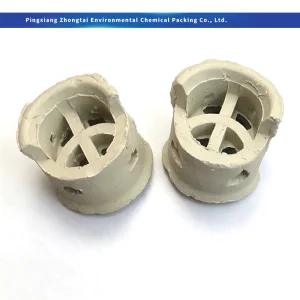
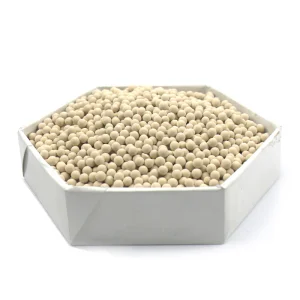
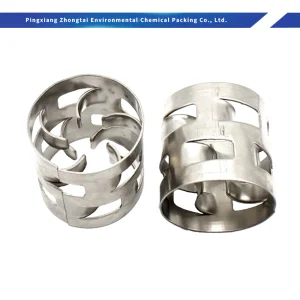
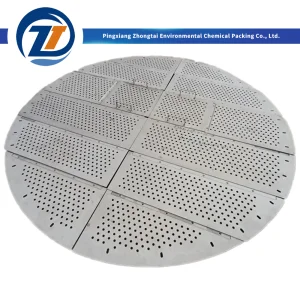
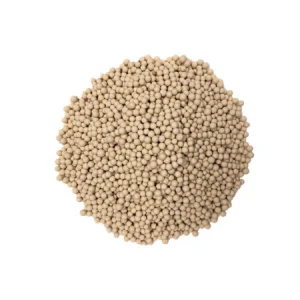
Explore high-performance ceramic foam filters, metal packing grids, heat storage honeycombs, and molecular sieves precision-fabricated in Pingxiang.
A rigorous examination of faujasite crystal geometry, nitrogen quadrupole interaction, and dynamic adsorption selectivity under variable cycle timing.
Zeolites used in Pressure Swing Adsorption (PSA) are crystalline hydrated aluminosilicates characterized by uniform three-dimensional pore architectures. Medical oxygen concentrators predominantly utilize Type X faujasite (FAU) structures with supercages approximating 11.8 Å connected by 12-ring windows of 7.4 Å aperture. This rigid crystalline skeleton ensures unhindered diffusion of atmospheric gases while retaining superior mechanical stability under cyclic pressurization.
Air separation on molecular sieves relies on physical electrostatic adsorption rather than kinetic sieving. Molecular nitrogen (N₂) possesses a permanent quadrupole moment of 1.52 × 10⁻⁴⁰ C·m², which is roughly three times greater than that of oxygen (0.39 × 10⁻⁴⁰ C·m²). When ambient compressed air passes through the zeolite bed, extra-framework cations (Li⁺, Na⁺, Ca²⁺) interact strongly with N₂, selectively retaining it within the crystalline cages while allowing neutral O₂ and Argon to pass through as enriched product gas (93% ± 3%).
Traditional Sodium-exchanged 13X (Na-FAU with Si/Al ratio ~1.25) provides reliable nitrogen capacity for standard 3L–5L stationary medical concentrators. In contrast, modern Lithium Low-Silica X (Li-LSX with Si/Al ~1.0 and >98% Li⁺ exchange degree) concentrates lithium cations directly at site SI' and SII, yielding an electric field gradient up to three times stronger than sodium, doubling N₂ adsorption capacity and facilitating portable micro-concentrator designs.
| Adsorbent Grade | Active Chemical Phase | N₂/O₂ Selectivity (α) | Dynamic N₂ Capacity (Nml/g @ 1 bar) | Bulk Density (g/ml) | Primary Industrial / Medical Application |
|---|---|---|---|---|---|
| Zeolite 5A | Ca/Na Aluminosilicate (LTA) | 2.2 – 2.6 | 8.0 – 9.5 | 0.68 – 0.72 | Small-scale PSA O₂ plants, hydrogen purification, syngas drying |
| Zeolite 13X APG / HP | Na-X Faujasite (FAU) | 3.0 – 3.4 | 11.0 – 14.5 | 0.62 – 0.66 | Stationary homecare concentrators (3L/5L/10L), air pre-purification |
| Lithium Zeolite (Li-X) | Li-LSX Faujasite (Si/Al ≈ 1.0) | 5.8 – 6.5 | 21.0 – 26.0 | 0.60 – 0.64 | High-efficiency portable concentrators (POCs), hospital PSA systems |
| Zeolite 4A Adsorbent | Sodium Aluminosilicate (LTA) | Non-selective (Kinetic) | < 2.0 (Moisture Guard) | 0.70 – 0.75 | Feed gas desiccant layer, guard beds to protect main Li-X charge |
Market benchmark pricing for container-load and OEM production batches. Raw material fluctuations, binder choices, and thermal activation protocols directly shape cost structures.
| Adsorbent Category | Bead Diameter (mm) | Order Volume: 1–5 Tons | Order Volume: 5–20 Tons | Order Volume: >20 Tons (FCL) | Standard Export Packaging |
|---|---|---|---|---|---|
| Zeolite 5A Commercial Grade | 1.6 – 2.5 mm | $1,850 / MT | $1,650 / MT | $1,450 / MT | 25 kg airtight iron drum / 500 kg jumbo bag |
| Zeolite 13X-HP Medical Grade | 0.4 – 0.8 mm / 1.6 – 2.5 mm | $3,800 / MT | $3,400 / MT | $2,950 / MT | Hermetic steel drum with N₂ blanket & desiccant |
| Lithium Zeolite (Li-X / Li-LSX) | 0.4 – 0.8 mm (POC micro-bead) | $26.00 / kg | $23.50 / kg | $19.80 / kg | Triple-laminated vacuum aluminum foil in steel drums |
| Lithium Zeolite (Li-X Industrial) | 1.3 – 2.0 mm (VPSA plants) | $23.00 / kg | $20.50 / kg | $17.50 / kg | Airtight drum with vacuum inner liner (50 kg net) |
From wearable clinical oxygen therapy to municipal effluent ozonation, our molecular sieves are tailored for specific gas kinetics, purge dynamics, and bed geometries.
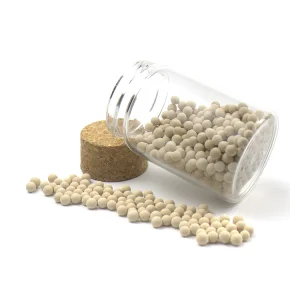
For battery-operated pulse-dose devices weighing under 2.5 kg, 0.4–0.8 mm Li-X micro-beads are the global industry standard. Their rapid mass transfer coefficient enables micro-second purge and repressurization cycles (10 to 30 seconds total cycle), delivering 90%+ pure O₂ with minimal power consumption from brushless DC compressors.
Centralized on-site medical gas systems replace cryogenic liquid oxygen or high-pressure cylinder logistics. Using 1.6–2.5 mm Li-X or 13X-HP in twin-column Skarstrom cycle configurations, these installations generate continuously monitored 93% ± 3% medical oxygen compliant with ISO 7396-1 and US Pharmacopeia (USP) monographs.
Industrial corona discharge ozone systems require dry, highly concentrated oxygen feed gas with dew points below -60°C to prevent nitric acid formation inside discharge dielectric tubes. Packed columns of Zeolite 13X APG and 4A ensure moisture and hydrocarbon scrubbing while enriching oxygen feedstock up to 95%.
Recirculating Aquaculture Systems (RAS) depend on constant dissolved oxygen (DO) saturation to sustain salmon, shrimp, and tilapia stocking densities. Cost-effective Zeolite 5A and 13X PSA generators deliver steady, low-cost oxygen streams without cryogenic delivery logistics in remote coastal installations.
Founded in 2003, Pingxiang Zhongtai Environmental Chemical Packing Co., Ltd. sits at the core of China's primary mass transfer and chemical packing production base.
Pingxiang's concentrated industrial ecosystem ensures immediate access to high-purity kaolin clay, sodium silicate, and alumina trihydrate within a 50 km logistics radius. This vertical integration buffers our synthesis lines against geopolitical raw material disruptions and raw salt price volatility, preserving lead time stability across large annual blanket orders.
Our Hi-Tech Industry Park facility features closed-loop hydro-thermal synthesis crystallizers, automated disk granulators, and tunnel kilns with ±2°C precision temperature control. Particle sizing for 0.4–0.8 mm micro-beads undergoes online laser diffraction inspection to eliminate undersized fines that cause downstream sieve bed dusting and valve clogging.
Situated in western Jiangxi with dedicated railway intermodal connections to Ningbo, Shanghai, and Shenzhen ports, Zhongtai executes seamless export fulfillment. Every consignment is protected by batch-specific Certificates of Analysis (COA), moisture titration reports, and verified export fumigation documentation for rapid customs clearance.
Market intelligence on respiratory healthcare demand, portable concentrator CAGR, and the rapid technological transition away from traditional sodium sieves.
Following unprecedented capacity expansion between 2020 and 2022, global demand for stationary home concentrators has settled into a stable, replacement-driven lifecycle growing at 6.8% CAGR through 2030. The post-pandemic landscape emphasizes durability, low noise (<38 dBA), and high energy efficiency, forcing OEMs to redesign PSA columns with higher-efficiency adsorbents to minimize compressor workload.
Portable Oxygen Concentrators (POCs) represent the fastest-growing market segment, outpacing stationary models at over 11.4% CAGR. End users demand sub-2 kg devices with 6+ hours of untethered operation. Standard 13X zeolite cannot fulfill these volumetric constraints; consequently, global Tier-1 device makers now specify high-purity Lithium-X exclusively for new model certifications.
Industrial oxygen consumers face rising electrical energy tariffs. Upgrading legacy Vacuum Pressure Swing Adsorption (VPSA) installations from 5A or 13X to advanced Li-LSX typically yields a 30% to 50% power consumption drop per ton of generated O₂. The resulting electricity savings routinely pay for the full adsorbent charge within 9 to 14 months of continuous operation.
Zhongtai's engineering research focuses on eliminating inert binders, engineering 3D monolithic adsorbents, and tailoring surface chemistry to resist humidity poisoning.
Conventional molecular sieve beads incorporate 15% to 20% clay binder (attapulgite or sepiolite) to maintain structural integrity. This inert material adds non-adsorptive dead volume. Zhongtai's latest binderless process converts the clay precursor directly into active crystalline Li-LSX through caustic aging, boosting nitrogen capacity per unit volume by an immediate 18%.
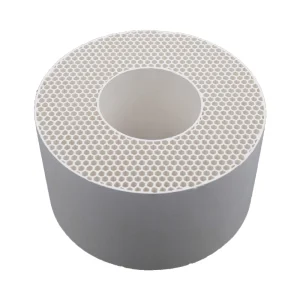
To eliminate bed fluidization, channel attrition, and the pressure drop intrinsic to random bead packing, our R&D team is piloting 3D-extruded zeolite honeycomb blocks. These monolithic channels provide direct laminar gas passage, allowing cycle frequencies above 60 cycles/minute (Rapid Cycle PSA) and enabling pocket-sized micro-concentrators.
Zeolite adsorbents possess an extreme thermodynamic affinity for H₂O; trace relative humidity rapidly deactivates Nitrogen adsorption sites. Next-generation research targets silanized hydrophobic outer crystal shells that repel water vapor while permitting unimpeded passage of N₂ and O₂, significantly prolonging sieve operating life in high-humidity tropical climates.
Medical separation materials require strict traceability, absence of particulate shedding, and biocompatibility verification before integration into patient-facing devices.
Gas produced across Zhongtai molecular sieves conforms to the Oxygen 93 Percent monographs established by the United States Pharmacopeia (USP) and European Pharmacopoeia (Ph. Eur.), limiting carbon monoxide to <5 ppm and carbon dioxide to <300 ppm.
Adsorbent filling is executed under climate-controlled cleanroom conditions (RH <15%). Materials are packaged in heavy-gauge steel drums with double-sealed multi-layer aluminum vacuum liners and inert Nitrogen blankets to ensure a guaranteed 24-month uncompromised shelf life.
Our quality management workflow maps to the risk assessment requirements of ISO 13485 medical device production. Every shipment carries a unique batch ID linked to raw bauxite lots, calcination thermal logs, and residual moisture titrations.
Mechanical crushing strength (>25 N/bead for 0.4–0.8 mm) is verified via compressive micro-strain gauges. This resilience prevents particulate dusting under continuous compressor vibration, protecting patient intake HEPA filters and solenoid seals.
In-depth technical answers for chemical process engineers, medical device OEM product managers, and industrial procurement teams.
Complete your plant installation with factory-direct random packing rings, distillation trays, and specialized catalyst bed support media.