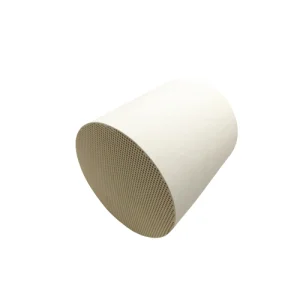
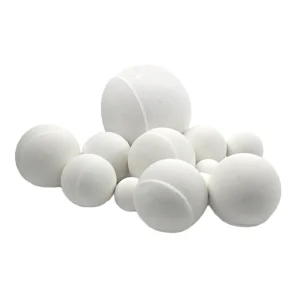
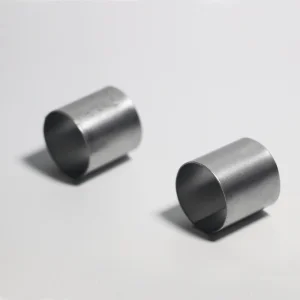
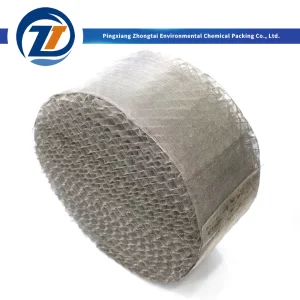
Explore high-performance chemical tower packings, molecular sieves, and honeycomb substrates engineered for rigorous industrial separation duties.

A comprehensive analysis of fluid dynamics, boundary layer renewal, and chemical resistance parameters for chemical process design engineers.
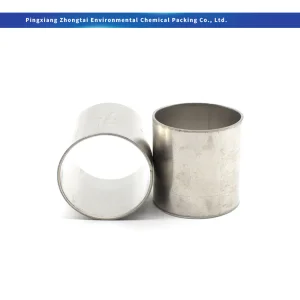
The Plastic Raschig Ring represents the foundational benchmark of random column packing geometry. Characterized by an aspect ratio where height equals outer diameter ($H/D = 1.0$), it presents an open cylindrical structure that facilitates gas-liquid contacting. In industrial absorption, stripping, and scrubbing columns, liquid trickles downwards over the inner and outer surfaces of the rings while gas ascends counter-currently through the void fraction.
Compared to traditional ceramic or metallic equivalents, plastic Raschig rings exhibit outstanding specific void volume (typically ranging between 85% to 92%), significantly diminishing pressure drop ($\Delta P$) across packed beds. The thin-wall polymer injection molding reduces dead-weight loading on column internals and support grids, avoiding the risk of mechanical packing collapse under hydraulic load.
Selecting the optimal polymer resin is paramount to preventing thermal degradation, environmental stress cracking, and liquid-phase swelling. Chemical plants operate under diverse oxidative and corrosive conditions. Our production lines synthesize six distinct grade tiers:
| Nominal Size (mm / inch) | Dimensions (D × H × T) mm | Number per m³ (Pcs/m³) | Specific Surface Area (m²/m³) | Void Fraction (%) | Bulk Density (kg/m³ - PP) | Packing Factor ($a/\varepsilon^3$) m⁻¹ |
|---|---|---|---|---|---|---|
| 16 mm (5/8") | 16 × 16 × 1.0 | 215,000 | 340 | 87% | 115 | 510 |
| 25 mm (1") | 25 × 25 × 1.2 | 54,000 | 225 | 90% | 92 | 310 |
| 38 mm (1.5") | 38 × 38 × 1.5 | 15,500 | 145 | 91% | 84 | 190 |
| 50 mm (2") | 50 × 50 × 1.8 | 6,500 | 110 | 92% | 75 | 140 |
| 76 mm (3") | 76 × 76 × 2.5 | 1,950 | 75 | 93% | 62 | 95 |
Engineering Note on Liquid Distribution: For optimal mass transfer efficiency with Plastic Raschig Rings, the ratio of column diameter ($D_c$) to packing nominal size ($d_p$) should ideally exceed 10:1 ($D_c / d_p > 10$). Below this threshold, liquid wall channeling effects increase exponentially, necessitating intermediate liquid redistributor trays every 3 to 4 bed diameters.
How Tier-1 chemical EPC contractors, plant operators, and industrial distributors mitigate sourcing risks and optimize Total Cost of Ownership (TCO).
Global procurement teams in North America, Europe, and the Middle East require strict verification that plastic packing is manufactured from 100% virgin polymer resin without unblended scrap contamination. Recycled regrind plastics introduce structural micro-fissures and unpredictable thermal stress degradation under aggressive solvent exposure. Direct factory certification (RoHS, REACH SVHC, FDA compliance) ensures long-term bed stability without mechanical collapse.
Industrial procurement demands comprehensive quality assurance dossiers prior to vessel loading. Factory inspection protocols must encompass bulk density measurement, crushing strength verification (radial compression testing), melt flow index (MFI) monitoring, and dimensional tolerance checks ($\pm 0.5\text{ mm}$). EPC contractors rely on EN 10204 3.1 material certificates for seamless plant commissioning audit compliance.
Volumetric shipping costs for random column packings can heavily impact landed cost. Advanced manufacturing suppliers utilize automated compression bagging systems and reinforced woven jumbo bags (1 m³ or 1.5 m³ capacity) on ISPM-15 compliant heat-treated wooden or plastic pallets. Container space optimization allows loading up to 65–70 m³ of plastic Raschig rings per 40HQ container, dramatically trimming sea freight overhead per cubic meter.
Leveraging Pingxiang’s global hub status for chemical tower packing and ceramic media production.
Pingxiang City, Jiangxi Province, stands as the premier global production epicenter for environmental chemical packing. Operating within this specialized industrial cluster provides unprecedented supply chain velocity. Raw resin sourcing (Sinopec/PetroChina premium virgin polymers), precision injection mold making, and high-speed automated molding lines reside within a 15-kilometer operational radius.
This geographic concentration eliminates multi-tier middleman markups, secures wholesale price competitiveness, and enables rapid factory scale-up—allowing output capacity exceeding 50 cubic meters per day for urgent refinery shutdown revamps.
Modern Chinese manufacturing facilities deploy multi-cavity high-speed injection machines coupled with robotic pick-and-place systems. Tooling design incorporates balanced runner systems and optimized multi-point hot runner gates to prevent weld-line weakness on the ring perimeter.
Furthermore, fully equipped in-house testing laboratories continuously validate crush resistance under simulated bed pressure, ensuring zero ring deformation even when installed in deep packed beds up to 10 meters in height.
Customized chemical mass transfer solutions engineered for diverse industrial sectors and stringent environmental regulations.
In wet chlorine absorption and hypochlorite neutralization towers, metal packing corrodes rapidly while ceramic is vulnerable to alkaline shock. CPVC and PVDF Plastic Raschig Rings provide exceptional resistance to wet $\text{Cl}_2$ gas and caustic soda ($\text{NaOH}$) spray. They ensure compliant tail gas scrubbing under US EPA Clean Air Act and EU Industrial Emissions Directive (IED) frameworks.
Municipal wastewater treatment facilities and chemical processing plants utilize polypropylene Raschig rings in packed air strippers to remove volatile organic compounds (VOCs), hydrogen sulfide ($\text{H}_2\text{S}$), and ammonia ($\text{NH}_3$) from effluent streams. High void fraction guarantees low blower energy consumption, directly lowering operational power expenses.
Marine Flue Gas Desulfurization (FGD) scrubbers aboard modern ocean cargo vessels operate under harsh marine environments. Lightweight plastic Raschig rings reduce top-heavy vessel weight while withstanding continuous seawater corrosion, helping ship operators comply with IMO 2020 sulfur cap emissions limits.
The evolution of random packing: From classical Raschig geometry to bio-based polymers and CFD-guided mass transfer modeling.
As chemical conglomerates target Net-Zero carbon goals, raw material research is pivoting toward bio-based polypropylene (derived from tall oil and waste fats) and chemically recycled post-industrial resins. Sustainable plastic packing must match the tensile strength, chemical resistance, and thermal endurance of traditional fossil-based polymers while cutting Scope 3 embedded carbon emissions by up to 40%.
Modern mass transfer engineering utilizes 3D Computational Fluid Dynamics (CFD) to analyze microscopic liquid film thickness and gas turbulence inside packed beds. While the classic Raschig ring remains the standard cost-efficient random packing, evolutionary hybrid geometries (such as internal cross-ribbing and wave-edged walls) are emerging to further suppress liquid channeling and minimize dead zone hold-up.
Comprehensive technical guidance on selecting, installing, and maintaining plastic column packings.
Explore our complete range of ceramic plates, metallic random packings, structured gauze media, and environmental substrates.