Explore our foundational range of certified mass transfer internals, ceramic refractory supports, and industrial filtration packing manufactured in our automated Pingxiang industrial park facilities.
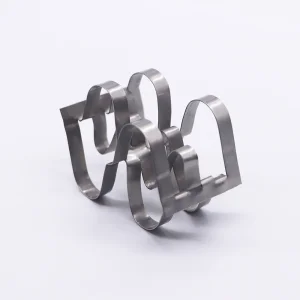
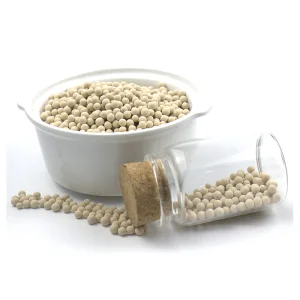
A rigorous industrial perspective on why modern chemical absorption, stripping, and scrubbers rely on modified cylindrical geometries to eliminate liquid channeling and reduce pressure drops.
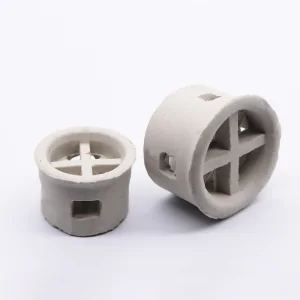
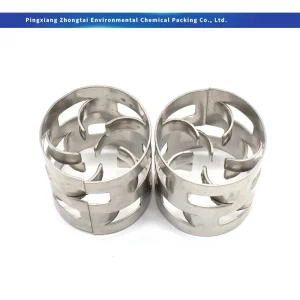
In mass transfer columns, random tower packing serves as the foundational contact interface between gas and liquid phases. The evolutionary breakthrough from traditional Raschig rings to the Plastic Pall Ring represents one of the most transformative developments in chemical process hydraulics. A classic Raschig ring presents an impervious cylindrical wall that impedes vapor dispersion and forces liquid film formation primarily onto its outer surfaces, creating dead zones and liquid stagnancy along the interior perimeter. Conversely, the Plastic Pall Ring utilizes an open-wall architecture incorporating inward-curved tongues (tabs) punched radially from the cylindrical perimeter.
This critical modification yields an immediate 100% to 150% increase in accessible surface area without increasing overall tower volume. By puncturing the solid wall with two tiers of slotted windows—each featuring ten internal curved fingers that project directly into the ring's core—vapor and liquid obtain unrestricted passage through the inner diameter. As down-flowing liquid strikes the internal curved tongues, it undergoes constant droplet atomization, shedding, and continuous surface film renewal. This mechanistic dynamic directly prevents liquid channeling (maldistribution), drastically lowers axial dispersion, and delivers exceptional gas-liquid contact efficiency even under fluctuating hydraulic loading rates.
Due to interstitial voidage exceeding 90%, plastic pall rings elevate flooding velocities by 25–40% compared to legacy ring configurations. This allows plant operators to expand tower throughput or retrofit existing shells without expensive vessel widening.
The inward-projecting tongues continuously slice vapor bubbles and break descending liquid streams into micro-droplets. This accelerates the surface renewal rate ($r = \sqrt{D \cdot s}$), maximizing both the liquid-phase ($k_L$) and gas-phase ($k_G$) mass transfer coefficients.
Internal radial tongues redirect liquid from column wall zones back toward the centerline of the packed bed, mitigating wall-flow migration and preserving balanced concentration gradients across column diameters up to 12 meters.
A precision comparison of virgin homopolymer and copolymer thermoplastics processed by certified wholesale factories for demanding chemical environments.
| Polymer Resin | Continuous Temp (°C) | Tensile Strength (MPa) | Chemical Resistance Scope | Key Industrial Applications |
|---|---|---|---|---|
| Polypropylene (PP) | -10 to +110 | 31 – 35 | Aqueous salts, dilute acids, alkalies, caustic washes | Acid gas scrubbers, municipal wastewater stripping |
| Reinforced PP (RPP) | -5 to +135 | 42 – 48 | Enhanced creep resistance, hot organic solvents | Hot ammoniacal scrubbers, refinery quenching |
| Polyethylene (PE) | -40 to +80 | 22 – 28 | Low-temperature impact resistance, non-polar acids | Cold brine degassing, cryogenic air scrubbers |
| Polyvinyl Chloride (PVC) | 0 to +60 | 45 – 55 | Oxidizing agents, wet chlorine, hypochlorite solutions | Chlor-alkali plants, electroplating exhaust towers |
| Chlorinated PVC (CPVC) | 0 to +95 | 50 – 58 | Concentrated hot inorganic acids, strong oxidizers | Hot chlorine gas absorption, pickling line scrubbers |
| Polyvinylidene Fluoride (PVDF) | -30 to +150 | 48 – 62 | Halogens, severe organic acids, nuclear solvents | Semiconductor ultrapure chemical stripping, bromine processing |
| Teflon (PTFE / PFA) | -180 to +260 | 25 – 35 | Universal chemical inertness, concentrated HF, oleum | Superheated fuming acids, hazardous waste incineration |
Long-term continuous operation in hot absorption columns imposes significant compressive stress on lower packing beds. Our factories utilize molecular weight-stabilized resins with anti-UV and heat stabilizers to eliminate bed crushing and collapse.
Hydrophobic polymers such as PP exhibit low surface tension. Zhongtai engineers introduce plasma and chemical oxidation surface texturing during precision molding to enhance the contact angle, encouraging broad thin-film liquid development.
Multi-cavity injection molds engineered with sub-10-micron tolerances prevent perimeter burrs or flash that would otherwise catch solid particulates, leading to fouling, clumping, and accelerated column scale formation.
Standard physical specifications across all nominal plastic pall ring diameters manufactured for wholesale and direct procurement.
| Nominal Size (mm / in) | Dimensions D×H×T (mm) | Number per m³ | Bulk Density (kg/m³, PP) | Specific Surface Area (m²/m³) | Void Fraction (%) | Dry Packing Factor (m⁻¹) |
|---|---|---|---|---|---|---|
| 16 mm (5/8") | 16 × 16 × 1.0 | 231,000 | 90 | 341 | 90.0 | 380 |
| 25 mm (1") | 25 × 25 × 1.2 | 52,000 | 65 | 228 | 92.5 | 175 |
| 38 mm (1.5") | 38 × 38 × 1.4 | 19,500 | 52 | 145 | 94.0 | 110 |
| 50 mm (2") | 50 × 50 × 1.5 | 6,500 | 42 | 112 | 95.5 | 85 |
| 76 mm (3") | 76 × 76 × 2.0 | 2,100 | 38 | 84 | 96.0 | 55 |
To avoid severe bypass phenomena where gas slips along vessel walls, process design standards dictate that the ratio of the tower diameter ($D_T$) to the nominal packing diameter ($d_p$) must strictly obey $D_T / d_p \ge 10$ to $15$. For instance, a column with an inner diameter of 1.2 meters should operate with packing sizes no larger than 50 mm or 76 mm. Exceeding this boundary allows preferential vapor channels that bypass liquid films, causing catastrophic spikes in the Height Equivalent to a Theoretical Plate (HETP).
Examining field-deployed process duties where wholesale plastic pall rings outlast traditional packings across severe continuous-duty regimes.
In municipal waste incineration and power generation scrubbers, PP and CPVC pall rings neutralize acidic streams containing $\text{SO}_2$, $\text{HCl}$, and $\text{HF}$. The non-clogging open structure resists particulate buildup from lime slurries and flue ashes, sustaining steady system backpressures under heavy continuous vapor loads.
In potable water treatment, forced-draft aeration towers packed with 50 mm food-grade virgin PP pall rings strip aggressive dissolved carbon dioxide ($\text{CO}_2$) and volatile organic compounds (VOCs). The high specific voidage facilitates extreme air-to-water ratios with low parasitic fan energy requirements.
Modern carbon capture pilot plants utilize alkali hydroxide or amine-based liquid contactors. High-surface-area 25 mm and 38 mm PP pall rings provide the extensive wetted surface necessary to accelerate fast pseudo-first-order chemical absorption of ultra-dilute atmospheric $\text{CO}_2$.
Large-scale commercial aquaculture hatcheries specify virgin polypropylene pall rings inside trickling biological filters. The smooth inert plastic provides non-toxic colonization surfaces for nitrifying bacteria ($\textit{Nitrosomonas}$ and $\textit{Nitrobacter}$) while the open interior prevents sludge bridging.
PVDF and CPVC pall rings are standard equipment inside chlorine drying columns contacting concentrated sulfuric acid ($98\%\ \text{H}_2\text{SO}_4$) and wet $\text{Cl}_2$ gas. These fluorinated and chlorinated matrices eliminate catastrophic stress cracking where metallic or lower-grade polymers fail.
Reinforced polypropylene (RPP) rings handle continuous high-temperature contact in sour water degasifiers, liberating hydrogen sulfide ($\text{H}_2\text{S}$) and ammonia ($\text{NH}_3$). RPP's heightened flexural modulus maintains structural stability up to 135°C under continuous steam purge.
Why procurement officers, EPC conglomerates, and chemical multinationals source bulk packing directly from Pingxiang's consolidated industrial ecosystem.
Located in Jiangxi Province, Pingxiang accounts for over 70% of the world's production capacity for chemical ceramic, metal, and plastic tower internals. This industrial concentration creates an unmatched geographical synergy. Upstream petrochemical polymer suppliers, high-precision CNC tool and die machining centers, and automated injection molding facilities exist within a 30-minute transportation radius.
For international EPC contractors, this tight cluster translates to unmatched lead times. While European or American mold shops often quote 8 to 14 weeks for custom tooling, our integrated manufacturing lines design, machine, test, and commission custom multi-cavity injection tooling in as little as 10 to 14 business days.
Our direct access to major Chinese sea ports (Shenzhen, Ningbo, Shanghai) coupled with direct rail networks into Central Asia and Europe (China-Europe Railway Express) ensures resilient logistics regardless of maritime disruption.
How next-generation computational modeling, circular economy polyolefins, and micro-surface functionalization are reshaping random tower packings.
Utilizing high-performance multiphase Computational Fluid Dynamics (CFD), current R&D efforts optimize the micro-curvature radius of inward fingers to prevent localized liquid entrapment and further depress two-phase frictional pressure drops.
Responding to strict EU ESG mandates, our plants now manufacture certified chemically recycled polypropylene (RPP) rings. These recycled grades retain >92% of the original mechanical tensile modulus while reducing embedded carbon by 40%.
Developing atmospheric plasma treatment regimens that graft oxygenated functional groups onto non-polar polyolefin surfaces. This drastically decreases liquid film contact angles from 85° down to <30°, ensuring complete wetting even at tiny irrigation rates.
Machine-vision automated injection workstations inspect ring geometries in real-time right off the mold. Sub-millimeter laser sensors instantly reject parts with flashing or warped tongues, ensuring 100% aerodynamic uniformity across wholesale shipments.
Adhering to strict international chemical apparatus standards: ASTM, ISO, REACH, and RoHS protocols verifying physical integrity before maritime container loading.
Every production batch undergoes randomized sampling tested against:
We facilitate on-site witness testing and third-party pre-shipment inspections by internationally accredited authorities:
Random packings are high-volume, low-density cargo. To ensure zero transit deformation while optimizing ocean freight container space, we offer:
A strategic buyer’s analysis of international regulatory drivers, lead time containment, and total cost of ownership (TCO) modeling.
Tightening Maximum Achievable Control Technology (MACT) limits under the Clean Air Act are driving chemical plants along the US Gulf Coast to expand scrubber capacities. Sourcing directly from high-volume Chinese factories enables refinery maintenance operators to slash revamp procurement expenses by 35–50% without compromising mass transfer performance.
European chemical parks in Germany, Belgium, and the Netherlands demand documented carbon footprints and circular materials. Zhongtai provides full life-cycle documentation, carbon footprint declarations per metric ton of packing, and REACH Annex XVII chemical safety dossiers.
Desalination vacuum deaeration and natural gas sour-gas treating complexes in Saudi Arabia, UAE, and Qatar order wholesale batches exceeding 1,000 m³. Our continuous high-output automated manufacturing guarantees swift 40-foot high-cube container batch dispatching.
Detailed technical answers addressing fluid mechanics, sizing criteria, chemical compatibility, and logistics for industrial process engineers.
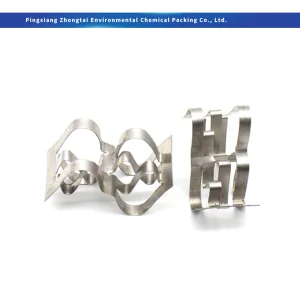
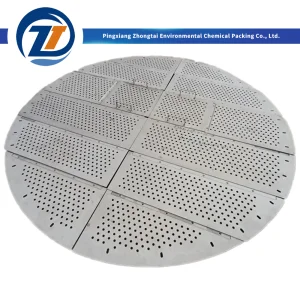
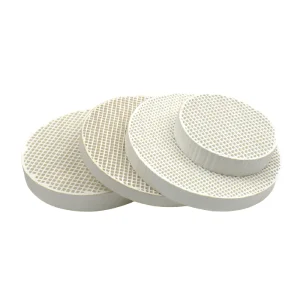
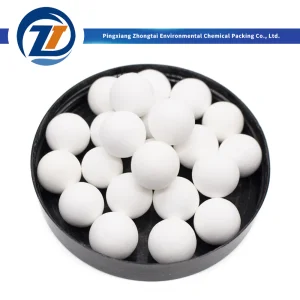
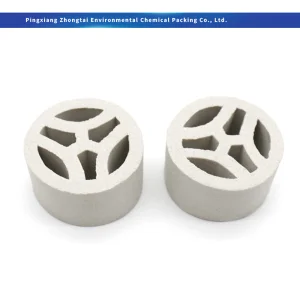
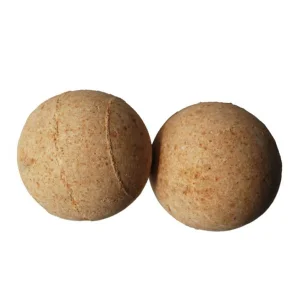
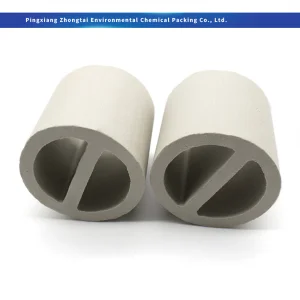
Complete your mass transfer column design with our high-grade stainless steel packings, heavy-duty acid-resistant ceramic rings, and wear-resistant catalyst support media.
Connect directly with our chemical engineering team in Pingxiang. Share your tower diameter, operating temperature, vapor-liquid loading rates, and corrosive medium to receive HETP simulations, packed volume calculations, and wholesale CIF/FOB pricing within 24 hours.
