Select engineered solutions direct from Pingxiang manufacturing center. Certified quality, custom pore tailoring, and bulk export capabilities.
Carbon dioxide (CO2) purification is a critical unit operation across petrochemical refining, natural gas sweetening, air separation, hydrogen synthesis, and bio-gas valorization. Molecular sieves—crystalline alkali metal aluminosilicates featuring uniform 3D pore networks—offer unparalleled selectivity and deep adsorption capability compared to liquid amine wash systems.
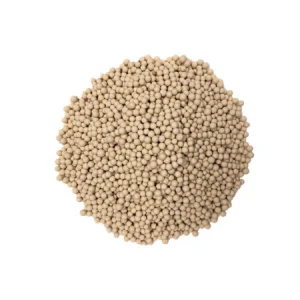
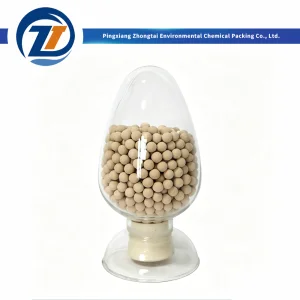
Engineered specifically for Air Separation Units (ASUs) and industrial CO2 scrubbers. Possesses a Na-X type structure with a pore aperture around 9-10 Å (0.9–1.0 nm). Exhibits exceptionally high static CO2 capacity (≥21% wt at 25°C) and superior CO2/N2 dynamic selectivity, eliminating CO2 freeze-up in downstream cryogenic heat exchangers.
Type 4A (sodium aluminosilicate, 4 Å pore) and Type 5A (calcium-exchanged, 5 Å pore) function as dual moisture-and-CO2 adsorbents in pressurized gas beds. Type 5A is particularly effective in Pressure Swing Adsorption (PSA) units for decarbonizing synthesis gas and reforming streams where molecule kinetic diameter differentiation is required.
Advanced lithium-exchanged (Li-X) and modified polar zeolites exploit quadrupole moment interaction with CO2 molecules. Under ambient temperature and moderate pressure, these specialized formulations enhance working capacity during Temperature Swing Adsorption (TSA) or Vacuum Swing Adsorption (VSA) cycles.
Unlike chemical absorption solutions (e.g., MEA/MDEA solvents) which require massive thermal energy for fluid circulation and liquid disposal, solid-state molecular sieve beds eliminate fluid corrosion, liquid carryover, and secondary chemical waste while achieving residual CO2 levels under 1.0 ppmv.
Key performance benchmarks delivered across major global energy, chemical, and gas processing operations.
The worldwide market for molecular sieves engineered for carbon dioxide capture and removal is undergoing explosive growth, driven by stringent net-zero policies, decarbonization mandates in petrochemical processing, rapid expansion of Liquefied Natural Gas (LNG) infrastructure, and the emergence of Direct Air Capture (DAC) technologies.
In LNG liquefaction trains, raw natural gas containing CO2 must be sweetened to under 50 ppmv (and typically <10 ppmv) to prevent dry ice formation inside cryogenic heat exchangers working at -161°C. 13X APG molecular sieve beds serve as the gold-standard polishing guard beds downstream of amine scrubbers or as standalone molecular sieve adsorption units.
With global initiatives targeting gigatonne-scale carbon dioxide removal from ambient air (~420 ppm CO2), novel low-enthalpy molecular sieves are replacing traditional amine-functionalized silicas. Alkali-cation modified zeolites provide high dynamic capacity, chemical stability against oxygen degradation, and thermal regeneration at moderate temperatures (80°C–120°C).
| Industrial Sector | Feed CO2 Concentration | Target CO2 Outlet | Recommended Molecular Sieve Grade | Regeneration Method |
|---|---|---|---|---|
| Air Separation Units (ASU) | 400 – 450 ppmv | < 1.0 ppmv | Zeolite 13X APG / APG II | TSA (Thermal Swing: 200–250°C) |
| LNG Liquefaction Pre-treatment | 0.5% – 3.0% vol | < 50 ppmv (< 10 optimal) | 13X APG / Formulated Dual Bed (4A + 13X) | TSA / PTSA |
| Biogas Upgrading (Bio-Methane) | 35% – 45% vol | < 1.5% vol / < 50 ppmv | Zeolite 13X / Modified 5A / Li-X | PSA / VSA (Vacuum Swing) |
| Hydrogen Purification (SMR Sync Gas) | 15% – 25% vol | < 10 ppmv | Zeolite 5A / 13X HP | PSA (Multi-Bed Cycle) |
| Direct Air Capture (DAC) | ~420 ppmv | < 50 ppmv | Amine-Functionalized / Modified NaX | TVSA (Thermal-Vacuum Swing) |
Why international EPC contractors, chemical plant operators, and industrial gas distributors procure molecular sieves directly from Pingxiang, Jiangxi—China’s premier chemical packing and synthetic zeolite cluster.
Direct access to high-purity sodium silicate and aluminum hydroxide sources within the Jiangxi industrial corridor guarantees consistent chemical stoichiometry during zeolite crystallization. This structural homogeneity maximizes pore volume and static CO2 adsorption capacity while reducing cost per metric ton.
State-of-the-art continuous tunnel kilns and spray granulation towers utilize precision temperature profile loops (±2°C accuracy). This eliminates under-calcined or over-vitrified beads, resulting in uniform particle diameter distribution (1.6–2.5mm / 3.0–5.0mm) and ultra-low attrition loss during high-velocity gas bed loading.
Every wholesale production batch undergoes comprehensive quality control testing, including static and dynamic CO2 break-through testing, bulk density, crush strength (single particle & bulk crush), moisture content (< 1.5% wt upon packing), and helium density profiling prior to sealed drum packaging.
Molecular sieves tailored for specific reactor designs and process environments worldwide.
Challenge: Ambient air contains trace levels of CO2 (~420 ppm), H2O (humidity), and hydrocarbons (acetylene, C2-C4). In cryogenic air separation, CO2 freezes into solids at -56.6°C, clogging plate-fin heat exchangers and creating hazardous blockages.
Solution: Loading Zeolite 13X APG in dual-bed Temperature Swing Adsorption (TSA) purifiers. 13X APG co-adsorbs residual moisture and CO2 down to <0.5 ppmv, ensuring uninterrupted continuous run times of up to 36 months before bed reconditioning.
Challenge: Raw anaerobic digester gas or landfill biogas contains roughly 60% CH4 and 40% CO2, plus H2S and moisture. To meet natural gas grid injection or Bio-CNG transport standards, CO2 must be reduced to <1.5% vol.
Solution: Utilizing 4-Bed / 6-Bed PSA Systems filled with high-density Zeolite 13X or 5A. Under 6–8 bar operating pressure, CO2 is selectively adsorbed into the cage framework, yielding product methane purity of >97% with minimal methane loss (<1.5%).
Challenge: Synthesis gas downstream of water-gas shift reactors contains 15–20% CO2 alongside CO, CH4, and N2 in pure H2 streams.
Solution: Implementation of layered bed PSA design: Activated alumina at the inlet for water removal, followed by Zeolite 5A / 13X HP for co-adsorption of CO2 and CH4, delivering high-purity fuel-cell grade Hydrogen (>99.999%).
Challenge: CO2 acts as a severe catalyst poison in Ziegler-Natta and metallocene polymerization reactors. Cracked gas streams require CO2 reduction to under 1.0 ppmv.
Solution: Dedicated Molecular Sieve 13X APG Guard Beds operate continuously upstream of polymerization reactors, safeguarding multi-million dollar catalyst beds from permanent deactivation.
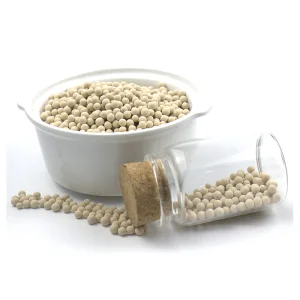
Wholesale pricing for molecular sieves used in CO2 removal depends on several technical specifications: zeolite structure (13X, 13X APG, 4A, 5A), particle geometry (spherical beads vs. cylindrical extrudates), size distribution (8x12 mesh / 1.6–2.5mm vs. 4x8 mesh / 3.0–5.0mm), binder composition (clay-bound vs. binderless), and order volume.
| Zeolite Specification | Form Factor | Standard Packaging | Est. Wholesale Price Range (FOB China) | Minimum Order Quantity (MOQ) |
|---|---|---|---|---|
| Zeolite 13X APG (ASU Grade) | 1.6 – 2.5 mm Beads | 150 kg Airtight Steel Drum / 1000 kg Super Sack | $1,850 – $2,450 / MT | 1 MT (Metric Ton) |
| Zeolite 13X APG (ASU Grade) | 3.0 – 5.0 mm Beads | 150 kg Steel Drum with PE Liner | $1,780 – $2,350 / MT | 1 MT |
| Zeolite 4A Industrial Grade | 1.6 – 2.5 mm / 3.0 – 5.0 mm | 25 kg Carton / 150 kg Drum | $1,250 – $1,650 / MT | 1 MT |
| Zeolite 5A PSA Grade | 1.6 – 2.5 mm Spheres | 150 kg Airtight Drum | $1,600 – $2,150 / MT | 1 MT |
| Binderless High-Capacity 13X | 1.6 – 2.5 mm Spheres | Specialty Airtight Steel Drum | $2,800 – $3,600 / MT | 500 kg |
For molecular sieves dedicated to deep CO2 and H2O removal (<1 ppmv), hermetically sealed 150 kg steel drums with internal vacuum PE liners are strongly recommended. Super sacks (1000 kg) are suitable for fast turn-around vessel reloads where bed charging occurs immediately upon opening, preventing atmospheric moisture pre-adsorption.
The evolution of carbon capture materials is shifting toward lower regeneration energy, structured adsorbents, and high hydro-thermal resistance.
Standard molecular sieves contain 15–20% inert clay binder (kaolin/attenpulgite), which adds weight without participating in adsorption. Binderless synthetic zeolites convert the binder phase into active crystalline zeolite, yielding a 20% increase in static and dynamic CO2 capacity per unit volume.
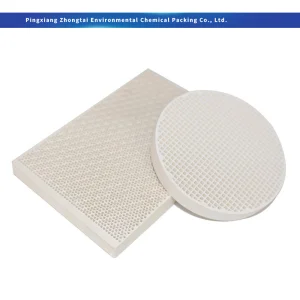
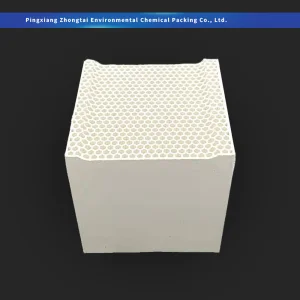
Replacing random packed beads with extruded cordierite/zeolite honeycomb monoliths dramatically reduces gas pressure drop across high-velocity contactors. This breakthrough is critical for Direct Air Capture (DAC) and flue gas CCUS applications handling millions of cubic meters of air per hour.
Emerging electrified regeneration technologies utilize conductive zeolite composites. By passing low-voltage electrical current directly through the adsorbent bed, thermal desorption of CO2 occurs uniformly in minutes rather than hours, cutting energy consumption by up to 35%.
Expert insights addressing common procurement, design, and operating queries from plant engineers and buyers.
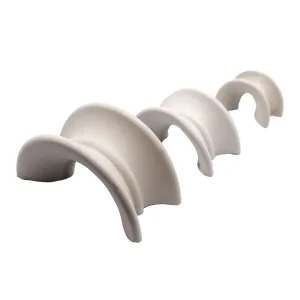
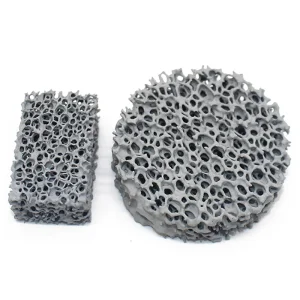
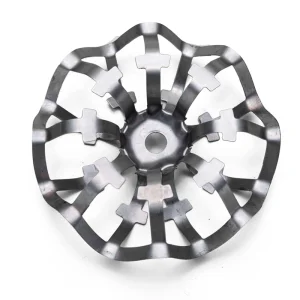
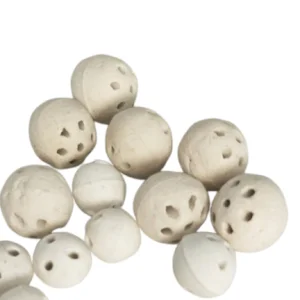
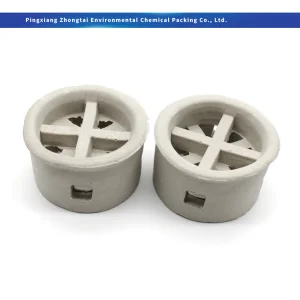
Explore additional chemical tower packings, structured media, and catalyst supports manufactured directly in our Pingxiang facilities.
Get direct factory pricing, technical data sheets (TDS), safety data sheets (MSDS), and sizing recommendations for your molecular sieve CO2 removal vessels.