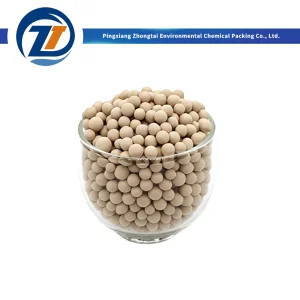
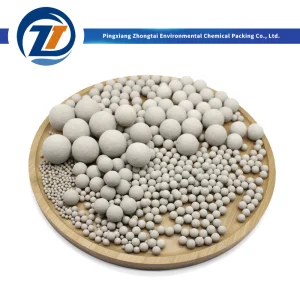
Engineered media manufactured in Pingxiang, China for rigorous chemical processing, catalyst bed protection, and industrial separation units.
Understanding the transition from conventional sodium-based 13X faujasite adsorbents to low-silica lithium-exchanged aluminosilicates for breakthrough air separation kinetics.
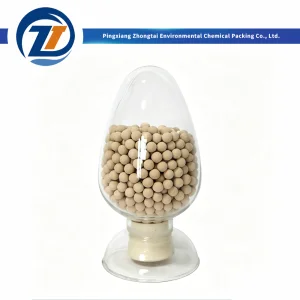
Standard synthetic Type X zeolites typically feature a Silicon-to-Aluminum (Si/Al) atomic ratio between 1.2 and 1.5. In contrast, advanced Li-LSX features a strictly managed Si/Al ratio of 1.0 ± 0.05. This structural configuration delivers the maximum thermodynamically allowed aluminum density in a Faujasite (FAU) framework, creating 96 anionic sites per unit cell to host exchangeable lithium cations.
Due to its extraordinarily small ionic radius (0.68 Å), the Li⁺ ion exhibits an intense local electrostatic field. When positioned within the accessible Site III' crystalline coordination rings, this concentrated field induces a powerful electrostatic interaction with the permanent quadrupole moment of nitrogen molecules (-4.9 × 10⁻⁴⁰ C·m²), far outstripping the weak interaction with non-polar oxygen.
By engineering the lithium cation exchange threshold beyond 99.0% of all accessible exchange sites, the nitrogen equilibrium adsorption capacity jumps to ≥24.0 ml/g at atmospheric pressure. The resulting N₂/O₂ separation selectivity ratio exceeds 6.2, enabling double the oxygen output per metric ton of bed volume compared to conventional CaA or 13X materials.
Thermodynamic Significance: The Henry's Law adsorption constant for nitrogen on fully exchanged Li-LSX is approximately 3 to 4 times higher than that of 13X. This creates an exceptionally steep initial isotherm curve, permitting pressure swing adsorption (PSA) and vacuum pressure swing adsorption (VPSA) systems to cycle within narrower pressure bands while cutting energy consumption per ton of oxygen produced by 25% to 38%.
Stringent Request for Proposal (RFP) criteria required by Tier-1 industrial gas operators, petrochemical plant EPCs, and medical device OEMs worldwide.
| Analytical Parameter | ZTAI-LiX Industrial Grade | ZTAI-LiX Medical Grade | Test Standard / Verification Protocol |
|---|---|---|---|
| Nominal Bead Geometry | Spherical (1.6 - 2.5 mm / 2.0 - 3.0 mm) | Micro-Spherical (0.4 - 0.8 mm / 1.3 - 2.0 mm) | Laser Diffraction / Optical Particle Sizing |
| Li⁺ Cation Exchange Degree | ≥ 99.0 mol % | ≥ 99.5 mol % | Inductively Coupled Plasma (ICP-OES) |
| Static Nitrogen Capacity (25°C, 100 kPa) | 23.5 - 25.0 ml/g | 24.5 - 26.5 ml/g | Volumetric Gas Sorption Isotherm (Micromeritics) |
| Dynamic N₂/O₂ Separation Factor (α) | ≥ 6.0 | ≥ 6.4 | Dual-Column Breakthrough Adsorption Rig |
| Bulk Density (Packed) | 0.62 - 0.66 g/ml | 0.64 - 0.68 g/ml | ASTM D2854 Tapped Density Analysis |
| Single-Bead Crush Strength | ≥ 18.0 N/bead (for 2.0mm) | ≥ 12.0 N/bead (for 0.6mm) | Digital Granule Strength Transducer (ASTM D4179) |
| Mechanical Attrition Resistance | ≤ 0.10 wt % | ≤ 0.05 wt % | Vibratory Air-Jet Mill / ASTM D4058 Equivalent |
| Residual Moisture Content (Packed) | ≤ 0.50 wt % | ≤ 0.30 wt % | Karl Fischer Coulometric Titration @ 550°C |
Procurement engineers must note that lithium molecular sieves possess extreme hygroscopic properties. Exposure to ambient air containing relative humidity above 15% will cause rapid degradation of the lithium coordination spheres through water molecule clustering, irrevocably attenuating nitrogen adsorption capacity. Pingxiang Zhongtai ships all lithium sieves under positive dry-nitrogen purge within airtight hermetic drums or high-barrier nitrogen-sealed foil containers.
How the chemical ceramics capital of China delivers unmatched cost efficiencies, raw material backward integration, and automated quality assurance.
Operating in Jiangxi Province—the center of China's lithium hydrometallurgical refining network—grants direct access to battery-grade lithium hydroxide and lithium chloride. Our multi-stage counter-current hydrothermal ion exchange process recycles mother liquor with 98.6% lithium recovery, keeping raw material costs insulated from global commodity market shocks.
Thermal activation is critical for clearing water without collapsing the delicate Li-LSX pore channels. Zhongtai operates fully digitalized rotary activation kilns regulated by distributed DCS systems. Multi-zone ramp schedules (from 150°C to 550°C under continuous counter-flow ultra-dry air purge) preserve complete crystallinity and eliminate framework dealumination.
Located in the Pingxiang Hi-Tech Industry Park, our production facility is embedded in a dense industrial ecosystem of inorganic clay suppliers, precision steel fabrication workshops, and mass transfer testing laboratories. This vertical synergy reduces inland supply chain lead times to under 48 hours for raw feedstocks, guaranteeing reliable export fulfillment.
Assessing macroeconomic structural shifts driving the replacement of legacy air separation units with modular Li-LSX adsorption beds.
Decarbonization in metallurgical smelting relies on oxygen enrichment in Electric Arc Furnaces (EAF) and basic oxygen furnaces. On-site VPSA oxygen generators using lithium molecular sieves produce 93% ± 2% purity oxygen at 0.32–0.38 kWh/Nm³, cutting specific energy demand by more than 30% compared to cryogenic plants under 20,000 Nm³/h capacity.
The global shift toward decentralized patient respiratory care has created surging demand for Portable Oxygen Concentrators (POC). These micro-systems require high-efficiency 0.4–0.8 mm lithium sieve beads capable of rapid cyclic operation (sub-second half-cycles) without fluidization or channel dusting, maximizing portable battery life.
While the initial procurement cost of Li-LSX molecular sieve is higher than legacy 13X or 5A media due to lithium carbonate prices, the amortized cost per cubic meter of delivered oxygen over a 10-year operating lifespan is reduced by up to 42%. Smaller blower sizing, lower compression ratios, and reduced vessel footprint drive major OPEX savings.
Examining field-proven process integration parameters across modern mass-transfer separation architectures.
Capacity: 500 to 10,000 Nm³/h per train.
Cycle Configuration: 2-bed or 3-bed Vacuum Pressure Swing Adsorption.
Operating Pressures: Adsorption at 105–135 kPa(a); Desorption vacuum at 35–45 kPa(a).
Key Benefit: Li-LSX allows shallow bed depths (0.8–1.5m), keeping overall pressure drop under 12 kPa while lowering mechanical compressor stress and preventing bed lifting.
Capacity: 3 to 10 Liters/minute (LPM) home units; 20 to 120 Nm³/h hospital manifolds.
Cycle Time: Rapid pressure swing cycling (3 to 12 seconds per phase).
Adsorbent Grade: Highly spherical 0.4–0.8 mm micro-beads.
Key Benefit: Superior volumetric mass transfer coefficients enable compact adsorption columns, reducing equipment weight and enabling whisper-quiet residential operation.
Process Duty: Producing 90–95% dry oxygen feed gas with dew point < -60°C.
Impact: Corona discharge ozone generators suffer cathode breakdown and nitrogen oxide (NOx) scaling when feed gas contains nitrogen above 8%. Li-LSX ensures stable, high-concentration oxygen feeds, doubling dielectric tube operational life.
In standard air separation vessels, incoming compressed air contains residual moisture and CO₂ that permanently poison lithium zeolite. A robust engineering design uses a composite bed configuration: bottom layer with activated alumina or 13X molecular sieve to capture moisture and CO₂ to <1 ppm, followed by high-purity Li-LSX for nitrogen separation. Pingxiang Zhongtai provides complete composite bed calculations and support media grading to optimize performance.
In-depth technical answers addressing operational mechanics, degradation limits, installation standards, and sourcing logistics.
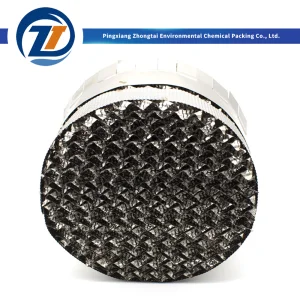
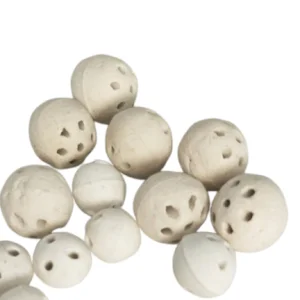
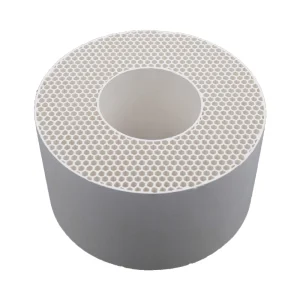
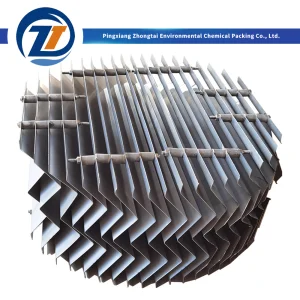
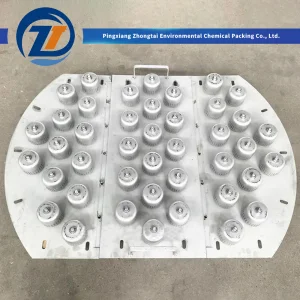
Explore complementary mass-transfer media, structured corrugated packings, mist eliminators, and catalyst bed support balls manufactured by Zhongtai.