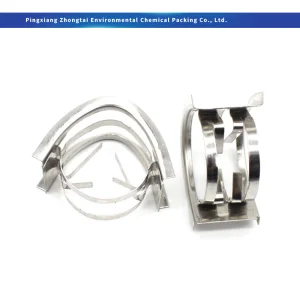
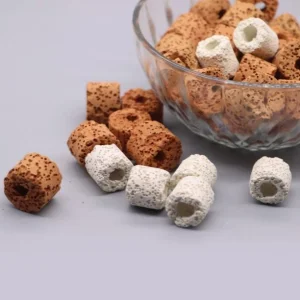
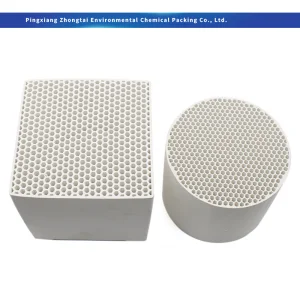
Precision-manufactured mass transfer and grinding components designed to maximize hydrodynamic surface area, withstand severe chemical corrosion, and deliver ultra-low contamination across processing reactors.
Evaluating kinetic energy transfer, fluid shear velocity, and the phase-transition dynamics driving modern nanogrinding and bead milling systems.
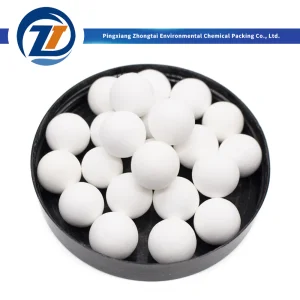
In the contemporary chemical process and materials science industries, comminution—the reduction of solid materials from macroscopic grain sizes down into sub-micron and nanometer dimensions—represents both the most energy-intensive and contamination-vulnerable operational phase. Across modern processing systems, the industry is witnessing a structural migration away from traditional tumbling ball mills and natural silica sand toward high-energy agitated bead mills (horizontal pin-type and disc-type systems). This technological leap requires micro-beads engineered with unprecedented density, crushing resilience, spherical roundness, and chemical inertness.
Kinetic comminution physics dictate that the energy transfer inside a stirred bead mill obeys the standard classical mechanic formulation: Ek = ½ m v2. Achieving efficient particle fracture without inducing excessive mechanical shear or thermal degradation hinges on optimizing the bead's specific density (ρ) and bead diameter (d). When grinding media exhibit high true density (e.g., 3.65 g/cm³ for 95% Al2O3 up to 6.05 g/cm³ for Yttria-Stabilized Zirconia), every rotor impact yields substantially higher kinetic momentum at equivalent peripheral tip speeds (8 to 14 m/s). This allows operators to run mills at reduced rotational velocities, conserving 18% to 34% in electricity while dramatically extending the wear life of polyurethane, ceramic, or silicon carbide mill chamber liners.
Precision microcrystalline ceramic beads prevent broad Gaussian tails in grinding slurries, delivering ultra-narrow D90/D50 ratios essential for lithium iron phosphate (LFP) cathode synthesis and MLCC dielectric films.
Narrow Span Index < 0.85Steel media introduce iron abrasion (Fe ppm) that poisons battery electrochemistry and catalytic converters. Sintered high-alumina and zirconia media ensure zero ferromagnetic inclusion and maintain extreme slurry purity.
Fe2O3 < 0.01% LimitsOptimized bulk density allows rapid breakdown of primary crystalline agglomerates. Reduces processing residence passes by up to 40%, preventing slurry viscosity runaway in high-solids fluid formulations.
Kinetic Transfer Eff. > 94%Comprehensive chemical composition, crystallographic phases, and mechanical testing benchmarks per ASTM C1327 and ISO 14704 standards.
| Media Grade | Composition (wt%) | Bulk Density (g/cm³) | True Density (g/cm³) | Vickers Hardness (HV10) | Crush Strength (Ø 2.0mm) | Typical Industrial Target |
|---|---|---|---|---|---|---|
| Alumina 92 (TA-92) | ≥ 92% Al2O3, SiO2 balance | 2.20 – 2.35 | ≥ 3.60 | ≥ 1,050 | ≥ 1,800 N | Mining & Glazes |
| Alumina 95 (TA-95) | ≥ 95% Al2O3, trace MgO | 2.30 – 2.45 | ≥ 3.68 | ≥ 1,200 | ≥ 2,200 N | Paints, TiO2, GCC |
| ZTA (Zirconia Toughened Al2O3) | 65% Al2O3 + 20% ZrO2 | 2.60 – 2.75 | ≥ 4.20 | ≥ 1,350 | ≥ 2,600 N | Agrochemicals & Coatings |
| Zirconium Silicate (ZS-65) | 65% ZrO2 + 33% SiO2 | 2.50 – 2.65 | ≥ 4.00 | ≥ 1,000 | ≥ 1,500 N | Industrial Minerals |
| Y-TZP (Yttria Micro-Beads) | 95% ZrO2 + 5.2% Y2O3 | 3.65 – 3.80 | ≥ 6.05 | ≥ 1,450 | ≥ 3,500 N | Battery Slurry & Nano |
| High-Purity 99.5 Alumina | ≥ 99.5% α-Al2O3 | 2.45 – 2.55 | ≥ 3.90 | ≥ 1,500 | ≥ 2,900 N | Catalyst & Pharma |
Pingxiang Zhongtai utilizes advanced isostatic rolling, drip-casting, and ultra-high-temperature computer-controlled tunnel kilns. The resulting micro-crystalline microstructure prevents trans-granular fractures, micro-spalling, and hollow pearl shell formation, ensuring sphericity (Ψ) remains above 0.98 throughout extended run cycles.
Direct factory volume brackets for global industrial purchasing directors, procurement engineers, and plant maintenance operations.
| Material Classification | Standard Bead Sizes (Ø mm) | MOQ (Metric Tons) | LCL Bracket (1 – 5 MT) | FCL Tier (20+ MT 1x20'GP) | Standard Export Packaging |
|---|---|---|---|---|---|
| Alumina 92% Media | 0.5 – 3.0 mm, 5 – 60 mm | 1.0 MT | $1,150 – $1,420 / MT | $950 – $1,180 / MT | 25 kg Poly-woven / 1.0 MT Bulk Bag |
| Alumina 95% Micro-Beads | 0.2 – 2.5 mm | 0.5 MT | $1,550 – $1,850 / MT | $1,320 – $1,550 / MT | 25 kg Steel Drum / Palletized |
| ZTA Toughened Beads | 0.4 – 3.0 mm | 0.5 MT | $3,800 – $4,600 / MT | $3,200 – $3,900 / MT | 25 kg Reinforced Drum / Vacuum Lined |
| Zirconium Silicate (ZS-65) | 0.6 – 3.0 mm | 1.0 MT | $2,600 – $3,100 / MT | $2,250 – $2,650 / MT | 25 kg PP Bag with Inner Moisture Barrier |
| Y-TZP Nano Zirconia (95%) | 0.05 – 2.0 mm | 0.1 MT (100 kg) | $28.00 – $38.00 / kg | $23.50 – $29.00 / kg | 25 kg Sealed Pails on Export Pallet |
Procuring grinding media based solely on FOB unit weight price is one of the most frequent calculation errors made by sourcing departments. In continuous nano-milling environments, media attrition drives a cascading sequence of plant-wide expenses. The True Cost of Media Consumption is defined by the following industrial formulation:
Where ΔWwear represents the media loss rate in ppm per run hour, Ekwh is motor shaft resistance governed by sphericity and spheroidal cohesion, Sscreen is the replacement frequency of downstream dynamic wedge-wire separator cartridges clogged by chipped beads, and Φreject corresponds to out-of-spec product batches contaminated by internal spalling voids.
Field verification demonstrates that although Y-TZP 95% zirconia micro-beads command a higher initial capital expenditure than 92% alumina, their attrition rate is 1/25th to 1/40th that of alumina. In high-value applications such as active cathode materials or automotive top-coats, our precision-sintered beads reduce overall milling expenditure per metric ton of processed slurry by 42.6% over a 12-month operational horizon.
Optimizing production throughput, color value, and electrical conductivity across Tier-1 advanced material sectors worldwide.
Used in East Asia and European Gigafactories for continuous wet processing of LFP, NCM precursor pastes, and carbon nanotube (CNT) conductive agents down to D50 ≤ 150 nm.
Y-TZP 0.1 – 0.6 mmEngineered for North American and European OEM automotive paint systems, UV flexo inks, and transparent pigments where zero micro-scratching and maximum gloss indices are required.
ZTA & 95 AluminaApplied in South American and Australasian processing of ground calcium carbonate (GCC), kaolin clay, and talc to achieve ISO 96%+ brightness without yellowing or iron contamination.
92% Alumina & ZSSuspension concentrates (SC), micro-encapsulated insecticides, and API biological disruption mills requiring ultra-clean, heavy-metal-free, FDA-sanctioned ceramic media contact surfaces.
99.5% High PurityBatch-level chemical verification, third-party testing protocols, and complete customs clearance documentation across international destinations.
Every sintering batch undergoes automated X-ray Fluorescence (XRF) and X-ray Diffraction (XRD) analysis to verify crystal phase structure (α-corundum vs. monoclinic/tetragonal zirconia) prior to packaging.
Beads pass through continuous optical sorting belts paired with laser diffraction measurement to guarantee diameter variances stay within ±0.05 mm, preventing mill discharge screen bridging.
Fully compliant with ISPM-15 fumigation standards, heat-sealed double PE anti-moisture liners, and heavy-duty UV-stabilized bulk bags rated for trans-oceanic transit and tropical warehousing.
Regulatory Compliance Standards: All ceramic grinding beads exported by Pingxiang Zhongtai conform to EU Regulation (EC) No 1907/2006 (REACH) concerning the Registration, Evaluation, Authorisation, and Restriction of Chemicals. Media shipments are verified to be free of Substances of Very High Concern (SVHC) and fully compliant with RoHS 3 (Directive 2015/863/EU) limits for lead, cadmium, mercury, and hexavalent chromium.
Forward-looking research vectors shaping next-generation microcrystalline ceramic synthesis, energy reduction, and sustainable circular recycling.
Development of continuous droplet titrating lines producing 0.03 mm to 0.08 mm Y-TZP beads for semiconductor polishing CMP slurries and next-generation solid-state battery electrolytes.
Target: D50 < 30nmTransitioning from natural-gas tunnel kilns to industrial microwave-assisted sintering, reducing carbon footprint by 58% while completely eliminating inter-granular thermal stress micro-voids.
Carbon-Neutral ProcessImplementing global spent-media buyback and refiring protocols, re-processing fractured high-alumina media into high-performance refractory monolithic castables and abrasive aggregates.
Circular Economy FrameworkOperational guidance on media selection, charge calculations, mill maintenance, and hydrodynamic optimization.
The proven engineering rule of thumb states that the grinding bead diameter should be approximately 10 to 20 times the initial feed D95 particle size, and 1,000 times larger than the desired target D50. For example, wet-milling a feed slurry with a D95 of 20 microns down to 0.8 microns requires beads between 0.3 mm and 0.6 mm. Employing oversized beads reduces contact frequency and energy efficiency, while undersized beads lack the kinetic mass needed to shatter coarse feed grains.
For horizontal pin-type and peg-type bead mills operating at tip speeds between 9 and 13 m/s, standard loading is typically 70% to 85% of net chamber volume. For disc-type mills, 80% to 85% is ideal. Overfilling (>88%) causes intense bead-on-bead collision, motor over-amperage, and rapid thermal escalation. Underfilling (<65%) leads to erratic media recirculation, inefficient energy transfer, and localized hydraulic bypass channeling.
The discharge separator screen gap or centrifugal separator clearance should typically measure one-third (1/3) to one-half (1/2) the nominal diameter of the smallest bead charged. If operating with 0.6 mm to 0.8 mm beads, your screen gap must not exceed 0.2 mm to 0.25 mm. Exceeding this ratio causes bead entrapment within screen slots, hydraulic pressure spikes, and potential media discharge into finished product holding vessels.
While 95% alumina is highly cost-effective for large-volume industrial minerals, coatings, and general ceramics, Y-TZP provides a density of 6.05 g/cm³ (vs. 3.68 g/cm³ for alumina) and a fracture toughness (>8.0 MPa·m½) that is more than double that of alumina. In high-viscosity formulations like battery slurries, high density permits faster milling speeds and smaller beads without causing hydraulic floating or bead cavitation.
Media breakage rarely stems from material defects when sourcing certified media; instead, it is typically caused by: 1) excessive rotor tip speeds (>15 m/s) with inadequate slurry flow, 2) dry running or severe cavitation, 3) contamination with rogue metallic foreign debris, or 4) pairing ultra-hard beads (such as Y-TZP) with inappropriate unlined cast-iron agitator discs that develop sharp, jagged burrs during wear.
Yes. Pingxiang Zhongtai supports complete OEM and ODM packaging workflows. We supply 25 kg steel or plastic drums, standard woven sacks, palletized Gaylord boxes, or 1.0 MT flexible intermediate bulk containers (FIBC jumbo bags) fitted with conductive ground discharge spouts for solvent-based explosion-proof milling bays.
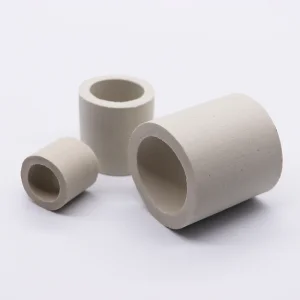
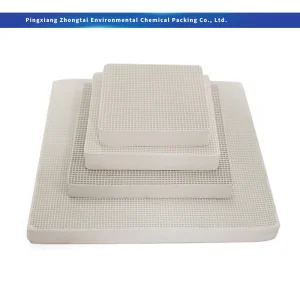
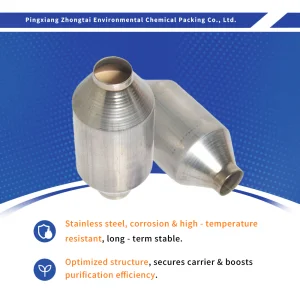
Engineered ceramic, metallic, and catalyst support products meeting high-temperature, acid-corrosion, and separation criteria in refining and chemical operations.
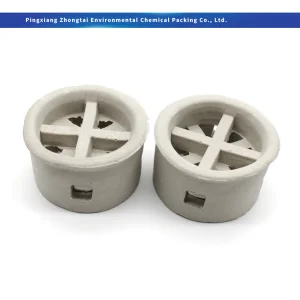
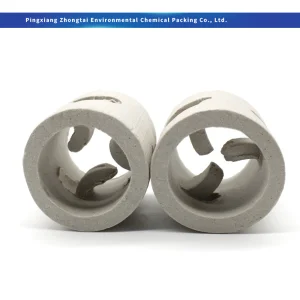
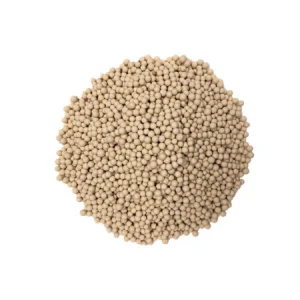
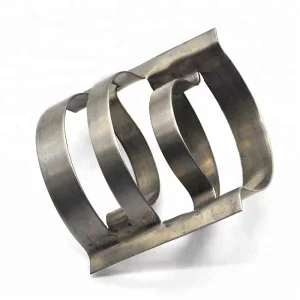
Request precise technical data sheets (TDS), complete batch inspection certificates (COA), or customized volume price quotations tailored to your operational specifications.
