Factory-direct engineered solutions for mass transfer, thermal storage, and catalyst support
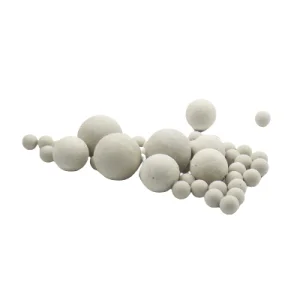
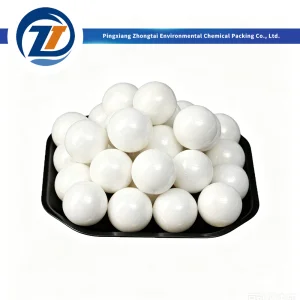
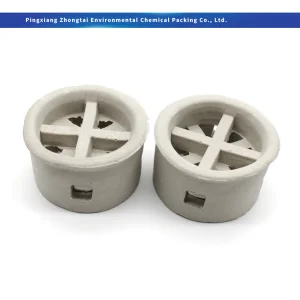
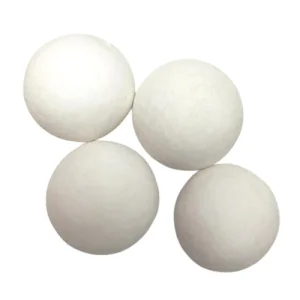
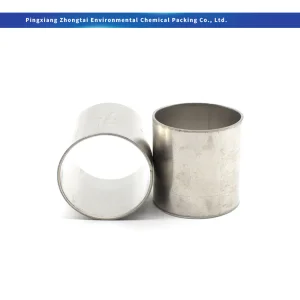
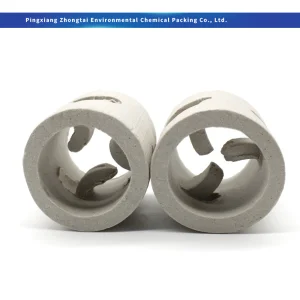
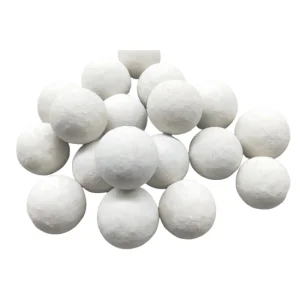
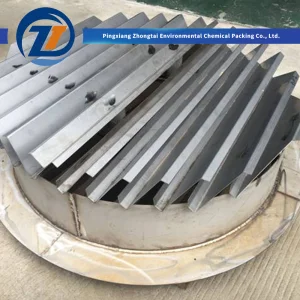
Industrial ceramic balls constitute the backbone of modern heterogeneous catalysis, mass transfer operations, and ultra-fine wet grinding systems across petrochemical, fertilizer, environmental protection, and metallurgical refining plants worldwide. As essential process components, these engineered spheres and packings provide mechanical stability, heat distribution, liquid retention control, and chemical inertness under extreme operating conditions.
The commercial landscape for ceramic media is experiencing structural realignment. Driven by expanding refinery hydro-processing capacity, decarbonization initiatives (such as green hydrogen and carbon capture scrubbers), and demand for ultra-pure chemical precursors, plant operators are moving away from traditional porcelain media toward high-performance alumina ($\text{Al}_2\text{O}_3$), yttria-stabilized zirconia ($\text{ZrO}_2$), and silicon carbide ($\text{SiC}$) formulations.
China, specifically the industrial cluster of Pingxiang in Jiangxi Province, accounts for over 65% of global chemical packing and ceramic ball production. As global supply chains prioritize resilience and verifiable quality standards (ISO 9001:2015, ASME compliance, and REACH regulation), leading Chinese manufacturers like Pingxiang Zhongtai Environmental Chemical Packing Co., Ltd. have integrated automated slip-casting, high-temperature tunnel kilns, and batch-level laser particle/crush testing to meet strict international procurement standards.
Selecting the appropriate ceramic ball specification requires a thorough understanding of chemical composition, crystalline phase transitions during firing, and physical behavior under process conditions.
| Grade Classification | Al₂O₃ Content (%) | SiO₂ Content (%) | Bulk Density (g/cm³) | Water Absorption (%) | Max Temp (°C) | Primary Application |
|---|---|---|---|---|---|---|
| Standard Inert Porcelain | 17% – 23% | 70% – 76% | 1.35 – 1.45 | ≤ 3.0 | 1050 | General catalyst bed support, fertilizer plants |
| Medium Alumina Inert | 23% – 30% | 65% – 72% | 1.45 – 1.55 | ≤ 2.0 | 1200 | Hydrotreating, gas drying, moderate pressure towers |
| High Alumina Grinding Media | 92% – 95% | ≤ 4.5% | 3.60 – 3.70 | ≤ 0.02 | 1550 | Fine wet/dry mineral milling, ceramic glaze grinding |
| Super High Alumina Inert | ≥ 99.5% | ≤ 0.1% | 2.00 – 2.10 (Bulk) | ≤ 0.2 | 1750 | Ethylene secondary reformers, high-temp steam service |
| Yttria Stabilized Zirconia (YSZ) | N/A (ZrO₂ 95%) | ≤ 0.05% | 6.00 (True) | 0.00 | 1350 | Ultra-fine pharmaceutical & nano-ink bead milling |
In hydrocracking, hydrodesulfurization (HDS), and reforming reactors operating above $350^\circ\text{C}$ with high-pressure steam, low-grade ceramic balls containing silica ($\text{SiO}_2$) undergo silica leaching. Free silica dissolves into the vapor phase, forming volatile silanols that travel downstream to deposit on active catalyst sites or compressor turbine blades, causing irreversible catalyst poisoning and plant downtime.
To prevent silica migration, process engineers specify 99% Alumina Ceramic Balls containing less than 0.1% $\text{SiO}_2$. The mineral structure consists entirely of dense, intertwined $\alpha$-alumina (corundum) crystals, providing high chemical inertia against hot alkalis, organic solvents, and strong inorganic acids (excluding hydrofluoric acid).
The chemical processing and industrial ceramic sectors are undergoing key technological shifts driven by strict environmental regulations, rising energy costs, and digital process optimization.
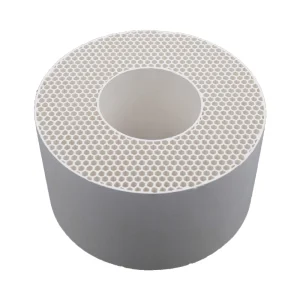
Thermal oxidizers (RTO/RCO) are replacing conventional flare systems. High-density cordierite and mullite honeycomb ceramics allow over 95% heat recovery, lowering natural gas consumption in industrial VOC abatement.
Modern pigment, battery material (LiFePO4), and semiconductor slurry processing demand zero-contamination milling. Yttria-stabilized zirconia (YSZ) beads under 0.1mm are replacing standard alumina to achieve nanometer particle sizes.
Leading Chinese exporters have introduced continuous tunnel kilns monitored by optical pyrometers and AI vision sorters. This eliminates internal voiding and ensures consistent crush strength batch after batch.
Implementation of hydrogen-blended natural gas kilns for firing ceramic media, alongside increased recycling of spent inert supports into refractory aggregates.
Development of 4th-generation ceramic cascade mini-rings and micro-channeled honeycomb structures designed to lower pressure drop ($\Delta P$) by an additional 18% in aggressive acid scrubbing services.
Integration of wireless ceramic micro-sensors embedded directly into support beds to provide real-time thermal gradient and flow-distribution metrics via IoT dashboards.
Achieving long catalyst life and optimal fluid distribution requires precise bed layering. Simply dumping ceramic balls into a vessel leads to fluid channeling, high pressure drop, and crushed catalyst particles.
In a standard downflow fixed-bed reactor, ceramic balls are arranged in layered sizes from largest at the bottom support grid to smallest adjacent to the active catalyst:
Process engineers use the modified Ergun equation to estimate pressure drop across a packed bed of spherical ceramic media:
Where $\Delta P/L$ is pressure drop per unit bed depth, $\mu$ is fluid viscosity, $\epsilon$ is bed void fraction (typically 0.38 – 0.40 for spherical ceramic balls), $v_s$ is superficial velocity, $\rho$ is fluid density, and $d_p$ is nominal ball diameter. Selecting smooth, highly spherical ceramic balls ensures a uniform void fraction ($\epsilon$), reducing localized high-velocity gas channeling.
Operating Context: High-sulfur crude processing requiring high-temperature ($>400^\circ\text{C}$), high-pressure ($>12 \text{ MPa}$) hydro-desulfurization units.
Solution: 23% and 99% Alumina inert ceramic balls installed in multi-bed hydrotreaters to withstand hot hydrogen and hydrogen sulfide ($\text{H}_2\text{S}$) corrosion without structural degradation.
Operating Context: Natural gas liquefaction plants requiring deep moisture removal down to $<0.1\text{ ppm}$.
Solution: 17% Al2O3 support balls paired with molecular sieve adsorbents (4A/13X) in dual-bed desiccant towers to withstand severe thermal cycling during desorption phases.
Operating Context: Aggressive $\text{SO}_2/\text{SO}_3$ gas absorption towers operating with concentrated sulfuric acid ($98\% \text{ H}_2\text{SO}_4$) at high velocities.
Solution: Acid- and heat-resistant ceramic Intalox saddles, Pall rings, and Cascade mini-rings designed for low pressure drop and high mass-transfer surface area.
Operating Context: Heavy calcium carbonate, kaolin, and titanium dioxide ($\text{TiO}_2$) grinding mills seeking to minimize media wear costs.
Solution: High-alumina (92% $\text{Al}_2\text{O}_3$) grinding balls and Yttria-Stabilized Zirconia beads, providing high density ($3.6+\text{ g/cm}^3$) and exceptionally low wear rates.
To maintain E-E-A-T compliance and meet international procurement audits (such as ISO, SGS, and BV inspections), industrial ceramic ball manufacturers must adhere to standardized laboratory testing protocols:
Single ceramic spheres are placed between hard steel platens on a hydraulic press. Force is applied at a uniform rate until failure. Minimum specified crush strength for a ½-inch 23% Al2O3 ball typically exceeds $1500 \text{ N/ball}$.
Samples are heated in a furnace to $800^\circ\text{C}$ for 2 hours, then quenched in water at $20^\circ\text{C}$. The cycle is repeated 10 consecutive times. The ceramic media must show no micro-cracking, spalling, or structural failure.
Boiling samples in 40% sulfuric acid and 10% sodium hydroxide solutions for 48 hours. Mass loss must remain under 0.5% for high-grade acid-proof ceramic formulations.
The main differences lie in crush strength, operating temperature limits, and silica leaching performance. 17% and 23% alumina balls contain a silica glass matrix suitable for general catalyst bed support at temperatures up to 1050°C–1200°C. 99% high-alumina balls are virtually silica-free (<0.1% SiO2), offering maximum chemical inertia against silica leaching in high-temperature steam reformers up to 1750°C.
Calculate the reactor's cross-sectional area ($A = \pi \cdot r^2$) and multiply by the designated height ($H$) of each graded layer to determine volume in cubic meters ($m^3$). Then multiply by the ceramic ball grade's bulk density (typically 1.35 – 1.55 metric tons/$m^3$ for inert balls) to determine the required ordering mass in metric tons, adding a 3-5% margin for handling loss.
Cascade mini-rings feature an aspect ratio (height-to-diameter ratio) of 1:3 or 1:2 rather than 1:1. This geometry forces the packing to orient horizontally in the tower, resulting in a lower pressure drop ($\Delta P$), higher liquid handling capacity, enhanced mass-transfer surface efficiency, and reduced risk of nesting compared to legacy Raschig rings.
High-density ceramic balls are packed in heavy-duty 25kg double-layered woven plastic bags or 1000kg flexible intermediate bulk containers (jumbo bags), secured on ISPM-15 compliant fumigated or non-wood plastic pallets, and shrink-wrapped. For high-purity zirconia beads, steel or plastic drums with internal padding are used.
While high-alumina balls can structurally withstand multiple cycles, reuse is generally discouraged unless balls are screened, thoroughly cleaned, and subjected to spot Cold Crush Strength (CCS) testing. Fine catalyst dust accumulation and thermal micro-fracturing can lead to premature degradation during subsequent operational cycles.
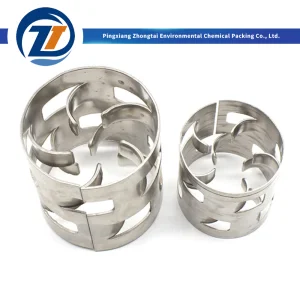
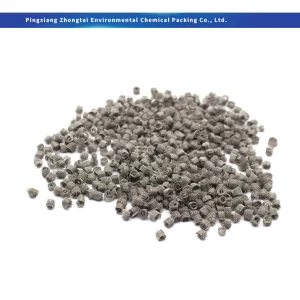
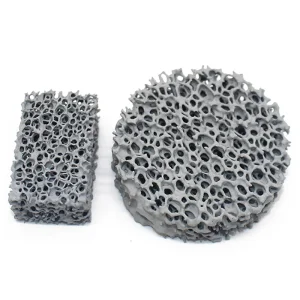
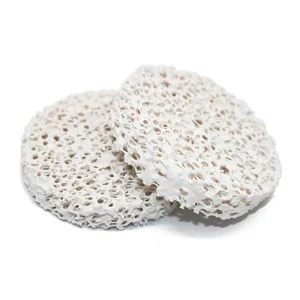
Explore our extended range of metal packings, structured elements, and foam filters