Factory-direct chemical porcelain, catalyst bed supports, random packing, and mass transfer solutions manufactured under stringent quality protocols.
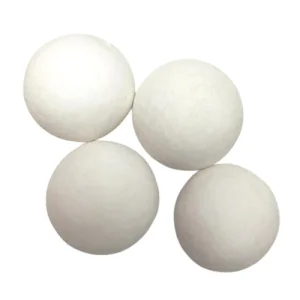
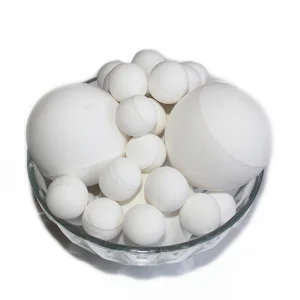
China 23% AL2O3 Inert Alumina Ceramic Ball support media porcelain balls Factory, Factories
View Product Details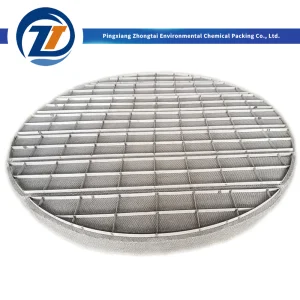
China 304 316L Stainless Steel Metal Wire Mesh Mist Eliminator Demister Pad for Chemical Scrubbing, Distillation & Gas-Liquid Separation Manufacturer, Factories
View Product Details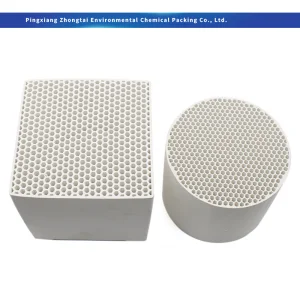
Wholesale Cordierite Honeycomb Ceramic Substrate (Catalyst Carrier/Monolith) for Automotive Exhaust & Industrial VOC Purification Manufacturer, Factories
View Product Details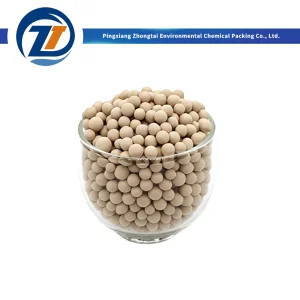
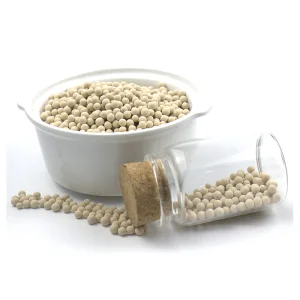
Wholesale High Performance 13X Molecular Sieve Zeolite Adsorbent for Air Separation and Cryogenic Purification Manufacturer, Factory
View Product Details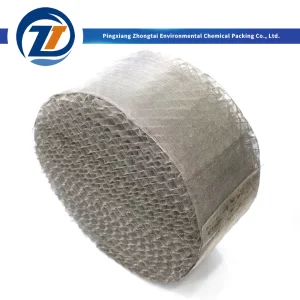
Wholesale High Efficiency 304 316L Metal Wire Gauze Structured Packing BX DX CY Type for Fine Chemical Distillation & Vacuum Columns Manufacturers, Factory
View Product Details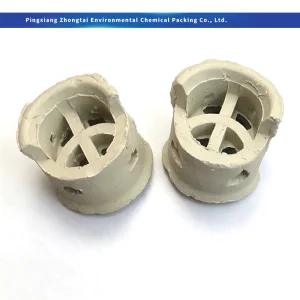
Wholesale Acid & Heat Resistant Ceramic Conjugate Ring Random Tower Packing 25mm 38mm 50mm 76mm for Chemical Absorption, Distillation & Scrubbing Supplier, Factories
View Product Details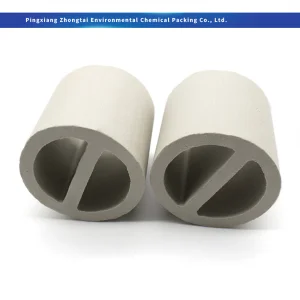
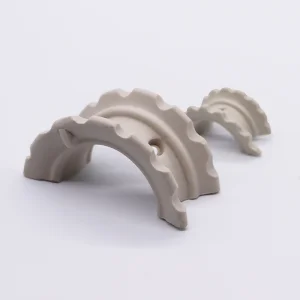
Wholesale Acid & Heat Resistant Ceramic Lessing Ring / Ceramic One-Partition Ring Tower Packing 50mm 80mm 100mm 120mm 150mm for Tower Bottom Support & Chemical Absorption Manufacturers, Suppliers
View Product DetailsAnalyzing market dynamics, shift toward high-purity alpha-alumina formulations, and the critical role of inert catalyst support in modern downstream refining.
In the modern process industries—spanning petroleum refining, petrochemical synthesis, fertilizer production, environmental protection, and fine chemical manufacturing—the operational integrity of fixed-bed reactors and mass transfer towers depends fundamental upon inert support media. Inert alumina ceramic balls serve as the unheralded workhorses of chemical reactors. Positioned at the top and bottom of catalyst beds, these spherical ceramic elements perform essential mechanical and hydrodynamic functions: preventing precious catalyst fines from migrating or crushing under bed weight, retaining feed distribution uniform across the cross-sectional area, and shielding delicate active catalysts from severe thermal shocks and fluid-dynamic turbulence.
The global industrial market for ceramic balls and chemical tower packing has undergone a massive paradigm shift. Historically centered around European and North American suppliers, procurement patterns have migrated decisively toward major Chinese industrial manufacturing clusters. Modern Chinese production hubs, specifically centered in Pingxiang, Jiangxi Province, have evolved from traditional stoneware workshops into advanced automated ceramic engineering centers. Today, global chemical conglomerates, EPC contractors, and refinery operators systematically source wholesale ceramic balls from qualified China suppliers to secure superior cost efficiency without compromising technical compliance against stringent ASTM, ISO, or ASME vessel standards.
Driven by global energy transitions, stricter environmental VOC abatement mandates (such as RTO thermal systems), and the rapid expansion of hydro-processing capacity (hydrotreating, hydrocracking, catalytic reforming), the engineering specification for ceramic media has tightened. Modern plant operators no longer treat ceramic spheres as simple commodity gravel; they evaluate them based on cold crush strength (CCS), hydrothermal aging resilience, crystalline phase composition ($\alpha$-Al₂O₃ vs. silica-mullite matrices), surface roughness, and silica leaching kinetics under high-temperature steam environments.
Technical breakdown of chemical composition, crystalline structures, mechanical thresholds, and silica-leaching performance metrics.
Inert ceramic support media are classified primarily by their total alumina ($\text{Al}_2\text{O}_3$) content, silica ($\text{SiO}_2$) ratio, and firing densification temperature. Selecting the optimal grade is a precise engineering trade-off between thermal resistance, crush strength, chemical inertness, and initial procurement expense.
| Ceramic Grade / Type | Al₂O₃ Content (%) | SiO₂ Content (%) | Water Absorption (%) | Bulk Density (g/cm³) | Max Operating Temp (°C) | Primary Application Service |
|---|---|---|---|---|---|---|
| Standard Chemical Porcelain | 23% – 30% | 65% – 72% | < 1.0% | 1.35 – 1.45 | 1050°C | Base catalyst support in standard acid absorbers, gas driers, and low-temp reactors. |
| Medium Alumina Inert | 40% – 65% | 30% – 55% | < 0.5% | 1.60 – 1.80 | 1250°C | Medium-pressure hydrotreaters, shift converters, secondary gas dehydration units. |
| High Alumina Media | 90% – 92% | 4% – 7% | < 0.2% | 2.05 – 2.15 | 1450°C | Abrasive grinding media, heavy hydrocracking bed top layers, high-velocity gas streams. |
| Ultra-High Purity Alpha-Alumina | ≥ 99.5% | < 0.1% | < 0.05% | 2.25 – 2.40 | 1650°C | Ethylene oxide, steam reformers, ammonia synthesis, high-temp steam service where silica poisoning is critical. |
Technical Focus: The Critical Danger of Silica Leaching in Steam Reactors
In high-temperature hydroprocessing and steam reforming reactors operating above 400°C in the presence of high-pressure steam, low-grade ceramic balls containing free silica ($\text{SiO}_2$) undergo hydrothermal leaching. Reactive silica reacts with water vapor to form volatile silicic acid $[\text{Si(OH)}_4]$, which travels downstream and deposits onto cooler catalyst surfaces or heat exchangers. This phenomenon causes irreversible catalyst pore blockage, rapid pressure drop spikes, and premature reactor shutdown. Therefore, specifying high-purity (99%+ $\text{Al}_2\text{O}_3$, silica < 0.1%) inert ceramic balls is mandatory for steam-rich synthesis operations.
The hydrodynamic performance of a packed bed governed by ceramic balls is modeled using the classical Ergun Equation, which accounts for pressure loss across a porous bed as a function of fluid velocity, fluid viscosity, fluid density, void fraction ($\epsilon$), and particle diameter ($d_p$):
$\frac{\Delta P}{L} = 150 \frac{(1-\epsilon)^2}{\epsilon^3} \frac{\mu v_s}{d_p^2} + 1.75 \frac{1-\epsilon}{\epsilon^3} \frac{\rho v_s^2}{d_p}$
To optimize fluid distribution while minimizing pressure drop ($\Delta P$), modern reactor vessel designs utilize multi-layered "gradated packing" configurations. The bed layers transition from larger ceramic sphere diameters (e.g., 50mm or 38mm) at the bottom support grid, stepping down incrementally through 25mm, 13mm, 6mm, to 3mm inert balls immediately contacting the active catalyst bed. This gradated sizing prevents small catalyst particles from sifting through support voids while ensuring an ideal void fraction gradient ($\epsilon \approx 0.38 - 0.42$) across the reactor column.
Why Chinese industrial ceramic manufacturers deliver unprecedented cost efficiency, quality consistency, and rapid global delivery turnaround.
Pingxiang, Jiangxi Province is globally recognized as the capital of chemical packing. Housing an end-to-end supply chain within a 30km radius—from high-grade kaolin clay mines and synthetic alumina refiners to specialized mold makers and test labs—operational overhead is minimized.
Continuous tunnel kilns operating 24/7/365 with automated computer temperature control ensure unmatched fuel efficiency and mass scale. Bulk purchasing of calcined $\alpha$-alumina raw powder lowers per-ton output costs by 25–40% relative to Western competitors.
Modern Chinese factories utilize automatic rolling sphere machines, laser particle size analyzers, digital cold crush strength testers, and optical sorting units. Every production lot undergoes rigorous sampling for water absorption, density, chemical assay, and crush limit tests.
Direct transport corridors to major ocean ports (Ningbo, Shanghai, Shenzhen) enable rapid container loading. Flexible packaging options include heavy-duty woven super-sacks (jumbo bags with bottom discharge), steel drums, micro-perforated moisture-proof plastic bags, or export wooden cases.
Cross-industry operational analysis: How inert ceramic balls and tower packings perform in real-world process environments.
Environment: High pressure (10–20 MPa), elevated temperature (350–450°C), H₂ and H₂S saturated oil vapor atmosphere.
Media Duty: 99% $\text{Al}_2\text{O}_3$ inert ceramic balls are loaded at top bed entry to absorb mechanical impacts during liquid feed surge, distribute gas-oil feed uniformly, and act as a hold-down layer preventing catalyst bed fluidization.
Environment: Concentrated $\text{H}_2\text{SO}_4$ (93%–98%), gas temperatures up to 250°C, highly oxidative acid mist.
Media Duty: Acid-resistant ceramic saddles (Intalox saddles, Raschig rings) and Lessing partition rings provide massive surface area for gas-liquid mass transfer while resisting chemical breakdown from boiling inorganic acid streams.
Environment: Rapid cyclic thermal shock heating/cooling (from 100°C to 1000°C every few minutes), industrial VOC vapor flow.
Media Duty: Cordierite or Mullite Honeycomb Ceramic media blocks store and exchange thermal energy at ultra-high efficiency (>95% heat recovery), significantly cutting natural gas usage in environmental exhaust abatement.
Environment: Deep moisture adsorption, high cyclic depressurization, nitrogen/oxygen separation under clean room standards.
Media Duty: Synthetic 13X / 3A Zeolite molecular sieves and activated alumina spheres dry process gases down to dew points below -70°C, supported by dense inert ceramic bottom beds that absorb mechanical pressure pulses.
Next-generation ceramic material developments, zero-carbon manufacturing kilns, and active-functionalized ceramic support geometries.
The industrial ceramics industry is undergoing rapid technical evolution driven by sustainability goals, process intensification, and digital quality monitoring. Leading Chinese manufacturers are investing heavily in research and development to pioneer next-generation media engineered for harsh future energy operations.
Traditional ceramic balls are purely inert passive physical supports. Future technical roadmaps introduce "functionalized inert media"—ceramic spheres engineered with controlled micro-porosity and trace metal dopants (e.g., Titanium, Zirconia, or Nickel micro-coatings). These active media perform preliminary demetallization, scale trapping, or guard-bed filtering of heavy metals (Arsenic, Vanadium, Nickel) before feed streams reach primary catalyst beds, extending main catalyst life by up to 30%.
While smooth spherical shapes remain standard, innovative structured shapes are gaining market share. Perforated ceramic spheres, multi-hole ceramic cylinders, and concave fluted ceramic media offer up to 15% higher void fractions without sacrificing crush strength. This geometry reduces reactor head loss, enabling refiners to boost throughput rates without exceeding blower or compressor pressure thresholds.
As green hydrogen production, ammonia-to-hydrogen cracking, and direct air carbon capture (DAC) scale globally, ceramic support media are being re-engineered to withstand pure hydrogen embrittlement hazards, extreme high-pressure thermal cycles, and amine-based solvent corrosion. Ultra-pure micro-grain alumina formulations are setting new benchmarks for hydro-thermal phase stability.
Chinese factories are replacing traditional natural gas kilns with green hydrogen-electric hybrid tunnel kilns, drastically lowering the embodied carbon footprint of exported ceramic products. Furthermore, inline AI-powered optical sorting systems inspect 100% of manufactured ceramic balls on high-speed conveyor belts, automatically rejecting spheres with surface micro-cracks, ovality deviations, or internal voids.
Ensuring seamless international procurement through rigorous testing standards, documentation, and site loading protocols.
Procuring wholesale chemical packing and ceramic media requires stringent verification to meet international plant safety standards. Reputable Chinese suppliers maintain comprehensive technical compliance systems certified by international inspection agencies.
Every shipment is backed by factory test certificates (MTC) and independent third-party laboratory verification (SGS, TÜV, Bureau Veritas) covering:
To prevent mechanical breakage during vessel installation, site engineers must enforce strict loading guidelines:
Technical and commercial answers for process engineers, plant buyers, and EPC procurement managers.
Explore our extended range of metal packings, activated alumina, zeolites, and high-porosity ceramic filters for industrial operations.
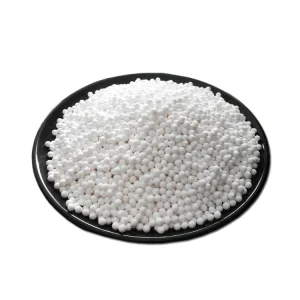
Wholesale Adsorbent Desiccant Activated Alumina Ball Manufacturer, Manufacturers
View Product Details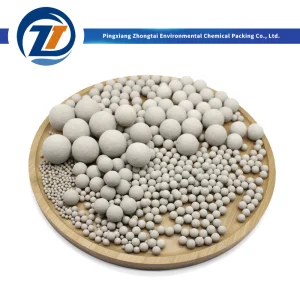
China High Purity Inert Alumina Ceramic Ball Catalyst Support Media for Petrochemical Industry Suppliers, Factory
View Product Details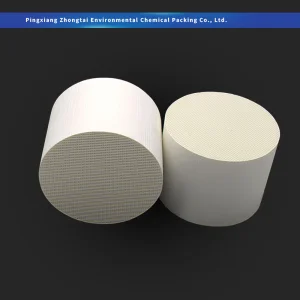
China Metal Honeycomb Catalyst Substrate | Ceramic-Coated Monolithic Structure Manufacturer, Suppliers
View Product Details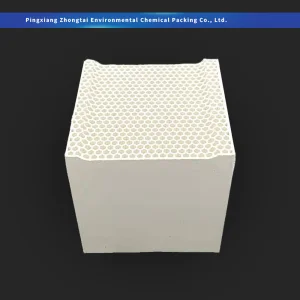
China Cordierite-Mullite Honeycomb for RTO/RCO | Advanced Thermal Storage Media Manufacturer, Suppliers
View Product Details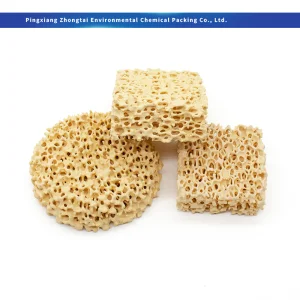
China High Porosity Ceramic Foam Filter (Alumina / SiC / Zirconia) 10-60 PPI for Foundry Molten Metal Filtration Manufacturer, Factories
View Product Details