Explore high-performance monoliths, bio-media, refractory ceramics, and molecular sieves direct from OEM factory lines.
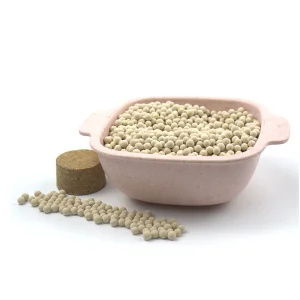
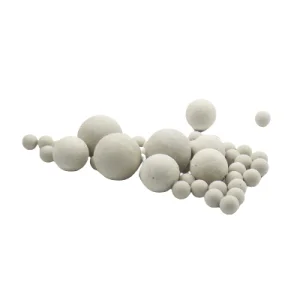
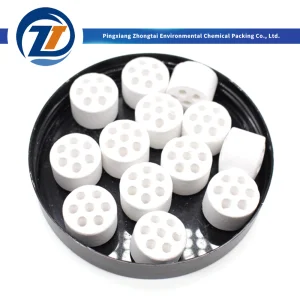
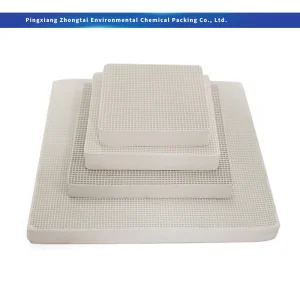
In modern industrial process engineering, the selection of molecular sieves is not merely a material acquisition task; it is a pivotal design decision that governs operational thermodynamic efficiency, bed lifecycle, and downstream purity parameters. Molecular sieves are crystalline, highly porous synthetic aluminosilicates belonging to the zeolite family. Their three-dimensional interconnecting framework consists of silica ($\text{SiO}_4$) and alumina ($\text{AlO}_4$) tetrahedra linked together by shared oxygen atoms.
This structural arrangement produces uniform pore diameters on a molecular scale (ranging precisely from 3 Ångströms to 10 Ångströms). Because the aluminum ion possesses a 3+ valence state within a 4-coordinate framework, the crystal lattice acquires a net negative charge. This charge is balanced by alkali or alkaline earth metal cations (such as $\text{Na}^+$, $\text{K}^+$, $\text{Ca}^{2+}$, or $\text{Li}^+$) situated within the pore channels. The spatial orientation, electrostatic field intensity, and exchangeable nature of these cations define the specific adsorption selectivity, polar molecule affinity, and kinetic separation behavior of each zeolite grade.
The primary mechanism underlying molecular sieve performance relies on two distinct physical phenomena: size exclusion (molecular sieving) and electrostatic adsorption (polarity and polarizability preference).
Analysis of evolving international procurement frameworks, green transition drivers, and high-purity gas supply chains.
Global net-zero mandates have accelerated wholesale demand for specialized 3A and 4A synthetic zeolites used in syngas polishing, carbon capture sequestration (CCS), and ultra-pure hydrogen purification beds for fuel-cell infrastructure.
The medical and metallurgical sectors are rapidly shifting toward high-efficiency 13X-HP and Lithium-exchanged molecular sieves (Li-X). These advanced zeolites deliver up to 300% higher $\text{N}_2$ adsorption capacity compared to legacy sodium-based zeolites.
Deep-freeze natural gas processing plants demand molecular sieves with exceptionally low attrition rates and high thermal stability to endure thousands of thermal swing adsorption (TSA) regeneration cycles without dusting.
Direct engineering metrics for process designers, EPC consultants, and bulk procurement officers.
| Zeolite Type | Nominal Cation | Pore Opening | Static Water Adsorption | Bulk Density (g/ml) | Crush Strength (Bead) | Primary Industrial Applications |
|---|---|---|---|---|---|---|
| Type 3A | Potassium ($\text{K}^+$) | ~3 Å | ≥ 21.5% | 0.68 - 0.74 | ≥ 40 N (1.6-2.5mm) | Ethylene, Cracked Gas & Ethanol Dehydration |
| Type 4A | Sodium ($\text{Na}^+$) | ~4 Å | ≥ 22.0% | 0.68 - 0.73 | ≥ 45 N (1.6-2.5mm) | Air Compressor Drying, Refrigerant Systems |
| Type 5A | Calcium ($\text{Ca}^{2+}$) | ~5 Å | ≥ 21.5% | 0.69 - 0.74 | ≥ 48 N (1.6-2.5mm) | Iso/Normal Paraffin Separation, $\text{H}_2$ PSA |
| Type 13X | Sodium ($\text{Na}^+$) | ~10 Å | ≥ 24.0% | 0.65 - 0.70 | ≥ 38 N (1.6-2.5mm) | Pre-purification Units (APU), Commercial $\text{O}_2$ |
| 13X-HP / Li-X | Lithium ($\text{Li}^+$) | ~10 Å | ≥ 25.5% | 0.62 - 0.67 | ≥ 30 N (1.6-2.5mm) | Medical & Industrial VPSA/PSA Oxygen Plants |
How Pingxiang Zhongtai coordinates molecular sieves, inert ceramic bed supports, and tower packings into holistic mass-transfer operations.
Utilizing high-density 17-23% or 99% $\text{Al}_2\text{O}_3$ Inert Alumina Ceramic Balls at the vessel bottom to resist hydrodynamic surge, hold active zeolite beads in place, and optimize gas/liquid flow distribution.
Employing graded spherical 13X, 4A, or 3A molecular sieves engineered with uniform bead sizes to eliminate channeling, minimize pressure drop ($\Delta P$), and maximize dynamic breakthrough volume.
Capping the upper vessel layer with heavy ceramic refractory balls or structured packing grids to prevent fluidization and bed attrition during high-velocity pressure swings.
Mass transfer packing, random tower internals, thermal storage media, and catalytic conversion cores.
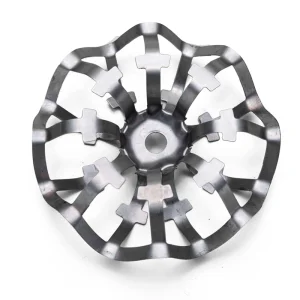
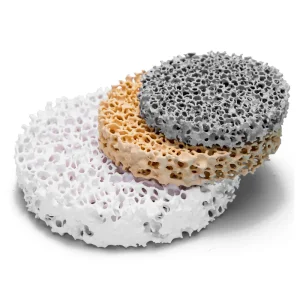
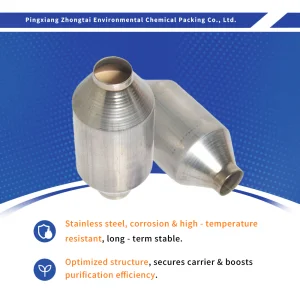
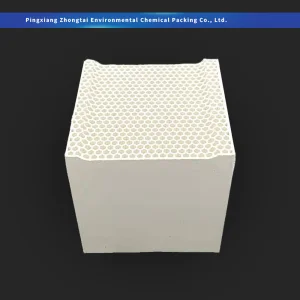
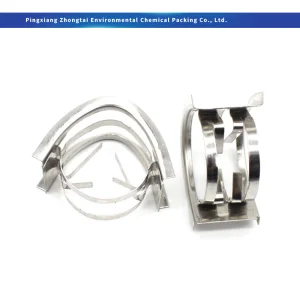
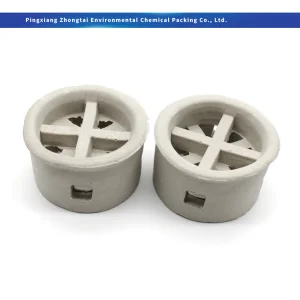
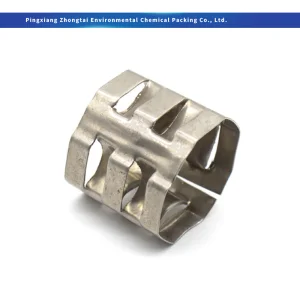
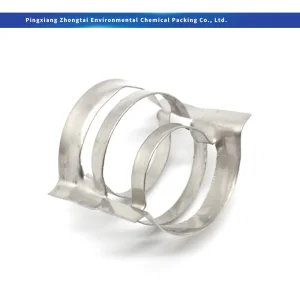
Pingxiang Zhongtai Environmental Chemical Packing Co., Ltd. operates state-of-the-art production facilities in the Hi-Tech Industry Park of Pingxiang City, Jiangxi Province—recognized globally as China’s central manufacturing hub for chemical tower internals and industrial ceramics. Spanning over two decades of engineering continuous improvement, our manufacturing framework guarantees batch-to-batch consistency for complex, enterprise-level orders.
Computerized tunnel kilns with micro-processor temperature control maintain narrow firing windows (+/- 5°C), ensuring optimal crystal integrity and pore structure stability.
Fully compliant with ISO 9001:2015 quality management systems. Every batch undergoes rigorous ASTM laboratory testing for static/dynamic water adsorption, crush strength, bulk density, and attrition loss.
Products are packed in airtight 55-gallon (200L) sealed steel drums with internal polyethylene vacuum bags or nitrogen-purged flexible intermediate bulk containers (FIBC jumbo bags) to prevent air moisture exposure during ocean transit.
When placing wholesale orders for molecular sieves or chemical packings, procurement costs must be evaluated against long-term operational expenditure (OpEx). Inferior adsorbents with high attrition rates lead to structural breakdown, fine dust generation, increased pressure drop across beds, and premature downstream catalyst poisoning. Zhongtai’s engineered zeolites feature low dusting profiles and high mechanical crush strength, reducing bed replacement frequency and energy consumption during thermal regeneration cycles.
Strategic R&D pathways for advanced adsorbents, energy efficiency, and low-carbon gas separations.
Development of modified framework topologies that lower the thermal desorption temperature of water molecules, reducing regeneration steam consumption by up to 25% in large-scale TSA units.
Engineering multi-layer composite beads that combine a high-density inert core with a highly active microporous shell to maximize mass transfer rates while reducing total raw material weight.
Providing custom numerical simulations of multi-component breakthrough curves based on plant operating parameters to optimize bed dimensions before physical vessel fabrication.
Detailed technical answers addressing common procurement questions, sizing methodologies, and operational protocols.
Connect with Pingxiang Zhongtai’s engineering and export department for pricing, technical datasheets, sample kits, and custom vessel bed design recommendations.
