Explore our flagship mass transfer media, ceramic substrates, and water treatment products engineered for extreme operating environments.
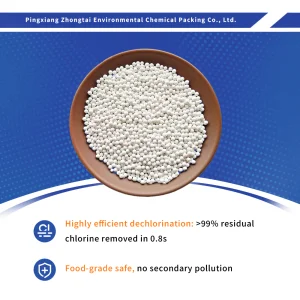
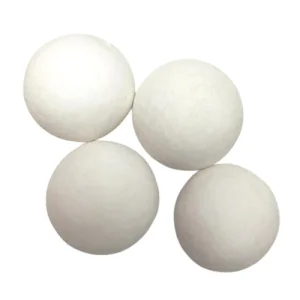
In modern chemical processing, continuous gas drying, and catalytic separation, Activated Alumina Balls ($\gamma$-Al₂O₃) represent the industry benchmark for high-capacity, thermally stable desiccant and adsorbent media. Fabricated via the precise rapid dehydration of aluminum hydroxide ($\text{Al(OH)}_3$) at temperatures ranging between $400^\circ\text{C}$ and $600^\circ\text{C}$, activated alumina adopts a highly porous, transition-phase crystallographic lattice characterized by exceptional specific surface area ($300\text{--}380\,\text{m}^2/\text{g}$) and tailor-made pore volume distribution.
Unlike inert support ceramic balls which function strictly as mechanical catalyst bed hold-down media, activated alumina is an active chemical substrate. Its internal structure is populated by coordinate-unsaturated aluminum ions ($\text{Al}^{3+}$) and amphoteric surface hydroxyl groups ($\text{OH}^-$). These active Lewis acid sites generate high physical dipole adsorption forces and localized chemisorption mechanisms, making activated alumina exceptionally effective at selectively capturing highly polar molecules—most notably water ($\text{H}_2\text{O}$), fluoride ions ($\text{F}^-$), arsenic oxides ($\text{As}_2\text{O}_3$), hydrogen fluoride ($\text{HF}$), and trace polar organic compounds—from complex fluid streams.
The performance of activated alumina desiccant media relies upon the physical dynamic known as capillary condensation combined with monolayer and multilayer physisorption. In desiccant air dryers, when a pressurized gas stream ($4\text{--}100\,\text{bar}$) enters an adsorption vessel packed with activated alumina balls, moisture vapor diffuses into the mesoporous network ($2\text{--}5\,\text{nm}$ pore radius). The dynamic water adsorption capacity reaches up to 20--22% by weight at 60% relative humidity under standard industrial conditions ($25^\circ\text{C}$).
Furthermore, activated alumina maintains its structural integrity without swelling, softening, or liquefying when submerged in liquid water—a critical operational advantage over silica gel or calcium chloride desiccant beds which suffer from structural degradation and rapid powdering upon liquid water slugging.
Activated alumina balls serve as indispensable operational consumables across diverse global industrial sectors, from petrochemical refining to clean energy transitions.
In twin-tower Pressure Swing Adsorption (PSA) and Temperature Swing Adsorption (TSA) desiccant air dryers, activated alumina is the premier desiccant for achieving deep dew points down to $-40^\circ\text{C}$ to $-70^\circ\text{C}$. It protects pneumatic control instruments, automated valve systems, and downstream pipelines from internal corrosion, ice formation, and mechanical freezing in sub-zero industrial environments.
In hydrofluoric acid (HF) alkylation units within crude oil refineries, specialized activated alumina acts as a defluorination adsorbent to capture trace HF acid, organic fluorides, and acid gases from hydrocarbon feeds (such as C4/C5 streams). This prevents downstream corrosion in distillation columns and protects expensive alkylate blending stocks.
During the anthraquinone process for industrial hydrogen peroxide production, working solution degradation products (such as epoxide and anthrone derivatives) accumulate over time, reducing oxidation efficiency. Activated alumina packed in working solution regenerators continuously adsorbs these degradation products, reversing side reactions and restoring anthraquinone activity.
Due to its strong ion-exchange affinity for electronegative ions, activated alumina is widely deployed in drinking water treatment facilities located in regions with high natural fluoride levels. It efficiently reduces fluoride levels from >10 mg/L down to below World Health Organization (WHO) standards (<1.5 mg/L), while simultaneously removing toxic Arsenic(V) and heavy metals.
Why sourcing direct from Pingxiang, Jiangxi—China's recognized capital of chemical packing—provides unmatched cost-to-performance metrics for global enterprise buyers.
Located within China's primary alumina refining corridor, our manufacturing facilities source high-purity aluminum hydroxide ($\text{Al(OH)}_3$) direct from upstream smelters, guaranteeing minimal iron oxide ($\text{Fe}_2\text{O}_3 < 0.02\%$) contamination and stable crystal phase precursors.
Utilizing fully automated, computer-controlled rotary kilns and continuous fluid-bed flash calcination lines, we maintain precise phase transformation control, ensuring homogeneous pore size distribution and zero batch-to-batch variation in crush strength.
With an annual production capacity exceeding 35,000 metric tons of activated alumina and chemical tower packing, direct factory sourcing eliminates international broker markups, offering tier-1 B2B buyers wholesale pricing savings of 25% to 40% over Western OEMs.
Comprehensive engineering parameters across standard bead sizes. Custom sphere sizing (e.g., 1-2mm, 2-4mm, 3-5mm, 4-6mm, 5-8mm) and chemical dopants available upon request.
| Property Parameter | 1-2 mm (Desiccant/Purification) | 2-4 mm (Water Treatment) | 3-5 mm (Standard Air Dryer) | 5-8 mm (Bed Support/Large PSA) |
|---|---|---|---|---|
| Al₂O₃ Content (%) | ≥ 93.0% | ≥ 93.0% | ≥ 93.5% | ≥ 93.5% |
| SiO₂ Content (%) | ≤ 0.02% | ≤ 0.02% | ≤ 0.02% | ≤ 0.02% |
| Fe₂O₃ Content (%) | ≤ 0.02% | ≤ 0.02% | ≤ 0.02% | ≤ 0.02% |
| Na₂O Content (%) | ≤ 0.35% | ≤ 0.35% | ≤ 0.35% | ≤ 0.35% |
| BET Surface Area (m²/g) | 320 - 380 | 300 - 350 | 300 - 360 | 280 - 340 |
| Pore Volume (cm³/g) | 0.38 - 0.45 | 0.38 - 0.45 | 0.40 - 0.48 | 0.40 - 0.48 |
| Bulk Density (g/cm³) | 0.70 - 0.78 | 0.68 - 0.75 | 0.68 - 0.75 | 0.65 - 0.72 |
| Crush Strength (N/particle) | ≥ 40 N | ≥ 80 N | ≥ 140 N | ≥ 220 N |
| Static Water Adsorption (RH=60%) | ≥ 20.0% | ≥ 18.5% | ≥ 19.5% | ≥ 18.0% |
| Attrition Loss Rate (%) | ≤ 0.1% | ≤ 0.1% | ≤ 0.1% | ≤ 0.15% |
| Estimated Direct Wholesale FOB Price | $850 - $1,200 / Ton | $780 - $1,100 / Ton | $750 - $1,050 / Ton | $720 - $1,000 / Ton |
To achieve extended operational lifespans ($3\text{--}5\,\text{years}$) in continuous thermal regeneration service, plant operations engineers must implement proper reactivation protocols to prevent thermal sintering and irreversible pore structure collapse.
During the thermal regeneration cycle in TSA gas dryers, dry purge gas (dry air, nitrogen, or process gas) heated to $170^\circ\text{C}$ to $250^\circ\text{C}$ should be passed through the activated alumina bed in a counter-current direction relative to the adsorption step.
Selecting the correct particle diameter is crucial to balance mass transfer zone (MTZ) length against vessel pressure drop. Fluid dynamic bed pressure drop can be calculated via the modified Ergun Equation:
\frac{\Delta P}{L} = 150 \frac{(1-\epsilon)^2}{\epsilon^3} \frac{\mu v_s}{d_p^2} + 1.75 \frac{1-\epsilon}{\epsilon^3} \frac{\rho v_s^2}{d_p}
Where $\epsilon$ is bed void fraction, $v_s$ is superficial velocity, $d_p$ is sphere diameter, $\mu$ is dynamic viscosity, and $\rho$ is gas density.
Using 3-5 mm spheres provides an optimal compromise between rapid adsorption kinetics and low bed differential pressure in high-flow desiccant air dryers. In deep beds or high-pressure gas towers, installing a bottom layer ($15\text{--}20\text{\%}$ of total bed height) of high crush-strength 5-8 mm activated alumina or inert ceramic balls prevents bottom-layer crushing and dust migration.
A buyer's guide for international chemical engineering procurement managers, EPC contractors, and refinery plant managers auditing supplier credentials.
Verify via X-Ray Diffraction (XRD) analysis that the crystal phase is predominantly $\gamma$-Al₂O₃ rather than uncalcined gibbsite or over-calcined inactive $\alpha$-Al₂O₃. Na₂O impurities must remain strictly below 0.35% to prevent active site poisoning.
Ensure the supplier provides batch crush testing values certified under ASTM D4179. High crush strength (>140N for 3-5mm) guarantees that the media will withstand pressure surges and thermal cycling expansion without dusting.
Confirm moisture-proof export packaging. Standard shipments should feature heavy-duty multi-layer plastic lining inside 25kg PP woven bags or 1000kg jumbo bags, steel drums, palletized and shrink-wrapped for ocean transit.
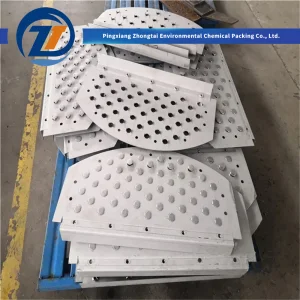
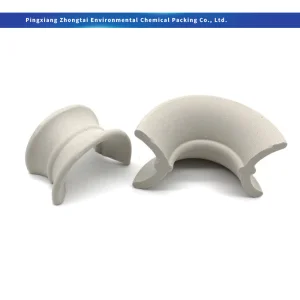
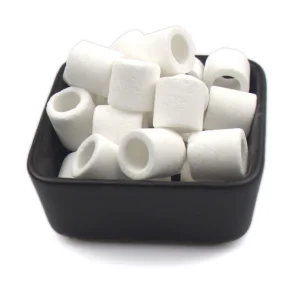
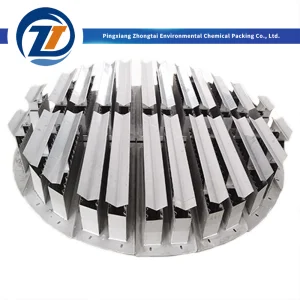
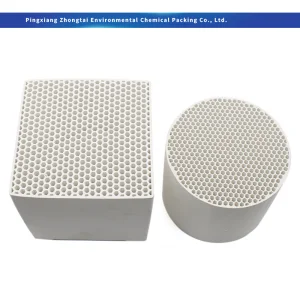
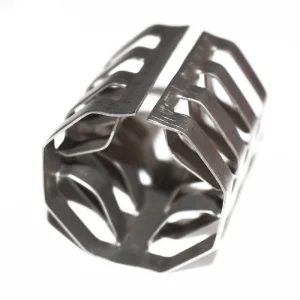
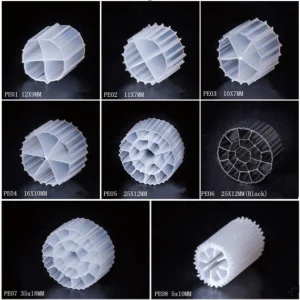
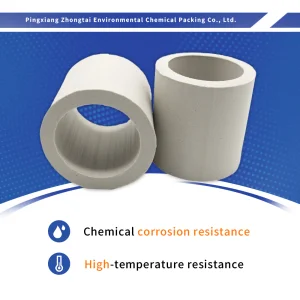
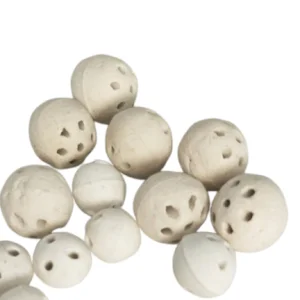
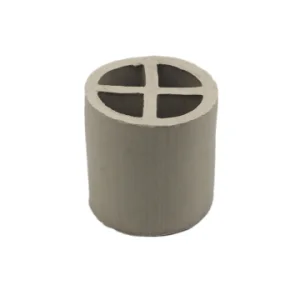
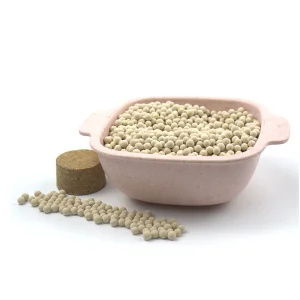
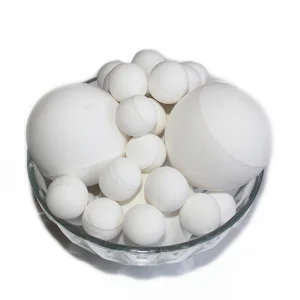
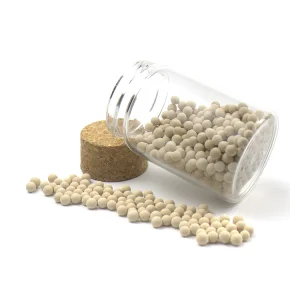
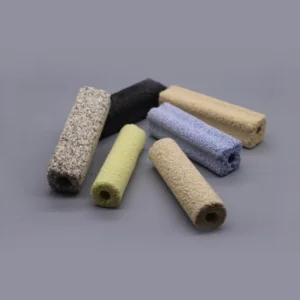
Explore our secondary lineup of inert support porcelain balls, tower packing rings, molecular sieves, and catalytic carriers.
In-depth engineering answers to common technical queries regarding activated alumina spheres, performance parameters, and factory sourcing.
Partner directly with Pingxiang's premier chemical packing and activated alumina manufacturer. Engineering samples, laboratory XRD test certificates, and custom ocean freight quotes delivered within 24 hours.
