Direct factory supply of high-wear resistance grinding balls, specialized ceramic packing, and mass transfer column internals.
In modern high-energy ultra-fine wet grinding and nano-dispersion, standard alumina media and forged steel balls often reach their operational thresholds due to excessive wear rates, media contamination, and lower density. Zirconia Grinding Balls (ZrO2) represent the pinnacle of ceramic engineering, leveraging tetragonal zirconia polycrystal (TZP) matrix transformation toughening mechanisms.
When subjected to mechanical impact inside high-speed pin agitator mills or horizontal bead mills, the metastable tetragonal phase of engineered zirconia transforms into a monoclinic phase. This stress-induced phase transformation induces a ~3-5% volumetric expansion, generating localized compressive stresses that arrest crack propagation—giving zirconia grinding media unprecedented fracture toughness.
| Technical Parameter | Y-TZP (95% Zirconia) | Ce-TZP (Ceria Stabilized) | Zirconium Silicate (ZCS) | 92% High Alumina |
|---|---|---|---|---|
| Specific Density (g/cm³) | ≥ 6.00 | ≥ 6.20 | 4.00 - 4.20 | 3.60 - 3.68 |
| Bulk Density (g/cm³) | 3.60 - 3.80 | 3.75 - 3.90 | 2.50 - 2.65 | 2.20 - 2.40 |
| Mohs Hardness | 9.0 | 8.5 | 7.5 | 9.0 |
| Crush Strength (0.8mm) | > 250 N | > 210 N | > 120 N | > 90 N |
| Wear Rate (Self-Wear g/kg.h) | ≤ 0.005 | ≤ 0.012 | ≤ 0.050 | ≤ 0.150 |
| Equivalent Size Range | 0.05mm - 30mm | 0.4mm - 12mm | 0.6mm - 5.0mm | 0.5mm - 60mm |
Analyzing the macro-economic factors driving global industrial transitions toward advanced zirconia ceramic micro-beads.
The global EV expansion demands sub-micron wet grinding of Lithium Iron Phosphate (LFP), Nickel Manganese Cobalt (NMC) cathode slurries, and silicon-carbon anodes. Y-TZP micro-beads (<0.3mm) enable target particle distributions ($D_{97} < 200nm$) essential for fast-charging electrochemical kinetics.
Multi-Layer Ceramic Capacitors (MLCC) require ultra-pure Barium Titanate (BaTiO3) dielectric powders. Contamination from iron or silica alters dielectric constants; high-purity Y-TZP grinding media provides absolute chemical inertness and crystalline consistency.
Automotive OEM finishes, inkjet formulations, and optical displays demand narrow particle size distribution without agglomeration. Micro-zirconia media ensures vivid color strength, high transparency, and high gloss by eliminating oversized tailing particles.
The global dominance of Chinese zirconia grinding ball manufacturers stems from an integrated industrial ecosystem that fuses raw material mineral processing, digitalized bead formation, high-temperature atmospheric sintering, and automated quality control.
Distinguishing modern Chinese manufacturing capabilities (such as those located in key industrial ceramic hubs like Pingxiang) are four crucial technological pillars:
Understanding factory cost breakdowns, volume-tier pricing metrics, and total cost of ownership (TCO) optimization.
Zirconia grinding ball pricing is highly sensitive to raw material purity (chemical grade $ZrO_2$ powder), stabilizer type ($Y_2O_3$ vs $CeO_2$), bead diameter (micro-beads under 0.2mm require significantly longer forming times), and minimum order quantity (MOQ).
| Product Grade & Specification | Diameter Range (mm) | Est. FOB China Price ($/kg) | Typical MOQ | Key Cost Drivers |
|---|---|---|---|---|
| Y-TZP Pure Micro-Beads (95% ZrO2) | 0.05mm - 0.3mm | $22.00 - $38.00 | 100 kg | Hydrothermal powder cost, liquid drip-forming throughput |
| Y-TZP Standard Beads (95% ZrO2) | 0.4mm - 3.0mm | $14.50 - $22.00 | 500 kg | Yttrium stabilizer global pricing, sintering gas consumption |
| Y-TZP Macro Grinding Media | 4.0mm - 25.0mm | $12.00 - $16.50 | 1,000 kg | Isostatic pressing cycle times, kiln loading density |
| Ceria-Stabilized Beads (Ce-TZP) | 0.6mm - 6.0mm | $9.50 - $14.00 | 1,000 kg | Cerium oxide market spot rates, heavy structural density |
| Zirconium Silicate Beads (60% ZrO2) | 0.8mm - 5.0mm | $3.80 - $6.50 | 2,000 kg | Zircon sand purification costs, titration speed |
| Toughened Zirconia Alumina (ZTA) | 1.0mm - 30.0mm | $2.50 - $4.80 | 3,000 kg | Alumina base material ratio, sintering temperature control |
*Disclaimer: The above prices represent indicative 2025 factory-direct FOB rates for export-grade certified shipments. Final quotation depends on technical drawing specs, customized packaging (UN-approved drums/jumbo bags), and shipping terms (FOB, CIF, DDP).
Selecting the correct zirconia bead diameter and material chemistry based on agitator tip speed and target slurry viscosity.
Recommended Media: Y-TZP 0.1mm - 0.6mm
High tip speeds (>12 m/s) generate immense shear forces. Ultra-fine Y-TZP beads withstand extreme kinetic impacts without shattering, achieving nano-scale particle breakdown in lithium battery slurries within minimal passes.
Recommended Media: Ce-TZP / ZCS 1.5mm - 3.0mm
Used extensively in mineral processing (copper, gold, metallic ores) and heavy calcium carbonate. High density media ensures gravity fluidization and deep energy transfer in high-solids loading slurries.
Recommended Media: Y-TZP / ZTA 1.0mm - 2.5mm
Optimal for batch production of industrial coatings, flexographic inks, and agricultural chemicals. Provides rapid circulation and easy vessel cleaning between batch color changes.
Leveraging two decades of chemical packing expertise to deliver total process engineering support.
Pingxiang Zhongtai Environmental Chemical Packing Co., Ltd. (founded in 2003) is strategically headquartered in Pingxiang City, Jiangxi Province—China's world-renowned manufacturing cluster for chemical packings and industrial ceramics. Operating from the West Section Hi-Tech Industry Park, Zhongtai seamlessly integrates raw ceramic refining, precision metal stamping, plastic molding, and molecular sieve synthesis.
Beyond high-performance zirconia and alumina grinding media, Zhongtai manufactures complete mass transfer column internals, inert bed support balls, and environmental heat storage media. Overseas EPC buyers, refinery plant managers, and chemical engineers rely on Zhongtai’s integrated material portfolio:
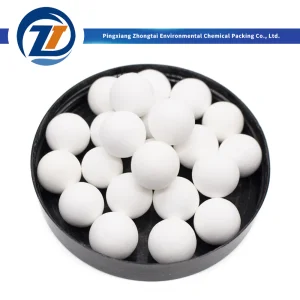
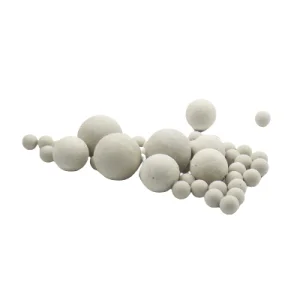
17% to 99% Al2O3 catalyst support bed spheres, engineered for high-temperature hydrotreating, steam reforming, and acid service without silica leaching.
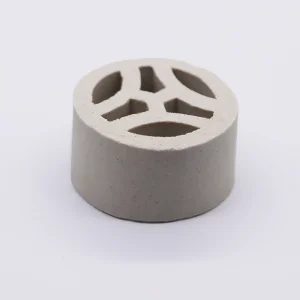
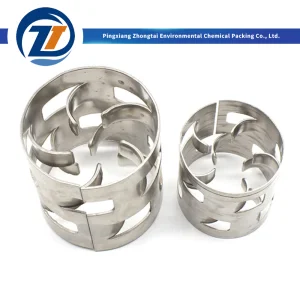
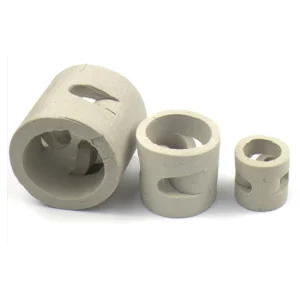
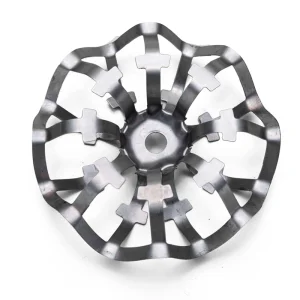
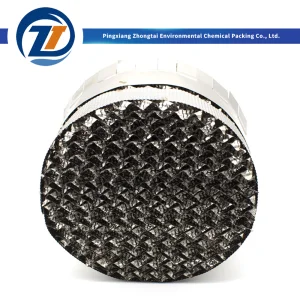
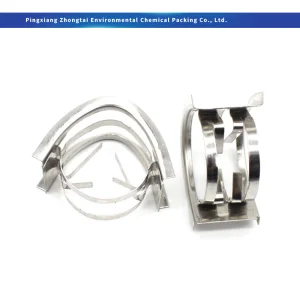
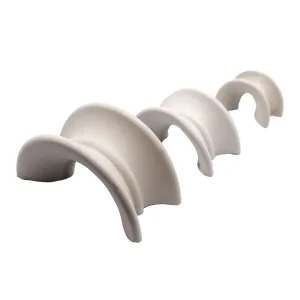
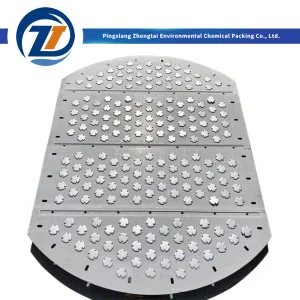
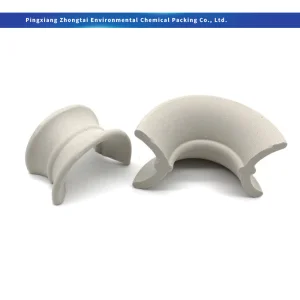
Random and structured tower packings including Pall Rings, Intalox Saddles, and Corrugated Sheets in SS304/SS316L, PP, PVDF, and acid-proof ceramics.
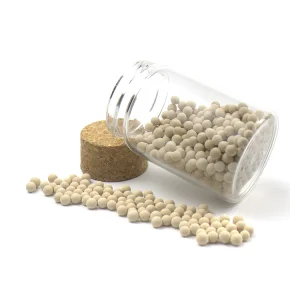
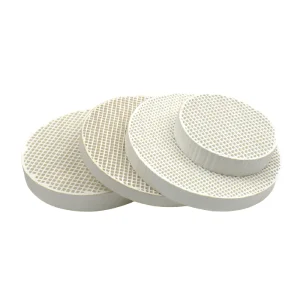
Honeycomb ceramics for RTO/RCO VOC thermal abatement systems, coupled with synthetic 3A, 4A, 5A, and 13X zeolite Molecular Sieves for air drying.
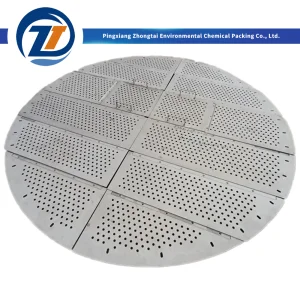
Explore our complete manufacturing line of inert ceramic balls, molecular sieves, structured packing, and tower trays.
Expert answers to critical technical questions regarding zirconia grinding media, crush strength, quality audits, and tower packing integration.
