Directly sourced chemical tower random packings, high-strength phase contactors, and high-efficiency transfer components manufactured under stringent ISO 9001:2015 protocol in Pingxiang, China.
In an era driven by high-energy-density lithium-ion batteries, sub-micron passive electronics (MLCCs), and active pharmaceutical nanomilling, standard alumina and chrome-steel grinding beads have reached thermodynamic and contamination limits.
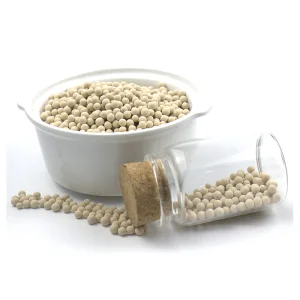
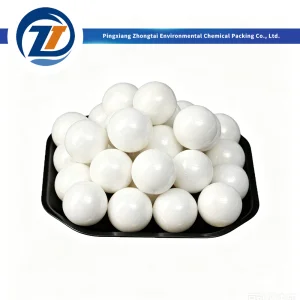
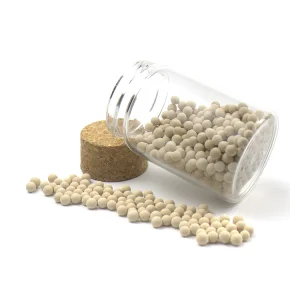
Global industrial processing has experienced an irreversible paradigm shift toward nanoscale wet comminution. Modern planetary bead mills, horizontal pin mills, and high-energy agitated media mills demand grinding beads with extreme kinetic mass, ultra-low shear attrition, and absolute chemical non-reactivity. High-purity Zirconia Balls (stabilized with Yttrium Oxide, Cerium Oxide, or Zirconium Silicate alloys) represent the apex of ceramic grinding engineering. As global manufacturing hubs migrate toward zero-metal contamination tolerances—most notably across cathode active materials (LFP/NCM), multi-layer ceramic capacitors, and aqueous titanium dioxide pigments—procuring superior-grade micro-crystalline zirconia beads at cost-resilient scales has become an imperative competitive bottleneck.
China's advanced ceramic manufacturing clusters, pioneered in established epicenters such as Pingxiang, Jiangxi, have integrated the entire upstream zircon sand refinement (Zr(Hf)O₂), chemical co-precipitation synthesis, spray granulation, and isostatic sintering supply chains. Consequently, Chinese manufacturers dominate over 70% of global industrial bead volume, offering international tier-1 processors unprecedented pricing advantages without sacrificing grain morphology, crystalline sphericity, or microstructural toughness.
The kinetic energy transferred during wet agitated milling follows the fundamental law E = ½mv². With a true density exceeding 6.0 g/cm³ (compared to 3.6–3.9 g/cm³ for alumina and 2.5 g/cm³ for glass beads), Yttria-Stabilized Tetragonal Zirconia Polycrystal (Y-TZP) beads deliver 1.6 to 2.4 times higher impact energy per revolution. This dramatically reduces process retention cycles, slashes power consumption per dry metric ton, and achieves sub-100 nanometer particle size distribution (PSD) profiles impossible with lighter media.
A transparent analytical breakdown of industrial ceramic pricing, raw oxide volatility, sintering power curves, and total cost of ownership (TCO) comparisons.
| Material Classification | Composition (wt%) | Specific Density (g/cm³) | Hardness (Mohs/HV) | FOB China Benchmark ($/kg) | Target Industrial Duty |
|---|---|---|---|---|---|
| 95 Y-TZP Micro-Beads | ZrO₂ 94.8% + Y₂O₃ 5.2% | ≥ 6.02 | 1250 HV10 | $24.50 – $38.00 | Lithium battery LFP/NMC, MLCCs, Bio-Pharma Nanomilling |
| Ce-TZP (Cerium-Stabilized) | ZrO₂ ~80% + CeO₂ ~20% | ≥ 6.20 | 1180 HV10 | $16.80 – $26.50 | Pesticides, heavy calcium carbonate (GCC), high-viscous paints |
| ZTA (Zirconia Toughened Alumina) | Al₂O₃ ~70% + ZrO₂ ~20–30% | 3.70 – 4.20 | 9 Mohs | $4.20 – $7.50 | Metallic mineral slurries, copper/gold grinding, paper coatings |
| Zirconium Silicate Beads | ZrO₂ 65% + SiO₂ 33% | 4.00 – 4.20 | 1000 HV10 | $6.80 – $11.50 | Automotive coatings, decorative paints, flexo printing inks |
| Inert Zirconia Support Balls | ZrO₂ 60–95% Industrial | 4.50 – 5.80 | High Crush | Custom Quote (RFQ) | Aggressive acidic catalyst bed support & hold-down beds |
Over 60% of Y-TZP bead pricing correlates directly to high-purity rare-earth market indices: monazite-derived 99.99% Y₂O₃ yttrium oxide and chemical grade zirconium oxychloride (ZOC). China's dominant internal extraction creates a buffered pricing insulation against global spot volatility.
Densifying zirconia into uniform tetragonal crystal matrices requires extended soaking at 1,450°C–1,550°C inside computerized electric or natural-gas roller kilns. Energy efficiency in high-scale Chinese clusters reduces per-kilogram thermal conversion expenditures by up to 28%.
While Y-TZP commands a higher initial invoice price than alumina or glass, its near-zero wear rate (often < 0.01% per 24 hours of operation) yields an effective operating life 30 to 50 times longer, radically dropping media replenishment downtime and mechanical seal abrasion costs.
Where microscopic structural perfection translates directly to production yield, purity, and system throughput across mission-critical industries.
Lithium Iron Phosphate (LiFePO₄), high-nickel ternary NCM precursors, and silicon-carbon composite anodes require ultrafine deagglomeration down to D50 < 350 nm. High-sphericity Y-TZP micro-beads (0.1–0.4 mm) prevent metallic iron/copper/zinc contamination that causes internal short-circuits.
Multilayer Ceramic Capacitors require ultra-uniform barium titanate (BaTiO₃) dielectric slips ground to narrow grain margins without mechanical micro-cracking. 95 Zirconia beads guarantee zero electromagnetic interference and unmatched batch-to-batch dielectric consistency.
Formulating poorly soluble Active Pharmaceutical Ingredients (APIs) into parenteral nano-suspensions mandates beads with total USP Class VI and FDA compliance. Autoclavable, mirror-polished Y-TZP beads eliminate chemical leaching, pyrogens, and abrasive biological contamination.
High-solids OEM clearcoats, inkjet printing pigments, and chemical mechanical planarization (CMP) silica/ceria slurries for semiconductor fabrication demand zero oversize particulate scratches. Zirconia's uniform sphericity avoids catastrophic macro-tailing.
From mechanical dry pressing to liquid-phase micro-dripping titration: evaluating structural engineering that eliminates internal porosity.
Unlike conventional disc-rolling forming which induces microscopic laminar onion-skin layers and void defects, advanced dripping (sol-gel titration) yields perfect spheres with internal sphericity > 98%, uniform grain boundaries, and completely homogeneous cross-sectional density.
By enforcing an average sub-micron grain sizing (< 0.5 µm) post-sintering, transformation-toughened mechanisms arrest micro-crack propagation. Stress induced phase transformation from Tetragonal to Monoclinic (t→m) absorbs fracture energy with 8–10 MPa·m½ toughness.
Next-generation R&D incorporates Spark Plasma Sintering (SPS) and multi-doped stabilizing oxides (Y-Ce-Al tri-doped composites). This prevents high-temperature grain coalescence, elevating wear resistance 300% in corrosive acidic aqueous slurries.
Capitalizing on decades of specialized infrastructure, localized raw mineral synthesis, and uncompromised factory-direct vertical integration.
Located in Jiangxi Province, the Pingxiang chemical ceramics and advanced packing industrial cluster represents the highest concentration of ceramic engineering specialists, automated high-temperature tunnel kilns, and precision material testing laboratories in the world. As an established manufacturer founded in 2003, Pingxiang Zhongtai Environmental Chemical Packing Co., Ltd. exploits this geographical and technological agglomeration to maintain unassailable supply chain resilience.
Factory-level integration with domestic zircon sand refining units guarantees guaranteed access to high-purity Zirconium Oxychloride and rare-earth stabilizers without exposure to foreign ocean transit interruptions or sudden export tariff spikes.
Continuous tunnel firing lines maintain safety reserves exceeding 350 metric tons of standard-calibrated beads (0.1mm to 20mm), cutting lead times for 20-foot full container loads (FCLs) to under 7 working days from formal purchase order ingestion.
Every single manufacturing lot leaves our Pingxiang testing center accompanied by ICP-OES elemental composition assays, scanning electron microscopy (SEM) grain structural imagery, and certified ASTM bulk crushing strength reports.
Delivering frictionless customs clearance, accredited international certifications, and secure multi-tier packaging for international sea and air freight.
All zirconia ceramic grinding balls are entirely inert, non-metallic, and fully certified compliant with EU REACH Regulation (EC 1907/2006) and RoHS directives. Completely free of hazardous heavy metals, SVHCs, or regulated plasticizers.
Standardized export clearance under HS Code 6909.11 (Ceramic wares for laboratory, chemical or other technical uses: Of porcelain or china) and 6909.19 enables straightforward preferential tariff documentation (Form E, CO, RCEP) worldwide.
Shipments utilize multi-ply polyethylene sealed pails (25 kg net) or heavy-duty polypropylene bulk sacks (1,000 kg net) on ISPM-15 heat-treated, fumigated export pallets wrapped in UV-resistant barrier films to prevent moisture condensation during transit.
Full Incoterms 2020 flexibility: EXW, FOB Ningbo/Shanghai/Shenzhen, CIF, CFR, and DAP delivery straight to plant storage silos across the Americas, Europe, ASEAN, and the Middle East with comprehensive cargo marine insurance.
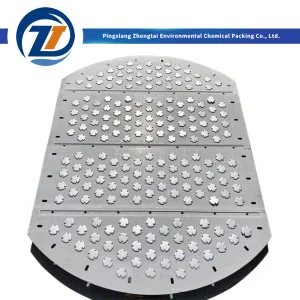
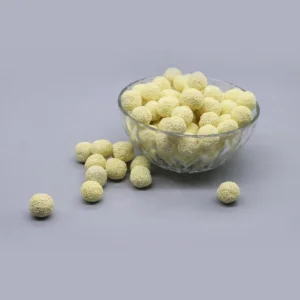
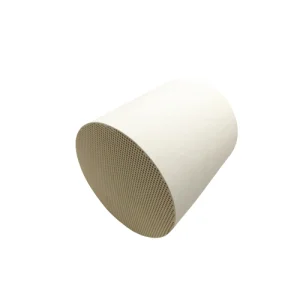
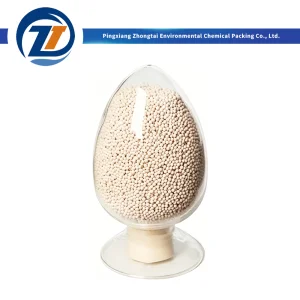
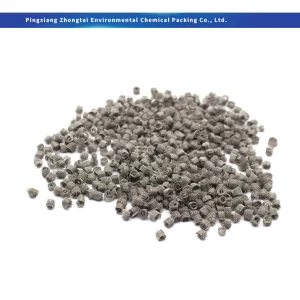
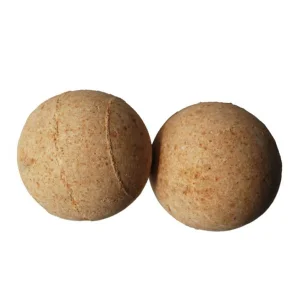
Explore our complementary technical ceramics portfolio: high-pressure distillation trays, thermal regeneration honeycombs, and catalytic support spheres.
Direct, engineering-level answers regarding sizing tolerances, mill compatibility, wear evaluations, and volume contract arrangements.
Wholesale export prices for genuine 95% ZrO₂ Y-TZP beads stabilized with 5.2% Y₂O₃ typically range between $24.50 and $38.00 per kilogram FOB Chinese port, based on bead diameter and order volume. Ultra-fine micro-beads (< 0.2 mm) require sophisticated dripping precipitation and intensive laser classification, commanding higher precision premiums than coarse sizes (1.0 mm to 5.0 mm).
Ce-TZP possesses a higher true density (~6.20 g/cm³) than Y-TZP (~6.02 g/cm³), giving it aggressive kinetic shearing power in high-viscosity slurries like calcium carbonate and industrial agrochemicals. However, Y-TZP offers significantly higher Vickers hardness (1250 vs 1180 HV10) and flexural fracture toughness, making Y-TZP the definitive choice for zero-contamination nanomilling in batteries and pharmaceuticals.
In cathode material processing (such as LiFePO₄ or NMC), microscopic metallic or silica inclusions degrade charge-discharge cycles and cause fatal thermal runaway risks. Zhongtai 95 Y-TZP beads are calcined from high-purity chemical precursors, offering self-wear rates < 0.01% per 24h. The minute quantities of microscopic zirconia dust generated are chemically inert and will not poison active battery cathode chemistry.
The standard engineering rule states that the media bead diameter should be approximately 20 to 30 times larger than the initial feedstock particle size (D90), and roughly 2 to 3 times larger than the gap separation screen in your horizontal pin mill. For example, to mill a 5-micron pre-dispersed suspension down to 100 nanometers, 0.2 mm to 0.4 mm Y-TZP beads provide the maximum collision-frequency-to-energy ratio.
Yes. We regularly supply 500g to 5kg pre-production evaluation batches for pilot-scale wet milling and SEM crystal structure analysis. Batch-specific Certificates of Analysis (CoA) containing ICP-OES elemental assay, pycnometer true density, Vickers microhardness, and particle size distribution (PSD) by laser diffraction accompany all qualification shipments.
Standard calibrated inventory sizes (0.2–2.0 mm) have an MOQ of 25 kg (one drum) for evaluation, and 500 kg for commercial bulk rates. Lead time for standard warehouse sizes is 3 to 5 business days to port. Custom calibrated fractional classifications (e.g., tight tolerance 0.15–0.20 mm) require a 500 kg MOQ and a 14-day production cycle.
Consult directly with Pingxiang Zhongtai's metallurgical ceramic engineering division. Submit your operating parameters (feedstock viscosity, mill brand/volume, target particle size D50/D90, and purity threshold) for rapid media sizing analysis and competitive FOB/CIF quotation within 12 hours.
