Precision-manufactured mass transfer internals, random packing matrices, catalyst support media, and PSA molecular sieves built to rigorous international engineering standards.
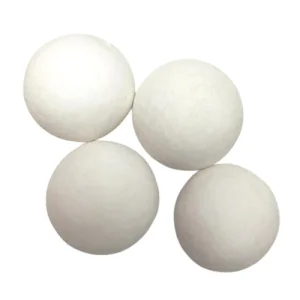
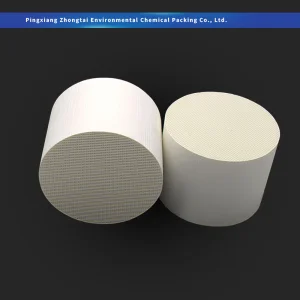
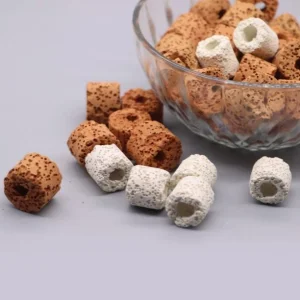
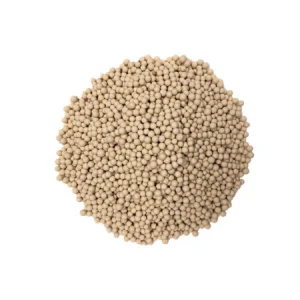
Exploring crystalline aluminosilicate lattice structures, cation exchange properties, and thermodynamic equilibrium vs. kinetic diffusion phenomena in modern gas processing.
Pressure Swing Adsorption (PSA) and its variant Vacuum Pressure Swing Adsorption (VPSA) represent foundational technologies in global gas fractionation, purification, and energy transition infrastructures. At the molecular center of this physical separation process lies the synthetic zeolite molecular sieve—a hydrated aluminosilicate crystal featuring an precisely defined three-dimensional porous structure interlaced with exchangeable metallic cations (primarily Na⁺, K⁺, Ca²⁺, and Li⁺).
Unlike standard desiccant gels or activated carbon whose pore volume distributions are broadly dispersed across micro- and mesoporous domains, synthetic zeolites possess crystallographically controlled aperture diameters precisely measured in tenths of nanometers (Angstroms, Å). The selectivity of a PSA molecular sieve operates under two primary mechanisms:
Separation governed by the intrinsic polarity, dipole moment, and quadrupole moment of the adsorbate molecules interacting with the localized electrostatic fields generated by framework extra-framework cations. In Type X and Faujasite frameworks (e.g., 13X APG, LiX), nitrogen (N₂) molecules possess a strong quadrupole moment (0.31 × 10⁻⁴³ C·m²) compared to argon or oxygen (0.10 × 10⁻⁴³ C·m²), driving selective retention of N₂ while allowing O₂ to discharge at high purity.
Molecules with a kinetic diameter exceeding the rigid crystalline pore window cannot diffuse into the internal void volume (steric exclusion). Concurrently, in carbon molecular sieves (CMS) or customized small-pore zeolites (3A, 4A, 5A), slight variations in diffusion velocity dictate separation: smaller molecules (e.g., O₂ with kinetic diameter 3.46 Å) diffuse multiple orders of magnitude faster into micro-cavities than larger molecules (N₂ at 3.64 Å).
The operational efficiency of a PSA bed hinges on rapid desorption during the depressurization and purge stages. If the adsorption heat is excessive or the desorption isotherm exhibits irreversible hysteresis, the cyclic working capacity declines steeply. China's top-tier manufacturers focus on controlling the macro-pore and meso-pore hierarchy inside composite spherical beads to minimize internal mass transfer resistance.
From medical oxygen generation to hydrogen refinery off-gas recovery and natural gas deep dehydration, molecular sieves serve as vital process catalysts across heavy industry.
Modern steam methane reforming (SMR), coal gasification, and hydrocracker purge gas loops utilize multi-bed (4 to 16 vessels) PSA installations to purify raw hydrogen. Beds feature stacked layers: activated alumina for free liquid/moisture knock-out, silica gel or 5A for heavy hydrocarbons and CO₂, and specialized high-selectivity 13X or CaA zeolites to drop CO, CH₄, and N₂ down to fractional parts per million, ensuring fuel-cell and catalyst protection.
On-site oxygen plants deploy Lithium Low-Silica X (Li-LSX) and modified 13X-HP zeolites. Lithium-doped frameworks offer exceptionally high N₂ dynamic working capacity and an N₂/O₂ selectivity ratio exceeding 3.5:1. This enables smaller adsorbent inventory, lowered feed air compressor duty, and minimized power consumption per normal cubic meter (Nm³) of generated O₂ for hospitals, metallurgy, and pulp bleaching.
Prior to cryogenic liquefaction at −196°C, ambient air must be stripped of water vapor (H₂O) down to <0.05 ppm and carbon dioxide (CO₂) down to <0.1 ppm to prevent cold box heat exchanger blockages. Specialized 13X APG molecular sieves maintain broad dynamic breakthrough capacity for trace acetylene (C₂H₂) and atmospheric hydrocarbons, safeguarding against explosive cold-box conditions.
Raw methane streams contain prohibitive moisture levels, hydrogen sulfide (H₂S), and mercaptans that rapidly corrode pipelines and foul compression valves. Utilizing tailored Type 4A and 5A molecular sieves, operators selectively dehydrate gas to water dew points below −100°C while co-adsorbing acidic sulfur compounds, ensuring compliance with pipeline transportation specifications.
Ethanol-water forms an azeotrope at 95.6% alcohol by volume, rendering conventional atmospheric distillation incapable of yielding anhydrous fuel-grade ethanol. Highly calibrated 3A zeolites (pore opening ≈ 3 Å) dynamically adsorb the smaller water molecule (2.65 Å) while completely excluding the larger ethanol molecule (4.4 Å), achieving 99.9% purity dehydration with minimal ethanol loss.
PSA nitrogen plants utilize Carbon Molecular Sieves (CMS) operating on kinetic diffusivity variance. Oxygen molecules penetrate the micropores significantly faster than nitrogen molecules. By cycling pressure between 0.7 MPa adsorption and atmospheric desorption across dual beds, high-purity nitrogen (95% to 99.9995%) is continuously generated for food packaging, laser cutting, and petrochemical blanketing.
Rigorous baseline parameters for plant design, hydrodynamic pressure drop modeling, and dynamic loading estimations under operational plant parameters.
| Adsorbent Grade | Nominal Pore (Å) | Cation Type | Form & Mesh Size | Bulk Density (g/mL) | Crush Strength (N) | Static H₂O (wt%) | Primary Industrial Service |
|---|---|---|---|---|---|---|---|
| 3A Molecular Sieve | ~ 3.0 | Potassium (K⁺) | Spherical (1.6-2.5mm / 8-12 mesh) | 0.68 – 0.74 | ≥ 35 N/bead | ≥ 21.0% | Cracked gas, ethylene, ethanol drying without olefin co-adsorption. |
| 4A Molecular Sieve | ~ 4.0 | Sodium (Na⁺) | Spherical (1.6-2.5mm / 8-12 mesh) | 0.66 – 0.72 | ≥ 38 N/bead | ≥ 21.5% | Closed-loop instrument air drying, refrigerant loops, pipeline natural gas. |
| 5A Molecular Sieve | ~ 5.0 | Calcium (Ca²⁺) | Spherical (1.6-2.5mm / 2.0-3.0mm) | 0.67 – 0.73 | ≥ 40 N/bead | ≥ 21.5% | Normal/iso-paraffin separation, PSA hydrogen purification, CO₂/H₂S sweetening. |
| 13X APG Zeolite | ~ 10.0 | Sodium (Na⁺) | Spherical (1.6-2.5mm / 8-12 mesh) | 0.64 – 0.70 | ≥ 35 N/bead | ≥ 24.5% | Cryogenic air separation pre-purification units, deep CO₂ and C₂H₂ elimination. |
| 13X-HP O₂ Grade | ~ 9.5 | Sodium / Low Silica | Spherical (0.4-0.8mm / 1.6-2.5mm) | 0.62 – 0.68 | ≥ 28 N/bead | ≥ 25.0% | High-throughput medical and industrial PSA oxygen concentrators (O₂ ≥ 93%). |
| Li-LSX Oxygen Zeolite | ~ 9.0 | Lithium (Li⁺ ≥ 99%) | Spherical (0.4-0.8mm / 1.3-2.0mm) | 0.60 – 0.65 | ≥ 25 N/bead | ≥ 26.0% | Large-scale VPSA oxygen plants, extremely high N₂ capacity with lowest energy per ton O₂. |
| Carbon Sieve (CMS-260) | ~ 3.8 - 4.2 | Carbon Matrix | Cylindrical Extrudate (1.1-1.3mm) | 0.64 – 0.68 | ≥ 70 N/granule | Kinetic Rate Driven | PSA Nitrogen generators demanding 99.9% to 99.999% inert gas delivery. |
An unvarnished look at the Pingxiang industrial chemical packing cluster, automated synthesis, raw material integration, and batch-to-batch quality management.
The global process engineering landscape has witnessed an unmistakable shift toward Chinese manufacturing hubs for synthetic zeolites, tower packings, and structured mass transfer equipment. Headquartered in Pingxiang, Jiangxi Province—widely recognized as China's premier cluster for environmental chemical packing and industrial ceramics—manufacturers like Pingxiang Zhongtai Environmental Chemical Packing Co., Ltd. (founded 2003) integrate raw mineral extraction, synthesis, automated sphere-forming, and high-temperature rotary calcination within a compact regional supply chain.
Direct proximity to premium kaolin, high-purity sodium silicate, sodium aluminate, and specialized binder clays eliminates supply chain delays. High-purity base reactants prevent iron (Fe) and heavy metal contamination, which can poison active crystalline cages or cause catalytic side reactions in hot hydrocarbon processing.
State-of-the-art Chinese synthesis lines deploy computerized hydrothermal crystallization autoclaves. Real-time temperature control (±0.5°C) and specialized organic structure-directing agents result in homogeneous crystal size distributions (<2 μm) with relative crystallinities routinely verified via X-Ray Diffraction (XRD) at >95%.
Equipped with low-emission natural gas rotary calcination kilns and fluid-bed activation units, modern facilities process hundreds of metric tons weekly with optimized heat recovery. This thermal efficiency delivers significant cost savings compared to aging European and North American assets without compromising structural integrity.
In PSA systems, adsorbent cost typically represents less than 5% to 8% of the overall facility capital expenditure (CAPEX). However, sub-par adsorbents that shed dust or break down mechanically can cause catastrophic process failures: valve seat scoring, compressor fouling, bed channeling, and steep pressure drop escalation that drives energy costs skyward.
Procuring directly from reputable Chinese manufacturers who manage in-house batch testing for single-particle crush strength (ASTM D4179) and attrition rate (ASTM D5757) guarantees Western-equivalent or superior service life (5 to 8+ years under normal maintenance) at a fraction of the delivered landed cost.
How Chinese manufacturing plants test, certify, and protect molecular sieves from atmospheric moisture contamination during trans-oceanic shipping.
Every production batch is tested across 50 randomly sampled spheres using automated computerized particle strength testers. Sieve beads must surpass rigorous radial crush strength thresholds (>35 N for 1.6-2.5 mm beads). Attrition rates are certified to remain below 0.1% wt according to ASTM D5757 air-jet fluidization standards.
Technicians verify moisture adsorption using gravimetric thermogravimetric balance equipment at 25°C and relative humidity levels of 10%, 60%, and 80%. Dynamic breakthrough columns run gas mixes (e.g., CO₂ in N₂) to trace the exact mass transfer zone progression before granting batch release certification.
Because activated molecular sieves instantly adsorb ambient humidity upon atmospheric exposure, export products are hot-packed into hermetically sealed steel drums (typically 125 kg, 140 kg, or 150 kg) lined with heavy-gauge polyethylene bags, often vacuum sealed with an inert nitrogen headspace blanket.
Clear, engineering-level answers to crucial operational and commercial questions regarding PSA molecular sieve specification, deployment, and regeneration.
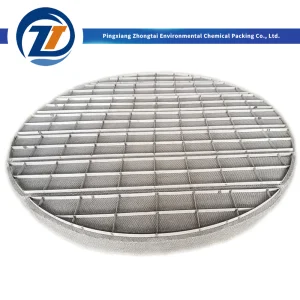
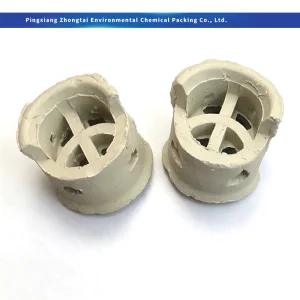
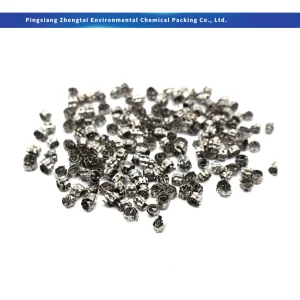
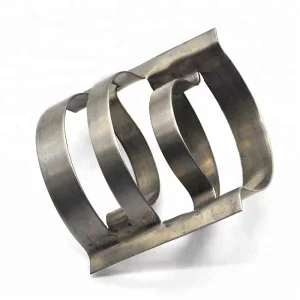
Complementary mass transfer trays, ceramic refractories, structural packing, and specialized catalytic filter media manufactured for heavy global processing facilities.
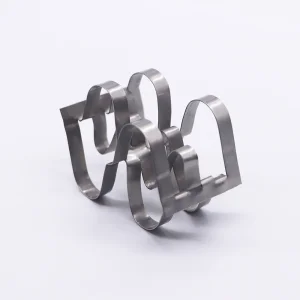
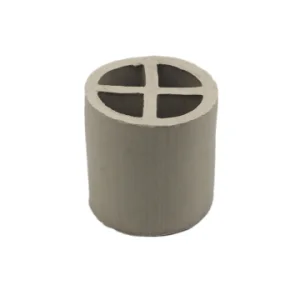
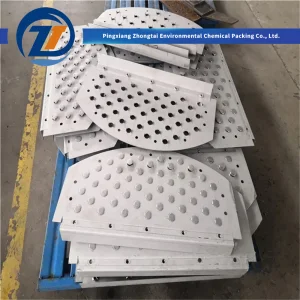
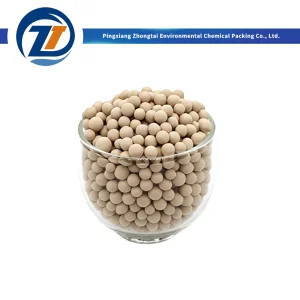
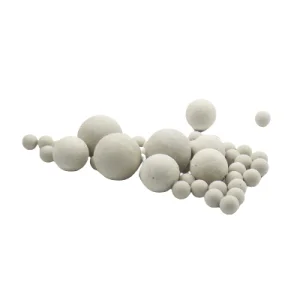
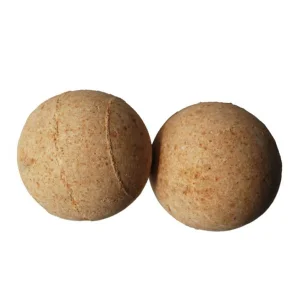
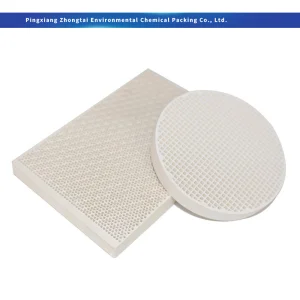
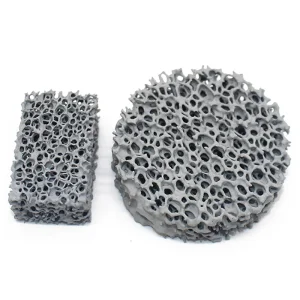
Pingxiang Zhongtai Environmental Chemical Packing Co., Ltd. provides customized adsorption breakthrough modeling, hydrodynamic pressure drop calculations, and sample lots for plant validation.
