Directly integrated with Zhongtai's advanced Pingxiang manufacturing facility. Comprehensive high-temperature, acid-resistant, and high-void-fraction components engineered for harsh process towers.
An analytical evaluation of how the hybrid open-saddle geometry overcomes the structural nesting, high static liquid holdup, and premature flooding limits common to historical random packings.
Unlike early Berl saddles or cylindrical Raschig rings, the Plastic Intalox Saddle features an open, parabolic arch contour merged with interior ribbing and scalloped exterior edges. This geometry minimizes interior stagnation pockets, forces continuous droplet tearing, and prevents adjacent saddles from mutually nesting, preserving an exceptionally high interstitial void fraction (>90%).
Liquid flow passing over conventional rings tends to migrate toward the tower wall, requiring frequent redistributor trays. Plastic Intalox Saddles constantly direct down-flowing irrigant outward and inward through alternating hydrodynamic gutters. This produces a micro-renewal of thin liquid films across both internal and external surfaces, maximizing effective wetted interfacial area ($a_e$) and boosting the volumetric mass transfer coefficient ($K_L a$).
According to generalized pressure drop correlations (GPDC), column capacity is strictly governed by the specific packing factor ($F_p$). With rounded saddles presenting minimal aerodynamic drag to ascending vapor, dry pressure drop drops by 30% to 45% compared with Pall rings. This expands the column's operating window, delaying the loading point and loading-to-flooding transition even at high liquid-to-gas ($L/G$) ratios.
Procuring engineering plastics for tower internals requires balancing thermal distortion temperature, flexural modulus, and oxidation limits against specific solvent polarities.
| Polymer Resin | Continuous Temp Limit (°C) | Tensile Strength (MPa) | Density (g/cm³) | Chemical Resistance Profile | Recommended Application Scenarios |
|---|---|---|---|---|---|
| PP (Polypropylene) | Up to 100°C | 31 – 35 | 0.90 – 0.91 | Excellent vs. non-oxidizing acids, alkalis, brine | Acid scrubbing, municipal degasification, CO₂ absorption |
| RPP (Reinforced Polypropylene) | Up to 125°C | 40 – 48 | 0.93 – 0.95 | Glass fiber modified; superior creep and crush resistance | High-bed-height packed columns, hot gas quench towers |
| PE (Polyethylene) | Up to 80°C | 20 – 28 | 0.94 – 0.96 | Outstanding low-temperature impact resilience, hydrolytic stability | Cold water degassing, offshore cryogenic scrubbers |
| PVC (Polyvinyl Chloride) | Up to 60°C | 45 – 55 | 1.38 – 1.42 | High resistance to wet chlorine, strong oxidizing acids | Chlor-alkali plants, brine purification, hypochlorite units |
| CPVC (Chlorinated PVC) | Up to 95°C | 50 – 60 | 1.50 – 1.55 | Enhanced thermal envelope; handles hot wet chlor-alkali streams | Hot caustic gas scrubbers, industrial acid distillation |
| PVDF (Polyvinylidene Fluoride) | Up to 150°C | 45 – 55 | 1.75 – 1.78 | Ultra-pure, fluorine-grade barrier against halogens, ozone, aromatics | Nuclear exhaust, semiconductor acid wash, chlorine dioxide absorption |
| ETFE / PTFE (Fluoropolymers) | Up to 200°C | 25 – 35 | 2.10 – 2.20 | Near-universal chemical inertness, non-stick surface energy | Extreme nitric/hydrofluoric acids, pharmaceutical syntheses |
How our centralized production hub in Jiangxi, China pairs multi-cavity injection mold tooling with high-grade polymer compounding to guarantee global cost competitiveness and batch integrity.
Located at the core of Pingxiang's chemical equipment hub, Zhongtai leverages direct, high-volume resin procurement from prime Sinopec and PetroChina petrochemical producers. Using only 100% pure virgin pellets without contaminated post-consumer regrind prevents micro-void cracking, embrittlement, and premature hydrolytic failure in acidic scrubbers.
Our in-house CNC mold workshop operates high-tonnage precision injection machines fitted with multi-cavity hot-runner tooling. Tight control of mold temperatures and balanced fill times eliminates gate vestige, flash, and wall-thickness variation, giving our saddles uniform dimensional weight and crush strength throughout large industrial batches.
Running more than 40 continuous automated injection lines gives us daily output exceeding 120 cubic meters of plastic tower packing. This scale accommodates expedited turnkey plant revamps, planned turnarounds, and sudden outages, cutting container dispatch lead times from months to 7–14 calendar days.
International EPC engineering contractors and global chemical conglomerates demand strict documentation, zero material deviations, and clear traceability across all tower packing shipments.
Every production run of Plastic Intalox Saddles is tracked under strict ISO 9001:2015 QA/QC protocols. Factory Acceptance Testing (FAT) evaluates dry bulk density, piece count per cubic meter, radial crush strength, and Melt Flow Index (MFI). Buyers receive full Material Test Reports (MTR), EU REACH SVHC non-containment declarations, and RoHS certificates to streamline customs clearance and plant audits.
Polymer random packings are vulnerable to ultraviolet deterioration and static compression during long ocean journeys. Zhongtai packs all export saddles in heavy-duty, anti-UV treated polypropylene jumbo bags (1.0 to 1.5 m³) or high-strength corrugated cartons secured on heat-treated, ISPM-15 compliant pallets, preserving dimensional integrity through transshipment and long yard storage.
Global supply disruptions have prompted procurement leaders in North America, Europe, and the Middle East to transition away from single-source OEM packing suppliers. Zhongtai acts as a dependable Tier-1 or secondary contract manufacturer, matching legacy tooling profiles (such as Koch-Glitsch, Sulzer, and Raschig designs) with zero changes required to existing tower drawings.
Our in-house technical department collaborates with engineering teams in fluent technical English. By sharing tower dimensions, operating temperatures, fluid viscosities, and desired separation stages (HETP), buyers receive tailored hydraulic calculations, column packing volume schedules, and support grid/hold-down recommendations before placing orders.
How digital modeling, carbon capture programs, and advanced fluoropolymer compounding are transforming random packing performance in modern environmental and chemical systems.
Using 3D Computational Fluid Dynamics (CFD), engineers have developed third-generation "Super Intalox" profiles. Wave-like outer edges, strategically placed drainage holes, and reinforced ribbing reduce gas vortex shedding and form drag, providing up to a 15% capacity gain over standard saddles of identical size.
Carbon Capture, Utilization, and Storage (CCUS) facilities operating amine wash absorption systems require large packing volumes with exceptionally low pressure drops. Polypropylene and modified CPVC Intalox Saddles provide the balanced liquid distribution and low energy consumption needed to keep blower parasitic power manageable.
Biological scrubbing and wastewater stripping towers often struggle with mineral scale and biofilm growth. Hydrophilic-modified surface finishes and low-surface-energy fluoropolymers limit salt precipitation and bacterial adhesion, extending run lengths between clean-in-place (CIP) wash cycles.
Proven mass transfer and gas scrub performance across diverse, aggressive industrial service duties around the world.
Deployed in wet chlorine drying towers, tail gas absorbers, and caustic brine degasifiers. CPVC and PVDF Intalox Saddles stand up to free chlorine attack, hypochlorous acid, and elevated temperatures where stainless steels pit and fail.
Essential packing media for wet flue-gas desulfurization (FGD), hydrogen sulfide ($H_2S$) scrubbing, and hydrochloric acid recovery columns, maintaining low pressure drop across wide operational gas swings.
In petroleum refining and petrochemical wastewater facilities, virgin Polypropylene saddles streamline steam-stripping of ammonia and dissolved volatile hydrogen sulfides without scaling or carbonate fouling.
Used by potable water and high-purity industrial treatment systems to remove carbon dioxide ($CO_2$), trihalomethanes (THM), and radon through countercurrent contact with fresh air.
Verified engineering parameters for designing new packed columns or debottlenecking existing installations using standard sizes #1 through #3.
| Nominal Size | Nominal Diameter (mm / in) | Specific Surface Area ($m^2/m^3$) | Void Fraction ($\epsilon$ %) | Bulk Density ($kg/m^3$, PP) | Number per $m^3$ (Approx.) | Packing Factor $F_p$ ($1/m$) |
|---|---|---|---|---|---|---|
| #1 (Small) | 25 mm (1") | 206 | 90.5% | 54 | ~ 50,000 | 170 |
| #1.5 (Intermediate) | 38 mm (1.5") | 150 | 92.0% | 42 | ~ 15,500 | 105 |
| #2 (Standard) | 50 mm (2") | 108 | 93.0% | 35 | ~ 6,500 | 72 |
| #3 (High-Flow) | 76 mm (3") | 85 | 94.5% | 30 | ~ 2,100 | 52 |
Typical Height Equivalent to a Theoretical Plate (HETP) for #2 Plastic Saddles ranges between 400 mm to 650 mm, varying with system surface tension, relative volatility, and reflux ratios.
To prevent lower layer compression at elevated service temperatures, continuous packed bed heights should not exceed 5 to 6 meters without intermediate support plates and redistributors.
For large tower diameters (>1.5 m), dry dump-loading through a water cushion prevents piece breakage and promotes a random packing pattern without preferential wall channelling.
Detailed technical answers to common questions on material selection, column operations, and procurement specifications.
While both offer low pressure drops, the Plastic Intalox Saddle features a continuously curved, parabolic open saddle profile instead of the cylindrical ring format of a Pall Ring. This reduces interior nesting and dead zones, yielding higher liquid film renewal rates and roughly 20% to 30% lower dry pressure drop at equivalent gas velocities.
Standard PP begins to experience creep and structural softening above 85°C. In deeper packed beds (>4 meters) or operations between 90°C and 125°C, RPP (modified with chemical-grade glass fibers) provides higher flexural modulus and crush strength, helping prevent bottom-layer saddle collapse and maintaining tower void fraction.
Yes. In addition to standard #1, #1.5, #2, and #3 sizes, Zhongtai's in-house tooling facility can build dedicated injection molds for custom geometries. We also compound custom resins with UV-stabilizers, antistatic agents, flame retardants (UL94 V-0), or specialized fluoropolymers such as PVDF and PFA.
Every batch undergoes testing for piece weight, wall thickness, bulk density, and point-load crush resistance. Standard documentation packages include a complete EN 10204 3.1 Material Test Report (MTR), certificate of origin, raw material virgin polymer certificate, and REACH/RoHS compliance declarations.
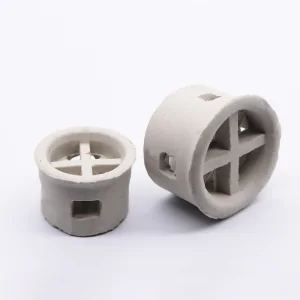
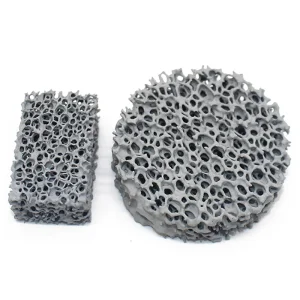
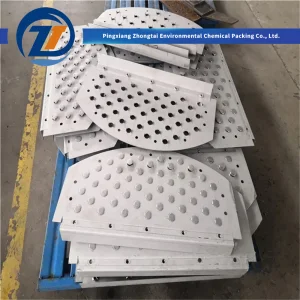
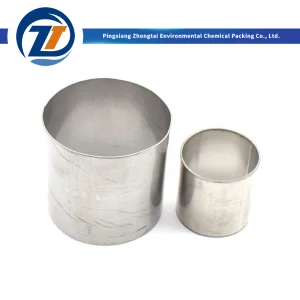
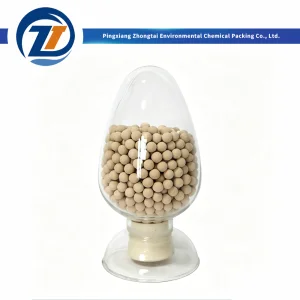
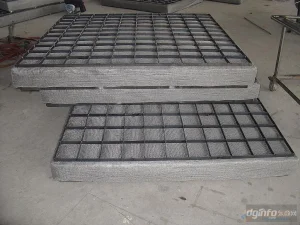
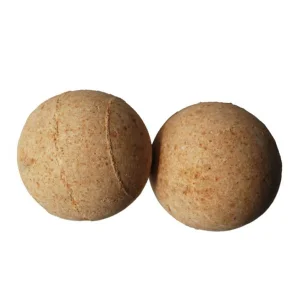
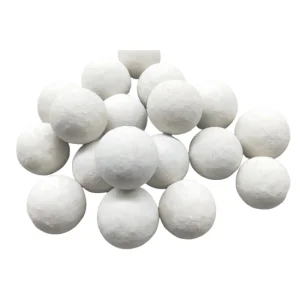
Expanded product lines engineered in Pingxiang to support diverse chemical separations, gas treatment, catalyst beds, and filtration units.
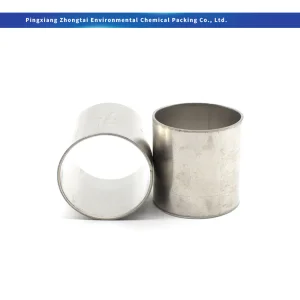
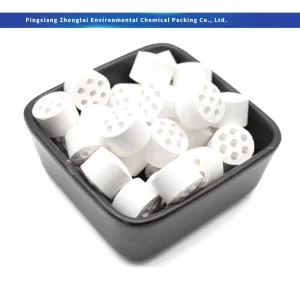
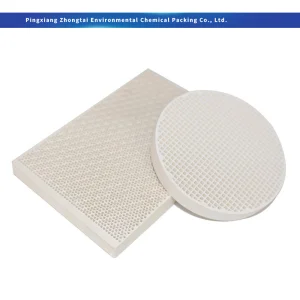
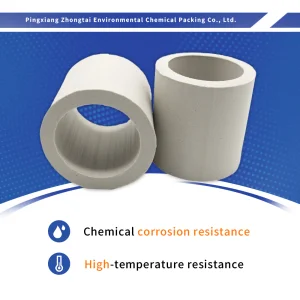
Contact our chemical process engineers for hydrodynamic sizing evaluations, free product samples, or direct quotation schedules for standard and custom polymer packings.
