Factory-direct industrial ceramic media, metallic random packings, and structured catalysts manufactured at our Pingxiang production base for petrochemical reactors, solvent purification columns, and high-temp furnaces.
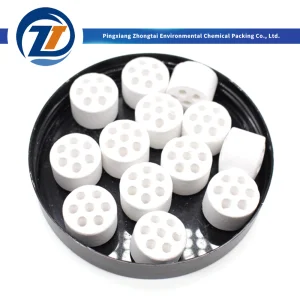
Wholesale High Strength Ceramic Proppant Bauxite Fracturing Media for Oil and Gas Well Manufacturers, Factory
View Specifications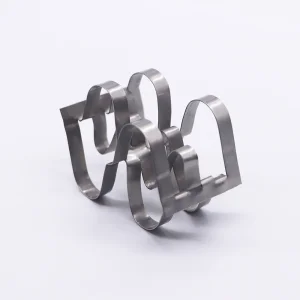
China Metal Super Raschig Ring Tower Packing Factory, Factories
View Specifications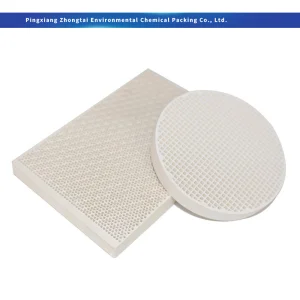
Wholesale 400 CPSI Cordierite Heater Plate | High-Temp Infrared Industrial Heater Supplier, Factory
View Specifications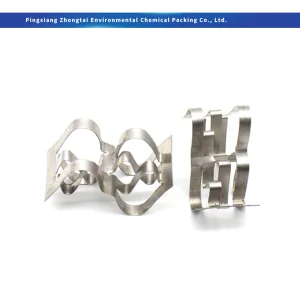
China High Capacity 304 & 316 SS Metal Super Raschig Ring (RSR) for Low Pressure Drop & Efficient Mass Transfer Factories, Pricelist
View Specifications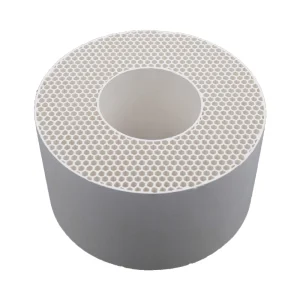
China Thermal Storage Rto/Rco Honeycomb Ceramic as Catalytic Converter for Heat Recovery Manufacturers, Quotes
View Specifications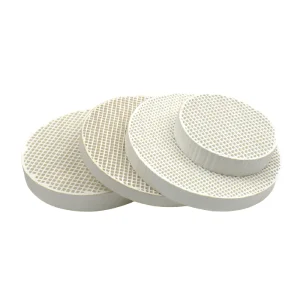
Wholesale Infrared honeycomb ceramic plate for BBQ Supplier, Pricelist
View Specifications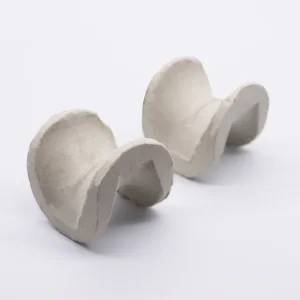
China Ceramic Berl Ring Tower Packing Suppliers, Pricelist
View Specifications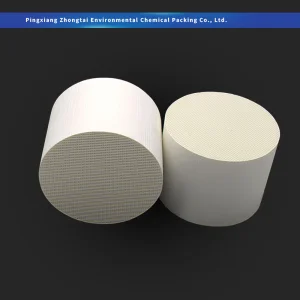
China Metal Honeycomb Catalyst Substrate | Ceramic-Coated Monolithic Structure Manufacturer, Suppliers
View SpecificationsHow crystalline aluminosilicate framework cavities break binary azeotropes, bypass thermodynamic distillation boundaries, and reduce residual moisture to sub-10 ppm levels without side-reaction catalytic degradation.
Zeolite molecular sieves exploit uniform, crystallographically defined pore apertures. Water molecules possess a kinetic diameter of approximately 2.6 to 2.8 Å. By synthesizing potassium-exchanged Type 3A aluminosilicates with an effective aperture of ~3.0 Å, polar water dipoles penetrate the α-cage while organic solvents—such as ethanol (4.4 Å), acetonitrile (4.3 Å), or THF (4.7 Å)—are strictly excluded via steric hindrance, eliminating co-adsorption losses and runaway bed temperature spikes.
The internal crystalline cages of Linde Type A (LTA) and Faujasite (FAU) architectures are populated by exchangeable mobile cations (K⁺, Na⁺, Ca²⁺). These cations generate localized electrostatic field gradients exceeding 10¹⁰ V/m. Water molecules, having a substantial permanent dipole moment (1.85 D), bond through exothermic chemisorption and high-energy physisorption, generating Type I Langmuir adsorption isotherms characterized by immense drying capacity even below 50 ppm moisture.
Traditional ternary azeotropic distillation of polar solvents requires hazardous entrainers such as benzene or cyclohexane, risking solvent cross-contamination and massive reboiler thermal duties. Fixed-bed molecular sieve adsorption operates as a non-thermal physical extraction process, stripping moisture from ethanol-water (95.6% azeotrope), isopropanol-water (87.7% azeotrope), or THF-water mixtures down to <5 ppm without leaving harmful volatile residue.
In polar solvents containing carbonyl groups (e.g., acetone) or polymerizable double bonds, incorrect zeolite choice causes severe bed fouling. Type 4A or 13X sieves present acidic framework sites and larger apertures (~4 Å to ~10 Å) that admit acetone molecules, triggering catalytic aldol condensation into diacetone alcohol and mesityl oxide. Pingxiang Zhongtai's high-purity, alkali-stabilized 3A solvent-drying beads guarantee strict pore calibration to 2.9–3.1 Å, locking out the organic backbone while achieving deep anhydrous dew points.
From hydro-thermal synthesis autoclaves to precision spherical pelletization and energy-efficient tunnel calcination, our Pingxiang manufacturing ecosystem ensures tight chemical consistency and superior attrition resistance.
Pingxiang Zhongtai Environmental Chemical Packing Co., Ltd. sits at the heart of Jiangxi's specialized chemical ceramics cluster. We leverage direct pipeline access to high-purity sodium silicate, sodium aluminate, and activated kaolin clay binders. This complete upstream integration ensures continuous batch uniformity, eliminates supply chain bottlenecks, and shields global procurement directors from raw material spot volatility.
Industrial solvent drying columns subject adsorbent beads to high hydraulic shock and thermal cycling during regeneration. Utilizing high-cohesion, purified attapulgite and sepiolite clay formulations fired in computer-controlled roller hearth kilns, our beads achieve a crush strength >20 N (beads) and >45 N (pellets), with ASTM D3802 attrition rates of <0.08 wt%, eliminating downstream filter blinding.
In our factory, sodium-type (4A) zeolite powder undergoes continuous multi-stage potassium counter-current ion exchange under PLC-monitored stoichiometry. We sustain a tight K⁺/Na⁺ substitution balance exceeding 65% exchange efficiency. This prevents pore size drift (which leads to co-adsorbing light solvent alcohols) while retaining maximum water saturation adsorption capacity above 21.5 wt%.
Serving EPC contracting conglomerates, fine chemical synthesis plants, and multinational battery raw material producers across 60+ countries.
Review kinetic diameters, critical molecular dimensions, recommended crystal frameworks, and process design targets for liquid-phase fixed bed dehydration systems.
| Solvent Name | Kinetic Diameter (Å) | Recommended Sieve | Initial Moisture (Typical) | Guaranteed Effluent | Key Process Considerations |
|---|---|---|---|---|---|
| Ethanol (Bio / Anhydrous) | 4.4 Å | 3A-EDG Ethanol Grade | 0.5% – 5.0% w/w | < 50 ppm | Excludes ethanol to prevent co-adsorption and thermal runaway; ideal for biofuel stripping columns. |
| Methanol (CH₃OH) | 3.8 Å | Special 3A Low-Pore | 0.1% – 1.0% w/w | < 30 ppm | Critical pore control: tight K⁺ exchange ensures methanol (3.8 Å) cannot enter the pore structure. |
| Acetonitrile (MeCN) | 4.3 Å | Type 3A Solvent Bead | 500 – 3,000 ppm | < 10 ppm | HPLC / Pharmaceutical grade synthesis; non-acidic matrix eliminates hydrolysis to acetamide. |
| Tetrahydrofuran (THF) | 4.7 Å | Type 3A / 4A Bead | 0.2% – 2.0% w/w | < 10 ppm | Organometallic synthesis & Grignard reactions; prevent ether peroxide formation with stabilized media. |
| Acetone (CH₃COCH₃) | 4.6 Å | Type 3A Only (Strict) | 0.3% – 1.5% w/w | < 20 ppm | Never use 4A or 13X! Large pores catalytically dimerize acetone into diacetone alcohol (DAA). |
| Dichloromethane (DCM) | 3.9 Å | Type 3A Acid-Resistant | 200 – 1,000 ppm | < 5 ppm | Halogenated solvent requires low-leach binder to avoid trace HCl generation during thermal regeneration. |
| N-Methyl-2-pyrrolidone (NMP) | > 5.5 Å | Type 4A / 13X Sieve | 500 – 4,000 ppm | < 15 ppm | Lithium battery cathode slurry solvent recovery; high dynamic water capacity under elevated temperature. |
| Isopropanol (IPA) | 4.7 Å | Type 3A High-Flow | 0.5% – 12.0% azeotrope | < 50 ppm | Semiconductor wiping grade & pharmaceutical processing; dual-column Temperature Swing Adsorption (TSA). |
Engineered integration of adsorbent media beds, support balls, and liquid distributors for multi-column Temperature Swing Adsorption (TSA) and continuous closed-loop solvent reclamation plants.
In fixed-bed solvent drying, the Mass Transfer Zone (MTZ) is the dynamic active band where moisture drops from feed saturation down to ppm equilibrium. By delivering tightly classified spherical beads (1.6–2.5 mm or 3.0–5.0 mm) with an exact sphericity index >0.95, Zhongtai sieves produce flat, stable breakthrough curves. This sharp MTZ minimizes unutilized bed capacity (LUB), extending on-stream production cycles between regenerations.
Proper column packing mandates an integrated packing geometry. High superficial liquid velocities can cause fluidization, bead abrasion, and channeling. We engineer combined systems: high-density 17–23% Al₂O₃ inert ceramic balls at the bottom support grid, topped with calibrated molecular sieve beads, and capped by 99% high-alumina balls to eliminate turbulence and hold the bed stable under reverse-flow purge.
Zeolite water desorption requires elevating the bed temperature to 200°C–250°C using dry nitrogen or superheated solvent vapor purge. Our low-binder, high-cristobalite-free crystalline zeolites resist repeated hydrothermal hydrothermal-aging stress. They withstand hundreds of thermal regeneration cycles without crystalline framework collapse or loss of micropore accessibility.
Comprehensive batch testing standards that procurement managers and chemical process engineers can verify before shipping from our factory.
Every single batch undergoes automated mechanical crush testing across 50 random beads, ensuring a statistically verified compressive strength profile. Attrition rates are checked using standardized ASTM D3802 ball-pan agitation, guaranteeing minimal dust creation during pneumatic filling, transport, and liquid column pressurization.
Static water adsorption is measured at both 10% relative humidity (evaluating micro-pore affinity) and 80% relative humidity (total saturation equilibrium capacity ≥21.5 wt% at 25°C). Loss on Ignition (LOI) is maintained below 1.5 wt% directly out of our calcination kilns to ensure instant ready-to-run performance upon site delivery.
Moisture protection during ocean freight is paramount. Zhongtai provides multi-barrier packaging configurations: 25 kg air-tight metal drums with hermetic gasket seals, 140 kg / 150 kg heavy-gauge steel drums with internal polyethylene foil barrier bags, or dry nitrogen-purged super-sacks mounted on fumigated wooden or CP3 pallets.
In-depth technical answers addressing solvent compatibility, co-adsorption phenomena, bed regeneration cycles, and continuous operation best practices.
Explore our complete engineering catalog including high-surface cordierite monoliths, precision grinding media, stainless steel distillation internals, and 5A PSA gas separation zeolites.
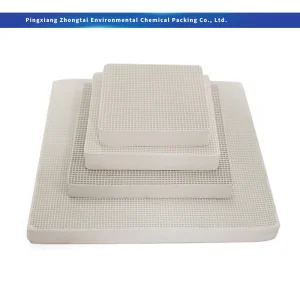
China High Surface Area Cordierite / Alumina Honeycomb Ceramic Plate Monolith Substrate for RTO, Catalyst Support & Chemical Absorption Factories, Pricelist
View Specifications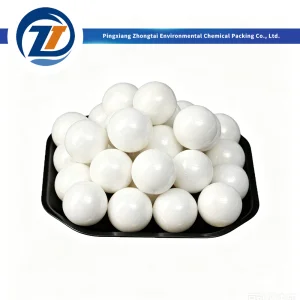
Wholesale Ultra Fine Yttria Stabilized Zirconia Grinding Ball Ceramic Milling Bead Manufacturer, Suppliers
View Specifications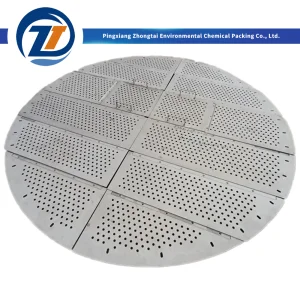
China High Efficiency 304 316L Stainless Steel Metal Sieve Tray for Distillation, Absorption & Stripping Columns Factory, Pricelist
View Specifications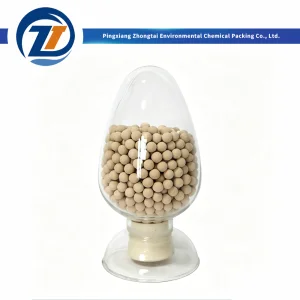
Wholesale High Performance 5A Molecular Sieve Zeolite Adsorbent for PSA Gas Separation Manufacturer, Manufacturers
View Specifications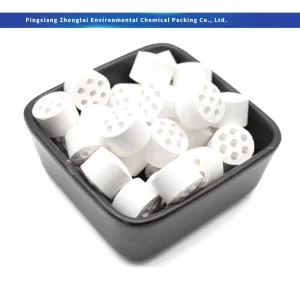
China Ultra-High Crush Resistance Ceramic Proppant 20/40 30/50 40/70 Mesh for Oil & Gas Hydraulic Fracturing Manufacturer, Factory
View Specifications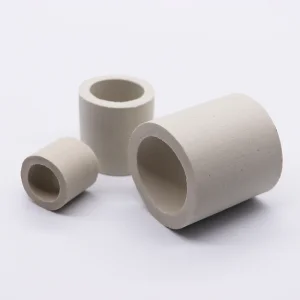
China Ceramic Raschig Ring Tower Packing Manufacturers, Factory
View Specifications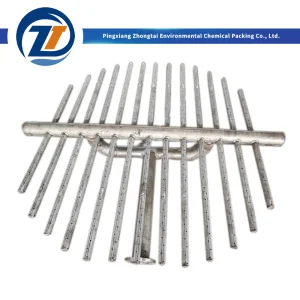
China 304 316L Stainless Steel Metal Pipe Liquid Distributor / Perforated Spray Pipe Distributor for Uniform Liquid Distribution in Packed Columns Suppliers, Pricelist
View Specifications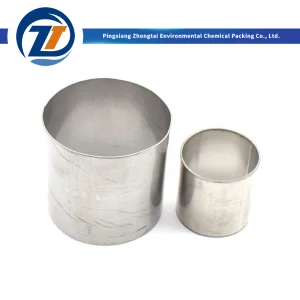
China High Strength 304 316L Stainless Steel Metal Raschig Ring Random Tower Packing 16mm 25mm 38mm 50mm 76mm for High Temperature & High Pressure Columns Manufacturers, Factories
View SpecificationsProvide your column dimensions, target solvent, initial water content in ppm, and operating flow rates. Our technical specialists provide complete mass transfer calculations, bed pressure drop predictions, and batch test documentation.
