ISO 9001:2015 & Industrial Adsorption Engineering Standard

China Molecular Sieve Regeneration Manufacturers & Pricelist

A definitive engineering whitepaper on synthetic zeolite reactivation kinetics, thermal swing adsorption (TSA/PSA) design parameters, and factory-direct procurement pricing from Pingxiang Zhongtai Environmental Chemical Packing Co., Ltd.

Integrated Equipment Inventory • Batch I

Primary Mass Transfer, Filtration & Adsorption Media

Explore key process components manufactured at our Pingxiang Hi-Tech industrial hub, engineered to withstand aggressive chemical atmospheres, severe thermal swings, and dynamic hydrodynamic loads.
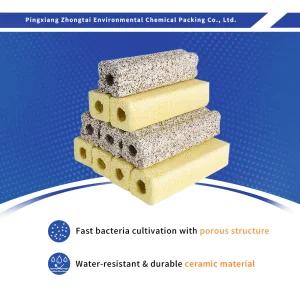
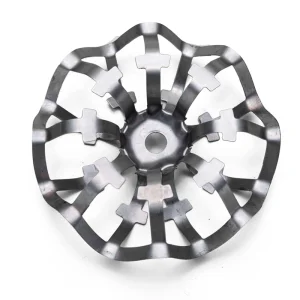
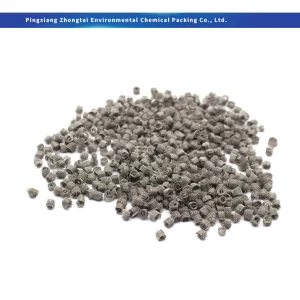
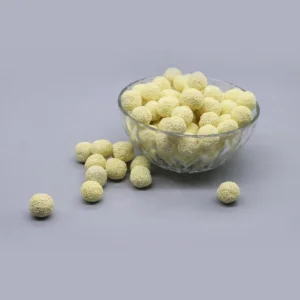
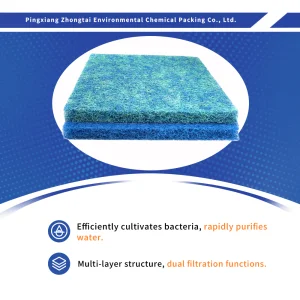
Bio-Media Media Far-infrared Nitrifying Bacteria House Bio Filter Media

Wholesale Far-infrared Nitrifying Bacteria House Aquarium Bio Filter

Request Spec Quote
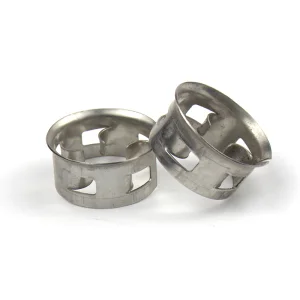
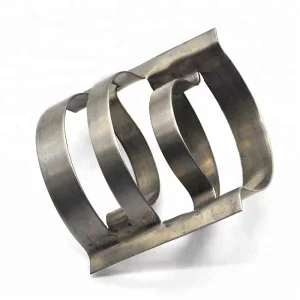
Precision Distillation Dixon Ring Wire Mesh Random Packing

Wholesale 304 316L Stainless Steel Metal Dixon Ring Wire Mesh Packing

Request Spec Quote
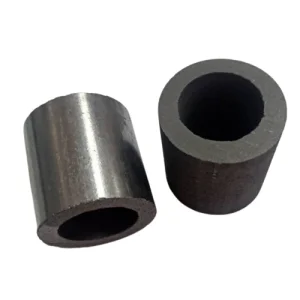
Corrosive Service Carbon Graphite Raschig Ring Tower Packing

China Carbon Graphite Raschig Ring Tower Packing Manufacturer

Request Spec Quote
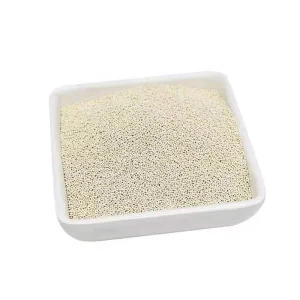
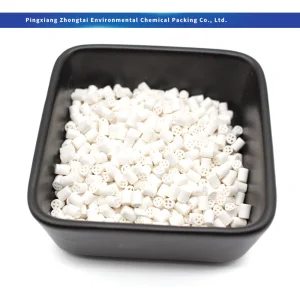
Catalyst Bed Support 90% Al2O3 Honeycomb Ceramic Proppant Filter

China 90% Al2O3 Honeycomb Ceramic Proppant Filter for Hydrogenation

Request Spec Quote
Technical Whitepaper Series • Section 01

Thermodynamic Fundamentals & Desorption Isotherm Dynamics

Zeolite molecular sieves (Types 3A, 4A, 5A, 13X, and 13X-HP) exhibit high equilibrium adsorption capacities for polar and polarizable molecules due to their crystallographic aluminosilicate framework and uniform sub-nanometer cage architectures. However, continuous industrial operation progressively saturates internal micropores, mandating thermally, kinetically, and barometrically precise regeneration to recover the pristine dynamic adsorption capacity (breakthrough capacity).

Langmuir & Polanyi Adsorption Potential Desorption

Adsorbate capture within zeolite cages relies on localized electrostatic dipole-quadrupole interactions. Desorption demands an enthalpy input ($\Delta H_{ads}$) exceeding the heat of vaporization, typically ranging from 45 to 65 kJ/mol for polar water molecules on Type 4A and 13X lattices.

  • Elevated temperature shifts the vapor-solid equilibrium isotherm downward.
  • Inert gas sweeping reduces adsorbate partial pressure ($P_i$), maintaining an aggressive driving force ($\Delta P$).
  • Prevents retrograde condensation within the intercrystalline macropores.

Hydrothermal Degradation & Sintering Prevention

The primary pitfall in premature sieve failure during regeneration is hydrothermal de-alumination. When moisture is desorbed too rapidly at temperatures above 180°C without adequate superficial gas velocity, localized steam creates hydrolytic cleavage of structural Si-O-Al bonds.

  • Destruction of crystalline sodalite cages, inducing phase transformation to amorphous aluminosilicates.
  • Collapse of dynamic water capacity from >21% wt down to <11% wt.
  • Strict multi-stage ramp rates (0.5–1.5°C/min) mitigate hydrothermal stress.

Mass Transfer Zone (MTZ) Velocity Management

During the thermal swing cycle, the reactivation thermal front must progress counter-currently to adsorption flow. This pushes the desorbing water/heavy hydrocarbon band toward the vessel inlet, keeping the product outlet zone exceptionally pristine.

  • Target outlet gas moisture dew points down to −80°C to −100°C (cryogenic standard).
  • Minimizes thermal hysteresis across deep fixed-bed reactors.
  • Reduces residual water loading ($q_r$) below 1.5 wt% on dry basis.
>99.2%
Equilibrium Capacity Recovery
<−100°C
Achievable Cryogenic Dew Point
3,000+
Thermal Cycles Verified Lifespan
≥85 N
Post-Regen Bead Crush Strength

Engineering Rule of Thumb from Zhongtai R&D: To eliminate retrograde condensation during thermal desorption, the regeneration gas velocity must maintain a Reynolds number ($Re_p$) > 25 across the packing bed, ensuring turbulent boundary-layer convective heat transfer while staying well below the minimum fluidization velocity ($U_{mf}$) to prevent abrasive bead attrition.

Global Sourcing Intelligence • Section 02

Enterprise Procurement Matrix: Zeolite Grades vs. Regeneration Criteria

Global engineering, procurement, and construction (EPC) firms, industrial gas operators (Air Products, Linde, Air Liquide specifications), and downstream petrochemical refiners require precise alignment between adsorbent chemistry, vessel mechanical design, and thermal reactivation protocols.

Adsorbent Zeolite Grade Pore Diameter (Å) Key Adsorbates Removed Regen Desorption Temp Range (°C) Recommended Purge Gas Medium Equilibrium Capacity (wt% H2O) Industrial Applications
Type 3A (K-A Zeolite) ~3.0 H2O, moisture traces 180 – 240 °C Dry cracked gas, N2, residue methane ≥ 21.0% Cracked olefin drying, ethanol dehydrators, LNG units
Type 4A (Na-A Zeolite) ~4.0 H2O, CO2, SO2, H2S, C2H6 200 – 260 °C Dry Instrument Air, Nitrogen, Pure Steam purge ≥ 21.5% Compressed air dryers, closed-cycle air brakes, solvent labs
Type 5A (Ca-A Zeolite) ~5.0 n-Paraffins, Mercaptans, H2S, CO2 220 – 280 °C High-purity H2, dry fuel gas, N2 ≥ 21.5% Normal-iso paraffin separation, H2 PSA purification
Type 13X (Na-X Faujasite) ~10.0 H2O, CO2, Hydrocarbons, Siloxanes 240 – 320 °C Dry N2, Air sweep, Process purge gas ≥ 24.0% Cryogenic ASU pre-purification (PPU), natural gas sweetening
Type 13X-HP (High Performance) ~9.5 – 10.0 N2 (high selectivity over O2) Ambient (PSA/VPSA) or 120–150 °C Dry Oxygen purge or deep vacuum desorption ≥ 24.5% Medical oxygen concentrators, industrial PSA/VPSA O2 plants

Total Cost of Ownership (TCO): In-Situ vs. Bed Replacement

Plant operators face continuous evaluations between multi-cycle thermal regeneration and complete bed repacking. High-grade synthetic zeolites manufactured by Pingxiang Zhongtai are engineered with high-purity kaolin/attapulgite binders (<15 wt%), exhibiting dynamic attrition resistance and low pore-blocking tendency.

By implementing a closed-loop automated regeneration cycle, refiners extend media lifetime from 24 months to upwards of 72 months, generating OPEX savings in excess of $420,000 per multi-bed train.

Support Bed Layering with High-Alumina Inert Ceramic Balls

Molecular sieve beds cannot sit directly on vessel support screens due to hydrodynamic channeling and structural point-loading. Zhongtai supplies integrated packages pairing molecular sieves with 17–23% and 99% high-purity Al2O3 inert ceramic balls.

Graded layers (1/8", 1/4", 1/2", 1") provide uniform gas distribution during intense heating phases and physically restrain the top surface during depressurization transients, preventing fluidization-induced bead breakage.

Process Engineering Execution • Section 03

Industrial Regeneration Process Flow Architectures

Thermal Swing Adsorption (TSA) and Pressure Swing Adsorption (PSA) represent the primary process configurations for driving desorption kinetics. The operational execution determines whether zeolitic sieves reach their thermodynamic equilibrium limit or succumb to accelerated pore deactivation.

01

Depressurization & Gas Sweep

Slowly ramp vessel pressure down to near-atmospheric at controlled rates (≤0.5 bar/min). This suppresses turbulence, prevents structural bed movement, and releases co-adsorbed hydrocarbons prior to high-temperature application.

02

Convective Thermal Ramp

High-purity slipstream purge gas is superheated in fired or electric circulation heaters. Gas enters counter-current to adsorption flow, heating the bed uniformly through a controlled ramp (50°C → 120°C plateau → 250°C target).

03

Desorption Soak Period

The bed is maintained at peak regeneration temperature (200–320°C depending on molecular sieve grade) until the bottom/outlet temperature rises above 180°C, verifying that the dynamic desorption thermal front has traversed the complete bed depth.

04

Counter-Current Cool & Pressurize

Dry, cold process gas cools the vessel down to operating temperature (<40°C). Moisture-free cooling prevents re-adsorption, followed by slow pressurization with dry feed gas to prevent hydraulic shock before switching back online.

Mitigating Hydrocarbon Coking & Heavy End Contamination

In natural gas treating and cracked gas dehydration facilities, carry-over of compressor lubricating oils, olefins, or heavy aromatics (BTEX) leads to severe bed coking. When exposed to temperatures >200°C during regeneration, unstripped heavy hydrocarbons crack inside the zeolite micropores, depositing inert elemental carbon that permanently blocks cage entry apertures.

Low-Temperature Stripping

Introduce an intermediate soak plateau at 110–130°C for 2–4 hours with high purge gas velocity to vaporize light aliphatic fractions before initiating the high-temperature desorbing phase.

Guard Bed Interception

Utilize a top sacrificial layer of wide-pore silica gel or active alumina to intercept heavy hydrocarbons and liquid mist droplets prior to reaching the primary zeolite molecular sieve bed.

Oxidative Regeneration Controls

When decoking is mandatory, tightly controlled off-line oxidation with lean O2 (<1.0 vol% in N2) at strictly monitored exotherm boundaries burn off carbon without exceeding 450°C.

Procurement Economics • Section 04

China Manufacturing Economics & 2025 Factory Pricelist Benchmark

Pingxiang, Jiangxi Province, functions as the global epicenter for industrial mass transfer ceramics, towers internals, and synthetic adsorbents. By collocating mineral calcination, chemical synthesis, and precision sphere extrusion within one consolidated industrial cluster, Pingxiang Zhongtai eliminates multi-tier handling markups.

Product Classification Form Factor & Size Range Standard Packaging Minimum Order (MOQ) Indicative Price Range (USD/Metric Ton) Key Factory Quality Certifications
Molecular Sieve 3A 1.6–2.5 mm / 3.0–5.0 mm Spheres 25kg Drum / 1000kg Super-Sack 1 MT $1,650 – $2,250 / MT ISO 9001, ASTM D3802 Attrition <0.1%
Molecular Sieve 4A 1.6–2.5 mm / 3.0–5.0 mm Spheres Airtight Steel Drums w/ N2 1 MT $1,450 – $1,950 / MT Static H2O Adsorption ≥ 21.5%
Molecular Sieve 5A 1.6–2.5 mm / 3.0–5.0 mm Pellets 25kg Vacuum Cartons / Metal Drums 1 MT $1,750 – $2,400 / MT Ca2+ Ion Exchange Rate ≥ 72%
Molecular Sieve 13X 1.6–2.5 mm / 3.0–5.0 mm Spheres 25kg Drum / 125kg Steel Drums 1 MT $1,850 – $2,550 / MT CO2 Adsorption ≥ 18.0 cm3/g
Molecular Sieve 13X-HP 0.4–0.8 mm / 1.6–2.5 mm Beads Sealed Steel Drum w/ desiccant 500 kg $3,200 – $4,500 / MT High N2/O2 Separation Factor ≥ 3.0
Inert Ceramic Balls (17–23% Al2O3) 3mm – 50mm Solid Spheres 25kg PP Bag / 1000kg Jumbo Bag 1 MT $450 – $750 / MT Crush Strength > 500 N/bead (1/2")
High-Purity Alumina Balls (99% Al2O3) 3mm – 25mm Spheres Steel Drums on Export Pallets 1 MT $2,100 – $3,200 / MT Silica leaching < 0.1%, Steam Stable
RTO Honeycomb Ceramic 150 × 150 × 300 mm Blocks Wooden crates with foam cushioning 10 m3 $950 – $1,400 / m3 Thermal Shock Cycles ≥ 40 times

Note on Contractual Pricing: Sieve prices fluctuate based on synthetic zeolite raw materials (silicate minerals, sodium aluminate), lithium exchange salts for high-performance VPSA grades, and natural gas calcination utility tariffs. Firm bids include full certificates of analysis (COA) per batch, FOB Chinese ports (Shanghai, Ningbo, Shenzhen), or CIF worldwide.

R&D Horizons • Section 05

Technology Roadmap: Next-Generation Adsorption & Electrified Regeneration

Driven by net-zero industrial targets, circular lifecycle mandates, and carbon capture (CCUS) scaling, molecular sieve regeneration is transitioning from gas-fired, thermal-inefficient sweep systems into dynamic, AI-modeled, and electrified desorption regimes.

AI-Powered Dynamic Breakthrough Prediction

Integration of real-time acoustic sensors and laser diode spectroscopy (TDLAS) along fixed bed cross-sections. Machine learning algorithms model the non-linear expansion of the Mass Transfer Zone (MTZ).

  • Eliminates rigid timer-based cycles in favor of adaptive thermal triggering.
  • Reduces regeneration sweep gas loss by 28–42%.
  • Maintains bed life by eliminating over-heating stress cycles.

Electrified Direct Resistance & Microwave Heating

Decarbonizing industrial desorption requires moving away from combustion-based purge gas heaters. Zhongtai collaborates with chemical engineering institutions on conductive-matrix sieves and microwave-responsive zeolites.

  • Volumetric dipole excitation directly desorbs water molecules instantaneously.
  • Achieves regeneration temperatures in <15 minutes without large purge gas volumes.
  • Facilitates direct deployment in clean green hydrogen dehydration networks.

Monolithic Honeycomb Structured Zeolites

Replacing traditional pelletized/spherical random beds with extruded zeolitic ceramic monoliths featuring parallel micro-channels. Combines low pressure drop (ΔP) with superior mass transfer kinetics.

  • Allows 300% higher superficial gas velocities without fluidization risks.
  • Enables ultra-fast cyclic TSA operations for direct air capture (DAC).
  • Zero bead attrition and zero downstream dusting filters required.
Compliance Assurance • Section 06

Factory Verification, Quality Protocols & Global Logistics

For international plant owners and engineering EPC contractors, supply chain reliability is defined by strict adherence to international testing standards, batch-to-batch repeatability, and robust packaging built for oceanic export transit.

ASTM Laboratory Quality Protocols

Every lot manufactured at our Pingxiang plant undergoes exhaustive physical and chemical evaluation prior to release.

  • ASTM D3802: Dynamic Ball-Pan Attrition & Abrasion Resistance (< 0.1% wt).
  • ASTM D2854: Standard Tamped Bulk Density verification.
  • ASTM C518: Thermal degradation resistance and loss on ignition (LOI < 1.5% at 575°C).
  • Single-Bead Crush Strength: Exceeding 25 N for 1.6mm beads; > 80 N for 3.0mm beads.

Air-Tight Packaging & Inert Padding

Molecular sieves possess aggressive ambient moisture affinity. Improper packaging causes saturation prior to delivery.

  • Carbon steel drums with hermetic rubber gasket closures and nitrogen purge seals.
  • Multi-ply heavy-duty composite foil vacuum bags inside reinforcement crates.
  • Fumigation-free ISPM-15 compliant wooden pallets with stretch-wrap hoods.
  • Desiccant indicator packs embedded inside every container for quality audit.

Global Engineering Dispatch & Field Audits

Zhongtai stands behind its products through all installation and commissioning phases.

  • On-site bed loading supervision via dense-phase "sock" or rotational loader methods.
  • Detailed regeneration curve programming support for DCS/SCADA engineers.
  • Factory inspection welcome: Comprehensive facility audits conducted by international inspection authorities (SGS, BV, TÜV).
  • Rapid sample dispatches via air courier accompanied by formal SDS and TDS.
Knowledge Center • Frequently Asked Questions

Process Engineering & Sourcing FAQ

Explore specification-level engineering answers addressing regeneration temperatures, hydrothermal stability preservation, and bulk factory purchasing from China.

What is the optimal regeneration temperature for 3A, 4A, 5A, and 13X molecular sieves? +
Optimal regeneration temperatures depend upon the specific adsorbate and equilibrium requirements. For dehydration service, typical bed temperatures range between 200°C and 250°C for Type 3A and 4A, 220°C to 280°C for Type 5A, and 240°C to 300°C for Type 13X. When co-adsorbed heavy components such as carbon dioxide or mercaptans must be desorbed from 13X lattices, temperatures approaching 300–320°C may be required. Temperatures should not exceed 350°C to avoid triggering thermal sintering and structural collapse of the aluminosilicate crystal framework.
How does hydrothermal de-alumination occur, and how do we prevent it during TSA cycles? +
Hydrothermal de-alumination occurs when moisture desorbing from the molecular sieve remains trapped in the bed at elevated temperatures (>180°C) under high partial water pressure. The hot steam hydrolyzes tetrahedral aluminum atoms out of the zeolite lattice, irreversibly damaging the sodalite cages. To prevent this, process engineers must apply a multi-tier heating profile: an initial ramp and hold at 100–130°C to purge bulk water at moderate temperatures, coupled with sufficient superficial gas velocity (minimum 0.15 m/s) to sweep liberated water vapor away rapidly before raising the bed to peak desorption levels.
Can a coked or oil-fouled molecular sieve bed be fully regenerated on-site? +
Standard thermal swing regeneration cannot remove heavy hydrocarbon polymers or graphitic carbon coke deposits. If hydrocarbon fouling is localized to light condensates, an intermediate stripping step at 120°C using dry inert gas can vaporize the fraction. However, hard polymer coke requires an off-line controlled burn-off using dilute oxygen (<1% O2 in N2) at carefully monitored temperatures (380–420°C). Because this risks severe hydrothermal deactivation if residual moisture is present, severely coked beds are frequently replaced or guarded with a sacrificial layer of high-surface silica gel or active alumina.
What purge gas volume and velocity are required for effective thermal desorption? +
As a standard engineering baseline, the regeneration purge gas stream should represent 5% to 15% of the primary forward process flow, depending on pressure differential and thermal availability. The gas velocity must be designed above the minimum fluidization velocity ($U_{mf}$) threshold to prevent point channeling, but maintained below 70% of the terminal settling velocity to avoid bed lifting and abrasive attrition. Superficial gas velocities between 0.12 and 0.35 m/s at operating conditions are typical for vertical cylindrical fixed beds.
Why is counter-current flow mandatory during the regeneration heating phase? +
Counter-current flow introduces hot, clean purge gas at the effluent end of the bed (the zone where product gas departs during adsorption). This ensures that the product-end of the bed experiences the highest thermal profile and the lowest water partial pressure, rendering it completely active and clean. The desorbed water and impurities are driven downward/backward toward the vessel inlet where the media is already heavily loaded, avoiding contaminating the critical dynamic polishing zone.
How does Zhongtai ensure bead crush strength and prevent dusting during export shipping? +
Pingxiang Zhongtai utilizes specialized high-purity inorganic binders (attapulgite and fibrous clay systems) combined with precise rotational spherodizing and automated high-temperature rotary kilns. Our spheres achieve single-bead crush strengths of ≥25 N for 1.6mm and ≥80 N for 3.0mm particles. Beads undergo dual mechanical screening and high-velocity vacuum de-dusting before packaging in hermetically sealed carbon steel drums or multi-layer barrier foil bulk sacks mounted on shock-isolated export pallets.
What are the lead times, typical MOQs, and FOB/CIF payment terms from Pingxiang? +
Standard inventory grades (3A, 4A, 5A, 13X) carry a Minimum Order Quantity (MOQ) of 1 Metric Ton, with dispatch times of 7 to 10 days ex-factory. Custom ion-exchange formulations or tailored bead size distributions require a 5 MT MOQ with a 2 to 3-week production lead time. Commercial terms include FOB Chinese major ports (Shanghai, Shenzhen, Ningbo) or CIF/CFR to any global container terminal, supported by Irrevocable Letters of Credit (L/C at sight) or Telegraphic Transfer (T/T).
What inert ceramic ball sizes should be selected to support molecular sieve beds? +
To prevent bead migration into bottom outlet screens and ensure uniform hydraulic distribution, a multi-layer ceramic ball configuration is recommended: a bottom layer of 1" (25mm) balls over the grid, followed by 1/2" (13mm), 1/4" (6mm), and 1/8" (3mm) support layers immediately beneath the molecular sieve beads. On top of the bed, a 2" to 4" layer of 1/2" or 3/4" heavy inert balls is placed to hold down the adsorbent bed and prevent fluidization caused by upward pressure surges during bed changeover.
Integrated Equipment Inventory • Batch II

Specialized Random Packing, Tower Trays & Filtration Media

Engineered tower internals, ceramic saddles, and high-temperature metallurgical filters manufactured by Pingxiang Zhongtai for worldwide process engineering installations.
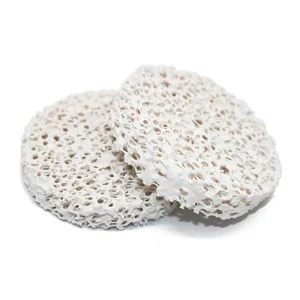
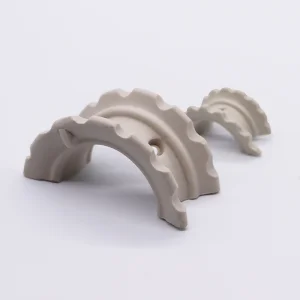
Foundry Filtration Alumina ceramic foam filter for Steel Casting

Wholesale Alumina Ceramic Foam Filter for Steel Casting Industry

Request Spec Quote
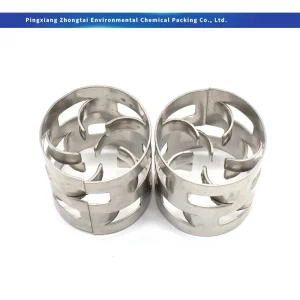
Chemical Distillation Metal Pall Ring Tower Packing

Wholesale Metal Pall Ring 16mm 25mm 38mm 50mm Tower Packing

Request Spec Quote
Aquaculture Media Fish tank biofilter far infrared bacterial house ball

Wholesale Fish Tank Biofilter Far Infrared Bacterial House Ball

Request Spec Quote
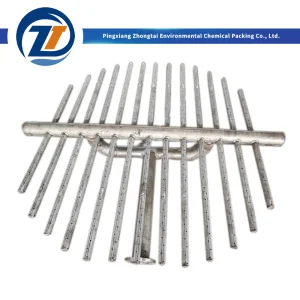
Liquid Distribution Stainless Steel Pipe Liquid Distributor

China 304 316L Stainless Steel Perforated Spray Pipe Distributor

Request Spec Quote
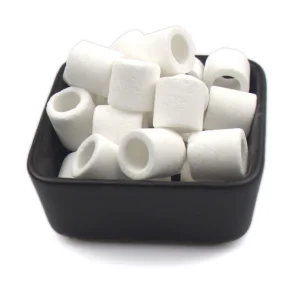
Biological Filtration Ceramic Glass Ring Aquarium Media

China Aquarium Ceramic Filter Media Ceramic Glass Ring Factory

Request Spec Quote
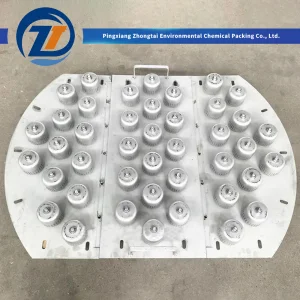
Mass Transfer Trays Stainless Steel Bubble Cap Tray

China 304 316L Stainless Steel Metal Bubble Cap Tray for High Turndown

Request Spec Quote