Direct factory delivery of molecular sieves, chemical tower packings, and catalytic ceramic support media engineered for global petrochemical, cryogenic gas, and environmental plants.
An in-depth analysis of crystalline aluminosilicate framework dynamics, kinetic mass transfer zones (MTZ), and hydrothermal regeneration protocols.
Molecular sieve filters represent the pinnacle of selective physisorption in industrial separation. Unlike amorphous silica gels or standard activated carbons, synthetic molecular sieves are crystalline hydrated aluminosilicates belonging to the zeolite mineral group. Their atomic structure comprises an infinitely extending three-dimensional skeletal framework of SiO4 and AlO4 tetrahedra cross-linked by shared oxygen atoms. Because aluminum cations possess a trivalent +3 state, every AlO4 tetrahedron incorporates an electrochemically unsatisfied negative charge within the crystal lattice, neutralized by counter-cations such as sodium (Na+), potassium (K+), calcium (Ca2+), or lithium (Li+).
These balancing cations reside within the intracrystalline apertures and directly dictate the crystallographic pore size of the sieve filter:
In continuous industrial gas and liquid process vessels, adsorption does not take place instantaneously across the entire vessel depth. Instead, the process proceeds along an axial Mass Transfer Zone (MTZ) that migrates through the column packing from the inlet toward the outlet. A molecular sieve filter's practical efficiency depends directly on minimizing the length of this MTZ:
As process feed enters the active fixed bed, the equilibrium section nearest the inlet becomes saturated with moisture or target sorbates. Ahead of this equilibrium front lies the active MTZ, where the concentration gradient falls from feed concentration down to the design effluent specification (typically <0.1 ppmv or -80°C to -100°C atmospheric dew point). If the molecular sieve exhibits poor macroporous diffusion or deficient hydrothermal crush strength, internal channeling occurs, lengthening the MTZ and triggering premature breakthrough, downstream piping freeze-up, or catalyst poisoning.
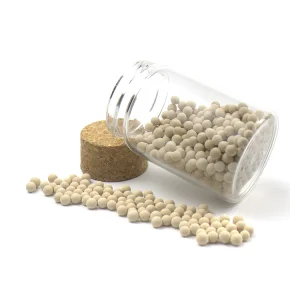
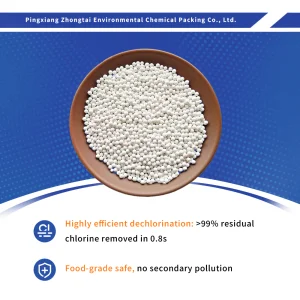
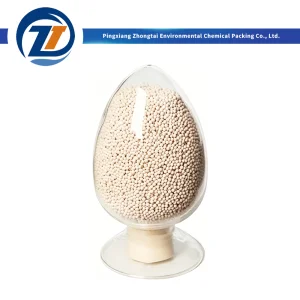
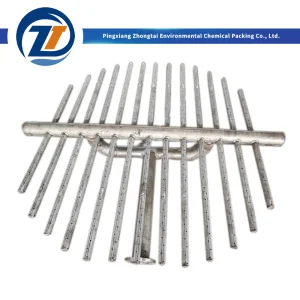
Pingxiang Zhongtai engineers its molecular sieve beads with an optimized micro-to-mesopore ratio, reducing Knudsen diffusion resistance within the pellet interior while maximizing single-pellet radial crush resistance (exceeding 25–70 N depending on bead size). When combined with robust bed support systems—such as 17–23% or 99% high-purity inert alumina ceramic balls and SS304/SS316L liquid distributors—fluidization, dusting, and pressure drop penalties governed by the Ergun equation are minimized.
Leveraging five decades of specialized ceramic engineering, concentrated mineral resources, and integrated automated calcination facilities in Jiangxi Province.
Situated within the Pingxiang industrial ceramics cluster, Zhongtai secures kaolinite clays, sodium silicate gels, and high-purity alumina within a 50 km logistics radius. This ensures raw material purity, zero supply chain decoupling, and unmatched cost-to-performance stability for overseas procurement contracts.
Our facility runs continuous automated granulators and computer-controlled natural gas rotary calcination kilns. Temperatures are regulated to ±1.5°C across drying, crystallization, and high-heat activation phases, ensuring uniform residual moisture (<1.0 wt% LOI) without thermal micro-fracturing.
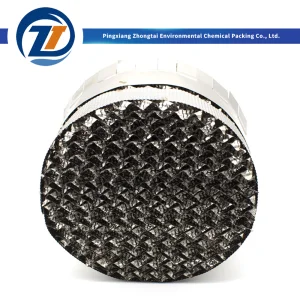
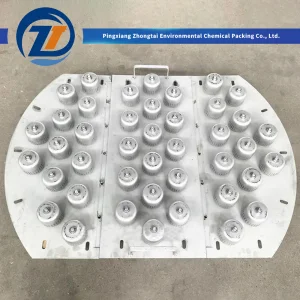
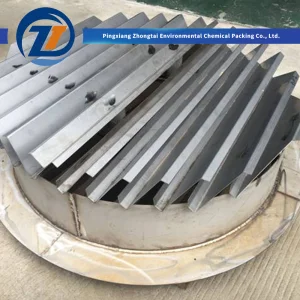
Unlike single-line media vendors, Zhongtai manufactures both chemical adsorption media (sieves, activated alumina) and mass transfer internals (bubble cap trays, structured corrugated packings, liquid redistributors). This vertical integration provides EPC contractors with guaranteed single-source mechanical fit.
Direct railway and high-speed highway trunks link our Pingxiang workshops to Ningbo, Shanghai, and Shenzhen container terminals. Standardized 55-gallon hermetic steel drums and 1000 kg vacuum-sealed bulk super-sacks ensure swift dispatch with zero maritime ambient vapor ingress.
Comprehensive physical and chemical parameters verified according to ASTM international testing methodologies for process vessel design.
| Adsorbent Grade | Pore Size (Å) | Form & Diameter | Bulk Density (g/ml) | Crush Strength (N) | Static H2O Ads. (wt%) | Residual H2O (% LOI) | Regen. Temp (°C) |
|---|---|---|---|---|---|---|---|
| Type 3A General | ~3.0 | Spherical (1.6-2.5mm / 3.0-5.0mm) | 0.70 – 0.74 | ≥ 35 N (1.6-2.5mm) | ≥ 21.0% | ≤ 1.0% | 180 – 250 |
| Type 3A-EPG (Ethanol) | ~3.0 | Pellet Extrudate (1.6mm / 3.2mm) | 0.68 – 0.72 | ≥ 30 N/cm | ≥ 20.5% | ≤ 0.8% | 190 – 260 |
| Type 4A Industrial | ~4.0 | Spherical (2.0-3.0mm / 4.0-5.0mm) | 0.68 – 0.73 | ≥ 40 N (2.0-3.0mm) | ≥ 21.5% | ≤ 1.0% | 200 – 300 |
| Type 5A PSA Grade | ~5.0 | Spherical (1.6-2.5mm / 0.4-0.8mm) | 0.68 – 0.72 | ≥ 30 N (1.6-2.5mm) | ≥ 21.5% | ≤ 0.8% | 200 – 310 |
| Type 13X-APG (Cryogenic) | ~9.0-10.0 | Spherical (1.6-2.5mm / 3.0-5.0mm) | 0.64 – 0.68 | ≥ 32 N (1.6-2.5mm) | ≥ 24.0% | ≤ 0.7% | 220 – 320 |
| Type 13X-HP (Medical O2) | ~9.0-10.0 | Micro-Bead (0.4-0.8mm) | 0.62 – 0.66 | ≥ 14 N (0.4-0.8mm) | ≥ 25.5% | ≤ 0.5% | 180 – 240 |
| Li-LSX (High Selectivity) | ~9.5 | Bead (0.4-0.8mm / 1.3-1.7mm) | 0.62 – 0.65 | ≥ 18 N (0.4-0.8mm) | ≥ 26.0% | ≤ 0.5% | 160 – 220 |
* Testing Standards Reference: Static water adsorption measured at 25°C, 60% relative humidity. Crush strength conducted via single-pellet radial compression testing according to ASTM D4179. Residual water loss on ignition (LOI) evaluated at 550°C.
Stringent compliance with international chemical processing frameworks, ensuring safety, batch uniformity, and environmental responsibility.
Our molecular sieve formulations are fully compliant with European Regulation (EC) No 1907/2006 (REACH). Thorough chemical analyses verify that Substances of Very High Concern (SVHC) remain below the 0.1% w/w threshold, guaranteeing safe handling in clean energy and pharmaceutical environments.
Every export lot is tested according to ASTM protocols: ASTM D3802 for ball-pan hardness and attrition rate, ASTM D2854 for apparent bulk density, and ASTM D4179 for single-pellet radial crush strength. Comprehensive Certificates of Analysis (COA) accompany every bill of lading.
To withstand severe thermal swing adsorption (TSA) protocols, our sieves undergo rapid thermal cycling tests from 250°C down to ambient temperatures. Structural crystal retention is monitored via X-ray Diffraction (XRD) to guarantee zero lattice collapse across thousands of regeneration cycles.
Zhongtai regularly partners with independent inspection organizations (SGS, Bureau Veritas, TÜV Rheinland) for container stuffing verification, moisture ingress surveillance, and chemical composition assay validation before customs export clearance.
Engineered for seamless integration into extreme operating regimes, including cryogenic fractionation, sour gas sweetening, and olefin desiccation.
13X-APG molecular sieve filters act as critical guard beds upstream of cryogenic liquefaction heat exchangers. They eliminate moisture and carbon dioxide down to <0.1 ppmv, preventing hazardous solid CO2 deposition and explosive acetylene build-up inside plate-fin evaporators.
Ethylene and propylene crackers rely on our custom-passivated Type 3A molecular sieve beads. Their precise 3 Ångström window rigorously prevents unsaturated monomer molecules from accessing active internal catalytic sites, averting polymerization green oil fouling and pressure drop spikes.
Engineered specifically for Pressure Swing Adsorption (PSA) and Vacuum PSA (VPSA) oxygen plants, our 5A and Lithium-LSX zeolites exhibit rapid nitrogen adsorption kinetics and high N2/O2 selectivity, reliably delivering continuous 93%±3% purity oxygen for hospital gas grids and metal fabrication.
Subsea and overland natural gas dehydration units face dynamic high-pressure environments (50–100 bar). Zhongtai 4A and 5A molecular sieves provide steady water dew point depression (<-80°C) while preventing methane hydrate crystallite formation, pipeline pitting corrosion, and downstream valve freezing.
How cutting-edge zeolite formulations are addressing the evolving challenges of the clean energy transition, hydrogen drying, and carbon management.
With the rapid expansion of water electrolysis facilities (PEM, Alkaline, and AEM technologies), hydrogen gas arrives saturated with water vapor and trace oxygen. Zhongtai is engineering specialized desiccant guard beds pairing Type 3A and 4A molecular sieves with deoxo catalysts. This combined system achieves sub-ppb moisture levels, meeting the stringent fuel cell purity standards established under ISO 14687 Grade D for heavy-duty fuel cell electric vehicles (FCEVs).
Furthermore, binderless zeolite synthesis represents the next generational shift in adsorption engineering. Standard molecular sieves typically incorporate 15–20 wt% inert inorganic clay binders (such as attapulgite or sepiolite) to achieve mechanical stability during bead extrusion. Zhongtai's advanced material team is scaling in-situ self-crystallized binderless zeolites, transforming the inert clay binder into pure active zeolite framework. This increases equilibrium capacity by 20–25% per unit vessel volume, allowing engineering firms to downsize reactor vessels and reduce parasitic footprint requirements.
Point-source flue gas decarbonization requires sorbent materials that combine high CO2 uptake capacity with low regeneration energy requirements. Standard chemical amine scrubbing systems (such as MEA and MDEA) suffer from solvent degradation, corrosivity, and high thermal reboiler penalties (requiring 3.0–3.8 MJ/kg CO2 removed).
Zhongtai is supplying modified 13X, LiX, and structured honeycomb zeolites for VPSA (Vacuum Pressure Swing Adsorption) carbon capture systems. By fine-tuning the framework Si/Al ratio and counter-cation electrostatic field gradient, our R&D laboratory has lowered thermal desorption temperatures down to 90–120°C. This allows plants to utilize low-grade industrial waste steam for bed regeneration, decreasing the operational energy penalty of carbon capture systems by over 30%.
Essential selection criteria for plant operators and process engineering managers to minimize Total Cost of Ownership (TCO).
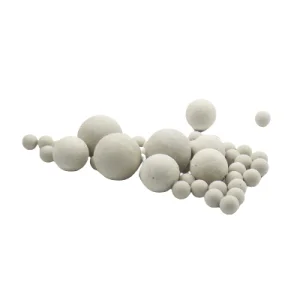
Always incorporate graduated layers of high-crush inert alumina ceramic balls (from 17% up to 99% Al2O3) at the bed bottom (13mm, 19mm, 25mm) and top (6mm, 10mm). This configuration dissipates inlet gas momentum, guarantees uniform radial gas velocity, and prevents fine zeolite bed fluidization and churning.
Molecular sieves are exceptionally hygroscopic and rapidly consume active capacity if exposed to ambient relative humidity. Zhongtai ships all media in UN-rated, heavy-gauge steel drums with internal hermetically sealed composite aluminum foil liners, or nitrogen-blanketed mega-bags to safeguard bed capacity.
Spherical beads offer roughly 10–15% lower pressure drop across the bed profile than cylindrical extrudates due to smoother bed packing packing dynamics. For high-gas-velocity applications (e.g., natural gas drying), spherical 3.0–5.0mm beads reduce blower power consumption while resisting abrasion wear.
Procuring factory-direct from Pingxiang Zhongtai eliminates multi-tiered trading broker markups by 25–40%. Coupled with a proven 3 to 5-year multi-cycle service life, plants reduce capital expenses (CAPEX) and recurring operating budgets (OPEX) without compromising process reliability.
Authoritative technical guidance compiled by Zhongtai's chemical process and adsorption engineering teams.
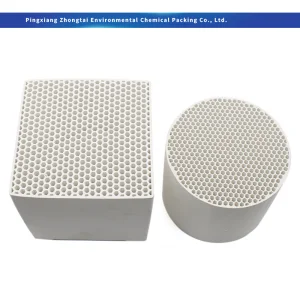
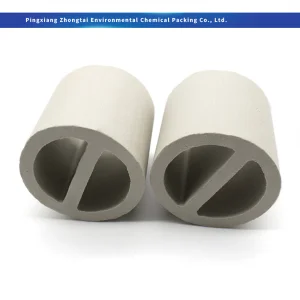
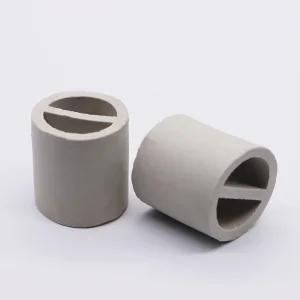
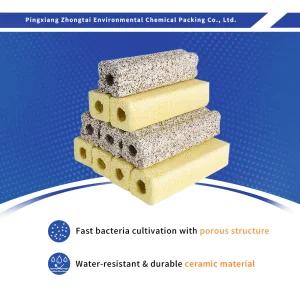
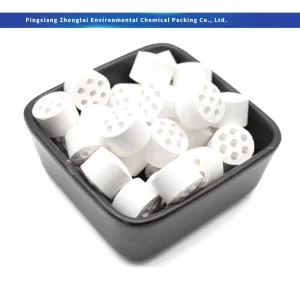
Complementary ceramic balls, structured corrugated packings, and specialty environmental filter media manufactured to international plant standards.
Submit your column diameter, operating pressure, temperature limits, and target stream contaminants. Our chemical process engineering team will deliver custom bed calculations, pressure drop simulations, and sample evaluations within 24 business hours.