Engineered in Pingxiang, Jiangxi Province — China's chemical packing industrial hub. Batch-certified mechanical crush strength, chemical leaching resistance, and superior thermal stability.
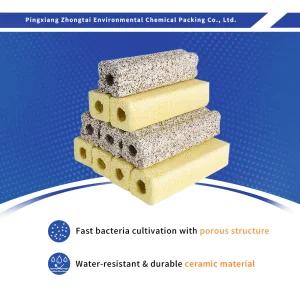
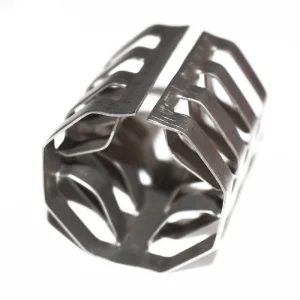
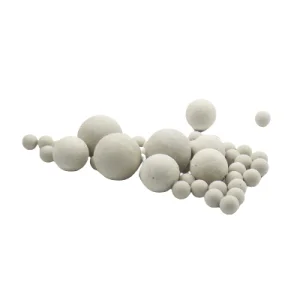
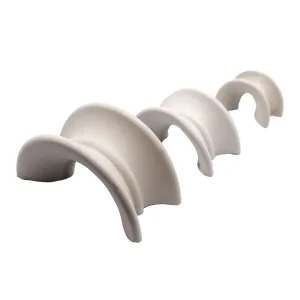
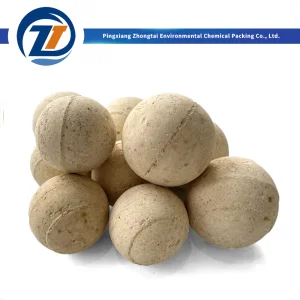
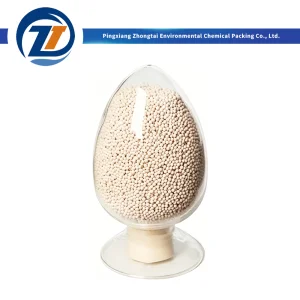
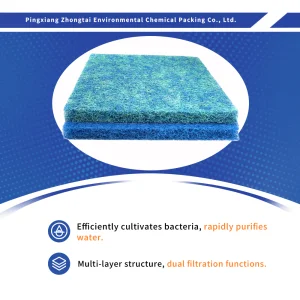
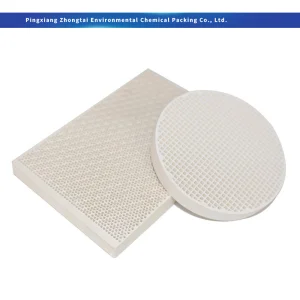
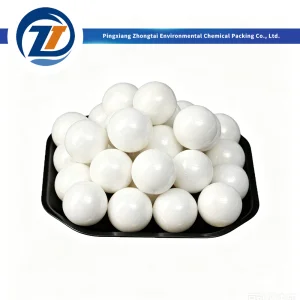
In modern continuous-flow chemical refining, inert ceramic balls serve as the uncompromised baseline for reactor integrity, fluid distribution, and catalyst preservation across multi-billion-dollar installations.
Hydrocracking, hydrotreating, reforming, and isomerization processes depend heavily on high-purity inert balls. As refiners shift from transportation fuels toward crude-to-chemicals (COTC) complexes, the operational lifetime of fixed-bed catalysts dictates total plant profitability.
Steam Methane Reforming (SMR) and Auto-thermal Reforming (ATR) for clean blue/green hydrogen demand extreme low-silica ceramics. High steam pressures cause volatile silicon migration, requiring strict 99%+ alpha-alumina formulations to protect downstream catalyst poisoning.
Western EPC contractors, European process licensors, and Middle Eastern mega-refineries rely on Chinese supply hubs like Pingxiang for cost stability, short manufacturing lead times, and massive single-kiln output capacities capable of dispatching 1,000+ metric ton orders without lot variances.
Comparing compositional grades from commercial standard 17-23% Al₂O₃ to reactor-critical 99.5% super-pure alpha alumina according to strict ASTM C-515 and HG/T 3683.1 standards.
| Alumina Grade | Al₂O₃ Content (%) | SiO₂ Content (%) | Bulk Density (g/cm³) | Water Absorption (%) | Crush Strength (1/2" Ball) | Max Temp Limit | Typical Critical Application |
|---|---|---|---|---|---|---|---|
| Standard Inert | 17% – 23% | 68% – 75% | 1.35 – 1.45 | < 3.0% | > 2.5 kN / ball | 1,100 °C | Hydrotreaters, Desulfurizers, Gas Dryers |
| Medium Alumina | 23% – 30% | 60% – 68% | 1.40 – 1.55 | < 2.0% | > 3.5 kN / ball | 1,200 °C | Pre-reformer tops, secondary sulfur condensers |
| High Alumina (68-75%) | 68% – 75% | 20% – 26% | 1.60 – 1.80 | < 1.0% | > 6.5 kN / ball | 1,400 °C | High-pressure hydrogenation, catalytic crackers |
| Super High (92-95%) | 92% – 95% | 4.0% – 6.0% | 1.90 – 2.15 | < 0.5% | > 12.0 kN / ball | 1,550 °C | Ethylene cracking quench towers, PTA reactors |
| Ultra-Pure Alpha (99.5%) | ≥ 99.5% | ≤ 0.15% | 2.10 – 2.30 | < 0.2% | > 20.0 kN / ball | 1,650 °C | Ammonia secondary reformers, SMR Hydrogen plants |
Market FOB China / CIF major port price guidelines based on alumina purity, ball diameter tolerances, production batch size, and international export packaging.
| Material Specification | Diameter Ranges (mm / inches) | Est. FOB China Price (USD / Metric Ton) | Est. CIF Main Port (USD / MT) | Standard Packaging | Batch Lead Time |
|---|---|---|---|---|---|
| 17% - 23% Standard Alumina | 3mm to 50mm (1/8" to 2") | $260 – $420 | $330 – $540 | 1 MT Jumbo Bag / 25kg Woven Bags | 5 – 10 Days |
| 23% - 30% Medium Alumina | 6mm to 50mm (1/4" to 2") | $380 – $560 | $450 – $680 | Jumbo Bag on Fumigated Pallets | 7 – 12 Days |
| 68% - 75% High Alumina | 6mm to 38mm (1/4" to 1-1/2") | $750 – $1,150 | $840 – $1,300 | Steel Drums / Heavy-duty Sacks | 10 – 15 Days |
| 92% - 95% High Density | 3mm to 25mm (1/8" to 1") | $1,200 – $1,650 | $1,320 – $1,850 | 25kg PP bags + Palletized Shrink | 12 – 18 Days |
| 99% - 99.5% Low-Silica Corundum | 3mm to 25mm (1/8" to 1") | $1,800 – $2,600 | $1,950 – $2,850 | Sealed Steel Drums / Export Crates | 14 – 20 Days |
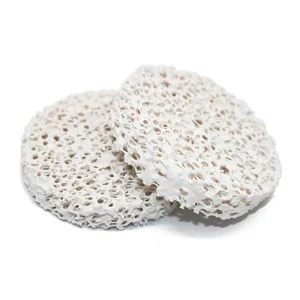
| Porous Catalyst Hold-down Balls | 13mm to 50mm (1/2" to 2") | $450 – $750 | $530 – $900 | Jumbo Bags / Cartons on Pallets | 7 – 14 Days |
17-30% balls utilize premium calcined fireclays and feldspar. 99% grades consume high-calcined alpha alumina powder, drastically shifting material raw cost.
Firing temperatures range from 1,280°C for standard vitrified ceramics to 1,680°C for alpha corundum balls. Natural gas pricing heavily dictates high-purity quotes.
Proximity to Ningbo, Shenzhen, and Shanghai ports ensures intermodal railway-to-vessel container consolidation without inland transshipment damage.
Premium pricing accounts for double vibratory rotary screening and optical sorting that eliminates hollow, split, oval, or undersized beads that cause reactor fouling.
Improper sizing of inert balls is the leading root cause of catalyst migration, channeling, high differential pressure (ΔP), and unplanned reactor shutdowns.
Typical reactor cross-sectional loading recommended by UOP, Haldor Topsoe, and Axens process designs.
Real-world operational duty profiles across harsh industrial processing columns, and emerging innovations in advanced material synthesis.
Duty: High hydrogen partial pressure (15-20 MPa) and operating temperatures up to 450°C. Requires extreme crushing strength to withstand catalyst bed slumping during thermal shutdowns.
Duty: Continuous contact with wet SO₂, SO₃, and elemental sulfur at temperatures above sulfur dew points. Excellent acid proofing (>99.8% ASTM C279) ensures zero matrix spalling.
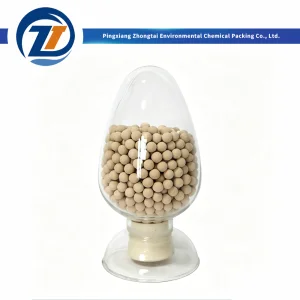
Duty: High-velocity cyclic PSA and TSA beds. Pulsing pressures generate micro-attrition in weak balls, causing dusting that chokes adsorption valves and molecular sieve zeolites.
Transition of Pingxiang tunnel kilns to oxy-fuel and hydrogen-blended firing, slashing embedded Scope 1 carbon footprint per metric ton by 32% for CBAM compliance.
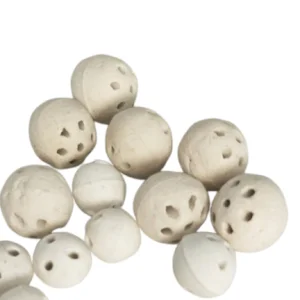
Commercialization of fluted, concave, and multi-hole inert balls to drop reactor bed pressure drag (ΔP) by an extra 18-24% compared to smooth solid spheres.
Next-generation sub-micron grain sizing for 99.8% Al₂O₃ media exhibiting near-zero water absorption (<0.05%), eliminating trace trace-metal catalyst contamination in clean energy reformers.
In-depth clarifications for EPC project managers, turnaround coordinators, and lead process engineers evaluating Chinese ceramic ball manufacturers.
For standard low-to-medium pressure hydrotreaters (diesel, kerosene, naphtha), 17–23% or 23–30% Al₂O₃ ceramic balls offer optimum cost-performance with excellent chemical stability in H₂S/NH₃ atmospheres. However, in high-pressure hydrocracking and vacuum gas oil (VGO) units operating at elevated differential pressures and severe thermal cycles, 68–75% or 92%+ high-alumina media is mandated to prevent ball crushing and subsequent bed channeling during reactor depressurization.
In secondary reformers and steam methane reforming (SMR) plants, high-temperature steam dissolves silica (SiO₂) from low-alumina balls into volatile silicon hydroxide complexes. These volatile silicas carry downstream into cooler process equipment (waste heat boilers, low-temperature shift converters, and methanators), where they precipitate as crystalline silica coatings. This irreversibly deactivates precious shift catalysts and fouls heat exchanger surfaces. Consequently, 99%+ alumina balls with strictly controlled silica content (<0.2%) are indispensable.
Premium Chinese suppliers certify each production lot against ASTM C-515, HG/T 3683.1, and ISO 9001 standards. Routine QA testing includes: (1) Single-particle crushing strength measured using hydraulic compression testers across a statistically random sample of 30+ balls; (2) Leachable iron and silica testing using ICP-OES; (3) Thermal shock resistance testing via rapid water quenching from 850°C to ambient without fracturing; (4) Water absorption testing using vacuum immersion techniques; and (5) Dimensional sphericity verification with laser caliper sorting.
Export orders are packed in heavy-duty UV-stabilized 1.0 or 1.2 metric ton circular woven jumbo bags (FIBC) with reinforced lifting loops, inner waterproof PE liners, and double-tie discharge spouts. For harsh offshore transit or prolonged plant turnaround staging, 25kg PP woven sacks packed onto ISPM-15 heat-treated fumigated wooden pallets with four-layer UV shrink wrap are standard. For critical 99% alpha alumina applications, sealed 200L epoxy-coated steel drums are deployed to eliminate any moisture or airborne particulate ingress.
To receive an engineered pricing schedule, specify: (1) Total tonnage and breakdown of required sphere diameters (e.g., 3mm, 6mm, 13mm, 25mm, 50mm); (2) Chemical grade required (17-23%, 23-30%, 92%, or 99.5% Al₂O₃); (3) Destination port for Incoterms calculation (FOB Shanghai/Shenzhen or CIF Rotterdam, Houston, Singapore, etc.); (4) Special packaging specifications (jumbo bags vs steel drums); and (5) Third-party inspection requirements (e.g., SGS, Bureau Veritas, or TÜV factory lot auditing before vessel loading).
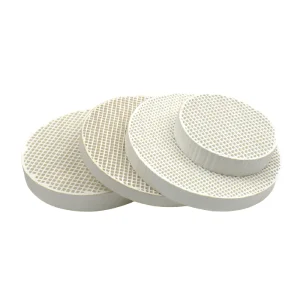
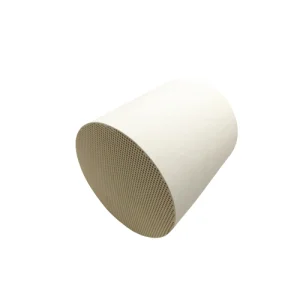
Refractory regenerative storage media, specialized grinding microspheres, zeolite adsorbents, and high-temperature thermal honeycomb blocks.