Featured High-Performance Industrial Formulations Manufactured in Pingxiang, Jiangxi
A Comprehensive Analysis of Material Physics, Lightweight Spheroidization, and Global Market Demand Trends
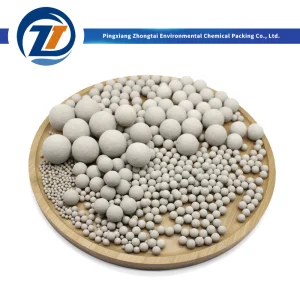
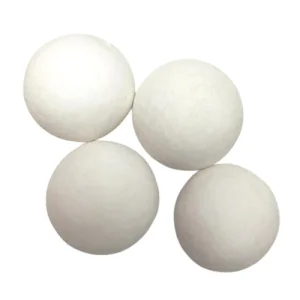
In modern chemical processing, energy transformation, and extreme-environment engineering, the requirement for advanced contact, support, and insulation media has transitioned from conventional solid bodies to highly engineered hollow morphologies. Hollow ceramic balls (engineered ceramic hollow spheres) represent a monumental leap in material science, synthesizing low bulk density, superior mechanical strength, excellent thermal isolation, and unyielding chemical inertness into a precise geometric form.
Unlike traditional solid ceramic spheres—which introduce massive deadweight to reaction vessels, increase vessel structural loads, and limit fluid dynamics efficiency—engineered hollow ceramic balls provide an internal gas void encircled by a dense, sintered micro-crystalline ceramic shell. This void structure yields a structural weight reduction ranging between 35% and 65% compared to solid equivalents, drastically lowering structural payload on internal support grids while maintaining exceptional hydrostatic crush resistance.
The global demand for hollow ceramic spheres is experiencing exponential growth, driven predominantly by three macro-industrial trends:
Quantitative Benchmarking of Hollow Ceramic Spheres Against Alternative Industrial Media
To assist process engineers, plant operators, and procurement specialists in making empirical sourcing decisions, the table below provides an exhaustive comparative breakdown of physical, chemical, and thermodynamic properties across different media types.
| Performance Characteristic | Hollow Alumina Ceramic Balls | Solid Inert Alumina Balls | Expanded Perlite / Vermiculite | Hollow Metallic Spheres |
|---|---|---|---|---|
| Bulk Density (g/cm³) | 0.40 – 0.95 | 1.35 – 2.10 | 0.08 – 0.25 | 0.80 – 1.80 |
| Hydrostatic Crush Strength | High to Very High (15–80 MPa) | Extremely High (>150 MPa) | Very Low (<0.5 MPa) | Moderate to High (10–50 MPa) |
| Thermal Conductivity (W/m·K) | 0.08 – 0.22 (At 1000°C) | 1.20 – 2.80 (At 1000°C) | 0.04 – 0.09 (At RT) | 15.0 – 45.0 (High transfer) |
| Max Working Temperature | 1600°C – 1800°C | 1550°C – 1750°C | 800°C – 1000°C | 500°C – 900°C (Oxidizes) |
| Acid & Alkali Resistance | >99.5% (Except HF) | >99.5% (Except HF) | Moderate (Degrades in strong base) | Poor in Corrosive Acids |
| Thermal Shock Resistance ($\Delta T$) | Superior (Hollow core cushions stress) | Moderate (Prone to thermal cracking) | Poor (Structural collapse) | Fair (Distorts under load) |
| Primary Failure Mechanism | Brittle shell wall buckling at limit | Cleavage fracture across core | Compaction / Powdering | Oxidative embrittlement / Creep |
Depending on the targeted service environment, chemical composition must be carefully matched:
Cost-effective grade ideal for low-temperature bed hold-down, water treatment floating filtration, and standard thermal insulation castables where ultra-purity is not required.
Engineered for high-stress hydro-processing units, severe thermal shock zones, and abrasive chemical contact towers needing low silica leaching potential.
The gold standard for ammonia secondary reformers, ethylene dichloride (EDC) plants, and hydrogen generation units. Virtually zero silica ($\text{SiO}_2 < 0.1\%$) prevents silica poisoning of downstream precious metal catalysts.
Unraveling the Supply Chain Infrastructure, Energy Integration, and Spheroidization Process Technology
China accounts for over 70% of the world's production capacity for technical ceramic packings, inert spheres, and industrial mineral products. At the epicenter of this industrial dominance stands **Pingxiang City, Jiangxi Province**—globally recognized as the "Capital of Chemical Industrial Ceramics."
Pingxiang factories sit directly atop immense high-purity kaolin, bauxite, and feldspar mineral reserves. Raw mineral slurry is piped directly to refinement centers, cutting transport overhead and raw material cost volatility.
Chinese manufacturers utilize state-of-the-art **Spray-Freeze Drying (SFD)** and **Coaxial Liquid Ring Nozzle Extrusion** combined with ultra-high-temperature computerized tunnel kilns (>1700°C) to guarantee 99.2% sphericity and uniform wall thickness.
Continuous-duty multi-layer roller kilns running on clean natural gas deliver economies of scale that reduce unit production costs by **25% to 40%** compared to European or North American specialty ceramic shops.
The manufacturing methodology of hollow ceramic spheres requires strict process control to ensure core concentricity and prevent micro-fissuring during firing:
How Modern Process Industries Deploy Hollow Ceramic Spheres to Resolve Operational Bottlenecks
Challenge: Heavy catalyst beds in refinery hydrocrackers exert extreme compressive loads on lower bed layers, causing particle attrition, fines generation, and premature pressure drop spikes ($\Delta P$).
Solution: Replacing top hold-down layers with 93% or 99% hollow alumina balls reduces bed overburden weight by 45% while trapping incoming foulants and retaining fluid distribution stability.
Challenge: Industrial petrochemical furnaces and ethylene cracking heaters suffer heavy thermal radiation loss and high refractory structural weight.
Solution: Blending hollow ceramic spheres (mullite or alumina hollow microspheres) into refractory monolithic linings drops thermal conductivity to <0.2 W/m·K at 1200°C while drastically lessening furnace steel framing loads.
Challenge: Subsea ROVs, oceanographic sensors, and deep-water riser insulation require flotation materials that do not collapse under 300–600 bar hydrostatic pressure.
Solution: Epoxy-matrix syntactic foams incorporating high-strength hollow ceramic microspheres deliver reliable positive buoyancy and zero water absorption over decades of deep-sea exposure.
Challenge: Acid tanks, hot water storage basins, and chemical process reservoirs lose immense heat via evaporation and emit hazardous volatile vapors.
Solution: Deploying a floating blanket of hydrophobic hollow ceramic spheres over liquid surfaces reduces thermal loss by up to 85% and suppresses toxic vapor venting without blocking fluid access.
Challenge: Next-generation electric vehicles (EVs) and aerospace structures demand flame-retardant, lightweight sound damping and battery thermal runaway barriers.
Solution: Hollow ceramic spheres integrated into polyurethane or silicone potting compounds act as fireproof thermal stop layers that arrest battery cell-to-cell thermal propagation.
Challenge: Conventional sand or dense gravel filters clog rapidly, require intense backwashing pressure, and demand high pumping power.
Solution: Buoyant hollow ceramic filter media allow upflow floating bed filtration, dramatically decreasing backwash energy inputs while offering vast surface area for bio-film attachment.
A Step-by-Step Guide for Chemical EPCs, Refinery Engineers, and Import Specialists
Sourcing technical ceramic components globally requires stringent quality assurance controls to guarantee that factory-delivered specs match engineering design parameters. When procuring hollow ceramic balls from China, enterprise buyers should enforce the following four-tier QA auditing protocol:
Verification of $\text{Al}_2\text{O}_3$, $\text{SiO}_2$, $\text{Fe}_2\text{O}_3$, and $\text{Na}_2\text{O}$ percentages using X-ray Fluorescence to ensure silica and alkali contents remain strictly within mill certificate tolerances.
Sampling batch spheres inside a fluid pressure cell (ASTM C773 / HG/T 3683 standards) to confirm the pressure required for 1% shell collapse exceeds field operating safety factors.
Utilizing Industrial X-ray Computed Tomography to verify concentric shell thickness, absence of internal micro-voids in the shell wall, and true spherical geometry.
Boiling samples in 20% HCl and 40% $\text{H}_2\text{SO}_4$ solution for 48 hours to confirm mass loss remains under 0.1%, ensuring chemical stability in hostile acid services.
Due to the lightweight nature of hollow ceramic spheres, improper packaging can lead to crushing during ocean transit or freight movement. Export-ready packing standards include:
Emerging Horizons in Hollow Ceramic Technology and Decarbonization Innovations
Pingxiang ceramic clusters are actively transitioning firing kilns from natural gas to hydrogen-electric hybrid systems. This transition drops the embedded carbon footprint of imported ceramic media by up to 60%, aligning with Western Scope 3 emissions mandates.
By integrating rare-earth dopants (Zirconia, Titania) into the alumina crystal matrix, next-generation hollow spheres achieve double the crush strength of traditional spheres while reducing shell wall thickness by 30%.
Future developments include in-situ coating of active catalytic metals (Platinum, Palladium, Nickel) onto the outer micro-porous membrane of hollow spheres, combining catalyst carrier and bed structure into a single monolithic media.
In-Depth Engineering Answers for Process Operators, Design Engineers, and Buyers
Explore Extended Product Lines Direct from Pingxiang Production Facilities