Direct factory supply manufactured in compliance with ISO 9001, ASTM, and rigorous chemical plant specifications.
A data-driven breakdown of FOB/CIF pricing variables, raw material index impacts, and manufacturing tech specifications influencing international procurement decisions.
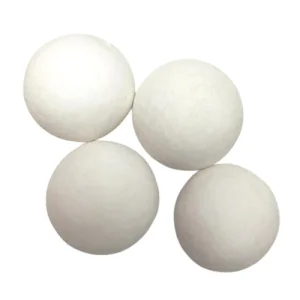
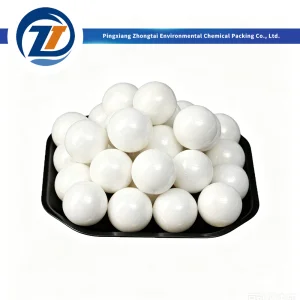
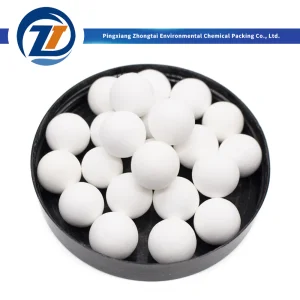
Navigating the market for Chinese high alumina ceramic balls requires evaluating purity levels, shaping processes (roll forming vs. cold isostatic pressing), and thermal sintering parameters. High alumina media—categorized primarily by $\alpha\text{-Al}_2\text{O}_3$ content ranging from 90% to 99.5%—exhibits distinct price-to-performance ratios across catalyst support, hydro-processing, and ultrafine wet/dry grinding applications.
| Alumina Grade ($\text{Al}_2\text{O}_3$) | Forming Technology | Bulk Density ($\text{g/cm}^3$) | Mohs Hardness / Wear Rate | Estimated Price Range (USD / Metric Ton) | Primary Industrial Use |
|---|---|---|---|---|---|
| 92% High Wear Alumina | Roll Formed / Isostatic | $\ge 3.60$ | 9 Mohs / $\le 0.01\%$ | $850 - $1,150 | Mining, Ceramic Glaze Milling, Cement Ball Mills |
| 95% Engineered Alumina | Cold Isostatic Pressing (CIP) | $\ge 3.68$ | 9 Mohs / $\le 0.008\%$ | $1,200 - $1,550 | Chemical Refining Support, Agitated Stirred Mills |
| 99% Ultra-Pure Alumina | Isostatic Pressing | $\ge 3.90$ | 9 Mohs / $\le 0.005\%$ | $1,800 - $2,400 | Ammonia Reformers, Ethylene Oxide, Severe Acid Duty |
| 99.5% Silica-Free Grade | Precision High-Temp CIP | $\ge 3.95$ | 9 Mohs / Near Zero Wear | $2,500 - $3,400 | Fertilizer Secondary Reformers, High Steam Gasifier |
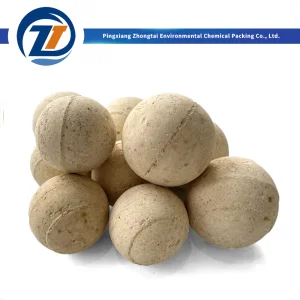
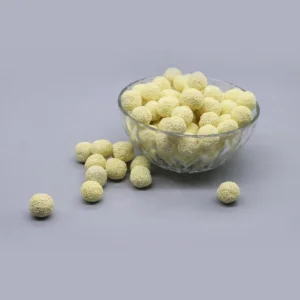
| 23-30% Inert Ceramic | Extrusion / Machine Roll | $1.40 - 1.55$ (Bulk) | 7-8 Mohs / N/A | $380 - $620 | Refinery Bed Support, Desulfurization Columns |
*Note: Prices vary according to order volume (MOQ), sphere diameter (1mm micro-beads up to 75mm bed support spheres), and specialized custom packing requirements.
Analyzing cross-industry consumption patterns, chemical process integration, and international operational benchmarks driving high alumina adoption.
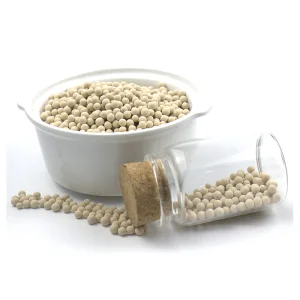
High alumina balls serve as critical catalyst bed support and top-hold-down media in hydrocrackers, hydrotreaters, and catalytic reformers. Their low silica content (<0.2%) prevents catalyst poisoning and silica leaching downstream under high-pressure steam environments.
Ultra-fine wet grinding of iron ore, gold, copper, and calcium carbonate requires high-density 92% and 95% $\text{Al}_2\text{O}_3$ media. High density drastically reduces grinding cycle times while cutting media consumption costs compared to conventional forged steel balls.
In sanitaryware, tile glaze preparation, and electronic ceramics manufacturing, high alumina balls prevent iron contamination. Zero color-staining and superior wear rates ensure batch-to-batch consistency in high-speed ball mills.
Bridging material science and mechanical performance to resolve operational bottlenecks in severe chemical and thermal processes.
Optimizing pressure drop across gas-liquid fixed-bed reactors requires precise size layering of inert and high alumina support spheres. Engineered bed designs place larger diameter balls (1.5" to 2") at the support grid, transitioning down to smaller spheres (1/8" to 1/4") directly below sensitive catalyst beds.
Replacing low-density ceramic packing or metallic grinding media with 92%+ cold-isostatic pressed alumina spheres transforms mill kinetics. The increased kinetic energy input ($E_k = \frac{1}{2}m v^2$) permits higher slurry viscosity loading, dramatically slashing kilowatt-hours per ton milled.
Next-generation ceramic formulations, microstructural grain boundary control, and eco-friendly manufacturing pathways.
Integrating sub-micron $\alpha\text{-Al}_2\text{O}_3$ powders with micro-dopants (such as $\text{MgO}$ and $\text{Y}_2\text{O}_3$) inhibits grain growth during sintering. This yields ultrafine microstructures boasting fracture toughness values exceeding $4.5\text{ MPa}\cdot\text{m}^{1/2}$.
For high-temperature secondary reforming and ammonia synthesis, next-gen 99.8% alumina media reduces residual $\text{SiO}_2$ content below 50 ppm, eliminating downstream silica fouling on synthesis gas cooler tubes.
Leading Chinese manufacturers are transitioning from conventional coal-gas firing to green-hydrogen blending and high-efficiency electric roller kilns, reducing embedded carbon footprints by 25-40% per ton produced.
In high-stress milling or extreme pressure reactor vessels, the manufacturing process dictates performance longevity. Cold Isostatic Pressing (CIP) subjects raw alumina powder to uniform hydrostatic pressure from all directions (typically $>150\text{ MPa}$). This eliminates internal density gradients, void pockets, and structural micro-cracks commonly found in traditional extrusion or roll-formed media.
During the sintering phase in high-temperature tunnel kilns ($1650^\circ\text{C}$), CIP-formed spheres undergo uniform volumetric shrinkage. The resulting dense, interlocked alpha-alumina phase exhibits exceptional crush resistance—often exceeding $20\text{ kN}$ per sphere for a 25mm ball—preventing sudden bed collapse or media fragmentation inside severe turbulence industrial equipment.
Ensuring end-to-end traceability, international certification compliance, and damage-free transit across global ports.
Fully verified under HG/T 3683-2014 (Industrial Inert Ceramic Balls) and ASTM C510 standards for chemical resistance and mechanical loading.
Double-layer reinforced 1000kg jumbo bags, steel drums, or moisture-sealed cartons mounted on fumigated wooden or plastic pallets.
Every lot includes a certified Mill Test Certificate (MTC) detailing XRF chemical analysis, crush strength, bulk density, and wear percentage.
Complete customs clearance support, DDP/DDU freight handling, and localized technical dispatch across Asia, Europe, Middle East, and Americas.
Direct technical guidance covering key buyer inquiries, chemical compatibility, and order execution.
92% alumina balls are predominantly used as high-efficiency wear-resistant grinding media due to their balance of hardness and cost-effectiveness. 99% high alumina balls are engineered for high-temperature chemical reactions, catalyst support beds, and environments requiring ultra-low silica leaching and superior thermal stability up to 1600°C.
CIP ensures completely uniform density distribution across the entire sphere volume. Compared to roll-formed balls, CIP-formed alumina balls exhibit higher bulk density, zero internal air pockets, and lower self-wear rates, extending operational lifespan by up to 30-50% in agitated mills.
Standard diameters range from micro-beads (0.5mm–3mm) up to large bed support spheres (25mm–75mm). We offer packaging in 25kg plastic woven bags, 1000kg jumbo bags, or heavy-duty steel drums, palletized and shrink-wrapped for international marine shipment.
Tonnage is calculated by multiplying the internal volume of the vessel ($V = \pi r^2 h$) by the target packing bulk density (e.g., ~$2.2\text{ MT/m}^3$ for 92% alumina balls). Our technical engineering team can assist in calculating precise bed grading and void space optimization.
Explore our complete catalog of high-efficiency random packings, structured trays, molecular sieves, and water purification media.