Industrial Ceramics & Mass Transfer Engineering Whitepaper

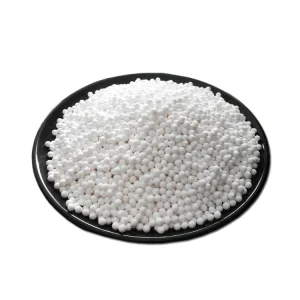
China Aluminum Oxide Ceramic Balls Supplier & Factories

Technical Sourcing Guide, Material Science Specifications, and Supply Chain Insights for Industrial Process Engineers & Procurement Directors

Factory Direct Catalog

Featured Alumina & Chemical Packing Products (Part I)

Precision-engineered inert bed supports, high-wear grinding media, and mass transfer packings manufactured under strict ISO quality standards.
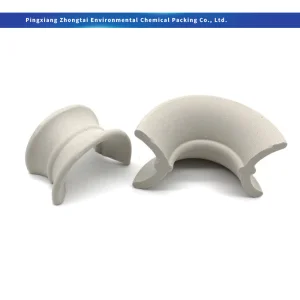
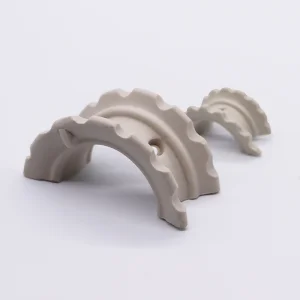
China Acid & Heat Resistant Ceramic Intalox Saddle Ring

China Acid & Heat Resistant Ceramic Intalox Saddle Ring Random Tower Packing 16mm 25mm 38mm 50mm 76mm

View Product Details
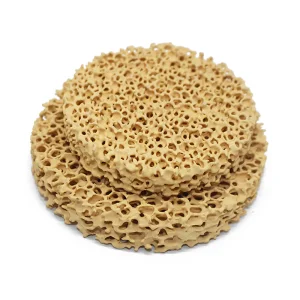
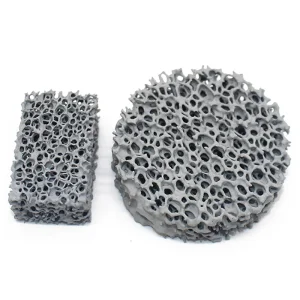
China SIC Ceramic Foam filter For metal filtration

China SIC Ceramic Foam Filter For Metal Filtration Suppliers, Factories

View Product Details
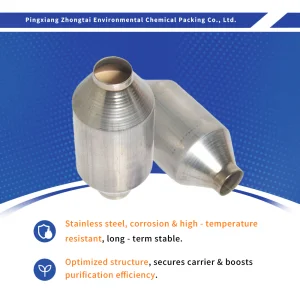
China Universal Direct Fit Catalytic Converter

China Universal Direct Fit Catalytic Converter | EPA Compliant Replacement with Ceramic Honeycomb Core

View Product Details
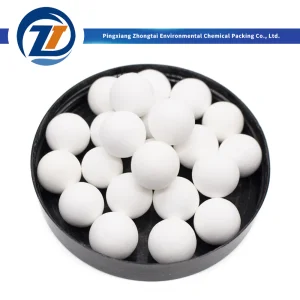
China High Wear Resistant Alumina Grinding Ceramic Ball Media

China High Wear Resistant Alumina Grinding Ceramic Ball Media for Ball Mill Manufacturer

View Product Details
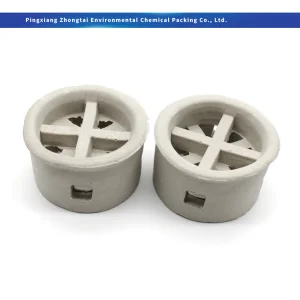
Wholesale Acid & Heat Resistant Ceramic Cascade Ring

Wholesale Acid & Heat Resistant Ceramic Cascade Ring (Cascade Mini Ring) Random Tower Packing

View Product Details
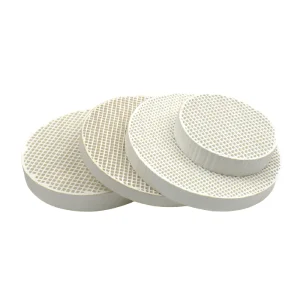
Wholesale Infrared honeycomb ceramic plate for BBQ

Wholesale Infrared Honeycomb Ceramic Plate for BBQ Supplier, Pricelist

View Product Details
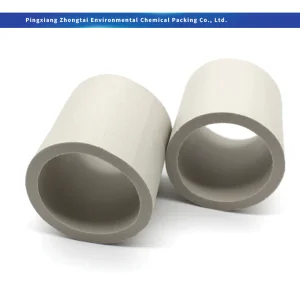
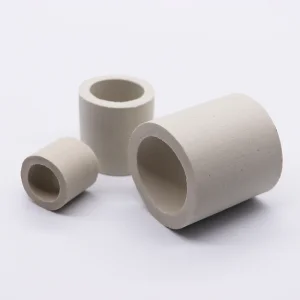
China Acid & Heat Resistant Ceramic Raschig Ring

China Acid & Heat Resistant Ceramic Raschig Ring Random Tower Packing 16mm-76mm

View Product Details
China Ceramic Super Intalox Saddle Ring Tower Packing

China Ceramic Super Intalox Saddle Ring Tower Packing Factory, Factories

View Product Details
Macro Industry Intelligence

The Strategic Role of Aluminum Oxide Ceramic Balls in Global Process Industries

Understanding the engineering mechanics, thermodynamic stability, and material evolution driving modern petrochemical and chemical processing towers.

Evolution of Catalyst Bed Support

Aluminum Oxide Ceramic Balls ($\text{Al}_2\text{O}_3$) serve as the fundamental backbone for fixed-bed reactors across global refineries and petrochemical complexes. Acting as both support media and top-hold-down capping layers, these high-density spheres prevent valuable catalyst beds from fluidizing, migrating, or suffering mechanical degradation under extreme superficial gas and liquid velocities.

Chemical Inertness & Thermal Shock

Modern process conditions demand ceramic media capable of enduring thermal shock deltas ($\Delta T > 200^\circ\text{C}$) without structural spalling. High-purity alumina matrix formulations exhibit near-zero chemical reactivity with organic hydrocarbons, steam, inorganic acids, and alkalis, protecting expensive downstream hydrotreating and reforming catalysts from silica poisoning.

Global Industry Growth & Shift

The global shift toward high-yield hydroprocessing, green hydrogen production, and carbon capture (CCUS) has elevated demand for continuous-operation ceramic media. Chinese manufacturing hubs, spearheaded by Pingxiang's advanced industrial ceramic clusters, have evolved from commoditized suppliers into high-precision engineering partners for global EPC contractors.

99.5%
Ultra-High Alumina Purity
1650°C
Max Operating Temp Limit
<0.01%
Leachable Silica Content
50+ kN
Single-Ball Crush Strength
Material Engineering Standard

Alumina Ball Grades, Microstructure & Physical Specifications

Selecting the exact chemical composition ($\text{Al}_2\text{O}_3, \text{SiO}_2, \text{Fe}_2\text{O}_3, \text{Na}_2\text{O}$) and mechanical density profile for your specific chemical process reactor.

Classification Grade Al₂O₃ Purity (%) Bulk Density (g/cm³) Water Absorption (%) Crush Strength (30mm) Core Industrial Application Duty
Standard Inert Bed Support 17% – 23% 1.35 – 1.45 ≤ 5.0% ≥ 2.5 kN/ball Standard refinery catalyst support, hydrotreating, natural gas drying towers.
Medium-High Alumina Inert 23% – 30% 1.45 – 1.55 ≤ 3.0% ≥ 3.5 kN/ball Deep-bed high pressure reactors, ammonia converters, chemical absorbers.
High-Wear Grinding Media 92% – 95% 3.60 – 3.70 ≤ 0.01% ≥ 18.0 kN/ball Ultra-fine wet/dry grinding in ball mills for minerals, glazes, and electronic ceramics.
Ultra-High Purity Inert 99.0% – 99.5% 3.80 – 3.90 ≤ 0.05% ≥ 22.0 kN/ball High-temperature steam reformers, secondary reformers, hydrogen generation units (Zero silica leaching).

Alpha-Alumina Phase Microstructure

During the sintering phase in automated continuous tunnel kilns at temperatures exceeding $1600^\circ\text{C}$, the raw material transforms into dense Alpha-Alumina ($\alpha\text{-Al}_2\text{O}_3$) crystalline structure. This high-density phase delivers exceptional mechanical hardness (Mohs scale 9) and non-porous resistance to chemical abrasion.

Sphericity & Dimensional Precision

Precise sphericity and tight diameter tolerance (±0.5mm) ensure predictable void fractions ($\sim 40\%$) within packed beds. Uniform packing prevents localized flow channeling, minimizes pressure drop ($\Delta P$), and optimizes fluid distribution across catalyst active zones.

Supply Chain Advantage

Why Global EPCs Source Aluminum Oxide Ceramic Balls from China Factories

Analyzing the cost-efficiency, raw material integration, strict quality assurance, and manufacturing scale of Pingxiang industrial ceramic clusters.

Integrated Industrial Hub Ecosystem

Pingxiang, Jiangxi Province stands as China's premier cluster for chemical packing and industrial ceramics. Local access to ultra-pure bauxite mines, advanced calcination facilities, and specialty chemical additives within a single industrial radius drops raw material logistics costs drastically while ensuring rapid raw stock replenishment.

Automated Cold Isostatic Pressing (CIP)

Leading Chinese ceramic ball factories utilize automated Cold Isostatic Pressing (CIP) and precision rolling technologies. CIP forming produces uniform green body density, eliminating internal air voids and micro-cracks that cause catastrophic ball disintegration during thermal cycling in heavy hydrotreaters.

Comprehensive Quality Control (E-E-A-T Certified)

Tier-1 suppliers operate under ISO 9001:2015, ISO 14001, and OHSAS 18001 standards. Every production batch undergoes rigorous laboratory testing: X-ray Fluorescence (XRF) for chemical composition, hydraulic press testing for crush strength, and ASTM C373 water absorption testing prior to export release.

Standard Manufacturing & QA Process Flow

01

Raw Material Prep

Calcined alumina grinding, wet ball milling, slurry spray drying to achieve ultra-fine powder particles.

02

Forming & Sphericity

Automated roll-forming or Isostatic Pressing into exact spherical dimensions (3mm to 75mm).

03

Tunnel Kiln Firing

High-temperature continuous firing ($1400^\circ\text{C}-1650^\circ\text{C}$) ensuring complete Alpha phase crystal transformation.

04

Batch Lab QC

Sampling for crush strength, chemical XRF purity analysis, bulk density, and thermal shock resistance.

05

Export Packing

Heavy-duty woven jumbo bags, steel drums, or plastic-lined cartons on fumigated wooden pallets.

Global Sourcing Guide

Macro Industry Solutions & Sector-Specific Sourcing Applications

How specialized process plants implement graded ceramic ball packing solutions to maximize run-lengths and prevent unscheduled plant turnarounds.

1. Petrochemical Refining & Hydroprocessing

In Hydrodesulfurization (HDS), Hydrocracking, and Catalytic Reforming reactors, multi-layer graded beds of inert alumina ceramic balls ($1/8"$, $1/4"$, $1/2"$, $3/4"$, $1"$, and $1-1/2"$) are installed. The bottom support layers prevent catalyst fines from escaping into downstream heat exchangers, while top topping layers act as scale-catchers to trap foulants and iron rust.

2. Fertilizer & Ammonia Synthesis Units

Secondary reformers, shift converters, and methanators operate under high partial pressures of steam and hydrogen at elevated temperatures ($>1000^\circ\text{C}$). High-purity 99%+ $\text{Al}_2\text{O}_3$ ceramic balls are mandatory here; standard low-alumina balls leach free silica ($\text{SiO}_2$) into steam flows, poisoning expensive noble-metal catalyst beds downstream.

3. Fine Mineral & Ceramic Media Milling

For ball mills processing quartz, feldspar, zirconium powder, and battery cathode material ($\text{LiFePO}_4$), 92% and 95% high-alumina grinding balls provide high density ($>3.60\text{g/cm}^3$) and ultra-low wear loss ($<0.01\%$). This minimizes energy consumption per ton of ground material while eliminating iron contamination in white ceramic slips.

4. Environmental VOC Abatement & Thermal Energy Recovery

Regenerative Thermal Oxidizers (RTO) and Regenerative Catalytic Oxidizers (RCO) utilize ceramic heat storage media alongside structured honeycomb ceramic blocks. Alumina balls retain high sensible heat capacity ($C_p \sim 1.05\text{ kJ/kg}\cdot\text{K}$), cycling thermal energy back into incoming solvent-laden exhaust streams at $>95\%$ heat recovery efficiency.

Technical Help Desk

Frequently Asked Questions by Technical Procurement Teams

Expert engineering answers regarding alumina ceramic ball selection, crush testing standards, factory audits, and global delivery logistics.

What is the critical difference between 17-23% Inert Ceramic Balls and 99% High Alumina Ceramic Balls?
The primary difference lies in silica content, temperature limit, and chemical reactivity with high-temperature steam. Standard 17-23% $\text{Al}_2\text{O}_3$ balls contain approximately 70-75% silica ($\text{SiO}_2$), which is ideal for cost-effective catalyst bed support in standard temperature oil hydrotreating. However, in steam reforming or hydrogen production above $800^\circ\text{C}$, silica can leach out as volatile $\text{Si(OH)}_4$, traveling downstream and fouling catalysts or compressor blades. High alumina (99%+) ceramic balls contain $<0.1\%$ silica, preventing steam depletion while standing up to operational temperatures as high as $1650^\circ\text{C}$.
How do process engineers calculate the correct size gradient for catalyst bed support?
Engineers follow the traditional 2-to-1 ratio rule for catalyst support bed layering. The top layer directly supporting the catalyst should feature ceramic ball diameters approximately twice the size of the catalyst extrudate or pellets (e.g., $1/4"$ ceramic balls to support $1/8"$ catalyst). Subsequent underlying layers step up in diameter—for instance, moving from $1/4"$ to $1/2"$, then $3/4"$, and finally $1"$- $1.5"$ at the bed support grid. This gradient prevents catalyst migration while allowing uniform fluid distribution and low pressure drop across the reactor floor.
What test methods verify the crush strength of alumina ceramic balls prior to shipping?
Single-ball compressive crush testing is performed using a calibrated hydraulic press in accordance with ISO 10545 or ASTM C517 standards. A representative sample of 10 to 20 balls is tested individually between hardened steel anvils until mechanical failure occurs. The average load in kiloNewtons (kN) or pounds-force (lbf) is recorded on the batch Certificate of Analysis (COA). For high-density 92% or 99% alumina spheres, crush strength typically exceeds 15 kN to 22 kN per ball depending on sphere diameter.
How are ceramic balls packaged to prevent chipping and damage during ocean transport?
Export shipments are packed in heavy-duty 25 kg multi-wall plastic-lined paper bags or double-wall woven plastic bags. These are consolidated onto ISPM 15 compliant heat-treated fumigated wooden pallets or plastic pallets, wrapped in heavy stretch film, and bound with steel/PET strapping. For large volume refinery turnarounds, 1.0 to 1.2 metric ton UV-resistant FIBC jumbo bags with bottom discharge spouts are utilized to allow rapid crane loading directly into process reactors.
Can foreign procurement buyers request third-party factory inspections and audits?
Yes. Leading Chinese manufacturers welcome independent third-party inspection agencies such as SGS, Bureau Veritas, Intertek, or TÜV Rheinland. Inspections routinely include pre-shipment sampling, dimensional verification, XRF chemical assaying, crush strength verification, and container loading supervision.
What is the wear rate standard for 92% Alumina Grinding Balls in wet ball milling?
High-wear 92% $\text{Al}_2\text{O}_3$ grinding balls typically demonstrate a self-wear loss rate of less than $0.01\%$ per 24 hours under standard lab wet milling conditions. This provides a service life 20 to 30 times longer than traditional forged steel balls or natural flint pebbles, dramatically reducing media replacement downtime and preserving slurry purity.
Factory Direct Catalog

Featured Alumina & Chemical Packing Products (Part II)

High-performance tower packings, structured mass transfer internals, filters, and desiccant adsorbents for chemical distillation and absorption systems.
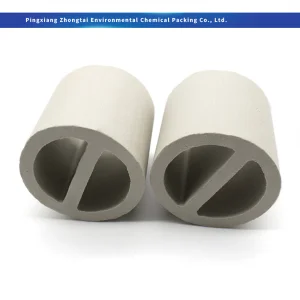
Wholesale Acid & Heat Resistant Ceramic Lessing Ring

Wholesale Acid & Heat Resistant Ceramic Lessing Ring / Ceramic One-Partition Ring Tower Packing 50mm-150mm

View Product Details
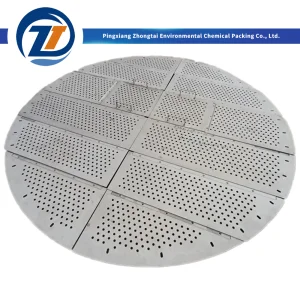
China High Efficiency Stainless Steel Metal Sieve Tray

China High Efficiency 304 316L Stainless Steel Metal Sieve Tray for Distillation Column

View Product Details
Wholesale Zirconia Ceramic Foam Filters for Casting Filtration

Wholesale Zirconia Ceramic Foam Filters for Casting Filtration Suppliers, Pricelist

View Product Details
Wholesale Adsorbent Desiccant Activated Alumina Ball

Wholesale Adsorbent Desiccant Activated Alumina Ball Manufacturer, Manufacturers

View Product Details
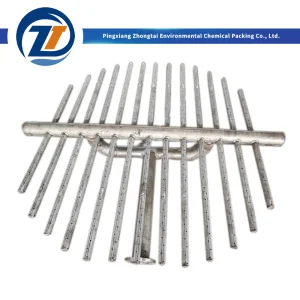
China Stainless Steel Metal Pipe Liquid Distributor

China 304 316L Stainless Steel Metal Pipe Liquid Distributor / Perforated Spray Pipe Distributor

View Product Details
China Ceramic Raschig Ring Tower Packing

China Ceramic Raschig Ring Tower Packing Manufacturers, Factory

View Product Details
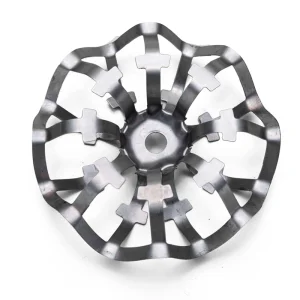
China Metal Tellerette Ring Tower Packing

China Metal Tellerette Ring Tower Packing Suppliers, Factory

View Product Details
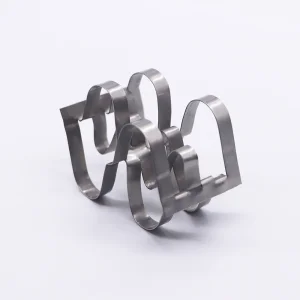
China Metal Super Raschig Ring Tower Packing

China Metal Super Raschig Ring Tower Packing Factory, Factories

View Product Details