Verified manufacturing integrity for extreme thermal regimes, catalytic processes, and high-flux absorption columns.
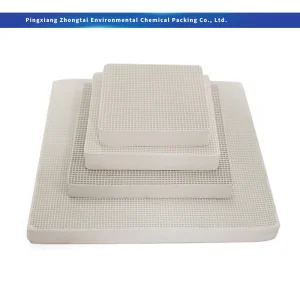
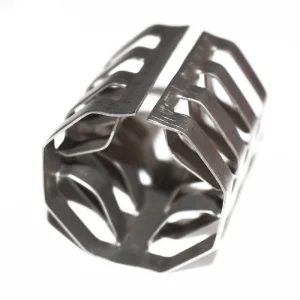
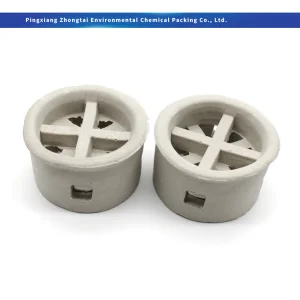
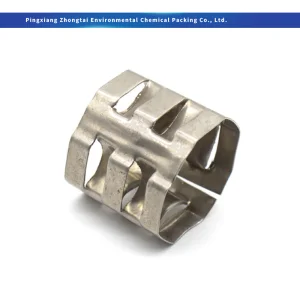
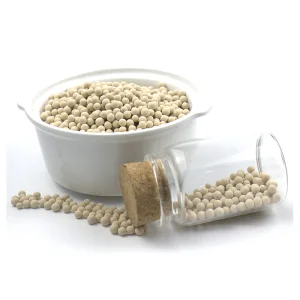
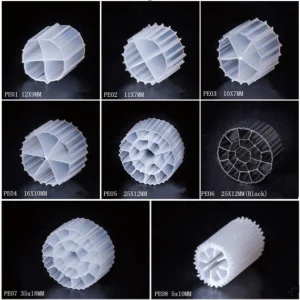
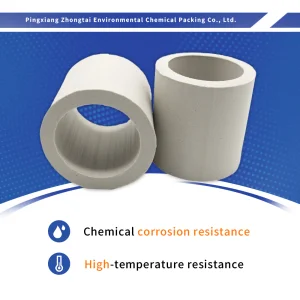
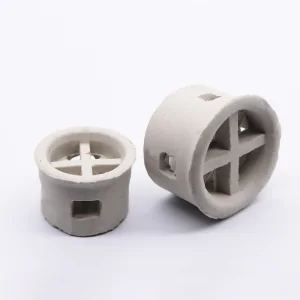
From high-temperature petrochemical catalytic support to sub-micron lithium battery slurry comminution, alumina ceramic media represent the critical backbone of contemporary industrial processing.
The global shift toward high-pressure, severe-duty hydroprocessing, sulfur recovery units (Claus units), and zero-defect electronic slurries has driven massive structural transitions away from standard silicate porcelain. Modern chemical plants and mining operations cannot tolerate catalyst bed collapse caused by mechanical crush failure, nor can high-energy bead mills tolerate abrasive media wear that introduces heavy metal contaminants into sub-micron battery lattices.
Pingxiang, located in Jiangxi Province, China, commands over 70% of the world's production capacity for mass transfer packing and specialized technical ceramics. This geographic industrial concentration integrates raw synthetic alpha-alumina calcination, high-pressure isostatic tooling, precision high-temperature tunnel kilns (1650°C+), and comprehensive batch testing within a compact logistic perimeter, establishing an insurmountable cost-to-performance ratio for international EPC firms.
Plant managers no longer procure inert bed supports or micro-milling media purely based on FOB price per metric ton. Life-Cycle Costing (LCC) models emphasize operational reliability: preventing costly unscheduled reactor shut-downs due to bed plugging, maintaining low differential pressure (ΔP) across hydrocracker runs, and minimizing wear loss (down to <0.01% in high-alumina micro-spheres), maximizing batch runtimes and yield.
Precision-engineered formulations tailored to withstand severe thermo-mechanical stresses, caustic/acidic corrosion, and intensive shearing forces.
| Alumina Grade / Type | Al₂O₃ Purity (%) | Bulk Density (g/cm³) | Cold Crush Strength (kN/bead) | Water Absorption (%) | Maximum Thermal Limit | Primary Industrial Purpose |
|---|---|---|---|---|---|---|
| Standard Inert Ceramic | 17% – 23% | ≥ 1.35 – 1.45 | ≥ 2.5 (1/2" dia) | ≤ 3.0 | 1100°C | Bottom bed support for low-severity chemical towers & secondary drying beds. |
| Medium-Duty Catalyst Bed Support | 23% – 30% | ≥ 1.40 – 1.50 | ≥ 3.8 (1/2" dia) | ≤ 1.5 | 1250°C | Refinery hydrodesulfurization (HDS), fixed-bed gas sweep units, amine scrubbers. |
| High-Alumina Inert Support | 90% – 95% | ≥ 1.85 – 2.05 | ≥ 7.5 (1/2" dia) | ≤ 0.5 | 1550°C | Deep-bed hydrocrackers, ethylene cracking guard beds, hot steam gas plants. |
| Ultra-Pure Corundum Support | ≥ 99.0% – 99.5% | ≥ 2.10 – 2.30 | ≥ 12.0 (1/2" dia) | ≤ 0.2 | 1750°C | Zero Silica Poisoning High-temp syngas, ammonia converter, secondary reforming. |
| Wear-Resistant 92 Micro-Beads | ≥ 92.0% | ≥ 3.60 (apparent) | Mohs Hardness: 9.0 | ≤ 0.02 | N/A (Wet Milling) | Ultrafine mineral wet grinding (calcium carbonate, zirconia, titanium dioxide). |
| High-Density 95 Micro-Beads | ≥ 95.0% | ≥ 3.68 (apparent) | Vickers Hardness: ≥1250 | ≤ 0.01 | N/A (Nanomilling) | Lithium Battery Slurry High-energy bead mills for LFP, NCM, and electronic dielectrics. |
How cutting-edge materials science is reshaping the synthesis, densification, and deployment of alumina ceramics worldwide.
Traditional ceramic beads rely on macro-scale crystalline alpha-alumina with boundary vitrification, which is susceptible to intergranular cracking under dynamic shock. Zhongtai utilizes sub-micron calcined alumina precursors combined with grain boundary stabilizing dopants (MgO, Y₂O₃, ZrO₂). Sintering at strictly controlled temperature curves inhibits abnormal grain growth, yielding a dense, homogeneous microcrystalline matrix with fracture toughness exceeding 4.5 MPa·m1/2.
Manual roll forming introduces internal micro-voids and density differentials that cause catastrophic cracking in high-differential-pressure reactors. Modern lines integrate continuous automated centrifugal ball rolling and cold isostatic pressing (CIP) up to 200 MPa. This produces perfect sphericity (sphericity index >98%), eliminating localized stress points and ensuring consistent packing voidage across 10-meter deep catalytic reactor beds.
Industrial ceramic production has historically been energy-intensive. Zhongtai has engineered next-generation regenerative gas-fired tunnel kilns featuring computerized zone-temperature telemetry and waste-heat recuperation systems. This reduces carbon emissions per metric ton of sintered media by 34%, ensuring that our European and North American tier-1 chemical clients meet their strict Scope 3 decarbonization mandates.
In steam methane reforming (SMR) and water-gas shift reactors for green/blue hydrogen production, operating steam temperatures exceed 1000°C under high pressure. Under these conditions, free silica (SiO₂) vaporizes and condenses downstream, fouling heat exchangers and irreversibly poisoning nickel catalysts. Zhongtai's 99.5% super-high purity alumina inert balls feature residual SiO₂ contents strictly <0.1%, completely mitigating silica carryover risk.
Field-proven performance across modern industrial sectors where catastrophic failure is not an option.
In the wet grinding of Lithium Iron Phosphate (LFP) and high-nickel NCM cathode precursors, media beads must be sized down to 0.1 mm – 0.8 mm. Standard steel media causes severe iron contamination that precipitates battery short-circuits. Zhongtai's 95% micro-crystallite alumina beads deliver high kinetic energy transfer, tight particle size distribution (D50 < 350 nm), and zero magnetic iron contamination, ensuring maximum battery cell energy density.
In heavy gas oil (VGO) and residue hydrocrackers, feedstocks contain particulate scale, organometallic iron, nickel, and vanadium. Graded layers of Zhongtai 99% and 92% high-alumina inert ceramic balls (from 2-inch at the top to 1/8-inch at the catalyst interface) act as a particulate filter and hold-down layer. They uniformly distribute turbulent inlet liquid, suppress channeling, and prevent catalyst bed crusting during 36-month non-stop operating runs.
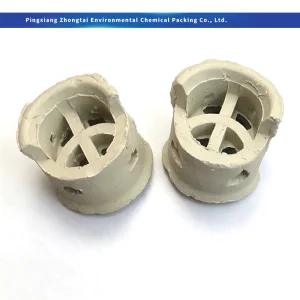
Operating inside drying and final absorption towers involves boiling concentrated sulfuric acid (98% – 99.2% H₂SO₄) at temperatures upwards of 180°C. Standard alloys and substandard ceramics suffer severe spalling and acidic embrittlement. Zhongtai acid-resistant ceramic cascade mini rings, conjugate rings, and high-purity alumina spherical hold-down packing maintain zero structural degradation, preserving low tower ΔP and maximizing SO₃ stripping efficiency.
Pingxiang Zhongtai Environmental Chemical Packing Co., Ltd. integrates 20+ years of manufacturing heritage to deliver end-to-end reliability for international project contracts.
Comprehensive technical guidance designed to resolve specification queries for plant designers, process engineers, and sourcing teams.
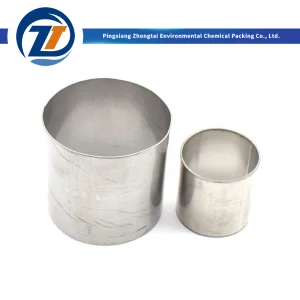
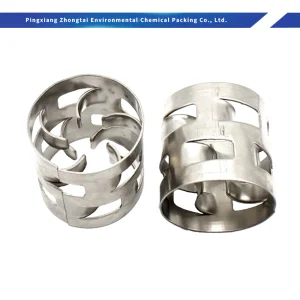
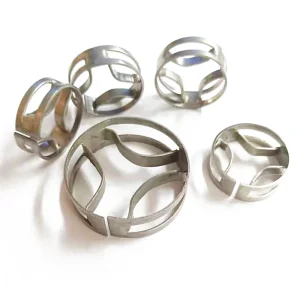
Engineered random packings, molecular sieves, and monolithic monoliths to complete industrial absorption, drying, and distillation packages.
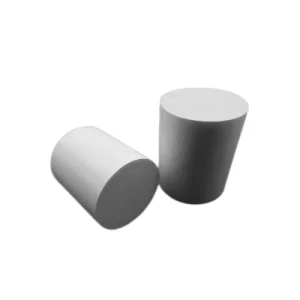
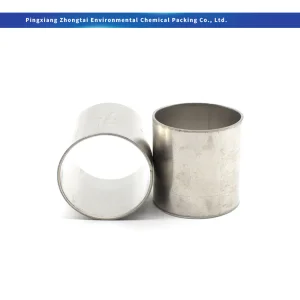
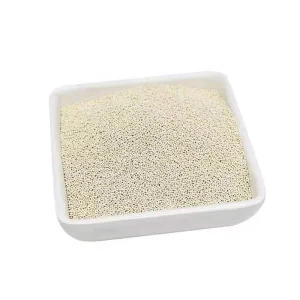
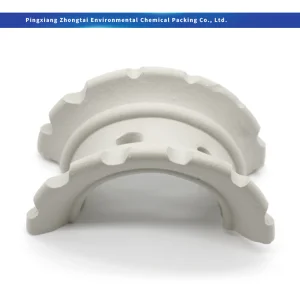
Whether calculating packing pressure drop (ΔP), optimizing bead loading volumes, or evaluating chemical resistance against aggressive halogens, our materials engineering department provides detailed, project-specific technical reviews.
