An in-depth chemical engineering analysis of Type 13X molecular sieve pricing, crystallographic faujasite frameworks, supply chain efficiency, and operational application benchmarks.
"In cryogenic air separation, natural gas sweetening, and industrial medical oxygen generation, specifying the correct 13X Zeolite adsorbent grade is the single most critical factor determining bed life, pressure drop efficiency, and operational expenditure (OPEX)."
As global demand for high-purity industrial gases, clean natural gas, and medical oxygen continues to surge, procurement directors and chemical plant managers are increasingly focused on sourcing reliable, high-capacity adsorbents. Among synthetic aluminosilicate adsorbents, Type 13X Zeolite (Na-X synthetic faujasite) stands as the flagship choice for deep dehydration, carbon dioxide removal, sulfur compound extraction, and air pre-purification.
Pingxiang Zhongtai Environmental Chemical Packing Co., Ltd. (established in 2003 in Pingxiang, Jiangxi Province, China) has operated at the absolute forefront of industrial mass transfer media and advanced adsorbent manufacturing for over two decades. Situated in China's renowned industrial ceramics and chemical packing capital, Zhongtai integrates end-to-end raw material preparation, precision extrusion/spheronization, automated temperature-controlled calcination kilns, and nitrogen-sealed packaging lines.
Understanding the pricing spectrum for 13X zeolite per metric ton, grade differentials, and manufacturing economics.
Price Range: $1,350 – $1,800 / MT
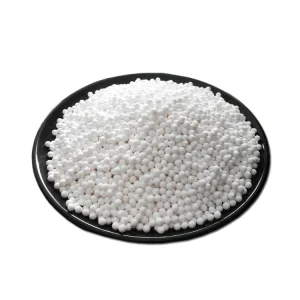
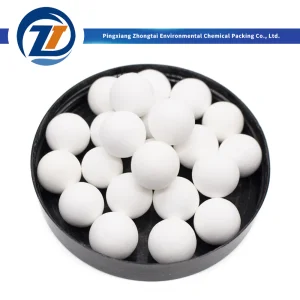
Utilized primarily for general gas drying, solvent moisture control, and air compressor desiccant beds. Manufactured with standard clay binders (20%), offering dependable crush strength and excellent static water capacity.
Price Range: $1,900 – $2,500 / MT
Engineered specifically for Air Pre-Purification Units (APG) prior to cryogenic distillation. Features superior co-adsorption capacity for CO₂ and H₂O, preventing freeze-up in heat exchangers while keeping dynamic attrition below 0.1 wt%.
Price Range: $2,600 – $3,400 / MT
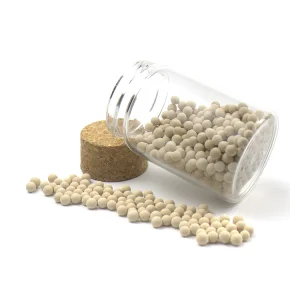
High-purity molecular sieves optimized for PSA/VPSA medical and industrial oxygen concentrators. Binderless variants boost active zeolitic content by 20–25%, delivering exceptional N₂/O₂ selectivity ratio and fast adsorption kinetics.
When evaluating quotes from Chinese 13X zeolite suppliers, buyers must look beyond the base metric ton price to analyze the total cost of ownership (TCO). Key variables affecting factory pricing include:
Understanding the molecular mechanisms, pore geometry, and thermodynamic selectivity of Type 13X synthetic faujasite.
Type 13X molecular sieve is the sodium form of the Faujasite (FAU) crystal structure, characterized by a three-dimensional porous framework of silica ($SiO_4$) and alumina ($AlO_4$) tetrahedra linked through shared oxygen atoms. The chemical composition formula is typically represented as:
Na₈₆[(AlO₂)₈₆(SiO₂)₁₀₆] · xH₂O (SiO₂/Al₂O₃ ratio ≈ 2.5)
Unlike Type A zeolites (such as 3A, 4A, and 5A) which possess a simple cubic cage network, Type X zeolites feature large supercages (approx. 13 Å in diameter) interconnected by 12-membered ring apertures with an effective kinetic opening of approximately 10 Å (1.0 nm). This larger pore aperture allows 13X to adsorb molecules that are physically excluded by smaller zeolites.
The electrostatic field generated by the sodium ($Na^+$) cations within the faujasite supercages gives 13X an exceptional polar selectivity. Molecules with permanent electric dipole moments, quadrupole moments, or high polarizability are strongly held within the internal pore surface:
| Property Parameter | Test Standard | 13X Standard Bead | 13X-APG Premium | HP-13X Medical O₂ |
|---|---|---|---|---|
| Nominal Pore Diameter | Theoretical Framework | 10 Å (1.0 nm) | 10 Å (1.0 nm) | 10 Å (1.0 nm) |
| Particle Diameter (mm) | Screen Mesh Analysis | 1.6-2.5 / 3.0-5.0 | 1.6-2.5 / 3.0-5.0 | 0.4-0.8 / 1.6-2.5 |
| Static Water Absorption (wt%) | GB/T 10504 (25°C, RH 60%) | ≥ 23.0% | ≥ 24.5% | ≥ 26.0% (Binderless) |
| CO₂ Static Capacity (wt%) | 25°C, 250 mmHg CO₂ | ≥ 16.5% | ≥ 18.0% | ≥ 19.5% |
| Bulk Density (g/mL) | ASTM D4512 | 0.62 – 0.68 | 0.64 – 0.70 | 0.60 – 0.65 |
| Crush Strength (N/particle) | ASTM D4179 (1.6-2.5mm) | ≥ 35 N | ≥ 45 N | ≥ 40 N |
| Attrition Rate (wt%) | GB/T 10504 Standard | ≤ 0.15% | ≤ 0.08% | ≤ 0.05% |
| Regeneration Temp Range | Thermal Desorption | 200°C – 300°C | 200°C – 300°C | 180°C – 250°C |
Selecting the correct molecular sieve geometry and chemical composition to prevent premature bed breakdown.
While 3A (3 Å) is restricted to moisture drying without co-adsorbing hydrocarbons, and 4A (4 Å) is standard for natural gas drying, 13X (10 Å) is chosen when larger molecules like carbon dioxide, mercaptans ($RSH$), and branched hydrocarbons must be trapped simultaneously alongside water.
Activated Alumina is highly economical for general compressed air drying (dew points around -40°C). However, where ultra-deep drying (dew points < -80°C to -100°C) or specific CO₂/N₂ separation is required, 13X zeolite is technically non-replaceable. Hybrid beds often layer Activated Alumina at the inlet and 13X at the outlet.
Silica gel excels in high relative humidity environments but suffers structural degradation and liquid water breakdown. 13X zeolite retains high equilibrium absorption capacity even at extremely low partial pressures and elevated temperatures, ensuring stable long-term continuous operation.
Real-world engineering implementations across petrochemical refineries, air purification plants, oxygen generation, and green hydrogen facilities.
In cryogenic air separation plants, trace water and CO₂ in feed air will freeze solid inside main heat exchangers, causing dangerous blockages. 13X-APG molecular sieve beds installed in Temperature Swing Adsorption (TSA) units strip CO₂ down to <1 ppm and water to <0.1 ppm, ensuring uninterrupted cryogenic distillation.
Natural gas streams frequently contain hydrogen sulfide ($H_2S$), methyl/ethyl mercaptans ($RSH$), and water. Because 13X possesses a 10 Å pore size, it easily accepts bulkier mercaptan molecules that 4A zeolite excludes, protecting pipeline transport infrastructure from acid corrosion.
Pressure Swing Adsorption (PSA) and Vacuum Pressure Swing Adsorption (VPSA) oxygen plants rely on high-performance 13X variants (such as Lithium-exchanged or HP-13X) to preferentially adsorb nitrogen ($N_2$) over oxygen ($O_2$), generating concentrated oxygen streams (93%–95% purity) for hospital systems and metallurgy.
In steam cracker petrochemical complexes, cracked gas feeds containing ethylene and propylene require deep moisture removal down to sub-ppm levels prior to low-temperature fractionation. 13X provides the exact pore geometry required to dry syngas and protect downstream precious metal catalysts.
Next-generation synthesis, binderless bead technology, and decarbonization strategies in zeolite manufacturing.
Traditional hydrothermal zeolite synthesis relies heavily on liquid sodium aluminate and sodium silicate derived from high-energy furnace melting. Zhongtai's R&D roadmap incorporates direct synthesis from calcined kaolin clay, cutting carbon footprint by 28% while maintaining identical FAU crystallographic purity.
Standard zeolites contain 15–20% non-adsorptive clay binder. Next-generation binderless 13X technology chemically converts the clay binder into active faujasite crystal framework. Result: 20–25% higher dynamic adsorption capacity per cubic meter of vessel volume and significantly lower bed pressure drop.
Modified 13X structures engineered with customized alkali cation exchange (such as $Cs^+$, $Ca^{2+}$, or $Li^+$) are demonstrating breakthrough equilibrium capacity for direct post-combustion carbon capture ($CO_2/N_2$ separation) from industrial flue gases, aiding global industrial decarbonization.
Why sourcing direct from Pingxiang Zhongtai Environmental Chemical Packing Co., Ltd. gives global buyers an unassailable competitive advantage.
Pingxiang City in Jiangxi Province is globally recognized as the ultimate industrial cluster for chemical mass transfer media, ceramic tower packing, and synthetic zeolites. This geographical concentration creates an unmatched industrial ecosystem:
Access to high-purity kaolin clay deposits and immediate regional chemical precursor suppliers eliminates raw material transport bottlenecks and stabilizes unit production costs against market volatility.
State-of-the-art continuous rotary calcination kilns equipped with digital optical temperature sensors ensure uniform crystal activation and batch-to-batch crush strength consistency exceeding ISO 9001 standards.
Direct access to major deep-water ocean ports (Ningbo, Shanghai, Shenzhen) with standardized containerization, nitrogen purge packaging, and expedited customs clearance protocols.
Every single production batch of 13X molecular sieve at Zhongtai undergoes standardized laboratory evaluation before Certificate of Analysis (COA) release:
Evaluating long-term operating costs, bed lifespan, and factory-direct procurement savings.
For international Engineering, Procurement, and Construction (EPC) firms, plant owners, and chemical distributors, replacing expensive Western molecular sieve brands with premium Chinese 13X zeolite from Pingxiang Zhongtai delivers profound financial savings without sacrificing technical compliance.
"Procuring factory-direct from Zhongtai yields a 35% to 50% initial capital expenditure (CAPEX) reduction per bed replacement, while achieving identical 3-to-5 year operational bed life in industrial service."
Our products have been exported to process plants across North America, South America, Europe, Southeast Asia, and the Middle East. Whether supplying standard 25kg bags for maintenance vessel reloads or multi-ton bulk super sacks for new plant builds, our international documentation team ensures complete REACH, ISO, and origin certification compliance.
Direct, specification-level answers for process engineers and procurement officers.