Direct factory-supplied synthetic zeolite formulations precision-calibrated for Kuwait's heavy crude refining, natural gas dehydration stations, and high-throughput petrochemical units.
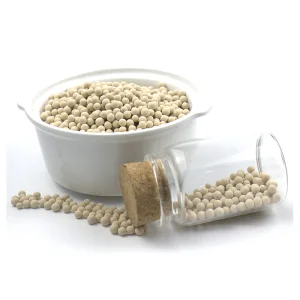
Engineered for cracked gas, ethylene, propylene drying, and ethanol dehydration with 3Å precision pore aperture preventing olefin co-adsorption.
China High Quality Adsorbent Zeolite 3A Molecular Sieve Factories, Pricelist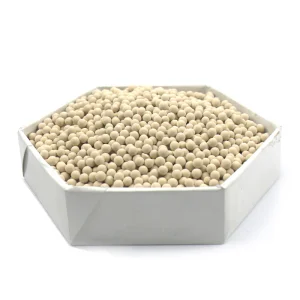
Standard sodium-form zeolite with a 4Å aperture, optimized for deep water stripping from natural gas streams and compressed instrument air networks.
China 4A Molecular Sieve adsorbent Suppliers, Quotes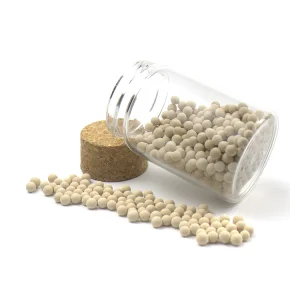
Calcium-exchanged framework offering structural selectivity for normal paraffin separation, pressure swing hydrogen purification, and medical oxygen feeds.
Wholesale 5A Molecular Sieve for oxygen Concentrator Suppliers, Pricelist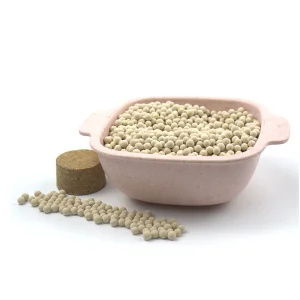
Large 10Å aperture faujasite matrix engineered to capture H2S, mercaptans, and heavy contaminants in Kuwait Clean Fuels Project (CFP) refinery lines.
China PSA Oxygen Generator 13X Molecular Sieve Supplier, QuotesKuwait's hydrocarbon sector—dominated by the Kuwait National Petroleum Company (KNPC), Kuwait Oil Company (KOC), and the state-of-the-art Al-Zour Integrated Complex—operates under some of the world's most grueling environmental and operational conditions. With ambient summer temperatures regularly exceeding 52°C (125°F) and extreme levels of ambient humidity along the Persian Gulf coast, downstream processing plants face severe thermal and mass transfer challenges.
At massive refining centers such as Mina Al-Ahmadi, Mina Abdullah, and Al-Zour (one of the largest single-site grassroot refineries globally with 615,000 bpd capacity), desiccant beds must prevent hydrate formation in cryogenic demethanizers and eliminate sulfur contaminants down to parts-per-billion levels. Standard commercial desiccants rapidly degrade under thermal stress and hydrocarbon coking. Pingxiang Zhongtai manufactures crystalline aluminosilicate structures specifically formulated to overcome these localized operating conditions.
Procurement teams servicing Mina Al-Ahmadi and Al-Zour mandate strict performance bounds under ASTM and UOP standards:
Pingxiang, Jiangxi is China’s premier industrial ceramics and chemical mass transfer cluster. Our localized supply ecosystem guarantees raw material purity, rapid furnace throughput, and uncompromised commercial value.
Direct synthesis from localized high-grade kaolin and specialized silica-alumina sources. Complete internal control over binder formulations (attapulgite, sepiolite) guarantees structural integrity with zero silica leaching.
By eliminating western intermediate trading markups and utilizing automated rotary kiln calcination, we supply Kuwait projects directly from the manufacturer at substantial capital savings without sacrificing ASTM/UOP technical compliance.
Our continuous automated firing lines maintain internal thermal variation under ±2°C across 32 zones, preventing under-activated crystalline domains or thermal micro-fractures in spherical and extrudate media.
All molecular sieve batches destined for Kuwait are packaged in airtight 125 kg or 150 kg carbon steel drums with vacuum-sealed inner polyethylene liners, nitrogen-purged to guarantee initial moisture content <1.0 wt% upon arrival at Shuwaikh Port.
Fully compliant with international third-party inspection standards. Regular pre-shipment sampling and testing conducted in conjunction with SGS, Bureau Veritas, and Intertek for chemical composition, crush strength, and dynamic breakthrough.
Established maritime shipping corridors linking Ningbo/Shanghai ports directly to Shuwaikh and Shuaiba ports. Flexible Incoterms including FOB, CIF Shuaiba, and DDP to local Kuwait free trade zones and warehouse yards.
Selecting the precise zeolite framework for specific adsorption and separation applications across Kuwait’s upstream, midstream, and downstream gas-liquid loops.
| Zeolite Type | Cation / Matrix | Nominal Pore Diameter | Critical Adsorbates | Excluded Molecules | Primary Kuwait Industry Duty |
|---|---|---|---|---|---|
| Type 3A | Potassium (K-A) | ~ 3 Å (0.3 nm) | H₂O, He, NH₃ | CH₄, C₂H₄, C₂H₆, higher HC | Cracked gas, Ethylene/Propylene drying, Ethanol loops |
| Type 4A | Sodium (Na-A) | ~ 4 Å (0.4 nm) | H₂O, CO₂, SO₂, H₂S, C₂H₄ | Propane, Butane, aromatic HC | Natural gas pipeline dehydration, instrument air drying |
| Type 5A | Calcium (Ca-A) | ~ 5 Å (0.5 nm) | n-Paraffins (C₄–C₁₄), H₂S, CO₂ | Iso-paraffins, cyclo-paraffins, aromatics | PSA Hydrogen purification, Iso/Normal paraffin separation |
| Type 13X | Sodium (Na-X / Faujasite) | ~ 10 Å (1.0 nm) | Mercaptans, R-SH, di-sulfides, H₂O, CO₂ | Large branched poly-nuclear aromatics | Al-Zour refinery gas sweetening, ASU pre-purification |
| 13X-HP / APG | High-Performance Na-X | ~ 10 Å (Refined cage) | N₂, CO₂, Trace Hydrocarbons | Molecules > 10 Å | Cryogenic air separation, high-yield VPSA/PSA medical oxygen |
In high-pressure natural gas dehydration vessels operating throughout Kuwait's Gathering Centers (GCs), bed efficiency depends heavily on the Mass Transfer Zone (MTZ) length. A poorly synthesized zeolite exhibiting broad pore size distribution or weak macroporosity produces an elongated MTZ, forcing operators to switch beds prematurely or risk water breakthrough.
Zhongtai’s proprietary agglomeration technique optimizes macropore diffusion channels within each spherical bead. This sharpens the breakthrough curve, allowing Kuwait plant engineers to maximize dynamic adsorption capacity (DAC) up to 18–19 wt% water under working process conditions, significantly extending cycle runtimes and cutting regeneration fuel gas consumption.
For high-liquid-load feed gas streams common in Kuwait's coastal terminals, Zhongtai recommends and engineers compound bed configurations. A bottom buffer layer consisting of high-surface-area silica gel or 17–23% inert alumina ceramic balls traps liquid droplet carryover and heavy hydrocarbons.
Above the buffer layer, a middle stratum of Type 4A molecular sieve handles bulk moisture stripping, while a polishing top layer of Type 13X APG strips remaining acid gases (H2S, mercaptans, and CO2). This multi-layer design shields the molecular sieve from hydrothermal shock, eliminates coking, and delivers sustained pipeline dew points down to -100°C (-148°F).
How our engineered adsorbent media serve critical process nodes across Kuwait’s industrial corridor from Shuaiba to Mina Al-Ahmadi and Ratqa.
Employed in hydrotreater units and reformer feed pretreaters to strip trace moisture and chloride radicals down to <0.5 ppmv, shielding precious metal platinum-rhenium catalysts from irreversible poisoning.
Deployed across KOC Gas Booster Stations (BS-140, BS-150, BS-171) for simultaneous moisture removal and deep desulfurization of heavy gas condensate prior to fractionation into commercial LPG and propane streams.
Supplied to merchant gas facilities and industrial ASUs generating bulk liquid nitrogen and gaseous oxygen. 13X APG beds remove atmospheric CO2, N2O, and hydrocarbons to prevent freeze-up in cryogenic core plate-fin heat exchangers.
Supplied to Kuwait Ministry of Health hospital oxygen generators and containerized field plants. Our 13X-HP lithium-like and specialized sieves yield steady 93%–96% medical oxygen with instantaneous adsorption kinetics.
Type 3A molecular sieve beads configured in dual-adsorber dehydration loops dry raw cracked olefin streams, achieving effluent water levels <0.1 ppmv while maintaining zero ethylene polymer formation (green oil resistance).
Packaged in instrument air dryers and marine bunkering equipment at Mina Al-Ahmadi pier to prevent pneumatic valve failure, line freezing, and internal galvanic corrosion in coastal atmospheric environments.
Key technological shifts shaping industrial desiccants, carbon capture, and clean energy strategies in the GCC and worldwide.
As Kuwait commits to net-zero greenhouse gas goals by 2050 for oil operations, point-source carbon capture has shifted from experimental pilots to commercial EPC design. Specialty 13X and amine-functionalized molecular sieve matrices represent the frontline for post-combustion CO2 capture from power generation and steam methane reforming flue gas.
Zhongtai is actively formulating high-silica, acid-tolerant zeolites that maximize CO2 working capacity at lower partial pressures while drastically reducing parasitic thermal regeneration energy requirements.
Modern industrial gas production requires high volumetric productivity in compact footprints. Traditional pelletized materials often suffer from slow intracrystalline diffusion and severe fluidization dusting under rapid 30-to-90 second cycle turnarounds.
Our factory engineers sub-millimeter micro-beads (0.4–0.8 mm and 1.6–2.5 mm) exhibiting narrow particle distributions and elevated macropore connectivity. This provides Kuwait operators with ultra-fast mass transfer kinetics, zero fluidization dusting, and reduced compressor power draw.
Direct answers to the most common engineering, regeneration, quality assurance, and commercial import questions posed by Middle East procurement managers.
Our chemical engineering technical team calculates dynamic breakthrough capacity, vessel dimensions, bed pressure drops, and regeneration heating cycles tailored specifically to your plant's feed gas composition and local ambient operating constraints.
Contact Our Engineering Desk NowExplore our complete range of specialized zeolite adsorbents, random tower packings, and catalytic honeycomb structures engineered for Kuwait and international global plants.
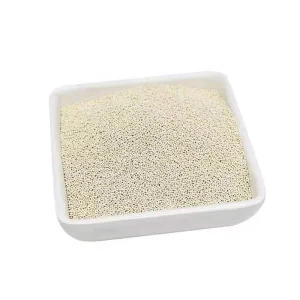
Engineered for rapid pressure swing oxygen concentrators, featuring optimized N2/O2 separation factors, low flow resistance, and prolonged cycling durability.
Wholesale PSA Oxygen Generator Concentrator 13X-HP Molecular Sieve Manufacturers, Pricelist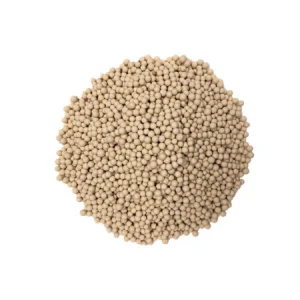
Specialized air prepurification adsorbent with superior dynamic capacity for trace atmospheric CO2, N2O, and water vapor ahead of cryogenic liquefaction.
Wholesale 13X APG Zeolite Molecular Sieve for PSA Device Manufacturer, Manufacturers
Heavy-duty high-crush 4A spherical desiccant designed specifically for deep pipeline drying, suppressing hydrocarbon drop-out and achieving sub-zero dew points.
China High Performance 4A Molecular Sieve Zeolite Adsorbent for Natural Gas Dehydration Supplier, Quotes
High-affinity molecular sieve calibrated for separation of branched vs. linear hydrocarbons and large-scale industrial hydrogen pressure swing upgrading.
Wholesale High Performance 5A Molecular Sieve Zeolite Adsorbent for PSA Gas Separation Manufacturer, Manufacturers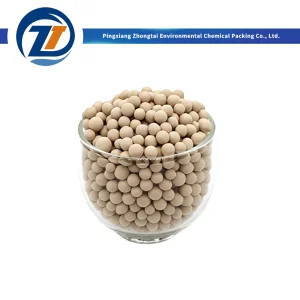
High-capacity sodium-form faujasite media providing maximum equilibrium capture of polar contaminants, acid gas species, and industrial solvents.
Wholesale High Performance 13X Molecular Sieve Zeolite Adsorbent for Air Separation and Cryogenic Purification Manufacturer, Factory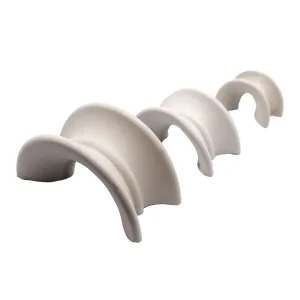
Acid-resistant ceramic mass transfer packing providing exceptionally low pressure drop and high throughput in hot corrosive acid wash and drying towers.
Wholesale Ceramic Intalox Saddle Ring Tower Packing Factory, Quotes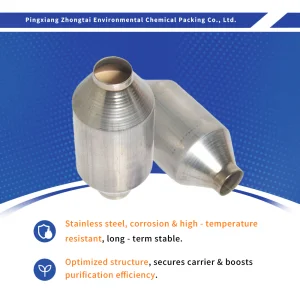
EPA-compliant ceramic honeycomb carrier featuring high thermal shock resistance and low thermal expansion for VOC abatement and emission scrubbers.
China Universal Direct Fit Catalytic Converter | EPA Compliant Replacement with Ceramic Honeycomb Core Factory, Quotes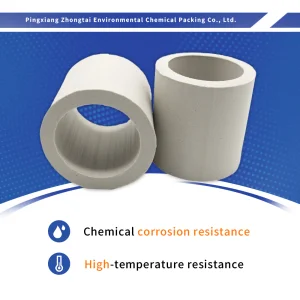
Classical heavy-duty mass transfer ceramic cylinders offering structural resistance to high temperature and harsh chemical degradation across distillation columns.
Wholesale Ceramic Raschig Ring – Random Tower Packing for Absorption, Distillation & Industrial Processing Towers Manufacturer, Suppliers