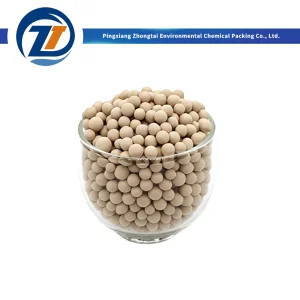
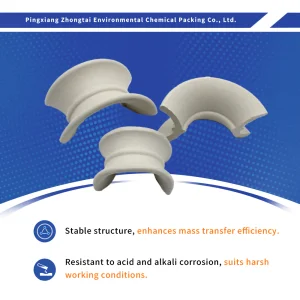
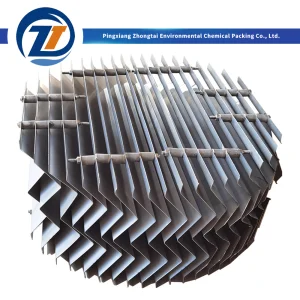
High dynamic capacity, ultra-low attrition rates, and field-tested selectivity for regional LNG plants, bio-refineries, and industrial gas skids.
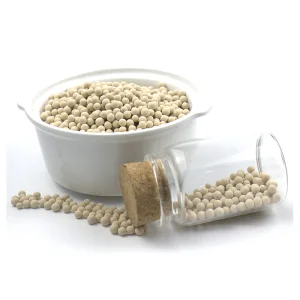
Strategic alignment with Vietnam's National Master Plan for Energy, Gas-to-Power value chains, and northern high-tech electronics hubs.
The Socialist Republic of Vietnam has emerged as one of the fastest-accelerating processing and manufacturing epicenters within Southeast Asia. Under the framework of Vietnam’s National Power Development Plan VIII (PDP8) and aggressive downstream diversification initiatives spearheaded by the Vietnam National Oil and Gas Group (PetroVietnam), the industrial demand for precision-engineered synthetic zeolite adsorbents has undergone fundamental qualitative transformation.
Modern petrochemical megaprojects—including the Nghi Son Refinery and Petrochemical Complex (NSRP) in Thanh Hoa, the Dung Quat Refinery expansion in Quang Ngai, and the Long Son Petrochemicals (LSP) Complex in Ba Ria-Vung Tau—demand molecular sieve adsorbents that maintain severe mechanical integrity under rigorous continuous thermal swing adsorption (TSA) and pressure swing adsorption (PSA) cycles. Concurrently, northern industrial corridors across Bac Ninh, Hai Phong, Thai Nguyen, and Bac Giang host tier-1 semiconductor foundries, advanced display manufacturers, and precision optics assembly lines where ultra-high-purity (UHP) nitrogen (purity ≥99.9999%) and compressed dry air (CDA) with dew points below -70°C are non-negotiable operational requirements.
Bac Ninh, Hai Phong, and Hanoi regional plants demand zero-dusting 4A and 13X APG molecular sieves for continuous nitrogen generation, cleanroom desiccant dehumidifiers, and zero-defect pneumatic robotics.
Dew Point ≤ -70°CNghi Son, Dung Quat, and Ba Ria-Vung Tau processing plants utilize heavy-duty 4A natural gas dehydration sieves and 13X cryogenic pre-purification units to strip water, mercaptans, and carbon dioxide down to sub-ppm levels.
LNG / Petrochem GradeEthanol fuel blending plants (E5/E10) and seafood cryogenic flash-freezing facilities rely on Zeolite 3A for breaking water-ethanol azeotropes without co-adsorbing ethanol, and PSA 13X for rapid industrial oxygen generation.
3A Azeotropic CleavageUnderstanding the molecular-scale mechanics behind aperture tuning, electrostatic dipole interactions, and hydrodynamic resistance.
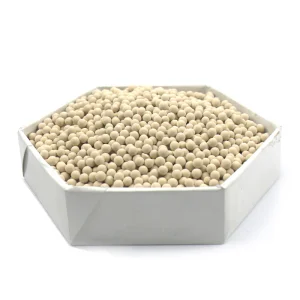
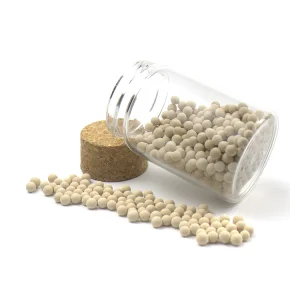
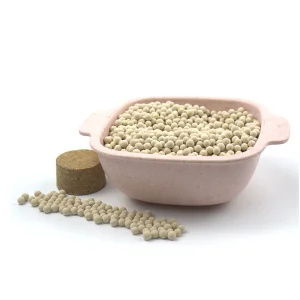
Synthetic zeolites are hydrated aluminosilicates possessing distinct three-dimensional crystalline framework structures built from linked silica (SiO₄) and alumina (AlO₄) tetrahedra. The isomorphic substitution of Si⁴⁺ by Al³⁺ induces a net negative framework charge, which is stoichiometrically neutralized by exchangeable extra-framework cations such as Na⁺, K⁺, and Ca²⁺. In our Pingxiang manufacturing base, thermal crystallization conditions and cation exchange parameters are strictly calibrated to establish exacting pore aperture diameters:
| Zeolite Type | Cationic Form | Nominal Pore Diameter | Bulk Density (g/ml) | Crush Strength (N/bead) | Primary Industrial Utility in Vietnam |
|---|---|---|---|---|---|
| Type 3A | Potassium (K⁺) | ~3 Ångströms (0.3 nm) | 0.68 – 0.74 | ≥ 35 (1.6–2.5mm) | Cracked gas drying, absolute ethanol fuel refining, IG unit moisture scavenging |
| Type 4A | Sodium (Na⁺) | ~4 Ångströms (0.4 nm) | 0.66 – 0.72 | ≥ 40 (1.6–2.5mm) | Closed-loop instrument air desiccation, CNG dehydration skids, dynamic pipeline drying |
| Type 5A | Calcium (Ca²⁺) | ~5 Ångströms (0.5 nm) | 0.68 – 0.73 | ≥ 45 (1.6–2.5mm) | PSA hydrogen purification, normal/iso-paraffin separation, natural gas sweetening |
| Type 13X (Faujasite) | Sodium (Na⁺) | ~10 Ångströms (1.0 nm) | 0.62 – 0.68 | ≥ 32 (1.6–2.5mm) | General VOC stripping, industrial desulfurization, heavy mercaptan removal |
| Type 13X-APG | High-Density Na⁺ | ~10 Ångströms (1.0 nm) | 0.64 – 0.70 | ≥ 38 (1.6–2.5mm) | Cryogenic Air Separation Unit (ASU) pre-purification: trace H2O & CO2 elimination |
| Type 13X-HP | Modified Lithium/Sodium | ~9-10 Ångströms | 0.60 – 0.65 | ≥ 30 (0.4–0.8mm) | Medical & Industrial VPSA/PSA oxygen generation, aquaculture aeration systems |
The operational efficiency of molecular sieves is governed by two concurrent phenomena: size exclusion (steric effects) and electrostatic dipole/quadrupole interactions. Water molecules (kinetic diameter ~2.65 Å) possess a high permanent dipole moment, creating extreme electrostatic affinity within the electric field established by the aluminosilicate framework. This ensures that even under conditions of near-zero gas relative humidity, our Type 3A and 4A zeolites exhibit steep Langmuir-type adsorption isotherms, driving effluent moisture levels down to less than 0.1 ppmv (corresponding to atmospheric dew points below -80°C).
In Vietnam's tropical monsoonal climate—where ambient conditions frequently register relative humidity levels exceeding 85% to 95% at temperatures between 32°C and 40°C—air compression and gas processing systems experience immense moisture loading. If low-grade adsorbents with irregular binder matrices or broad pore size distributions are deployed, hydrothermal aging accelerates exponentially. Hydrothermal degradation causes structural dealumination, collapsing the crystalline cages, generating micro-fines (dusting), and triggering catastrophic pressure drops across adsorption beds. Our factory eliminates this through a proprietary inorganic clay binder formulation that preserves structural crystallinity through thousands of thermal regeneration cycles.
Seamless execution from our Jiangxi production facility directly to industrial zones in Northern, Central, and Southern Vietnam.
We provide authentic, fully verified Certificates of Origin (Form E) under the ASEAN-China Free Trade Agreement. This grants qualified Vietnamese industrial clients complete import duty exemptions, substantially reducing total landing procurement expenditure.
Cost OptimizationNorthern destinations (Hai Phong, Bac Ninh) are served via rapid bonded road transport through the Friendship Pass (Huu Nghi) or sea freight via Hai Phong Port. Southern hubs (Ho Chi Minh City, Vung Tau) are efficiently accessed via direct container lines to Cat Lai and Cai Mep ports.
Reliable Lead TimesGiven the extreme humidity levels of maritime and tropical transport, all adsorbents are hermetically sealed in heavy-gauge steel drums with internal nitrogen-flushed, heat-welded polyethylene vacuum barrier bags, guaranteed zero atmospheric pre-saturation prior to vessel loading.
Zero Pre-MoisturePioneering binderless synthesis, point-source carbon capture zeolites, and hydrogen economy gas treatment.
As Vietnam advances toward its Net Zero 2050 greenhouse gas emission commitments pledged at COP26, the industrial processing sector must reconcile high productivity with deep energy conservation. Conventional thermal swing adsorption processes account for substantial energy penalties during bed regeneration. Our R&D pipeline focuses on three transformative adsorbent technologies directly addressing these operational dynamics:
Standard industrial molecular sieves incorporate approximately 15% to 20% inert clay binder (such as attapulgite, sepiolite, or kaolin) to provide mechanical strength. However, the binder contributes zero adsorption capacity. Our continuous hydrothermal conversion technique converts the clay matrix directly into active crystalline zeolite phase, yielding binderless zeolites that deliver a 20% to 25% increase in dynamic working capacity. For Vietnamese ASU operators and natural gas processors, this translates directly to smaller column dimensions, lower bed weight, and significantly reduced thermal regeneration heat inputs.
In response to flue gas emissions standards around heavy manufacturing corridors like Vung Tau and Quang Ninh, specialized surface-modified 13X zeolites with elevated basicity and customized mesoporosity have been developed. These engineered adsorbents achieve high CO2/N2 selectivity under low partial pressures, enabling cost-effective post-combustion vacuum swing adsorption (VSA) carbon capture units.
As offshore wind and solar projects in Central and Southern Vietnam (such as Ninh Thuan and Binh Thuan provinces) transition into green hydrogen electrolysis initiatives, our advanced 5A and modified faujasite sieves are configured for multi-bed PSA systems, removing trace moisture and unreacted oxygen down to <1 ppmv, fulfilling stringent ISO 14687 fuel-cell grade hydrogen standards.
Detailed engineering, operational, and commercial insights for specifying and purchasing molecular sieves.
Comprehensive engineered consumables direct from our Pingxiang manufacturing base for turnarounds, revamps, and greenfield installations.