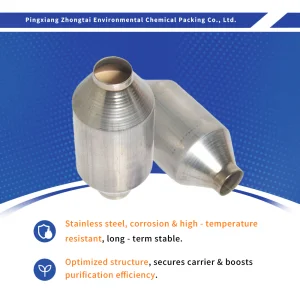
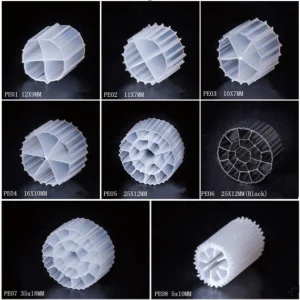
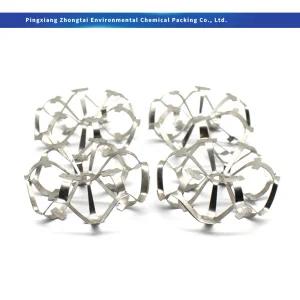
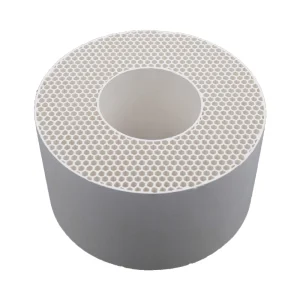
Explore our top chemical mass transfer internals, ceramic catalyst supports, and specialized adsorption materials engineered for petrochemical, refinery, and environmental installations.
A comprehensive market analysis on thermodynamic integrity, catalyst degradation avoidance, and the paradigm shift toward microcrystalline engineered ceramics.
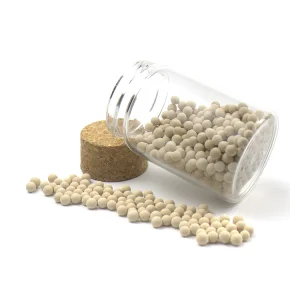
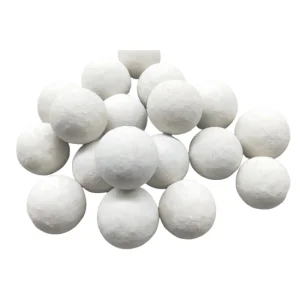
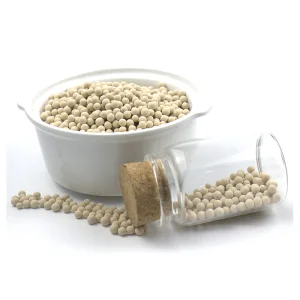
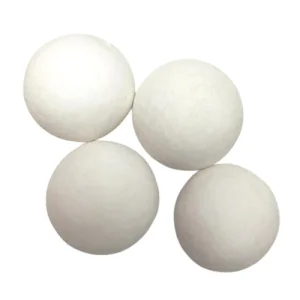
Modern mega-scale hydrocrackers and continuous reforming units operate under intense mechanical stress. Industrial white ceramic balls have evolved from standard porcelain to isostatically pressed high-alumina spheres that resist severe hydrostatic loads, preserving bed voidage fractions above 40% and eliminating costly thermal shutdowns.
Under elevated partial pressures of steam, low-purity ceramic balls leach volatile silicon dioxide (SiO₂). This migrate down-bed, fouling high-value precious metal catalyst pores. The prevailing standard has shifted toward 99.5%+ alpha-alumina compositions containing less than 0.2% silica for secondary reformers and synthesis loops.
In lithium-ion battery cathode preparation (such as LFP) and sub-micron technical ceramic formulations, white ceramic grinding balls prevent iron contamination. The market demands density ranges beyond 3.65 g/cm³ and wear rates under 0.01% to sustain prolonged high-energy agitator bead milling operations.
Wholesale price bands vary primarily by raw alumina purity, calcination temperature (tunnel kiln vs. shuttle kiln), and precision sizing tolerances.
| Classification | Al₂O₃ Content | SiO₂ Content | Bulk Density | Crush Strength (13mm / 1/2") | Reference FOB Price (MT) |
|---|---|---|---|---|---|
| Standard Inert Porcelain Balls | 23% – 30% | 65% – 72% | 1.35 – 1.45 g/cm³ | > 5.0 kN/bead | $420 – $580 |
| Mid-Alumina Support Media | 65% – 75% | 20% – 28% | 1.60 – 1.80 g/cm³ | > 9.5 kN/bead | $780 – $980 |
| High-Alumina Industrial Grinding | 92% | < 6.5% | 2.10 – 2.30 g/cm³ | > 18.0 kN/bead | $1,150 – $1,420 |
| Ultra-High Purity Inert Alumina | 99.5% | < 0.15% | 2.20 – 2.40 g/cm³ | > 22.0 kN/bead | $1,850 – $2,300 |
| Specialized Porous Bio-Ceramics | Formulated | Multi-Oxide | 0.70 – 0.95 g/cm³ | Specific Duty | $650 – $900 |
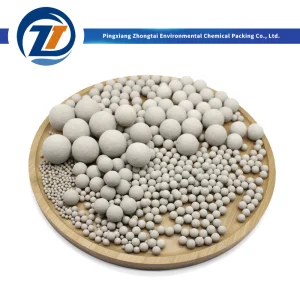
* Prices are indicative wholesale tiers for 20-foot full container load (FCL) commitments. Custom sizing (1.5mm micro-beads up to 75mm macro-spheres) and customized packing solutions are quoted upon engineering review.
Pingxiang Zhongtai operates at the industrial ceramic ground-zero of China, capturing complete supply-chain cluster efficiencies across raw bauxite refinement, tunnel kiln firing, and automated sorting.
Unlike conventional extrusion or hand-rolled spherical forming, our facility utilizes modern multi-cavity isostatic cold pressing. This exerts uniform omnidirectional pressure, eradicating internal air voids, micro-delaminations, and differential firing shrinkage, ensuring symmetrical crush strength.
Continuous computer-monitored tunnel kilns regulate thermal sintering curves at temperatures exceeding 1,650°C. Solid-state sensors eliminate temperature variances across the kiln car profile, locking in phase conversion from gamma-alumina precursors into dense, unreactive alpha-corundum structures.
Every industrial campaign is backed by rigorous lot sampling. From cold-crush resistance and water absorption testing to acid-solubility profiling under ASTM C515 and DIN 51102 methodologies, buyers receive certifiable Mill Test Reports (MTR) prior to port clearance.
White ceramic balls serve as unheralded operational cornerstones across multi-billion-dollar processing infrastructure globally.
Placed at top and bottom catalyst layers inside diesel hydrotreaters and hydrocrackers to withstand turbulent high-velocity feed streams, preventing bed channeling and fines migration.
Acts as an inert ballast and thermal shock buffer in natural gas dehydration towers and cryogenic air separation units (ASU), holding micro-zeolite beads firmly in position during swing cycling.
Resistant to 98% concentrated hot sulfuric acid, our inert balls serve as supporting base grids below ceramic saddles, ensuring smooth gas distribution under aggressive acid irrigation.
High-density 92% and 95% white alumina grinding balls maximize kinetic energy dissipation within high-speed bead mills, ensuring ultra-fine, iron-free dispersions for energy storage matrices.
Direct answers to technical questions concerning sizing, crush strength criteria, and cross-border delivery logistics.
Engineered ceramics, high-adsorbent molecular sieves, and precision foundry filtration components manufactured under ISO-compliant operational standards.