Direct-from-factory catalog items inspected under batch-level ISO 9001 and ASTM mechanical integrity standards. Engineered for low pressure drop, intense chemical inertia, and superior thermal tolerance.
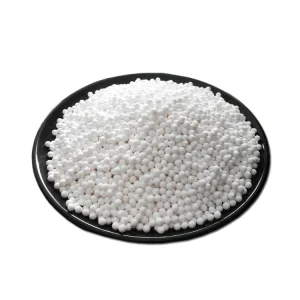
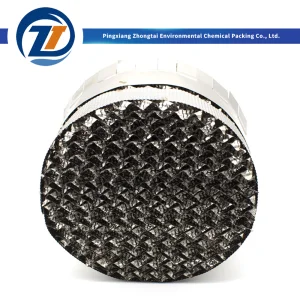
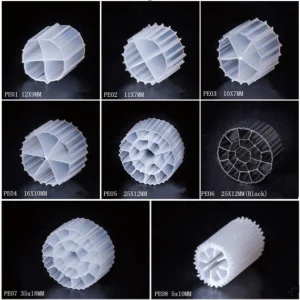
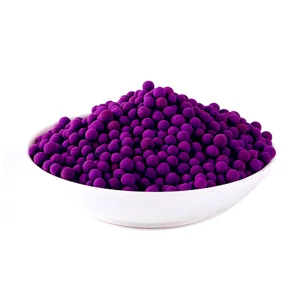
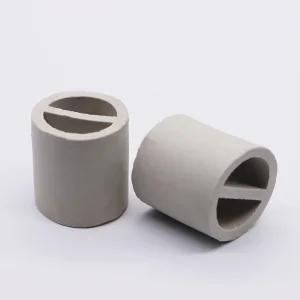
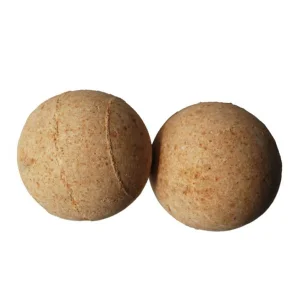
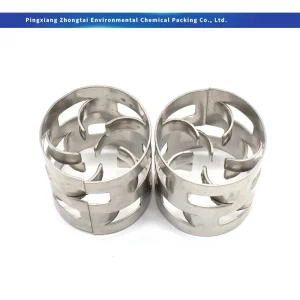
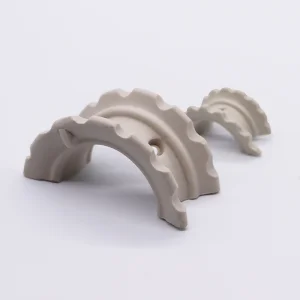
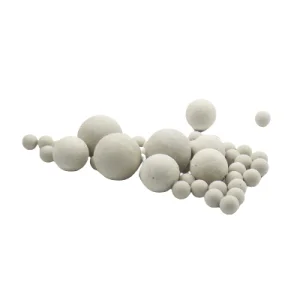
The global chemical processing, petrochemical, and industrial wastewater sectors are undergoing an unprecedented structural transition toward deep decarbonization, prolonged catalytic lifecycles, and intensified mass transfer. Historically regarded merely as passive catalyst bed ballast, modern porous ceramic balls have transformed into active hydrodynamic and catalytic facilitators.
By tailoring open-pore tortuosity, pore volume (ranging from 28% to over 55%), and chemical sintering profiles, industrial engineers now leverage porous spherical media to eliminate vapor maldistribution, mitigate localized thermal spikes, and scavenge fine particulates before catalytic beds become fouled. Pingxiang Zhongtai has spearheaded the computational design and precision firing of these refractory matrices to ensure exceptional resilience against high-pressure hydrogen, steam stripping, and corrosive acid condensates.
Unlike conventional dense inert balls that solely provide dead-weight structural retention, engineered porous ceramic spheres possess controlled multimodal pore topologies. This facilitates fluid absorption and balanced dispersion across the entire packed volume.
The high specific surface area within the internal micro-channels provides exceptional liquid-film holdup, accelerating inter-phase thermodynamic equilibrium before reactants contact high-cost active precious-metal catalyst beds.
Engineered with specialized corundum and mullite phase matrices, our spheres resist severe structural spalling, phase transitions, and hydrothermal micro-fissuring even under continuous exposure to superheated steam up to 1350°C.
Minimizing silica leaching is paramount in high-temperature syngas and hydrogen processing. Our high-alumina porous formulations maintain residual free silica ($SiO_2$) below 0.1%, eliminating downstream boiler and turbine scaling.
For global engineering, procurement, and construction (EPC) conglomerates, plant turnaround directors, and chemical plant supply officers, porous ceramic sphere procurement extends far beyond initial FOB price comparisons. Unplanned reactor shutdowns resulting from support ball crushing, dusting, or fluidization run into millions of dollars per day.
Procurement must evaluate point-load crush strength (kN/sphere) alongside bulk crushing strength (BCR). Our spheres deliver up to 35% higher mechanical thresholds than standard ISO benchmarks, sustaining heavy catalyst columns.
Full metallurgical and mineralogical transparency is vital. Every production batch is certified via X-Ray Fluorescence (XRF), automated Archimedes water absorption, and cold crushing evaluations documented per shipment.
Turnarounds require strict just-in-time delivery windows. Utilizing centralized Pingxiang kiln networks and standardized container staging at Ningbo and Shanghai ports, we mitigate ocean transit volatility.
Rough intermodal freight creates fine abrasion dust if packing is sub-par. We utilize heavy-duty polymer-reinforced 1000kg jumbo super-sacks or hermetically sealed steel drums mounted on fumigated ISPM-15 wooden skids.
Pingxiang, located in Jiangxi Province, has been the undisputed ceramic engineering capital of China for over a century. Within this focused geographic radius, Pingxiang Zhongtai Environmental Chemical Packing Co., Ltd. utilizes an optimized ecosystem of high-purity kaolin clay quarries, synthetic alumina refineries, and automated kiln engineering centers.
By integrating automated continuous rolling drums, automated green-body sizing separators, and digital SCADA-controlled 120-meter tunnel kilns, our facilities achieve micro-structural thermal uniformity that eliminates internal shear stress. Real-time optical sorting removes out-of-round or micro-cracked spheres, assuring tight particle diameter distributions and dependable hydrodynamic bed voidage.
From heavy hydroprocessing bottom-bed supports to bio-filtration kinetics in modern aquaculture, our porous and inert spheres are customized to tackle aggressive chemical attrition, high thermal cycling, and particulate accumulation.
Deployed in top hold-down and graduated bottom support layers in refinery fixed-bed reactors. Layering balls from 1/8" to 2" prevents costly catalyst migration, protects reactor internals, and moderates the hydrodynamic impact of high-pressure hydrogen feed streams.
Ultra-high purity 99.5% $\alpha$-alumina spheres withstand severe temperatures up to 1450°C and reductive syngas streams. Zero silica content ($SiO_2 < 0.1\%$) prevents volatilization and downstream waste-heat boiler fouling.
Our refractory ceramic balls withstand extreme thermal shocks and elemental sulfur gas corrosion in furnace reaction chambers and checker-wall supports, preventing packing collapse during rapid burner shutoffs.
Porous and inert ceramic balls stabilize molecular sieve and desiccant beds in cryogenic air separation and natural gas dehydration units, buffering sudden pneumatic pressure surges during bed regeneration cycles.
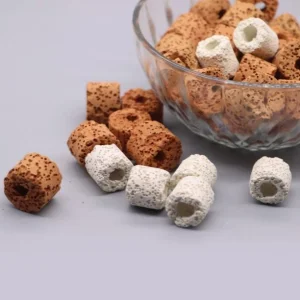
Breath bio-rings and high-porosity ceramic spheres offer open interconnected macro-pores ($2000–3500\text{ m}^2/\text{m}^3$), accelerating nitrifying bacterial colonization ($Nitrosomonas$ and $Nitrobacter$) for rapid ammonia and nitrite conversion.
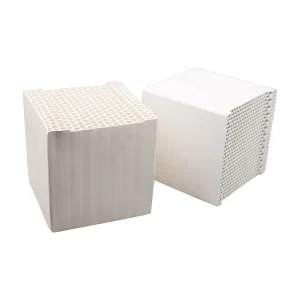
Engineered honeycomb ceramics and thermal refractory balls facilitate >95% VOC thermal recovery, minimizing auxiliary burner natural gas consumption in high-volume industrial painting and chemical coating exhaust exhausts.
Industrial buyers can reference standardized property ranges to align reactor operating parameters with specific ball formulations.
| Property Parameter | Standard Inert (17-23%) | Medium Alumina (23-30%) | High Alumina (90-92%) | Super Alumina (≥99%) | Porous Bio-Matrix Media |
|---|---|---|---|---|---|
| Al₂O₃ Content (%) | 17.0 – 23.0 | 23.0 – 30.0 | 90.0 – 92.5 | ≥ 99.2 | 20.0 – 28.0 |
| SiO₂ Content (%) | 70.0 – 76.0 | 65.0 – 72.0 | 5.0 – 7.5 | ≤ 0.15 | 62.0 – 70.0 |
| Bulk Density (g/cm³) | 1.35 – 1.45 | 1.40 – 1.50 | 2.00 – 2.15 | 2.25 – 2.40 | 0.85 – 1.10 |
| Apparent Porosity (%) | ≤ 3.0 (Dense) | ≤ 2.5 (Dense) | ≤ 1.5 (Dense) | ≤ 1.0 (Dense) | 38.0 – 58.0 (Porous) |
| Crush Strength (Ø19mm, kN/ball) | ≥ 4.5 | ≥ 6.5 | ≥ 14.0 | ≥ 22.0 | ≥ 1.8 (Open Pore) |
| Max Working Temp (°C) | 1100 | 1200 | 1500 | 1650 | 950 |
| Acid Resistance (wt% loss) | ≤ 0.35 | ≤ 0.30 | ≤ 0.15 | ≤ 0.08 | ≤ 0.50 |
| Primary Target Application | Refinery Bed Support | Deep-Bed High Pressure | Slurry Milling & Severe Duty | Steam Reformers, Syngas | Aquaculture & Scrubbers |
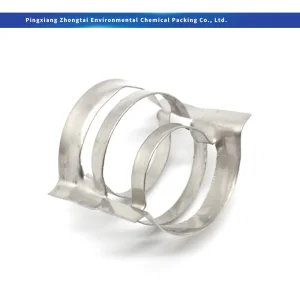
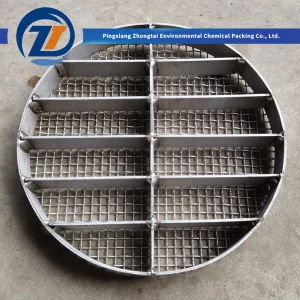
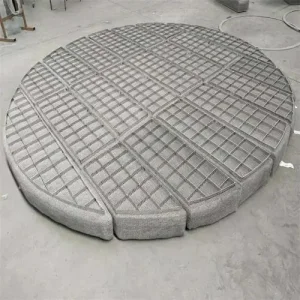
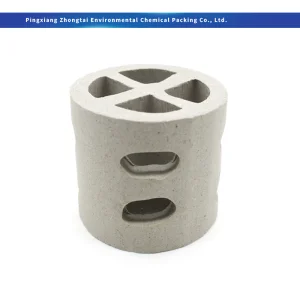
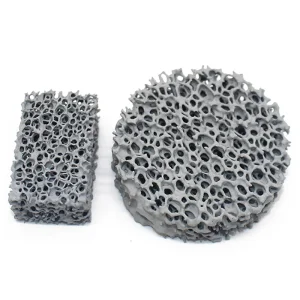
Engineered structured packing, ceramic foam molten filters, and random column elements for complex distillation, absorption, and fine separation duties worldwide.
Comprehensive, specification-grade explanations answering the critical thermodynamic, chemical, and logistics challenges encountered by refinery operators and procurement directors.
Connect directly with our chemical engineering team in Pingxiang. Whether you require specific alumina purities, customized voidage configurations, or urgent turnaround shipments, Pingxiang Zhongtai delivers reliable, high-spec ceramic media to plants worldwide.
