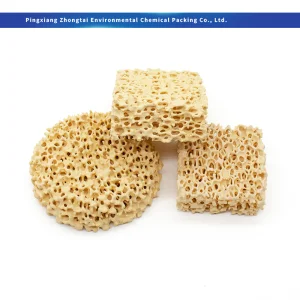
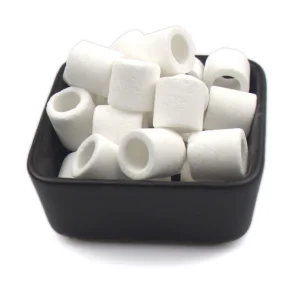
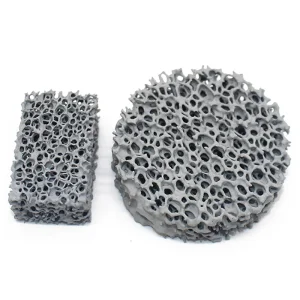
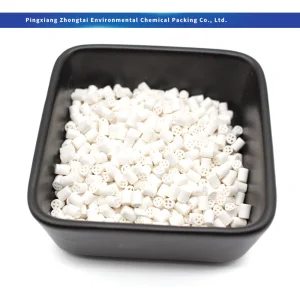
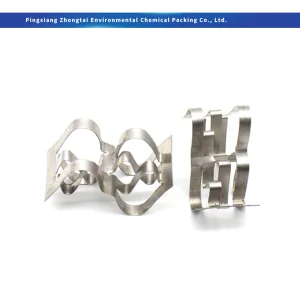
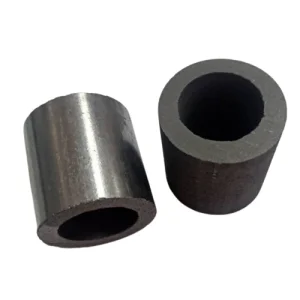
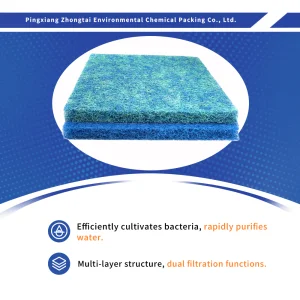
Direct factory manufacturing of advanced honeycomb ceramics, molecular sieves, foam filtration media, and high-efficiency tower internals engineered to ISO 9001:2015 process standards.
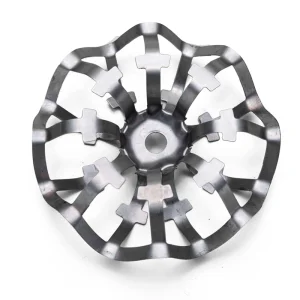
Originally invented by Dr. A. J. Teller, the Teller Rosette Ring (frequently categorized as the Tellerette or Rosette packing) represents a fundamental quantum leap in random mass transfer architecture. Unlike hollow cylindrical packings such as Raschig or classic Pall rings, the Teller Rosette consists of an interconnected toroidal framework with multiple radiating helical loops.
Instead of relying purely on wetted static film flow, the open filamentous loops continuously collect falling liquid droplets at nodal junctions, shearing and dispersing them into atomized mist before redepositing them on neighboring rings. This eliminates dry spots and liquid channeling even under low liquid irrigation rates.
With an engineered void fraction typically exceeding 90% to 93%, the aerodynamic profile prevents premature vapor choking. Gas flows freely through multi-directional radial channels, drastically cutting blower energy consumption and allowing column operation closer to theoretical flood capacity.
The rounded loops and absence of enclosed hollow pockets prevent particulates, bio-slimes, and crystallization scale from settling. The interlocked toroidal geometry creates a self-supporting bed structure that resists nesting, maintaining uniform bulk density and consistent mass transfer coefficient (KLa).
| Nominal Size | Outer Diameter × Height (mm) | Specific Surface Area (m²/m³) | Void Fraction (ε, %) | Bulk Density (PP, kg/m³) | Packing Factor (Fp, 1/m) | Dry Pressure Drop (ΔP/m @ 1.5 m/s) |
|---|---|---|---|---|---|---|
| Type S-O / 1" Mini | 25 × 10 mm | 210 | 88% | 125 | 82 | ≤ 22 Pa/m |
| Type 1-R / 47 mm (Standard) | 47 × 19 mm | 160 | 91% | 75 | 55 | ≤ 14 Pa/m |
| Type 2-R / 73 mm (High-Flow) | 73 × 28 mm | 110 | 93% | 52 | 38 | ≤ 8 Pa/m |
| Type 3-R / 95 mm (Heavy Duty) | 95 × 36 mm | 85 | 94% | 45 | 26 | ≤ 5 Pa/m |
Fluid Dynamics Note for Process Simulation: When running simulation packages such as Aspen Plus or ChemCAD, plastic Teller Rosette rings exhibit a significantly lower Height Equivalent to a Theoretical Plate (HETP) compared to traditional saddles under equivalent gas loadings ($F_s = v_g \sqrt{\rho_g}$ between 1.2 and 2.4 $m/s \cdot \sqrt{kg/m^3}$). This allows engineers to reduce total scrubber shell height by up to 25% during capital expenditure (CAPEX) design phases.
Zhongtai manufactures Teller Rosette Rings using 100% virgin prime-grade thermoplastics formulated with specialized anti-oxidants, thermal stabilizers, and UV inhibitors tailored to rigorous chemical environments.
Temp Threshold: -10°C to 100°C (PP) / 125°C (RPP)
Standard homopolymer or glass-reinforced (RPP). Exhibits exceptional resistance to caustic alkalis (NaOH, KOH), dilute inorganic acids, and salt brines. Widely applied in basic chemical scrubbers, municipal wastewater odor towers, and cooling towers.
Temp Threshold: 0°C to 60°C (PVC) / 95°C (CPVC)
Rigid, self-extinguishing polymer characterized by high dielectric strength and chemical resistance to strong mineral acids, wet chlorine gas, sodium hypochlorite, and oxidizing solvents. CPVC offers elevated glass transition temperatures for chlorine drying systems.
Temp Threshold: -30°C to 150°C
High-purity fluoropolymer providing virtually universal chemical inertness against concentrated nitric acid, hydrofluoric acid (HF), sulfuric acid (98%), ozone, and pure halogens. Indispensable for semiconductor acid exhaust scrubbers and nuclear waste processing.
Temp Threshold: -50°C to 180°C / 200°C
Engineered for extreme continuous duty involving aggressive organic solvents, high-temperature wet gas streams, and ultra-harsh chlor-alkali environments. Features exceptional non-stick surface kinetics to eliminate organic tar fouling.
For over two decades, Pingxiang Zhongtai Environmental Chemical Packing Co., Ltd. has established rigorous manufacturing protocols guaranteeing that every shipment matches multinational EPC and API plant quality metrics.
All plastic resins are certified compliant with European REACH (SVHC-free), RoHS 3 (Directive 2015/863/EU), and OSHA industrial workplace standards. Full plasticizer-free declarations and food/potable contact statements (FDA 21 CFR 177.1520) are available upon project specification.
Our facility utilizes high-cavity, hot-runner multi-axis CNC tooling with automated flash-trimming robotics. This guarantees zero sharp parting-line flash, uniform loop wall thickness (±0.05 mm), and uncompromised structural tensile modulus under hydraulic bed head-loads.
Every production run undergoes documented quality control auditing: Melt Flow Index (MFI, ASTM D1238), Tensile Modulus (ASTM D638), Notched Izod Impact (ASTM D256), and thermal bed collapse simulations. Inspection reports are archived with unique lot numbers on shipping documents.
Integrated supply-chain velocity and strategic industrial scale located in Pingxiang Hi-Tech Industry Park, Jiangxi.
International process engineering contractors and chemical distributors source tower internals from Pingxiang due to unmatched industrial ecosystem clustering, rapid tooling customization, and economies of scale.
Our proximity to domestic petrochemical hubs (Sinopec, PetroChina) and direct strategic bulk procurement of raw polymer pellets protects procurement managers from raw material spot market volatility while guaranteeing 100% prime resin authenticity with zero hazardous post-consumer adulteration.
Unlike trading intermediaries, our on-site precision toolmakers can engineer and produce custom cavity molds in under 18 days. Whether modifying loop thickness for higher compressive loads or optimizing ring diameter for specialized column revamps, rapid OEM/ODM customization is our core capability.
Because random packings are light but voluminous, shipping economics dictate procurement viability. We utilize advanced high-density hydraulic pneumatic bagging, UV-treated 1.0 m³ to 1.5 m³ jumbo super-sacks, and tailored container-stuffing matrixes to maximize container cubic utilization up to 98%.
Full customs and export documentation is handled in-house: Bills of Lading, Certified Invoices, Certificates of Analysis (CoA), Generalized System of Preferences Certificates of Origin (Form A / Form E / RCEP), and fumigation certificates for palletized maritime transport.
Procurement officers at international EPC firms (e.g., Bechtel, Technip, Fluor) and multinational asset operators require precise technical alignment prior to RFQ sign-off. Below is the systematic engineering review checklist required for mass transfer media procurement.
Ensure the design package outlines maximum liquid loading ($L$, $m^3/m^2 \cdot h$), vapor loading ($V$, $m^3/h$), column operating temperature, design pressure, and maximum allowable clean pressure drop. Tellerette rings are selected when operating near 70% to 85% of flooding velocity where classic cylindrical rings suffer surging.
Assess presence of trace aromatic hydrocarbons, free wet halogens, or oxidizing surfactants. In chlor-alkali scrubbers handling hot moist chlorine gas ($Cl_2$), PVDF or CPVC must be specified over standard PP to prevent premature environmental stress cracking (ESC) and plastic brittleness.
Calculate maximum packing bed height ($Z$). Beds exceeding 4.5 to 6 meters require intermediate redistribution trays and support grid designs with open beam areas exceeding 85% of tower cross-section to eliminate localized pressure spikes at the packing support interface.
When executing column debottlenecking revamps, replacing older 2" Pall rings (Packing Factor ≈ 82) with Type 2-R Teller Rosettes (Packing Factor ≈ 38) cuts gas-side pressure drop by up to 50%, enabling up to a 30% increase in scrubber gas throughput without replacing existing blowers.
Plastic Teller Rosettes have established proven field longevity across high-stringency gas-liquid contacting processes worldwide.
In coal-fired power plants, metallurgical smelting plants, and marine scrubbers, sulfur dioxide ($SO_2$) absorption into caustic or limestone slurries presents severe scaling hazards. Teller Rosette packings minimize calcium sulfate ($CaSO_4$) gypsum scale adhesion, ensuring continuous run times without clogging.
Advanced semiconductor wafer fabs release exhaust gases laden with hydrofluoric acid (HF), hydrochloric acid (HCl), and silicon tetrafluoride ($SiF_4$). PVDF Teller Rosettes ensure zero silica particle accumulation and 99.9% acid gas removal efficiency while meeting strict cleanroom VOC emission ceilings.
Chlorine tail gas scrubbers and sodium hypochlorite ($NaOCl$) production towers rely on CPVC and PVDF Tellerettes to contact concentrated chlorine gas with circulating sodium hydroxide without experiencing oxidative thermal degradation or bed settlement.
In municipal groundwater remediation and industrial wastewater stripping columns, Teller Rosettes volatilize trichloroethylene (TCE), perchloroethylene (PCE), and volatile fluorinated organic precursors at high air-to-water ratios with ultra-low fan kilowatt consumption.
The random packing sector is entering an era driven by global net-zero mandates, carbon capture technologies, and circular economy requirements.
Large-scale Direct Air Capture (DAC) and post-combustion carbon capture facilities employ amine solvents (MEA, MDEA, piperazine) to absorb CO2. Specialized polypropylene and modified polymer Tellerettes provide the necessary high gas velocities and dynamic surface renewal required to handle enormous air volumes with minimal pressure drop.
To reduce Scope 3 carbon emissions, Zhongtai leads the development of certified Post-Industrial Recycled (PIR) technical blends. Formulated with impact modifiers, these recycled-content packings match the mechanical crush strength of prime resins while drastically lowering the cradle-to-gate carbon footprint.
Current research and development focuses on laser-etched and plasma-treated filament loops. By lowering the critical liquid contact angle (θ < 30°), micro-textured Teller Rosettes maintain an unbroken capillary liquid film across the entire surface area, multiplying effective interphase mass transfer kinetics.
Selecting the optimal media geometry and chemistry prevents premature bed failure, excessive blower backpressure, and expensive unplanned plant outages. Compare key industrial packing types below:
| Packing Media Type | Predominant Materials | Primary Strengths | Ideal Applications | Relative Cost Factor |
|---|---|---|---|---|
| Plastic Teller Rosette Ring | PP, RPP, PVC, CPVC, PVDF, ETFE | Lowest ΔP, non-clogging, high liquid hold-up & drop creation | Acid gas wet scrubbing, bio-filtration, stripping, degassing | Moderate (High ROI) |
| Plastic Pall Ring | PP, HDPE, PVDF | General-purpose standard, balanced liquid-vapor contact | Moderate-load absorption, cooling towers, stripping | Low - Economy |
| Metal Pall Ring / RSR | SS304, SS316L, Carbon Steel | High mechanical strength, thermal endurance up to 400°C | Petroleum refining, atmospheric & vacuum distillation | Medium - High |
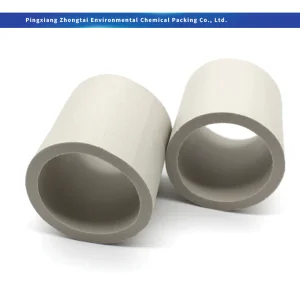
| Ceramic Raschig / Saddle Ring | Acid-Proof Chemical Stoneware | Total chemical inertness to hot acids (except HF) | Sulfuric acid drying & absorption, chlorine production | Economical / Heavy |
| Structured Packing (Wire/Sheet) | Stainless Steel, Hastelloy, Titanium | Extremely low HETP, maximum theoretical stage efficiency | Vacuum distillation, precision isomer separations, revamps | High Capital |
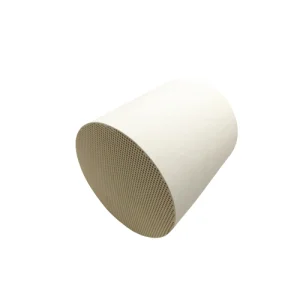
| Honeycomb Ceramic Blocks | Cordierite, Mullite | Exceptional thermal shock resistance & heat recovery | RTO / RCO regenerative thermal oxidizers, VOC abatement | Specialized |
For catalyst support in refining and petrochemical reactors, alumina purity dictates crush strength and chemical leaching boundaries:
| Grade Classification | Al&sub2;O&sub3; Content | Dominant Physical Property | Representative Process Duty |
|---|---|---|---|
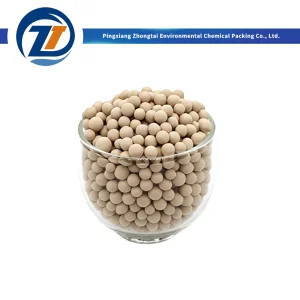
| Standard Inert Ceramic | 17–23% Al&sub2;O&sub3; | Chemically stable, economical bed hold-down | Catalyst support in hydrotreaters, reformers, basic petrochemical service |
| Medium Alumina Support | 23–30% Al&sub2;O&sub3; | Enhanced crush strength and impact resistance | Higher-pressure hydrocrackers, gas dryers, deep catalyst beds |
| High Alumina Media | 90–92% Al&sub2;O&sub3; | Extreme hardness, low abrasion loss | Wet grinding ball mills, mineral slurries, abrasive services |
| Super High Alumina | ≥ 99% Al&sub2;O&sub3; | Zero silica leaching, thermal limit >1650°C | Steam methane reformers, secondary reformers, ammonia synthesis units |
Founded in 2003, Pingxiang Zhongtai Environmental Chemical Packing Co., Ltd. has developed from a dedicated chemical ceramics manufacturer into an integrated multi-material powerhouse operating across ceramic, metal, and engineered plastic media platforms.
Established manufacturing operations in the Pingxiang National Hi-Tech Industrial Development Zone, directly capitalizing on the region's century-old chemical packing knowledge cluster.
Korean EPC engineering auditors completed exhaustive on-site quality and production line audits of our ceramic and packing plants prior to qualifying Zhongtai for major overseas petrochemical projects.
Formalized direct strategic distribution partnerships with key South American chemical and refinery contractors at the Canton Fair, expanding honeycomb ceramic and plastic packing supply lines.
Exhibited at the China International E-Commerce Industry Expo & Indonesia Product Selection Exhibition, delivering localized mass transfer packings to Southeast Asia's burgeoning nickel refining and fertilizer industries.
In-depth analyses from our engineering faculty exploring chemical packing fluid mechanics, trade strategies, and advanced wastewater treatment technologies.
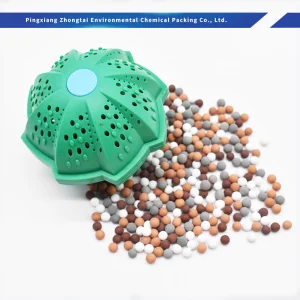
An engineering investigation into microporous ceramic formulation and low-temperature catalytic sintering techniques. Reviews chlorine removal efficiency ($Cl_2 \rightarrow Cl^-$ conversion) in commercial shower filtration, municipal water purification, and reverse osmosis pre-treatment systems.
An exporter's strategic assessment of tariff adjustments, anti-dumping classifications, supply-chain diversification, and cost hedging. Outlines critical risk mitigation strategies for procurement teams purchasing chemical fillers and random tower packing.
A rigorous fluid dynamics breakdown of the conjugated ring profile. Compares internal rib curvatures against conventional Pall and saddle geometries, demonstrating where conjugated designs reduce liquid channeling in acid gas strippers.
Technical highlights from the Indonesia Product Selection Exhibition. Examines customized anti-fouling packings engineered specifically for Southeast Asian high-humidity flue gas scrubbing and industrial nickel extraction towers.
Authoritative, specification-level answers provided by Zhongtai's chemical process engineers and global trade compliance managers.
Engineered tower packings, carbon graphite rings, metallic high-capacity internals, and specialty grinding media designed for severe service columns and global process plants.
Connect directly with Zhongtai's chemical engineers to discuss tower sizing, hydraulic simulations, custom mold fabrication, and volumetric export pricing.
Pingxiang Zhongtai Environmental Chemical Packing Co., Ltd.
No. 905, Global Business Center, Economic Development Zone, Pingxiang City, Jiangxi Province, China
Direct Sales: +86 182 7099 7020 | Tech Support: +86 139 7992 2265 | Email: [email protected]