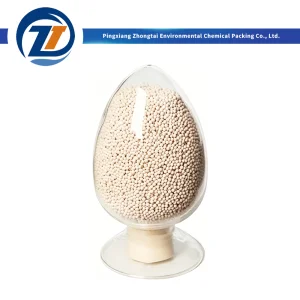
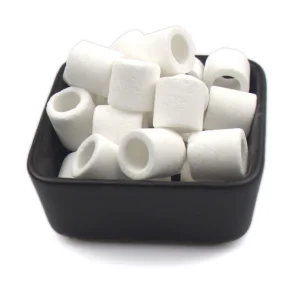
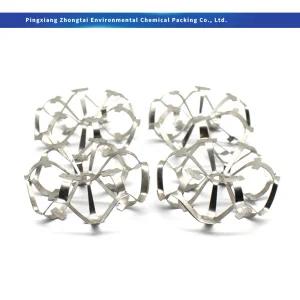
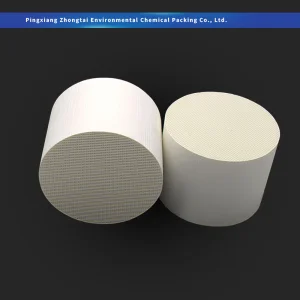
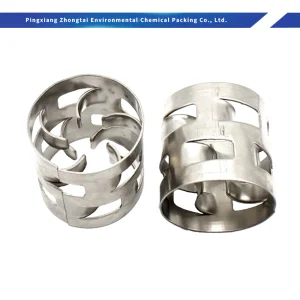
Direct factory supply of high-performance chemical tower packings, molecular sieves, and catalytic substrates.
Strategic Insights into Crystalline Aluminosilicate Adsorbent Manufacturing, Market Dynamics, and Bulk Procurement
The global molecular sieve market is projected to reach over $4.8 Billion by 2030, driven by expanding LNG liquefaction projects, medical oxygen demand, and carbon capture infrastructure modernizations.
Synthetic zeolites (LTA, FAU, BEA, MFI) are engineered with ultra-precise pore diameters ranging from 3Å to 10Å, delivering unparalleled selectivity over silica gels and activated alumina.
Next-generation molecular sieves play a pivotal role in bio-ethanol dehydration, blue hydrogen purification via PSA systems, and Direct Air Capture (DAC) CO2 sequestration processes.
Molecular sieves—synthetically manufactured crystalline metal aluminosilicates—form the backbone of modern petrochemical processing, gas separation, and environmental remediation plants. Unlike amorphous adsorbents such as activated carbon or standard silica gel, molecular sieves possess a uniform, three-dimensional porous network defined by precise crystallographic parameters. The basic structural unit consists of silicon-oxygen ($SiO_4$) and aluminum-oxygen ($AlO_4$) tetrahedra cross-linked via shared oxygen atoms.
Because aluminum carries a net negative valence state of -1 within the tetrahedral framework, the structure inherently incorporates compensating alkali or alkaline earth cations (such as $Na^+$, $K^+$, $Ca^{2+}$, or $Li^+$). By precisely controlling cation exchange reactions during factory production, manufacturing facilities tailor the effective pore aperture size, surface polar electrostatic fields, and overall thermodynamic affinity for polar molecules like water ($H_2O$), hydrogen sulfide ($H_2S$), carbon dioxide ($CO_2$), and mercaptans.
Comprehensive Crystallographic Matrix & Factory Performance Benchmark for Global Sourcing
To optimize bed design and prevent premature fluidization or catalyst poisoning, process engineering teams must evaluate adsorbents based on rigorous physical and thermodynamic metrics. Below is an authoritative cross-reference comparison of industrial-grade molecular sieves available from certified OEM factories:
| Zeolite Type | Nominal Pore Diameter | Cationic Form | Equilibrium Water Capacity (25°C, 50% RH) | Bulk Density (g/mL) | Crush Strength (N/Granule, 3-5mm) | Primary Industrial Application |
|---|---|---|---|---|---|---|
| Molecular Sieve 3A | ~3 Å (0.3 nm) | Potassium ($K^+$) | ≥ 21.0% | 0.68 – 0.74 | ≥ 85 N | Cracked Gas, Ethylene, Dehydration of Polar Liquids (Ethanol/Methanol) |
| Molecular Sieve 4A | ~4 Å (0.4 nm) | Sodium ($Na^+$) | ≥ 21.5% | 0.65 – 0.72 | ≥ 80 N | Closed-Loop Air Systems, Refrigerant Drying, Solvent Processing |
| Molecular Sieve 5A | ~5 Å (0.5 nm) | Calcium ($Ca^{2+}$) | ≥ 21.5% | 0.66 – 0.73 | ≥ 85 N | n-Paraffin Separation (Iso-Sieve), PSA Hydrogen Purification, Town Gas Sweetening |
| Molecular Sieve 13X | ~10 Å (1.0 nm) | Sodium ($Na^+$) | ≥ 24.0% | 0.62 – 0.68 | ≥ 75 N | Cryogenic Air Separation Pre-Purification Unit (APU), $CO_2$ & $H_2S$ Removal |
| 13X-HP / Li-X | ~9-10 Å (0.9 nm) | Lithium ($Li^+$) | ≥ 25.5% | 0.60 – 0.64 | ≥ 70 N | VPSA Medical & Industrial Oxygen Generators ($N_2/O_2$ Kinetic Selectivity) |
During column operation in a dual-bed dehydration system, adsorption occurs across a discrete band termed the Mass Transfer Zone (MTZ). As fluid streams pass through the vessel, the MTZ progresses vertically down the bed until breakthrough occurs at the outlet. Superior wholesale molesieve adsorbents exhibit an exceptionally steep mass transfer profile. This minimizes unused bed capacity (LUZ - Length of Unused Bed) and allows process engineers to design smaller pressure vessels while maintaining ultra-low water dew points below -100°C (-148°F).
Demystifying Factory Cost Breakdown, Minimum Order Quantities (MOQ), and Tiered Pricing Models
Pricing is strongly correlated with high-purity sodium silicate, sodium aluminate, and rare cationic salt prices (e.g., Lithium Hydroxide for Li-X oxygen concentration sieves).
Standard grade sieves use 15–20% attapulgite or kaolin binders. Premium binderless molecular sieves undergo secondary hydrothermal conversion, adding ~25-40% to unit production costs but boosting volumetric capacity by 20%.
Wholesale orders require airtight steel drums (50L/150L) with inner hermetic vacuum bags or nitrogen-purged 1000kg super sacks to eliminate moisture uptake during ocean shipping.
When requesting formal factory quotations, procurement professionals should structure requests according to standardized order volume tiers:
Custom-Engineered Adsorption Architectures across Energy, Petrochemical, and Industrial Gas Sectors
Utilizing high-strength 3A and 4A beads in multi-bed units to suppress hydrocarbon co-adsorption while stripping water content to < 0.1 ppm prior to cryogenic LNG cold boxes.
Deploying tailored 3A molesieve with strict 3.0Å pore opening controls to prevent ethylene/propylene polymerization within the bed while eliminating trace moisture and preventing green oil formation.
High-purity Lithium-exchanged Low Silica X (Li-LSX) sieves providing exceptional nitrogen adsorption capacity ($N_2/O_2$ alpha factor > 6.0) for lightweight portable oxygen concentrators and industrial steel furnaces.
Pioneering Innovations in Nanostructured Frameworks, Low-Thermal Regeneration, and Carbon Capture
Transition from clay-bonded beads to 100% active zeolite crystallites, expanding bed dynamic capacity by up to 25% and reducing vessel dimensions.
Synthesis of macro-meso-microporous architectures that drastically shorten diffusion paths, allowing rapid cycle PSA times and lowering operational footprint.
Integration of Metal-Organic Frameworks (MOFs) with aluminosilicate matrices to yield targeted separation factor spikes for trace VOC and carbon capture duty.
Conductive ceramic matrix integration enabling direct volumetric heating, reducing energy consumption during desorption cycles by over 40%.
Expert Engineering Solutions for Common Molecular Sieve Operational Challenges
During initial dry-down and thermal activation, heat ramp rates must be controlled at 15°C to 25°C per hour up to an intermediate hold stage at 150°C to strip out atmospheric moisture without causing high-pressure steam breakdown of the zeolite crystal structure (hydrothermal dealumination). Final activation should hold at 200°C–315°C depending on sieve type.
In natural gas treating units, heavy aliphatic ($C_6+$) or aromatic compounds enter the pore framework and undergo thermal cracking during high-temperature regeneration cycles, depositing elemental carbon ("coking") that permanently blocks pore entrances. Mitigation requires utilizing 3A sieves with steric exclusion properties or installing a top sacrificial guard bed of silica gel/13X to intercept heavy hydrocarbons.
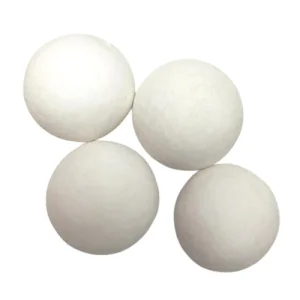
Excessive pressure drop across the vessel is primarily caused by mechanical attrition (bead crushing) resulting from bed fluidization during rapid depressurization, liquid water slugging, or improper top support distribution. To prevent bed uplift, engineers should specify high-density inert ceramic bed topping balls (e.g., 23% or 99% $Al_2O_3$ balls) and ensure superficial gas velocities remain well below the minimum fluidization velocity ($U_{mf}$).
In well-designed Temperature Swing Adsorption (TSA) natural gas or air separation units operating under recommended gas velocity, filtration, and regeneration parameters, industrial molecular sieves typically exhibit an operational service life of 3 to 5 years (equivalent to 2,000 to 4,000 thermal cycles) before requiring full bed replacement.
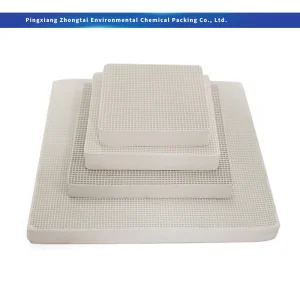
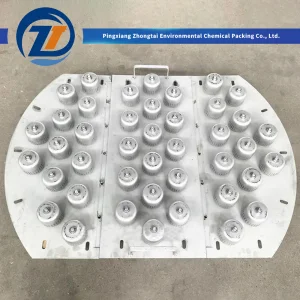
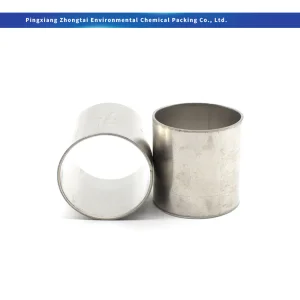
Explore our complete industrial portfolio of ceramic support media, tower packings, and molecular sieves.