
Direct supply from Pingxiang ISO9001 certified facilities. Optimized for sub-angstrom contaminant retention, severe thermal endurance, and rapid mass transfer.
Why modern industrial facilities are shifting from particulate interception to sub-molecular airborne molecular contamination (AMC) scrubbing.
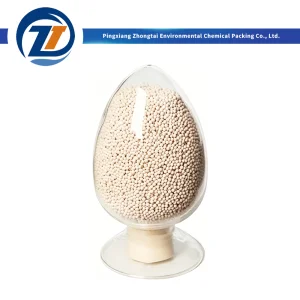
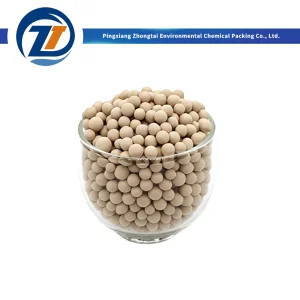
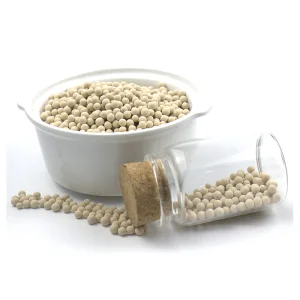
Advanced semiconductor lithography (EUV) and biopharma compounding demand cleanroom environments strictly free from volatile organic acids, amines, and condensable organophosphates. Traditional HEPA and ULPA stages only capture particulate matter down to 0.1 µm. Molecule Air Filters utilizing engineered molecular sieves (Zeolite 13X, 4A, 3A) capture micro-pollutants at the molecular scale (3 to 10 Ångströms).
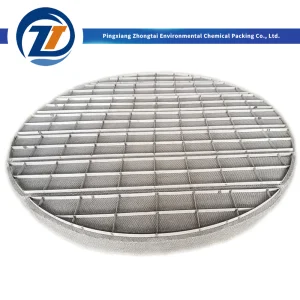
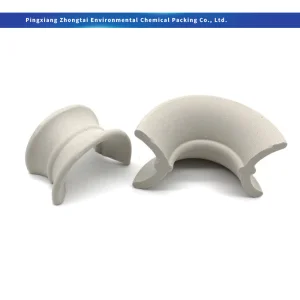
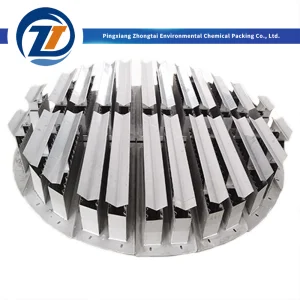
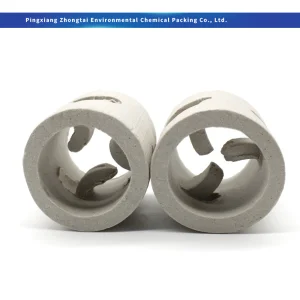
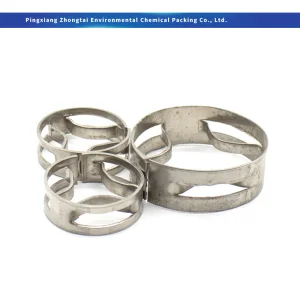
Petrochemical off-gas desulfurization and sulfuric acid synthesis generate aggressively corrosive streams saturated with hot sulfur dioxide (SO₂), nitrogen oxides (NOx), and acid mist. Conventional organic-bound media deteriorate rapidly. Industrial installations demand ceramic-based random packings (Intalox saddles, Pall rings) and demister mist eliminators fabricated in SS316L/PVDF to ensure mechanical rigidity up to 1000°C.
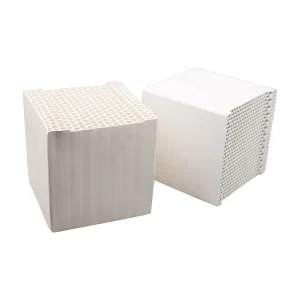
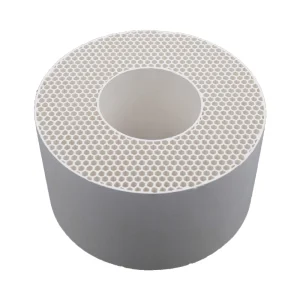
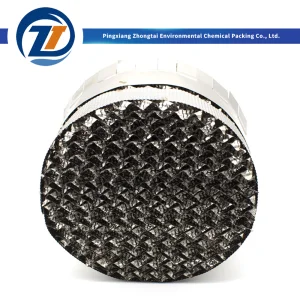
High air-handling pressure drops across large adsorption beds directly translate into massive HVAC electrical loads. Modern factory operations rely on structured packings and ceramic honeycomb monolithic bodies offering void fractions exceeding 70%, slashing airflow resistance while preserving contact surface areas up to 1200 m²/m³ for catalytic destruction of VOCs in RTO assemblies.
Comprehensive technical guidance for EPC contractors, plant design engineers, and filtration procurement executives.
| Adsorbent / Filtration Platform | Pore Size / Geometry | Primary Kinetic Driver | Max Operational Temp | Target Atmospheric Contaminants |
|---|---|---|---|---|
| Zeolite 3A Molecular Sieve | ~3 Å (0.3 nm) | Size exclusion adsorption | 450°C (Thermal Regen) | Moisture (H₂O) trace cracking without co-adsorbing hydrocarbons |
| Zeolite 4A Molecular Sieve | ~4 Å (0.4 nm) | Polar affinity & molecular sieving | 450°C (Regeneration) | H₂O, CO₂, SO₂, H₂S, light hydrocarbons (C₂H₄, C₃H₆) |
| Zeolite 13X (Type NaX) | ~10 Å (1.0 nm) | Broad electro-static capacity | 500°C | Aromatics, siloxanes, VOCs, cryogenic feed air purification |
| Cordierite/Mullite Honeycomb | 100 - 400 CPSI Monolith | Thermal heat sink & catalyst carry | 1200°C | High-volume industrial VOCs, solvents, carbon monoxide (CO) |
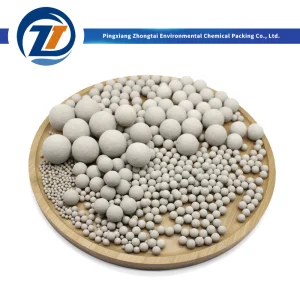
| High Purity Alumina (92-99%) | Spherical Inert Ball | Thermal/Chemical containment bed | 1450°C | Compressive support, gas distribution, particulate trapping |
| Structured Wire Sheet (SS316L) | Corrugated Perforated Sheet | Low-pressure thin-film contact | 400°C | Sub-micron liquid mists, amine vapor, distillation fractioning |
By producing α-alumina inert ceramic balls with silica content under 0.2%, catalytic downstream beds are shielded from silicate deposition during high-temperature steam surges.
Random tower packing configurations (Intalox Saddle & Pall Rings) provide void ratios up to 94%, reducing continuous air blower energy requirements across heavy absorption trains.
Every lot of synthetic zeolites and high-alumina media undergoes hydraulic crush testing, guaranteeing retention of physical form even under deep-bed hydrostatic pressure exceeding 25 kN.
Cordierite RTO honeycomb blocks withstand cyclical thermal switching transitions from 200°C to 1100°C within 60-second operational cycles without micro-fissuring.
Engineered installations mitigating process vulnerability across distinct international regulatory environments.
In oxygen and nitrogen generation plants worldwide, incoming air streams contain ambient trace carbon dioxide, moisture, and hydrocarbons. Failure to capture these molecules results in solid dry-ice formation within cryogenic expansion columns. Zhongtai 13X-APG Molecular Sieves perform deep purification down to ppb levels, ensuring explosive hydrocarbon compounds like acetylene never enter cold boxes.
Automotive spray booths, chemical synth labs, and semiconductor fabricators emit complex VOC mixtures (benzene, toluene, xylene, IPA). Utilizing Regenerative Thermal Oxidizers (RTO) packed with cordierite honeycomb ceramics, incoming exhaust streams are preheated by stored heat up to 850°C, breaking molecular bonds with 99.2% destruction efficiency while conserving auxiliary natural gas fuels.
Chemical processing plants producing chlorine gas, hydrochloric acid, and sulfuric acid operate scrubbing towers under concentrated acidic mist atmospheres. Metallic packs fail through pitting corrosion. Zhongtai high-grade Ceramic Intalox Saddles resist virtually all chemical acids (except hydrofluoric acid), driving mass gas-liquid transfer without surface degradation or column packing collapse.
Continuous investment in synthetic crystallite structures and material durability to meet next-generation environmental mandates.
Moving toward ultra-pure synthetic crystallization with engineered pore distributions. Development of zeolite-MOF composites will allow ultra-selective capture of fugitive greenhouse gases such as SF₆, methane slips, and fluorinated hydrocarbons at ambient temperature and pressure.
Traditional pressure swing adsorption (PSA) and thermal swing adsorption (TSA) consume sizable heat budgets during media regeneration. Formulations engineered with modified framework Al/Si ratios reduce the desorption activation barrier, dropping regeneration temperatures from 280°C down to ≤ 160°C.
Expanding honeycomb ceramic monolith architectures impregnated with solid basic amines and amine-functionalized molecular sieves to capture ambient CO₂ directly from atmospheric airflow streams at low 420 ppm concentrations with minimized parasitic fan drag.
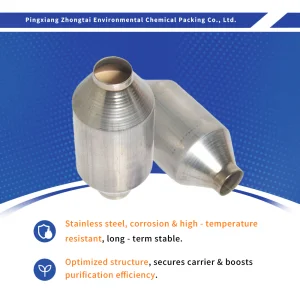
Engineered packings, liquid distributors, catalytic monoliths, and specialized chemical adsorbents manufactured for mission-critical operations.
Specific analytical answers addressing bed sizing, regeneration economics, and material selection criteria.
Standard 17–23% Al₂O₃ inert balls suit most hydrotreating and reforming catalyst supports. Choose 23–30% for higher crush strength, and 99% alumina where high-temperature steam could cause silica leaching that would poison downstream catalysts.
Please share the tower diameter and bed height, the service (distillation, absorption, stripping or scrubbing), the medium and its corrosivity, operating temperature and pressure, and any pressure-drop or capacity targets. Our engineers then propose packing type, material and size.
Yes. Samples of standard sizes and technical data sheets covering chemical composition, bulk density, crush strength and other key properties can be provided for evaluation before a production order.
Depending on product and volume, we use cartons, jumbo bags, plastic drums or wooden cases on fumigation-free or fumigated pallets, with clear marking for each size and batch to simplify site receiving.
We are based in Pingxiang, Jiangxi Province, a recognized Chinese hub for industrial ceramics and chemical packing. Buyers and third-party inspectors are welcome to visit; Korean customers audited our ceramic production in July 2018.
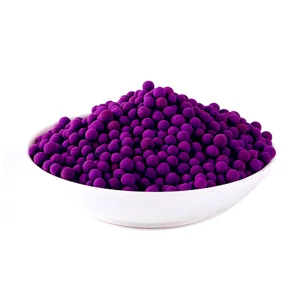
Potassium permanganate (KMnO₄) impregnated into highly porous activated alumina acts as a chemisorbent. Instead of simple physical adsorption, it irreversibly oxidizes contaminants such as hydrogen sulfide (H₂S), sulfur dioxide (SO₂), and formaldehyde into stable, non-volatile sulfate and carbonate mineral salts.