Explore high-performance industrial ceramic, metal, and zeolite products manufactured under rigorous international quality standards.
A comprehensive examination of sodium-form Type A synthetic zeolites for chemical process engineers and procurement directors.
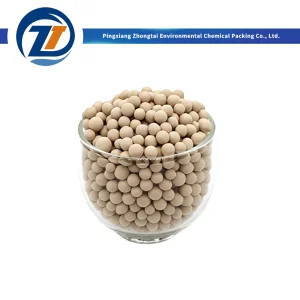
Molecular Sieve Type 4A is an alkali metal aluminosilicate synthesized through hydrothermal crystallization of sodium silicate and sodium aluminate. The unit cell formula is structurally represented as Na₁₂[(AlO₂)₁₂(SiO₂)₁₂]·xH₂O. It features a three-dimensional framework of SiO₄ and AlO₄ tetrahedra linked by shared oxygen atoms, forming a Linde Type A (LTA) lattice.
The effective pore aperture of Type 4A is approximately 4 Angstroms (0.4 nm). This geometric pore window restricts molecular access based on kinetic diameter, allowing the selective adsorption of water (H₂O), carbon dioxide (CO₂), hydrogen sulfide (H₂S), ammonia (NH₃), and ethanol, while excluding larger hydrocarbons such as propane, butane, and aromatic compounds.
Adsorption within Molecular Sieve 4A is driven primarily by electrostatic interactions within the inner crystalline cavities (alpha-cages). The localized exchangeable sodium cations (Na⁺) create intense electric fields that exert powerful polar attraction toward molecules with permanent dipole moments, such as water vapor.
Unlike silica gels or activated alumina, which exhibit wide pore size distributions and physical capillary condensation, Type 4A zeolites maintain a uniform pore network, preventing co-adsorption of heavier feed-gas fractions.
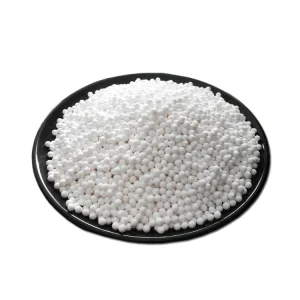
Factory-tested quality control standards for industrial sphere and extrudate grades of Molecular Sieve Type 4A.
| Property Parameter | Spherical Bead (1.6 - 2.5 mm) | Spherical Bead (3.0 - 5.0 mm) | Extrudate Pellet (1.6 mm / 1/16") | Extrudate Pellet (3.2 mm / 1/8") |
|---|---|---|---|---|
| Nominal Pore Aperture | 4 Angstroms (0.4 nm) | 4 Angstroms (0.4 nm) | 4 Angstroms (0.4 nm) | 4 Angstroms (0.4 nm) |
| Bulk Density (g/mL) | 0.70 – 0.74 | 0.68 – 0.72 | 0.66 – 0.70 | 0.65 – 0.69 |
| Static Water Adsorption (25°C, RH 60%) | ≥ 21.5% | ≥ 21.0% | ≥ 21.5% | ≥ 21.0% |
| Crush Strength (N/bead or pellet) | ≥ 35 N | ≥ 80 N | ≥ 30 N | ≥ 50 N |
| Attrition Rate (% by weight) | ≤ 0.10% | ≤ 0.10% | ≤ 0.15% | ≤ 0.15% |
| Residual Moisture (as packed, 550°C) | ≤ 1.0% | ≤ 1.0% | ≤ 1.0% | ≤ 1.0% |
| Regeneration Temperature Range | 200°C – 315°C | 200°C – 315°C | 200°C – 315°C | 200°C – 315°C |
Leveraging Pingxiang’s industrial ceramic cluster to deliver unmatched bulk capacity, cost stability, and raw material purity.
Our production base in Pingxiang, Jiangxi, operates within China’s premier chemical packing and industrial ceramic cluster. Direct access to high-purity kaolin clay, sodium silicate, and alumina sources eliminates supply chain bottlenecks and reduces raw material transport costs.
We utilize fully automated continuous rotary kilns equipped with precision temperature control loops. This ensures uniform thermal activation across every bead, maintaining low residual moisture levels without damaging the molecular crystal lattice.
Custom packaging solutions engineered for long-distance maritime shipment, including air-tight 208-liter steel drums with inner polyethylene vapor barriers, 1,000 kg super-sacks with moisture protection, and nitrogen-blanketed containerization.
Meeting strict procurement and regulatory requirements for multinational EPC contractors and refinery plant operators.
Every batch of Molecular Sieve Type 4A undergoes systematic testing according to ASTM standards for bulk density (ASTM D4512), crush strength (ASTM D4179), and attrition loss (ASTM D4058). Our manufacturing processes adhere to strict environmental management and workplace safety protocols.
We provide comprehensive technical assistance from initial bed design to vessel loading and thermal commissioning. Our process engineers assist overseas buyers with dynamic breakthrough modeling, dew-point troubleshooting, and bed lifetime maximization.
Proven reliability across diverse processing sectors requiring stringent moisture control and gas drying.
Used extensively in commercial vehicle air brake desiccant cartridges and pneumatic control systems to prevent moisture condensation and freezing in sub-zero operating environments.
Prevents fogging and interior glass condensation by co-adsorbing water and residual organic solvents trapped between double or triple glass panes over multi-decade lifespans.
Functions as a moisture scavenger powder additive in polyurethane coatings, sealants, adhesives, and elastomers (CASE) to eliminate carbon dioxide gassing and bubble formation during curing.
Protects closed-loop refrigeration systems utilizing R-134a, R-600a, and HCFC refrigerants by drying liquid streams and neutralizing trace acid build-up that damages compressors.
Extensively applied in liquid-phase ethanol dehydration, methanol drying, and feed gas conditioning prior to cryogenic distillation processes where ice formation must be avoided.
Serves as a reliable sacrificial guard bed desiccant for removing water traces and light sulfur compounds (H₂S, mercaptans) ahead of pipeline distribution networks.
Strategic technological developments reshaping the synthetic zeolite market over the next decade.
With global industrial decarbonization mandates gaining momentum, process plants are transitioning to pressure swing adsorption (PSA) and vacuum thermal swing adsorption (VTSA) cycles that reduce energy consumption during heat regeneration phases. Next-gen Type 4A adsorbents feature modified binder systems that lower heat capacity, reducing the total BTU input required for desorbing bound water.
Modern fast-cycling adsorption beds exert higher mechanical shear on desiccant media. Research and development in specialized clay binder matrices have raised crush strengths by over 25% while maintaining rapid adsorption kinetics. This prevents dust formation, pressure drop spikes, and downstream filter blinding in heavy-duty gas plants.
Delivering precision chemical mass transfer fillers and adsorbents to global process industries since 2003.
Founded in 2003, Pingxiang Zhongtai Environmental Chemical Packing Co., Ltd. has grown from a specialized ceramic packing facility into an integrated multi-material manufacturer. Based in the West Section Hi-Tech Industry Park of Pingxiang City, Jiangxi Province, our commercial operations are coordinated through our global trade department in the city's Economic Development Zone.
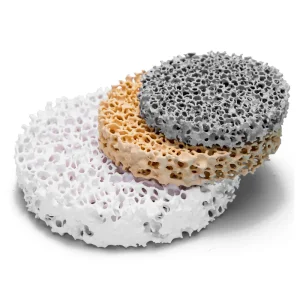
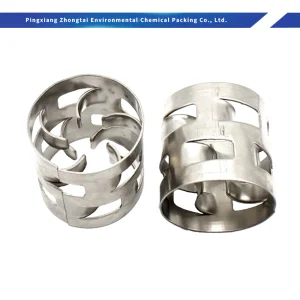
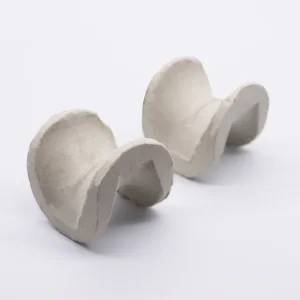
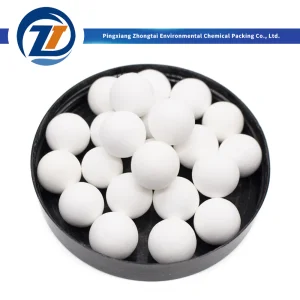
We manufacture and export inert ceramic balls, ceramic, metal, and plastic random and structured packing, RTO honeycomb ceramics, ceramic foam filters, molecular sieves, and water purification media.
Essential answers for procurement officers, process engineers, and plant operators.
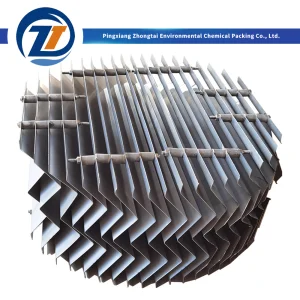
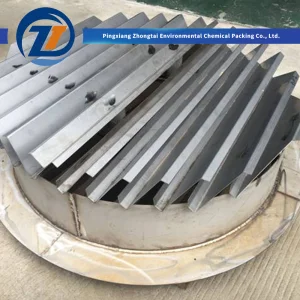
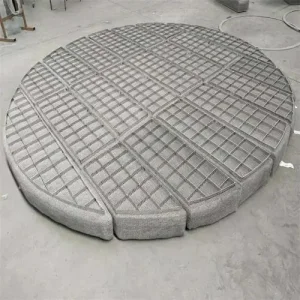
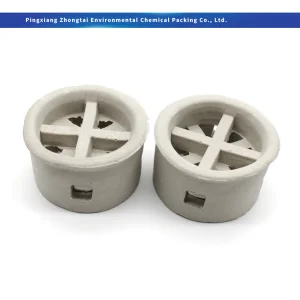
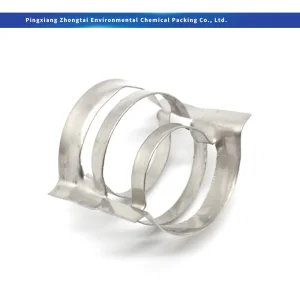
Explore our complete manufacturing capabilities across structured packings, mist eliminators, and grinding media.