Explore our foundational mass transfer equipment, molecular sieves, and industrial ceramic internals developed at our Pingxiang manufacturing base for overseas EPCs and plant revamps.
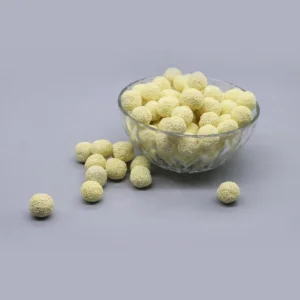
A rigorous examination of potassium aluminosilicate zeolite frameworks, pore aperture mechanics, size exclusion thermodynamics, and selective moisture capture across olefin and volatile solvent streams.
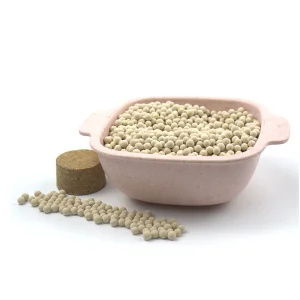
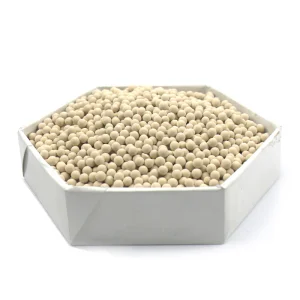
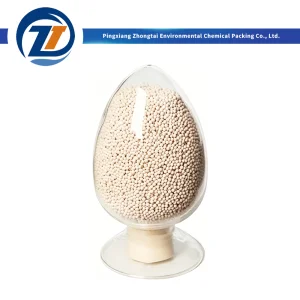
Molecular Sieve Type 3A is an alkali metal potassium-aluminosilicate crystallized in the zeolite Type A (LTA) cubic crystal network. It possesses the idealized chemical formulation: 0.4K₂O · 0.6Na₂O · Al₂O₃ · 2.0SiO₂ · 4.5H₂O. The native Type A lattice has a structural cavity opened to roughly 4Å when balanced purely by sodium cations (Na⁺). In Type 3A manufacture, controlled ion exchange replaces approximately 65% or more of the native sodium cations with larger potassium cations (K⁺).
Because the ionic radius of potassium (1.38 Å) is significantly larger than sodium (1.02 Å), these bulkier cations occupy coordinates directly adjacent to the 8-ring window apertures. This structural obstruction narrows the effective free crystallographic aperture from 4.0 Ångströms to precisely 3.0 Ångströms (0.3 nm).
| Zeolite Type | Cation Type | Nominal Pore | Primary Exclusion Threshold |
|---|---|---|---|
| Type 3A | Potassium (K⁺ / Na⁺) | 3.0 Å (0.30 nm) | Admits H₂O, NH₃; Excludes C₂H₄, C₂H₆, Ethanol |
| Type 4A | Sodium (Na⁺) | 4.0 Å (0.40 nm) | Admits H₂O, CO₂, SO₂, H₂S, C₂H₄; Excludes C₃H₈ |
| Type 5A | Calcium (Ca²⁺ / Na⁺) | 5.0 Å (0.50 nm) | Admits n-Paraffins; Excludes Iso-paraffins, Aromatics |
| Type 13X | Sodium (NaX - Faujasite) | 10.0 Å (1.00 nm) | Admits Aromatics, Branched Hydrocarbons, Mercaptans |
Data Reference: Mass transfer zone (MTZ) kinetics derived under standard temperature and pressure test regimes following Pingxiang Zhongtai internal quality standards and ASTM D3838 guidelines.
Located in Jiangxi Province, Pingxiang is recognized worldwide as the epicenter of mass transfer packing and industrial ceramics, enabling unrivaled supply chain efficiency, continuous rotary kilns, and competitive wholesale pricing.
Pingxiang Zhongtai Environmental Chemical Packing Co., Ltd. benefits from Jiangxi’s rich natural deposits of ultra-pure kaolin, halloysite clay, and high-reactivity sodium silicates. Direct access within a 50 km logistics radius guarantees stable raw material chemistry, eliminates inland freight surcharges, and secures consistent batch purity without trace heavy-metal adulteration.
Our facility operates high-temperature, PLC-monitored continuous calcination kilns equipped with multi-stage oxygen regulation. Firing curves are held within ±2°C tolerances between 550°C and 620°C, preventing structural crystal collapse while fully driving off residual zeolitic pore water to maintain initial moisture levels below 1.0% by weight.
Eliminating overseas intermediaries, private label re-packagers, and trading desk markups allows our factory to deliver tier-one FOB Shanghai/Ningbo and CIF world-port quotes. Global buyers achieve a 20% to 35% procurement cost reduction alongside verifiable batch certificates of analysis (COA) directly tied to our ISO 9001 certified labs.
The global transition to sustainable fuels, blue hydrogen networks, and ultra-high-efficiency building envelopes is placing unprecedented mechanical and thermal demands on commercial synthetic zeolites.
Traditional ethanol distillation hits a stubborn azeotropic limit at 95.6% purity by weight. Molecular Sieve Type 3A pressure swing adsorption (PSA) beds break this azeotrope without benzene or toxic entrainers, generating anhydrous 99.9% ethanol. The rapid expansion of bio-ethanol and SAF hydroprocessed esters demands low-attrition, attrition-resistant 3A beads capable of surviving rapid cycle depressurization cycles.
In green and blue hydrogen production pipelines utilizing electrolysis or steam methane reforming (SMR), trace moisture causes embrittlement in high-pressure transport pipelines and poisons delicate fuel-cell catalysts. Specialized Type 3A beads achieve trace moisture reduction to under 0.1 ppmv (< -80°C dew point), safely bypassing hydrogen gas without unwanted catalytic side-reactions.
Industrial operators are actively lowering carbon footprints by targeting desiccant bed regeneration energy. Modified 3A formulations with targeted macroporous-mesoporous matrix binders lower desorption initiation temperatures from 260°C down to 180°C–200°C, significantly shrinking utility steam demand and fuel gas usage across petrochemical facilities.
Modern structural architectural glazing must maintain thermal barrier integrity over a 25-to-30 year service lifespan. Type 3A molecular sieve matrix compounds adsorb water vapor while completely rejecting air components (N₂ and O₂), preventing winter sash deflection, pressure imbalance glass deflection, and premature perimeter seal blowouts.
From petrochemical crackers to HVAC refrigerant loops, Type 3A synthetic zeolite provides targeted moisture scrubbing without compromising stream composition or triggering fouling.
In ethylene cracking furnaces, effluent cracked gas contains saturated moisture alongside reactive diolefins (acetylene, butadiene). Employing any desiccant with pore windows larger than 3Å (such as 4A) triggers catalytic olefin polymerization inside the pores, forming heavy "green oil" oligomers that blind beds, ignite thermal runaways, and cause premature regeneration failure. Type 3A’s strict 3Å barrier guarantees zero polymer buildup.
Operating in dual-column or triple-column thermal swing adsorption (TSA) configurations, our 3A beads selectively strip remaining hydration water from condensed alcohol vapors. Because the ethanol molecule cannot negotiate the 3Å aperture, alcohol loss per cycle is virtually zero, delivering ultra-pure fuel-grade ethanol compliant with ASTM D4806 standard specifications.
In dual-seal and triple-pane architectural glass assemblies, 3A molecular sieve beads are loaded inside hollow aluminum or warm-edge composite spacer bars. By maintaining initial water capacity (≥ 20%) while refusing to absorb nitrogen, the window unit prevents differential pressure cycles that cause pane bow, optical distortion, or edge sealant delamination across harsh seasonal climates.
Prior to chilling natural gas to -162°C in liquefied natural gas (LNG) cold boxes, water vapor must be slashed below 0.5 ppmv to prevent catastrophic cryogenic hydrate formation and solid ice blockages in spiral-wound heat exchangers. Type 3A desiccants deliver ultra-low water breakthrough curves under variable feed pressures.
Modern hydrofluorocarbon (HFC) and hydrofluoroolefin (HFO) cooling systems (such as R-134a, R-410A, and R-1234yf) require specialized 3A cores to scrub moisture from circulating lubricant oils and refrigerant fluids. Moisture exclusion stops hydrofluoric acid formation, protecting copper piping from pitting and hermetic compressors from acid burnout.
CNG vehicle fueling stations compress pipeline methane to 200–250 bar. Any moisture present causes nozzle icing during high-pressure expansion fueling. Dual-tower automated 3A desiccant dryers provide uninterrupted, continuous gas dehydration, ensuring clean vehicle tank fills without pressure drop spikes.
Achieving a reliable 3-to-5 year adsorbent lifespan requires deliberate vessel hydraulics, mass transfer zone calculations, and proper layered support internals.
In dynamic column adsorption, the active adsorbent bed partitions into three distinct zones: the Equilibrium Zone (fully saturated desiccant), the Mass Transfer Zone (MTZ) (where active moisture uptake occurs), and the Unused Bed Zone.
An optimized 3A bead must exhibit high intra-particle macropore diffusivity to maintain a shallow, steep MTZ. When the MTZ is narrow, the plant can extend on-stream cycle times before moisture breakthrough (> 0.1 ppmv) triggers a bed switchover.
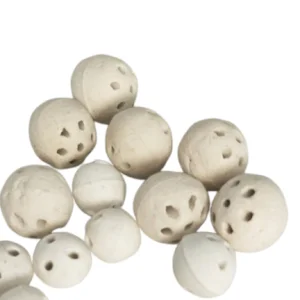
A high-performance molecular sieve bed cannot operate in isolation. It relies on a balanced column loading architecture supported by inert ceramic balls and high-capacity random packing.
| Bed Layer | Media Specified | Core Engineering Function |
|---|---|---|
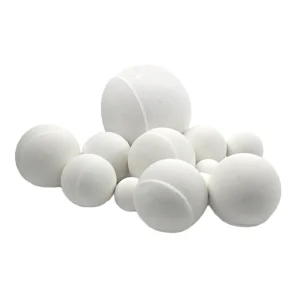
| Top Hold-Down Layer | 19mm – 25mm Inert Ceramic Balls | Prevents top bead fluidization, velocity scouring, and gas distribution turbulence. |
| Graded Buffer Layer | 6mm – 13mm Inert Ceramic Balls | Smooths transition zone, prevents fine sieve bead migration into upper stream lines. |
| Primary Working Bed | Type 3A Molecular Sieve (1.6–2.5mm) | Active dynamic moisture adsorption down to sub-ppm levels. |
| Bottom Support Grate | 25mm – 50mm High-Alumina Support Balls | Facilitates unhindered effluent collection and supports immense total bed metric tonnage. |
Essential testing benchmarks, ASTM quality validation standards, and packaging requirements every global procurement engineer should mandate in competitive RFQ evaluations.
Verifies individual bead mechanical resistance under radial compression. Industrial 3A beads must meet ≥ 20 N/bead (1.6–2.5mm) to avoid bed compaction under deep column loading.
Tumbler friability testing determines dust generation rates. Pingxiang Zhongtai limits attrition to ≤ 0.10% by weight, safeguarding downstream compressors from particulate fouling.
Evaluates desiccating power at 25°C under 60% relative humidity. Premium grade materials must demonstrate ≥ 21.0% to 22.0% equilibrium weight gain.
Measures pre-activation moisture content straight out of the factory seal. Sealed drum exports are guaranteed with an LOI of ≤ 1.5% wt prior to initial site charging.
Standardized in 25 kg multi-wall air-tight cartons, 140 kg / 150 kg hermetically sealed steel drums with nitrogen blanket purge, or 1000 kg vacuum bulk super sacks.
Specific, data-driven answers addressing operation, regeneration, bed loading, and wholesale procurement parameters for process and plant managers.
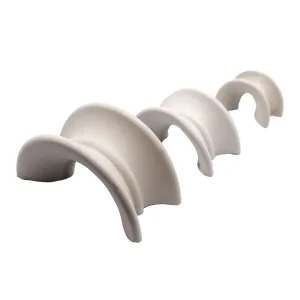
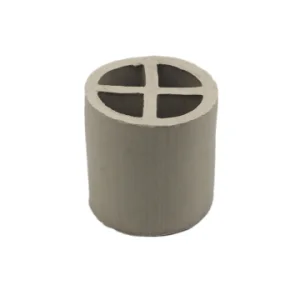
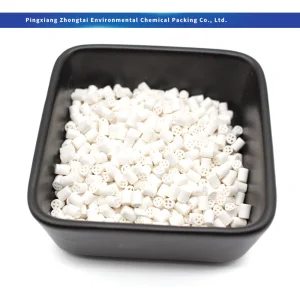
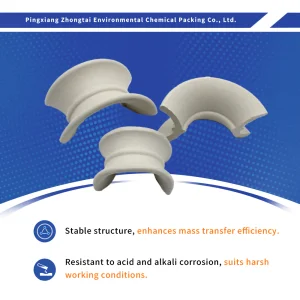
Complete your unit revamps with factory-matched random packings, proppant filter beds, wear-resistant alumina, and environmental filtration ceramics.
Connect directly with Pingxiang Zhongtai's chemical process engineering team. Receive customized mass transfer calculations, adsorption breakthrough simulations, certified physical test samples, and transparent direct-from-kiln FOB or CIF quotes within 24 hours.