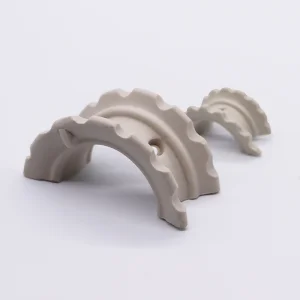
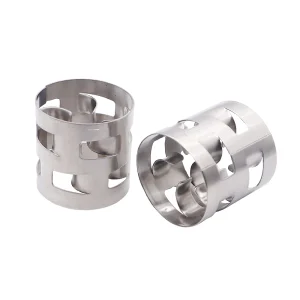
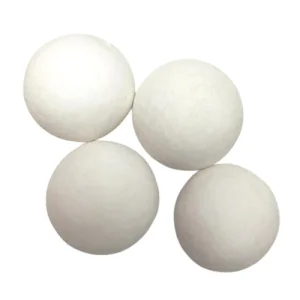
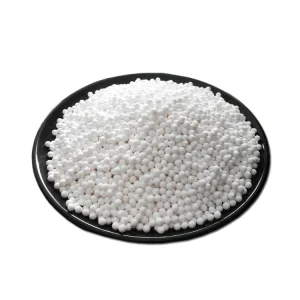
Direct from Pingxiang Zhongtai’s integrated production line: high-performance tower packings, inert catalyst bed supports, and advanced ceramic media for global chemical plants.
Strategic analysis of synthetic crystalline aluminosilicates: Driving high-performance moisture scavenging, polyurethane formulation integrity, and global clean energy processing.
The global expansion of solvent-free, high-solids polyurethanes, polyaspartics, and elastomeric structural adhesives has elevated activated molecular sieve powder into an indispensable chemical scavenger.
By irreversibly trapping trace moisture without reacting with hydroxyl groups or aromatic isocyanates (-NCO), it eliminates CO₂ micro-foaming, bubbling, pinholes, and structural surface failure.
Accelerated transitions toward carbon-neutral fuels mandate ultra-deep gas dehydration. Water saturation must drop below 0.1 ppmv before liquefaction, cryogenic cooling, or pipeline compression.
Type A and Type X synthetic zeolite powders form the chemical backbone for binderless adsorbent extrudates and specialized pressure swing adsorption (PSA) membranes worldwide.
Modern architectural codes demand 25-year dewpoint warranties for insulated glass units (IGU). Molecular sieve powder is integrated into warm-edge spacer matrices, polyurethane secondary sealants, and polysulfides.
It maintains continuous desiccation under extreme climatic shifts without physical desorption or atmospheric argon gas co-adsorption.
International procurement directors in Germany, North America, and East Asia are shifting away from generic desiccants. Contemporary high-speed processing lines require tailored chemical surface neutralities (pH 8.0–10.5), strict sub-10-micron particle top-cuts (D97 < 15 µm), and pre-dispersed vacuum foil moisture-barrier packaging to prevent premature atmospheric saturation during batch compounding.
Precision-synthesized aluminosilicate frameworks: Understanding pore diameter selectivity, cation distribution, and thermodynamic water-binding equilibrium.
Molecular sieve powder is synthesized through the hydrothermal crystallization of reactive silica and alumina hydrogels in strong alkali mediums. The basic crystallographic unit comprises interconnected tetrahedrons of $[SiO_4]$ and $[AlO_4]^-$, yielding an open, uniform three-dimensional crystalline lattice permeated with defined molecular-scale cavities. Because aluminum carries a trivalent state, charge compensation requires metal cations ($K^+$, $Na^+$, $Ca^{2+}$). Varying these exchangeable cations calibrates the physical aperture diameter across 3Å, 4Å, 5Å, and 10Å (13X).
| Zeolite Grade | Nominal Pore Window | Major Cation | Static H₂O Capacity (25°C, 80% RH) | Loss on Ignition (LOI, 550°C) | Primary Industrial Utility |
|---|---|---|---|---|---|
| Type 3A Powder Potassium A |
~ 3.0 Å (0.3 nm) | Potassium ($K^+$) / Sodium ($Na^+$) | ≥ 21.0 wt% | ≤ 1.0 wt% | Polyurethane coatings, insulating glass sealants, ethanol dehydration, cracked gas drying. Excludes molecules larger than 3Å. |
| Type 4A Powder Sodium A |
~ 4.0 Å (0.4 nm) | Sodium ($Na^+$) | ≥ 22.0 wt% | ≤ 1.0 wt% | Static moisture removal in closed systems, pigment grinding, electronic component casting, solvent desiccation, PVC stabilization. |
| Type 5A Powder Calcium A |
~ 5.0 Å (0.5 nm) | Calcium ($Ca^{2+}$) / Sodium ($Na^+$) | ≥ 21.5 wt% | ≤ 1.0 wt% | Co-adsorption of water and acid gases ($H_2S$, $CO_2$), separation of normal and iso-paraffins, industrial PSA hydrogen refining. |
| Type 13X Powder Sodium X (Faujasite) |
~ 10.0 Å (1.0 nm) | Sodium ($Na^+$) | ≥ 24.0 wt% | ≤ 1.0 wt% | Cryogenic air pre-purification ($H_2O + CO_2$ capture), medical oxygen PSA, mercaptan and sulfur compound removal, specialty adhesives. |
Raw Molecular Sieve Powder: The non-calcined crystalline filter cake synthesized directly from hydrothermal crystallization. Contains 18% to 22% structural water within the zeolite cages. Serves as intermediate raw material for bonded beads, catalyst extrudates, and structured honeycombs.
Activated Zeolite Powder: Thermally flashed in high-temperature rotary kilns at 550°C–600°C under vacuum or dry counter-current gas sweep. Reduces residual moisture to < 1.0 wt%, opening maximum active surface area (> 650 m²/g) for instant water scavenging.
Unlike traditional silica gels or montmorillonite clays that rely on weak capillary condensation and show low capacity at low relative humidity, synthetic zeolite powders follow a Type I Langmuir adsorption isotherm.
They exhibit immense affinity for water molecules even at ppm-level moisture contents (< 10% RH) and elevated temperatures up to 100°C, ensuring comprehensive, irreversible moisture lockup in chemical formulations.
In high-end paint, ink, and resin production, poorly processed powders can cause high viscosity spikes or grit defects. Our automated milling produces narrow Gaussian particle size distributions (D50 = 2.5–4.5 µm, D98 < 12 µm).
This allows rapid de-agglomeration under standard dissolver disc speeds (15–20 m/s) without impacting masterbatch leveling, optical gloss, or thixotropic flow curves.
How Pingxiang Zhongtai Environmental Chemical Packing Co., Ltd. combines industrial cluster economics with intelligent automation to guarantee global delivery security.
Located in Pingxiang, Jiangxi Province—China's historical and contemporary capital for industrial ceramics and chemical mass transfer media. High-purity kaolin deposits, sodium silicate processors, and specialized precision engineering facilities operate within a 30-kilometer supply radius.
Continuous hydrothermal reactors and dynamic flash activation calciners are managed via distributed DCS control systems. Every production run undergoes automated batch analysis: Malvern Mastersizer particle sizing, XRD crystalline purity verification, and Karl Fischer moisture titration.
Direct rail access and consolidated highway freight lanes connect Pingxiang manufacturing plants to major maritime gateways (Shenzhen, Ningbo, and Shanghai ports). In-house customs compliance officers ensure seamless freight documentation, certificates of analysis, and hazardous/non-hazardous handling.
Activated powders degrade rapidly if exposed to ambient relative humidity. Zhongtai deploys high-barrier multi-layer aluminum foil vacuum bags (15 kg, 20 kg, or 25 kg), vacuum-sealed and protected in outer corrugated boxes or steel drums with shrink-wrapped, palletized seaworthy packaging.
Founded in 2003, Pingxiang Zhongtai Environmental Chemical Packing Co., Ltd. has evolved from a specialized ceramic packing facility into an advanced engineering manufacturer supplying 8 core industrial product families. Backed by rigorous material certifications, our molecular sieve powders and tower internals are deployed across major refineries, petrochemical complexes, pharmaceutical formulation units, and environmental systems in over 60 countries.
Solving complex process engineering challenges: How activated molecular sieve powder enhances system performance across diverse chemical and industrial sectors.
The Engineering Bottleneck: In casting thick-section polyurethane parts or RIM (Reaction Injection Molding), trace water in polyols (even 0.05%) reacts vigorously with isocyanate: $$\text{R-NCO} + \text{H}_2\text{O} \rightarrow \text{R-NH}_2 + \text{CO}_2 \uparrow$$ The liberated carbon dioxide creates microscopic bubbles, reducing tensile strength, ruining surface finish, and causing internal fractures.
The Zhongtai Solution: Blending 2.0% to 4.0% Type 3A or 4A activated powder directly into polyol side pre-mixes. It selectively scavenges moisture within minutes, suppressing $CO_2$ generation and boosting durometer hardness and optical clarity.
The Engineering Bottleneck: Moisture-curing one-component (1K) polyurethane sealants depend on ambient air moisture to cure after application. However, water introduced via mineral fillers ($CaCO_3$, talc, carbon black) causes premature hardening inside the aluminum cartridge, destroying shelf-life.
The Zhongtai Solution: Adding 1.5% to 3.0% 3A activated powder during high-shear vacuum disperser compounding. It guarantees over 12 months of cartridge shelf stability without impairing post-extrusion atmospheric curing rates.
The Engineering Bottleneck: Two-component zinc-rich epoxy and polyurethane primer formulations contain high loadings of metallic zinc dust. In the presence of moisture, zinc generates hydrogen gas: $$\text{Zn} + 2\text{H}_2\text{O} \rightarrow \text{Zn(OH)}_2 + \text{H}_2 \uparrow$$ This causes severe container bulging, paint can rupture, and solvent de-wetting on marine structures.
The Zhongtai Solution: Incorporating Type 4A or 5A activated powder locks up water, preventing hydrogen gas formation and maintaining formulation rheology throughout marine storage cycles.
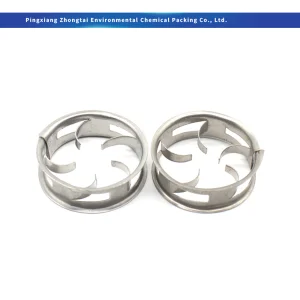
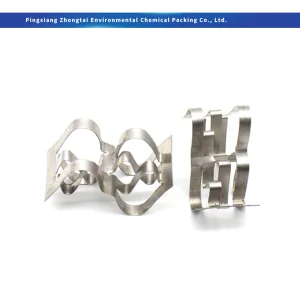
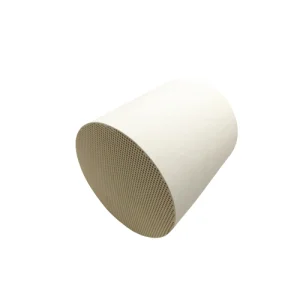
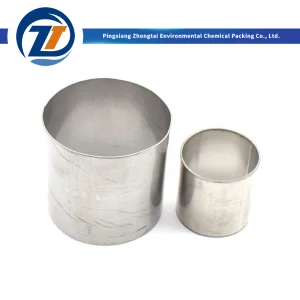
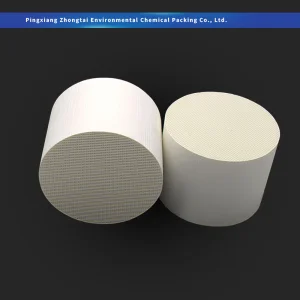
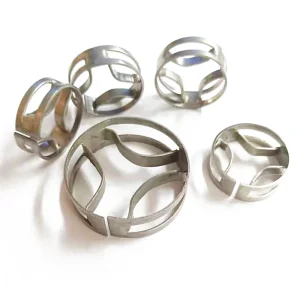
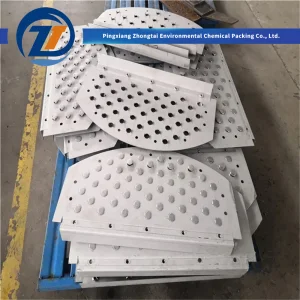
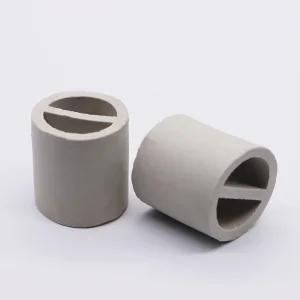
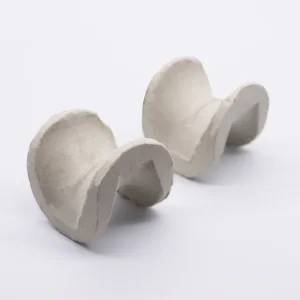
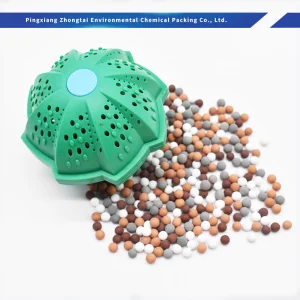
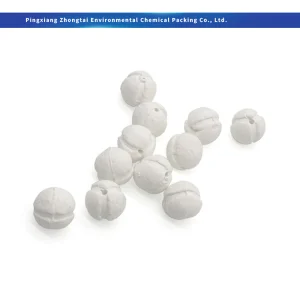
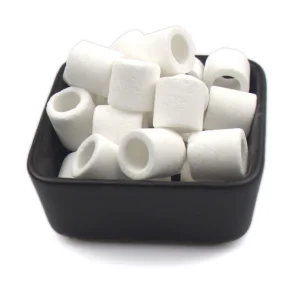
Complementary chemical process equipment engineered and exported globally by Pingxiang Zhongtai Environmental Chemical Packing Co., Ltd.
Expert answers addressing the core considerations of chemical engineers, formulators, and global sourcing specialists.
In polyurethane compounding, moisture reacts with free isocyanate (-NCO) groups, generating amine and gaseous carbon dioxide ($CO_2$). Because the molecular diameter of water is approximately 2.6 Å to 2.8 Å, Type 3A (pore aperture ~ 3.0 Å) or Type 4A (aperture ~ 4.0 Å) activated powder rapidly encapsulates water inside its crystalline cage. By removing water before it encounters isocyanates, $CO_2$ generation is completely prevented, eliminating micro-pinholes, blisters, and surface imperfections.
Raw synthetic zeolite powder is the crystallized filter cake produced directly from the synthesis reactor after washing and drying. Its crystalline cavities remain fully occupied by structural hydration water (typically 18–22% moisture content). Activated zeolite powder has undergone specialized flash thermal calcination at 550°C–600°C under controlled atmosphere to liberate this crystalline water, lowering residual moisture below 1.0 wt% to provide maximum immediate adsorption capacity.
Every commercial production batch undergoes strict quality control certified against ISO 9001:2015. We record and archive Karl Fischer coulometric titration for residual moisture, Malvern laser diffraction for D10/D50/D90 particle size distributions, X-ray fluorescence (XRF) for chemical composition, and X-ray diffraction (XRD) for phase purity and crystalline index. Shipments are packaged in multi-ply, aluminum-foil vacuum hermetic bags to prevent ambient moisture ingress during extended marine transit.
Yes. The physical adsorption mechanism within synthetic zeolites is reversible via thermal desiccation. In bulk gas or liquid processing beds, regeneration is carried out using a hot, dry purge gas at 200°C to 300°C under slight vacuum. However, when molecular sieve powder is dispersed into polymer matrices (such as paints, polyurethanes, or sealants), it becomes permanently locked into the crosslinked matrix, serving as an irreversible lifetime desiccant barrier.
Recommended dosage depends on the moisture content of the polyols, solvents, and mineral fillers utilized. Standard formulation guidelines suggest an addition rate between 1.0% and 3.5% by weight of the total system. For systems containing hygroscopic pigments or high-surface-area calcium carbonates, dosing can be increased to 4.0%–5.0% without negatively affecting viscosity or mechanical adhesion profiles.
Type 3A has an effective pore opening of roughly 3 Å, which readily admits water molecules (~ 2.6–2.8 Å) while physically excluding larger molecules such as solvents, polyols, plasticizers, and atmospheric gases (nitrogen, oxygen, argon). Type 4A or 13X, with larger apertures (4 Å and 10 Å), could co-adsorb atmospheric nitrogen or solvents. In insulating glass units, co-adsorbing nitrogen or argon during cold cycles causes pressure fluctuations that stress seals and lead to glass deflection.
Partner with Pingxiang Zhongtai Environmental Chemical Packing Co., Ltd. for factory-direct synthetic zeolite powders, random and structured tower packings, and inert catalyst bed supports engineered to your operational parameters.
