Explore our high-performance mass transfer media, ceramic supports, and specialty industrial adsorbents engineered for demanding global process plants.
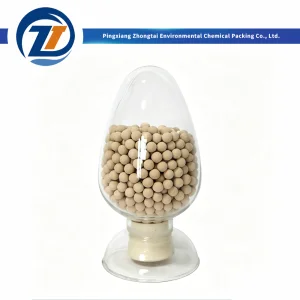
In modern industrial processing, pharmaceutical packaging, electronics logistics, and energy storage, controlling micro-environmental relative humidity (RH) is paramount to preventing hydrolytic degradation, oxidative damage, and structural instability. Molecular sieve packets—precision-engineered sachets filled with synthetic crystalline alkali metal aluminosilicates—represent the highest tier of static desiccant technology available today. Unlike standard silica gel or bentonite clay, synthetic molecular sieves possess uniform pore apertures defined at the angstrom level (3Å, 4Å, 5Å, and 10Å/13X), enabling aggressive moisture scavenging even at ultralow relative humidity levels (RH < 10%) and elevated operational temperatures (up to 90°C).
The global industrial desiccant packet market is undergoing a structural expansion driven by stringent international regulatory mandates, such as USP <670> for pharmaceutical auxiliary packaging components, FDA 21 CFR compliance for direct food and drug contact, and rigorous IEC cleanliness protocols for semiconductor shipping. Industrial buyers and procurement officers face increasing pressures to balance moisture adsorption kinetics against total procurement expenditure. Navigating the global supply network of B2B manufacturers and wholesale factories requires an engineering-level understanding of synthetic zeolite chemistry, packet substrate vapor permeability, dusting tendencies, and automated packaging line integration.
Synthetic molecular sieves are crystalline aluminosilicates possessing a three-dimensional interconnecting network of silica (SiO4) and alumina (AlO4) tetrahedra. The structural chemical formula for a standard Type A zeolite cell is represented as:
M2/nO · Al2O3 · xSiO2 · yH2O
By substituting the mobile counter-cations (Sodium, Potassium, Calcium) within the crystal lattice, chemical engineers precisely control the effective free diameter of the pore opening. This precise pore size selectivity enables molecular sieve sachets to adsorb moisture while excluding larger organic molecules or specific process gases, eliminating co-adsorption phenomena.
Features an effective pore opening of approximately 3 Ångstroms (0.3 nm). It selectively adsorbs water (critical diameter ~2.65 Å) while excluding hydrocarbons, ethanol, and unsaturated monomers. Ideal for insulated glass units, solvent drying, and moisture removal in volatile environments.
The standard industrial grade with a 4 Ångstrom (0.4 nm) pore size. Adsorbs water, carbon dioxide, hydrogen sulfide, and sulfur dioxide. Widely utilized in closed-system packaging, static electronic device protection, and general industrial moisture control.
5A (Calcium exchange, ~5 Å) and 13X (Faujasite structure, ~10 Å) offer high structural void volumes. Used for co-adsorption of moisture and trace acidic gases or heavy volatile organic compounds (VOCs) in medical equipment and advanced aerospace enclosures.
| Zeolite Type | Nominal Pore Diameter | Bulk Density (g/ml) | Equilibrium Water Adsorption (25°C, 10% RH) | Equilibrium Water Adsorption (25°C, 80% RH) | Primary Industrial Application |
|---|---|---|---|---|---|
| 3A Synthetic Zeolite | ~3.0 Å (0.3 nm) | 0.68 – 0.74 | ≥ 19.5% wt | ≥ 21.5% wt | Insulated Glass, Refrigerant & Solvent Dehydration |
| 4A Synthetic Zeolite | ~4.0 Å (0.4 nm) | 0.70 – 0.76 | ≥ 20.0% wt | ≥ 22.0% wt | Pharmaceutical Packaging, Electronics, Automotive Parts |
| 5A Synthetic Zeolite | ~5.0 Å (0.5 nm) | 0.69 – 0.75 | ≥ 20.5% wt | ≥ 22.5% wt | Medical Oxygen Concentrators, Air Scrubbing |
| 13X Synthetic Zeolite | ~10.0 Å (1.0 nm) | 0.64 – 0.70 | ≥ 23.0% wt | ≥ 26.5% wt | Biopharmaceutical Co-Adsorption, Gas Separation |
A molecular sieve packet is a combined thermodynamic system: the raw adsorbent core provides moisture capacity, while the external packaging substrate dictates water vapor transmission rate (MVTR), mechanical puncture resistance, chemical compatibility, and particulate linting properties. Direct sourcing from qualified OEM factories requires selecting the optimal membrane technology for your specific packaging process.
Flash-spun high-density polyethylene (HDPE) nonwoven fabric. Tyvek® is the gold standard for pharmaceutical, diagnostic reagent, and medical device desiccants.
Engineered for high-volume industrial packaging (automotive components, optical hardware, solar modules).
Because synthetic molecular sieves adsorb water molecules via physical electrostatic forces (dipole-dipole interactions within the crystalline cages) rather than chemical reaction or swelling, they maintain complete dimensional stability throughout their operational lifecycle. Below are key industrial deployment sectors:
Active APIs, oral solid dose (OSD) tablets, and diagnostic test strips suffer rapid hydrolytic degradation upon exposure to ambient moisture. Low-dusting molecular sieve sachets maintain internal bottle RH below 5%, extending product shelf life and ensuring regulatory compliance.
Trace moisture reacts with lithium hexafluorophosphate (LiPF6) electrolytes to form corrosive hydrofluoric acid (HF). Custom-sized 4A molecular sieve packets placed inside battery module transport cases absorb trace water vapor, protecting cell integrity.
High-density microchips, PCB assemblies, and laser optics are subject to microscopic corrosion and vapor phase delamination ("popcorning") during surface mount reflow. 3Å and 4Å packets keep ESD moisture-barrier bags at near-zero dew points.
Dual-sealed insulated windows utilize specialized 3A molecular sieve matrix beads packed into hollow aluminum spacer bars or integrated into flexible foam strips, absorbing water trapped in the airspace during construction to eliminate fogging down to -60°C.
Procuring molecular sieve desiccant packets directly from primary production factories in Asia yields substantial cost optimization. Pricing relies on four primary variables: raw zeolite binder formulation (clay-bound vs. binderless), gram weight per packet (0.25g to 1000g+), packaging substrate choice (Paper vs. Tyvek®), and batch procurement volume.
| Packet Gram Weight | Inner Adsorbent Core | Substrate Material | Moisture Capacity (Δw/w) | Est. Wholesale Price Tier (>100k units) | Packaging Format |
|---|---|---|---|---|---|
| 0.5 Gram | 4A Molecular Sieve Beads | DuPont Tyvek® 1059B | ≥ 20% @ 10% RH | $0.008 – $0.015 / unit | 10,000 pcs / Sealed Drum |
| 1.0 Gram | 4A / 3A Synthetic Zeolite | Medical Non-Woven / Tyvek® | ≥ 20% @ 10% RH | $0.012 – $0.022 / unit | 5,000 pcs / Vacuum Bag |
| 5.0 Grams | 4A Molecular Sieve Beads | Micro-Perforated PE Film | ≥ 20% @ 10% RH | $0.035 – $0.055 / unit | 2,000 pcs / Master Carton |
| 10.0 Grams | 3A / 4A High-Density Beads | Laminated Non-Woven | ≥ 21% @ 10% RH | $0.065 – $0.095 / unit | 1,000 pcs / Master Carton |
| 50.0 Grams | 4A / 13X Industrial Grade | High-Strength Composite Fabric | ≥ 22% @ 10% RH | $0.250 – $0.380 / unit | 200 pcs / Fiber Drum |
To maintain consistent performance on automated packaging lines, procurement managers should audit prospective manufacturer facilities against the following technical standards:
Verified according to ASTM E96 or HG/T 2524 protocols. Factory must verify minimum water adsorption capacity at 10% RH (desiccated environment) and 80% RH (saturated environment) for every raw production batch prior to packet filling.
Evaluated using standardized mechanical tumbling mills. The maximum allowable fine particulate release for medical/Tyvek sachets must remain below 0.01 mg/packet to guarantee zero contamination of cleanroom packaging.
Determined by burst testing and seam peel strength analysis. Heat seals must withstand continuous mechanical stress exceeding 15 N/15mm to eliminate sachet rupture under shipping vibrations.
As industry requirements evolve toward zero-carbon manufacturing and smart packaging systems, molecular sieve factories are advancing next-generation material platforms:
Traditional zeolite bead manufacturing utilizes 10–20% clay binder (attapulgite or bentonite), reducing net adsorption capacity per gram. Modern factories are pioneering binderless synthetic zeolite beads via direct hydrothermal conversion. This innovation raises active adsorbent content to near 100%, allowing a 15% reduction in packet physical dimensions while maintaining identical moisture scavenging performance.
To combat plastic packaging waste, R&D teams are integrating bio-based polylactic acid (PLA) micro-perforated films and cobalt-free, heavy-metal-free optical humidity indicator strips. These smart sachets offer visual color transitions (e.g., orange-to-green or yellow-to-brown) without compromising environmental compliance under EU REACH and RoHS regulations.
Unit Weight (g) = [V × V_factor] + [A × MVTR × Time]
Review additional precision-manufactured process media from our primary factory floors.