Explore our wholesale chemical packing solutions and industrial molecular sieves manufactured under strict ISO standards.
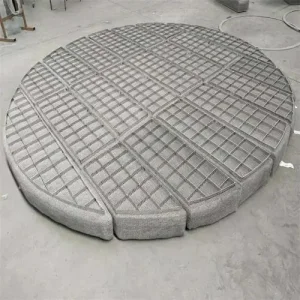
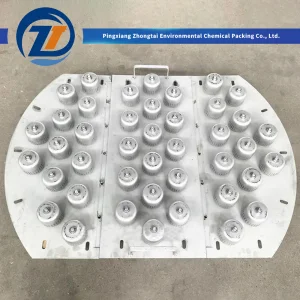
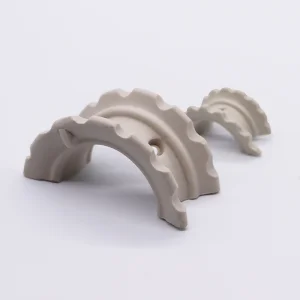
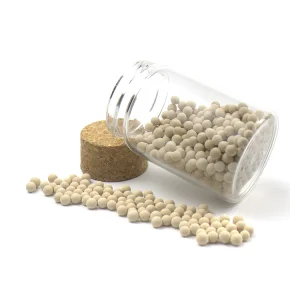
A comprehensive analysis of crystalline aluminosilicate adsorption mechanisms, pore size control, and thermodynamic efficiency in industrial drying systems.
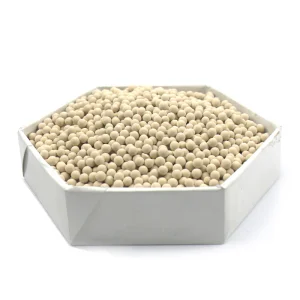
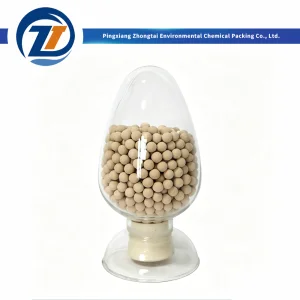
Molecular sieves represent the pinnacle of physical desiccant technology. Unlike non-crystalline silica gels or activated alumina, molecular sieves are crystalline synthetic zeolites (alkali metal aluminosilicates) featuring precise, uniform pore networks at the angstrom (Å) level. In industrial gas and liquid processing, water contamination induces catastrophic operational failures—including pipeline hydrate freezing, catalyst poisoning in downstream reactors, corrosion in cryogenic distillation units, and insulation degradation in structural glass.
The molecular sieve framework consists of a three-dimensional network of SiO₄ and AlO₄ tetrahedra cross-linked through shared oxygen atoms. The presence of trivalent aluminum creates a net negative charge within the crystal lattice, balanced by exchangeable cations such as sodium (Na⁺), potassium (K⁺), or calcium (Ca²⁺). These cations act as strong electrostatic poles inside the internal cages (α-cages and β-cages).
When moist gas or polar liquids pass through the fixed bed, water molecules—possessing a small kinetic diameter (2.65 Å) and a high permanent dipole moment—are rapidly drawn into the crystalline cages via polar electrostatic attraction. This process is highly exothermic, releasing approximately 4,200 to 4,600 kJ per kilogram of adsorbed water (heat of adsorption).
Pore opening: ~3 Å. Formed by exchanging sodium ions in 4A lattice with potassium. Excludes molecules larger than 3Å (e.g., unsaturated hydrocarbons, ethanol), preventing co-adsorption while capturing water. Preferred for cracked gas and ethanol drying.
Pore opening: ~4 Å. The foundational sodium form of the LTA crystal structure. Adsorbs H₂O, CO₂, H₂S, SO₂, and molecules with kinetic diameters < 4Å. The baseline standard for closed air systems, refrigerant drying, and general desiccant canisters.
Pore opening: ~5 Å. Calcium substitution creates higher polar field intensity and larger aperture. Simultaneously removes moisture, mercaptans, and normal paraffin hydrocarbons. Key adsorbent for PSA oxygen and hydrogen purification.
Pore opening: ~10 Å (Faujasite structure). Highly open pore network designed for massive polar molecule capture. 13X-APG is engineered specifically for cryogenic air separation pre-purification units to strip H₂O and CO₂ concurrently.
Compare key physical properties, adsorption thermodynamics, and dynamic efficiency targets across major commercial desiccant grades.
| Desiccant Grade | Nominal Pore Size | Bulk Density (g/ml) | Static H₂O Capacity (25°C, 60% RH) | Crush Strength (Spherical 3-5mm) | Regeneration Temp Range | Target Dew Point Output |
|---|---|---|---|---|---|---|
| Molecular Sieve 3A | 3 Å (0.3 nm) | 0.68 – 0.74 | ≥ 21.0 wt% | ≥ 85 N / bead | 175°C – 230°C | -80°C to -100°C |
| Molecular Sieve 4A | 4 Å (0.4 nm) | 0.68 – 0.73 | ≥ 21.5 wt% | ≥ 80 N / bead | 200°C – 250°C | -75°C to -90°C |
| Molecular Sieve 5A | 5 Å (0.5 nm) | 0.69 – 0.75 | ≥ 21.5 wt% | ≥ 85 N / bead | 200°C – 300°C | -80°C to -95°C |
| Molecular Sieve 13X | 10 Å (1.0 nm) | 0.65 – 0.72 | ≥ 24.0 wt% | ≥ 75 N / bead | 200°C – 315°C | -70°C to -90°C |
| 13X-APG (Air Prep) | 10 Å (1.0 nm) | 0.66 – 0.72 | ≥ 24.5 wt% | ≥ 80 N / bead | 200°C – 280°C | -80°C to -100°C |
| Activated Alumina | 20 – 50 Å | 0.68 – 0.78 | ≥ 15.0 wt% | ≥ 120 N / bead | 160°C – 200°C | -40°C to -60°C |
| Silica Gel (Type A) | 20 – 30 Å | 0.70 – 0.80 | ≥ 30.0 wt% (High RH) | ≥ 60 N / bead | 120°C – 150°C | -30°C to -50°C |
Tailored molecular sieve desiccant beds engineered to meet demanding industrial specifications across energy, petrochemical, and manufacturing sectors.
In natural gas processing plants and NGL fractionation facilities, moisture content must be suppressed below 0.1 ppm to avoid ice and gas hydrate (methane clathrate) formation in cryogenic heat exchangers. Molecular Sieve 4A and 3A beds operate in Temperature Swing Adsorption (TSA) mode to deliver ultra-low dew points (-100°C), extending plant uptime and protecting expander turbines.
Air separation plants liquefy atmospheric air to yield high-purity oxygen, nitrogen, and argon. Trace H₂O and CO₂ in the feedstock can freeze inside main heat exchangers, causing dangerous blockages. 13X-APG molecular sieve beds serve as primary pre-purification units (PPU), simultaneously adsorbing water vapor, carbon dioxide, acetylene, and trace hydrocarbons.
Double and triple-pane architectural glass units rely on specialized 3A molecular sieve beads filled within aluminum or warm-edge spacer frames. By selectively adsorbing water without capturing nitrogen or oxygen, 3A molecular sieve prevents internal condensation, fogging, and pressure-induced glass distortion across extreme seasonal temperature swings.
Super-dehydrated solvents are vital for lithium-battery electrolyte formulation, pharmaceutical synthesis, and fuel-grade ethanol production. 3A molecular sieve breaks water-ethanol azeotropes, dehydrating 95% crude ethanol into 99.9%+ anhydrous fuel ethanol without needing hazardous benzene distillation co-solvents.
How Pingxiang Zhongtai leverages industrial cluster dynamics, automated hydrothermal synthesis, and strict batch-level quality control to supply global process engineering leaders.
Located in Pingxiang, Jiangxi Province—China’s premier cluster for industrial ceramics and mass transfer chemical packing—Pingxiang Zhongtai Environmental Chemical Packing Co., Ltd. operates a modern, vertically integrated manufacturing matrix. By combining localized raw kaolin and silicate sourcing with automated hydrothermal synthesis kilns, Zhongtai maintains total oversight over crystal growth, cation exchange purity, binder formulation, and final calcination kinetics.
Our computer-controlled crystallization tanks ensure precise stoichiometry of silica-to-alumina ratios. This eliminates crystal lattice defects, guaranteeing high static water adsorption capacity (≥21.5 wt%) and preventing premature pore collapse during thermal regeneration cycles.
Raw synthetic zeolite powder requires a binding agent for forming into resilient spheres or extrudates. We blend high-purity clay binders to achieve high crush strength (>80 N/bead) while maintaining <15% total non-active binder content, ensuring minimal trade-off in active pore volume.
Every production lot undergoes rigorous laboratory testing: X-ray fluorescence (XRF) for chemical composition, BET surface area measurement, bulk density check, attrition loss testing, and thermal gravimetric analysis (TGA) for moisture saturation profiles.
Key technical considerations for plant managers, EPC contractors, and procurement directors when evaluating wholesale molecular sieve pricelists and operational parameters.
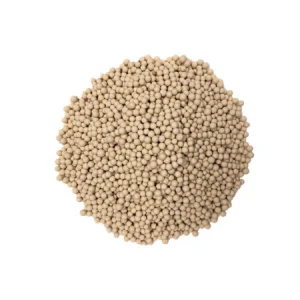
Molecular sieves are supplied primarily in spherical beads (e.g., 1.6–2.5 mm / 8×12 mesh, and 3.0–5.0 mm / 4×8 mesh) or cylindrical extrudates (1.6mm / 1/16" and 3.2mm / 1/8"). Selecting the ideal size requires balancing mass transfer kinetics against pressure drop ($\Delta P$):
Inside an active adsorption bed, the adsorbent bed divides into three zones: the saturated zone, the Mass Transfer Zone (MTZ), and the unused desiccant zone. Over time, liquid water droplets, heavy hydrocarbon fouling, oil mists from upstream gas compressors, or thermal shock during regeneration will degrade the adsorbent matrix.
When requesting wholesale pricelists, evaluating adsorbents purely on price per metric ton can lead to higher overall operational expenditures. Cheaper molecular sieves formulated with inferior clay binders suffer from high attrition rates (dusting), causing pressure drop spikes, filter blinding, downstream valve erosion, and premature bed replacements. Zhongtai's high-crush-strength synthetic zeolites deliver extended service life (3 to 5+ years), lower regeneration energy requirements, and reduced lifetime costs.
Next-generation molecular sieve advancements driving energy reduction, green hydrogen purification, and carbon capture efficiency.
Standard TSA regeneration requires heating beds to 200°C–315°C using natural gas heaters or electric reboilers. Zhongtai's R&D team is developing modified framework zeolites with tailored cation site densities that desorb water fully at 120°C–150°C, enabling process plants to utilize low-grade waste steam and cut carbon emissions by up to 35%.
By integrating secondary mesoporous networks (2–10 nm) into microporous crystalline zeolites, hierarchical adsorbents facilitate faster mass transfer rates for viscous liquids and high-space-velocity gas streams, reducing MTZ length by up to 40%.
Ultra-deep moisture and oxygen removal adsorbents tailored for electrolyzed green hydrogen streams (ISO 14687 Grade D fuel-cell standards) and direct air carbon capture (DAC) structured monolithic zeolites.
End-to-end quality documentation, customized moisture-proof packaging, and flexible international logistics support.
All molecular sieve products comply fully with EU REACH regulations, RoHS standards, ISO 9001:2015 Quality Management Systems, and ISO 14001 Environmental Management framework. Certificates of Analysis (COA) are issued for every lot prior to shipment.
Molecular sieves are hydroscopic desiccants requiring airtight export packaging to prevent pre-saturation. We offer standard 25 kg triple-layer polyethylene-lined airtight steel drums, 150 kg heavy-duty iron drums, and 750 kg/1000 kg moisture-sealed super sacks (jumbo bags) on fumigation-free pallets.
With direct shipping support across FOB China ports (Ningbo, Shanghai, Shenzhen, Qingdao) and CIF/DDP delivery terms worldwide, Zhongtai provides rapid fulfillment. Our process engineering support team provides bed load design calculations and turn-key unloading/re-bedding technical advice.
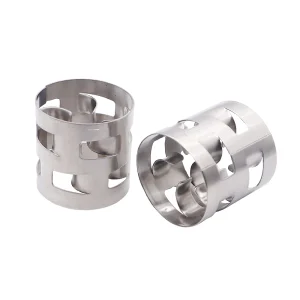
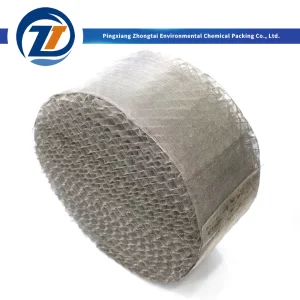
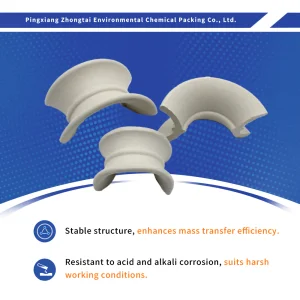
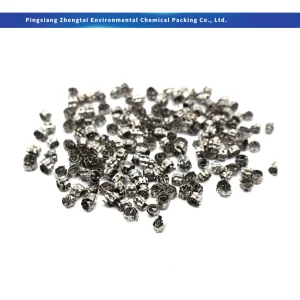
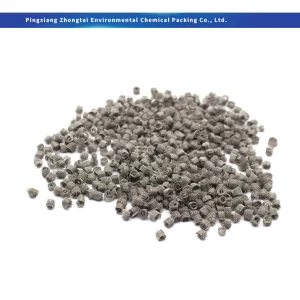
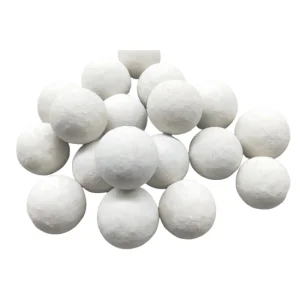
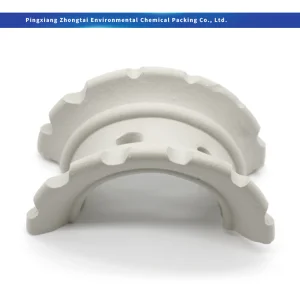
Explore our secondary suite of high-performance column packings, random media, and specialty adsorbents for global process plants.
Expert answers addressing intent queries from process engineers, procurement leads, and plant managers.
