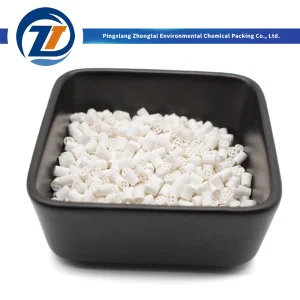
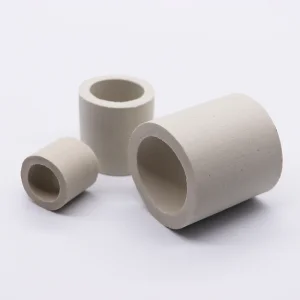
Precision-engineered packing rings, honeycomb monoliths, and inert bed support proppants fabricated within Pingxiang's advanced materials corridor.
How crystalline synthesis, Si/Al ratio control, and structural mesoporosity govern cracking selectivity, thermal regeneration resistance, and catalytic lifetime.
In modern industrial catalysis, molecular sieves are not merely passive adsorbents; they serve as precisely calibrated solid acid catalysts and catalyst substrate matrixes. The crystalline aluminosilicate lattice framework contains uniform microscopic apertures ranging from 3Å to 10Å. By strictly controlling tetrahedral aluminum substitution ([AlO4]-) into the silicate framework, our manufacturing lines regulate both Brønsted acid site density and Lewis acid distribution with molecular precision.
Our direct manufacturing process addresses the historic industry trade-off between diffusion resistance and acid strength. Through secondary templating and chemical desilication-dealumination protocols, Pingxiang Zhongtai engineers synthesize hierarchical zeolites containing continuous intra-crystalline mesopores (2–10 nm) interconnected with classical microporous channels. This hierarchical transport path dramatically accelerates mass transfer of bulky hydrocarbon intermediates, minimizing secondary side-reactions, reducing carbonaceous coking, and prolonging operating runs between thermal regenerations.
Comprehensive physical and catalytic index verified by continuous X-ray Diffraction (XRD) and Nitrogen Physisorption (BET Method).
| Zeolite Catalyst Class | Crystalline Framework | Free Pore Aperture (Å) | Specific Surface Area (m²/g) | Typical SAR (SiO₂/Al₂O₃) | Primary Industrial Conversion |
|---|---|---|---|---|---|
| High-Silica ZSM-5 | MFI (Orthorhombic) | 5.1 × 5.5 / 5.3 × 5.6 | ≥ 380 – 420 | 30 – 350 | Fluid Catalytic Cracking (FCC), Olefin Maximization |
| Silicoaluminophosphate SAPO-34 | CHA (Rhombohedral) | 3.8 × 3.8 | ≥ 550 – 620 | 0.15 – 0.35 (P/Al) | MTO / MTP light olefin synthesis (Ethylene / Propylene) |
| Ultra-Stable Y (USY) | FAU (Cubic) | 7.4 × 7.4 | ≥ 650 – 720 | 5.2 – 30 | Hydrocracking, heavy distillate hydro-upgrading |
| Synthetic Beta (H-BEA) | BEA (Tetragonal) | 6.6 × 6.7 / 5.6 × 5.6 | ≥ 580 – 680 | 25 – 120 | Benzene alkylation, dewaxing, disproportionation |
| Type 13X-HP (Modified FAU) | FAU (Sodium form) | 9.8 – 10.0 | ≥ 750 – 850 | 2.2 – 2.8 | Cryogenic air separation, PSA O₂ generation, Claus beds |
Deploying integrated ceramic catalyst matrices, mass transfer column packings, and structured honeycombs into complex multi-phase reaction loops.
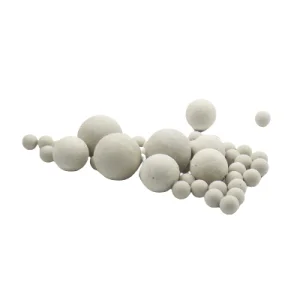
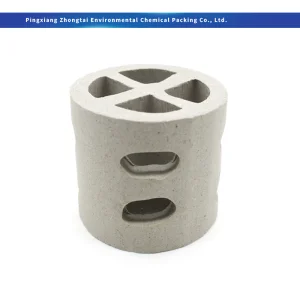
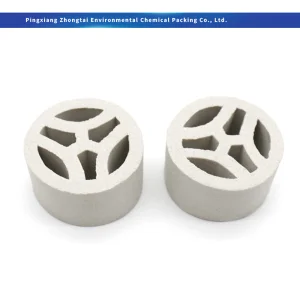
High-integrity USY and ZSM-5 catalyst matrices engineered to withstand continuous steam deactivation at 750°C. Coupled with 17–99% alumina inert hold-down ceramic balls and corrugated structured packing for distillation tower fractionators.
Deep molecular dehydration and trace CO2/mercaptan scavenging utilizing high-capacity 4A and 13X-HP molecular sieves. Low dust index and exceptional dynamic adsorption capacity prevent valve fouling in liquefaction cold boxes.
Advanced catalytic media optimized for CO2 hydrogenation, renewable syngas to Sustainable Aviation Fuel (SAF), and methanol cracking loops. Customized pore channels reduce carbon deposition during cyclic thermochemical operations.
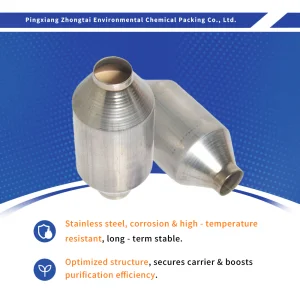
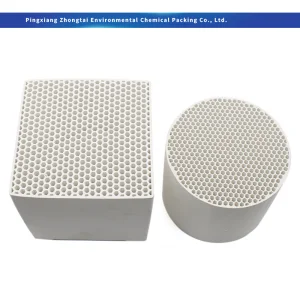
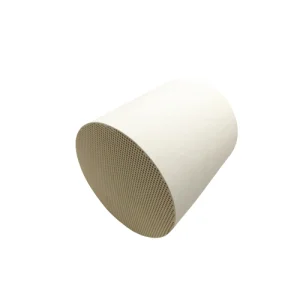
Cordierite honeycomb monoliths impregnated with customized molecular sieve zeolite coatings for selective adsorption and catalytic oxidation of volatile organics, reducing abatement burner energy penalties by up to 40%.
Operating inside China's premier chemical ceramic and process packing corridor, Pingxiang Zhongtai couples abundant precursor sources with intelligent kiln automation.
Our synthesis floor utilizes closed-loop SCADA-monitored hydrothermal crystallization vessels ranging from 5 m³ to 30 m³. Computer-controlled temperature profiles, agitation shears, and automated liquid-solid separations eliminate batch variance in zeolite crystallite size distribution.
Equipped with 60-meter automated rotary calciners and mesh-belt kilns operating under controlled oxygen, steam, and nitrogen environments. Strict thermal gradient governance ensures uncompromised template removal without lattice collapse or framework dealumination.
Headquartered in Pingxiang, Jiangxi, we benefit from a 100-kilometer procurement radius covering ultra-pure kaolin clays, technical alumina hydrates, sodium silicates, and metal alloys. This geographic synergy shields our global clients from component shortages and volatile logistics surcharges.
Meeting the rigorous vendor pre-qualification audits of major global engineering, procurement, and construction (EPC) conglomerates.
We recognize that catalytic failure or bed collapse directly compromises refinery on-stream availability, incurring millions of dollars in downtime. Consequently, Pingxiang Zhongtai subjects every production campaign to verifiable analytical validation:
Moisture ingress and transit attrition are critical hazards during transoceanic shipping. We implement industrial-grade export safeguards tailored to customer unloading methods:
Pioneering green synthesis templates, non-precious metal atomic dispersion, and circular spent catalyst rejuvenation protocols.
Transitioning thermal activation lines to renewable electricity-powered, high-frequency electromagnetic induction kilns. This technology cuts Scope 1 factory carbon emissions by up to 65% while providing uniform radial heat flux that prevents crystallite sintering.
Developing proprietary coordination cages within zeolite topologies to anchor isolated single atoms of ruthenium, platinum, and cobalt. Maximizes atom efficiency for sustainable syngas synthesis, CO₂ capture, and low-temperature methane valorization.
Developing advanced chemical leaching and acid-site rejuvenation pathways that allow spent hydroprocessing catalysts and molecular sieves to be reactivated, re-pelletized, and returned to production loops with >90% baseline activity retention.
Providing cross-border regulatory compliance, rigorous certificates of analysis (CoA), and on-site engineering advisory services worldwide.
All synthetic zeolites and aluminosilicate compounds carry full EU REACH registrations and comply with US TSCA regulations. Complete GHS-compliant Safety Data Sheets (SDS) are provided in 14 languages.
Shipments leave our Pingxiang manufacturing base with exhaustive Certificates of Analysis (CoA). Every parameter—from silica content to water adsorption and bulk density—is traceable to retained archive samples.
Direct access to Ningbo, Shanghai, and Shenzhen deep-water ports via dedicated rail and trucking lanes. Customized shipping charters and consolidated FCL/LCL arrangements prevent delays for shutdown deadlines.
Experienced chemical engineers provide remote pressure drop modeling, mass balance simulations, bed sizing, and on-site reactor loading guidance to guarantee initial startup design parameters.
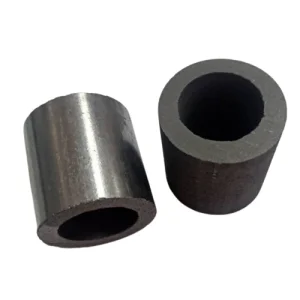
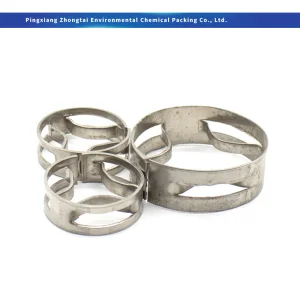
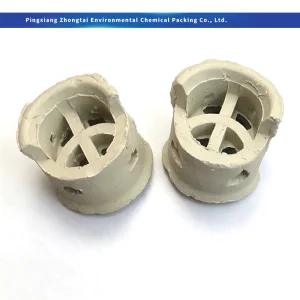
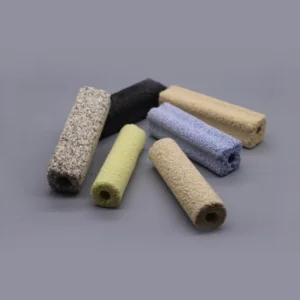
Corrosion-resistant ceramics, high-efficiency metallic mini-rings, and monolithic substrates engineered for acid recovery and extreme thermal stress.
Precise operational answers covering molecular sieve catalytic selection, pressure drop mitigation, and bed support integration.
