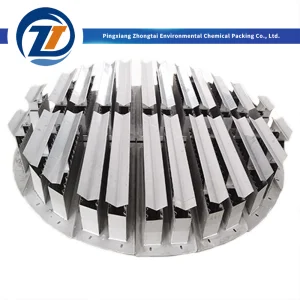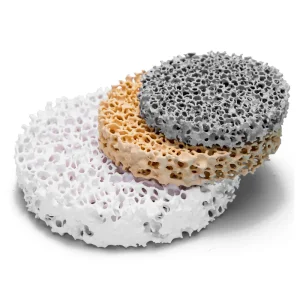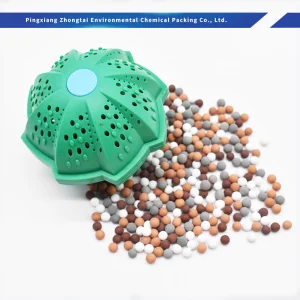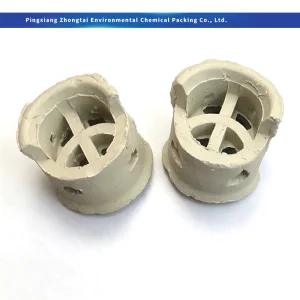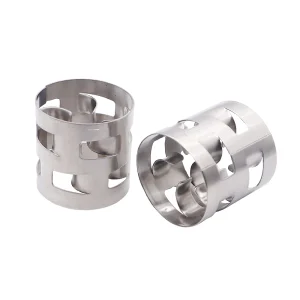
Engineered mass transfer internals, random packing, and advanced filtration media exported from our Pingxiang factory base.
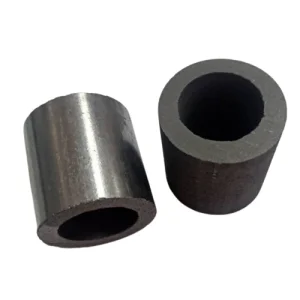
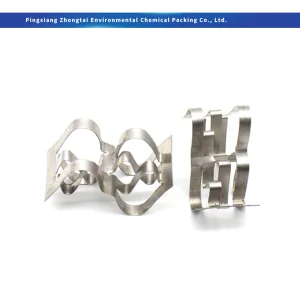
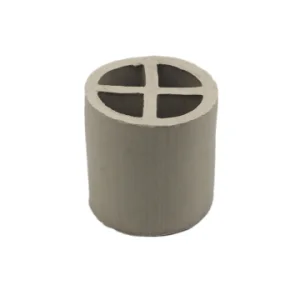
Understanding the fundamental crystalline mechanics, cation exchange precision, and kinetic equilibrium governing high-performance moisture separation in industrial towers.
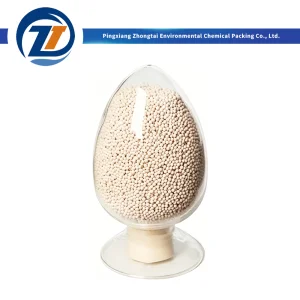
In modern industrial gas drying, petrochemical processing, and cryogenic purification, Molecular Sieve 3A—a crystalline potassium-modified aluminosilicate belonging to the Linde Type A (LTA) structural framework—stands as the definitive technological benchmark. With the crystallographic chemical formula 0.4K₂O · 0.6Na₂O · Al₂O₃ · 2.0SiO₂ · xH₂O, the effective aperture diameter of the inner cavity entrance is precisely trimmed to approximately 3 Ångströms (0.3 nm) via ion-exchange of potassium ions (K⁺) for sodium ions (Na⁺).
This exact dimensional threshold provides complete steric exclusion to molecules with kinetic diameters larger than 3.0 Å (such as unsaturated hydrocarbons like ethylene [3.9 Å], propylene [4.5 Å], and alcohols such as ethanol [4.4 Å]), while permitting the unfettered passage and chemisorption of polar water molecules (kinetic diameter ~2.65 Å). Consequently, the parameter known as Water Adsorption Capacity represents the definitive operational and economic metric for chemical plant operators, refinery engineers, and procurement directors worldwide.
Measures the saturation mass of H₂O captured under stagnant conditions at 25°C and relative humidity levels (RH 60% standard testing). Premium Zhongtai grade 3A zeolites consistently yield ≥ 21.5% to 23.0% by weight, guaranteeing superior reservoir holding density within industrial drying vessels.
Reflects real-world bed performance under continuous stream flow. Dictated by the length of the Mass Transfer Zone (MTZ), dynamic capacity represents moisture absorbed prior to reaching the breakthrough dew point limit (< -80°C or < 0.1 ppmv), delivering lower operational regeneration cycles.
The differential heat of adsorption for water vapor on 3A zeolite ranges from 3,800 to 4,200 kJ/kg H₂O. Optimal calcination and customized low-binder sintering ensure rapid thermal moisture desorption between 200°C and 280°C without crystalline collapse or hydrothermal amorphization.
| Property Parameter | Test Standard / Method | Zhongtai Grade 3A-EP (Cracked Gas) | Zhongtai Grade 3A-ED (Ethanol Fuel) | Zhongtai Grade 3A-IG (Insulating Glass) |
|---|---|---|---|---|
| Nominal Pore Diameter | Crystallographic LTA | 3 Ångströms (0.3 nm) | 3 Ångströms (0.3 nm) | 3 Ångströms (0.3 nm) |
| Static Water Adsorption (RH 60%, 25°C) | ASTM D3802 Mod. | ≥ 21.5 wt% | ≥ 22.0 wt% | ≥ 20.5 wt% |
| Dynamic Water Breakthrough Capacity | Fixed Bed Run (100 ppm breakthrough) | ≥ 15.5 wt% (at 25°C, 30 bar) | ≥ 16.0 wt% (vapor phase ethanol) | N/A (Desiccant spacer use) |
| Bulk Density | ASTM D4180 | 0.70 – 0.74 g/mL | 0.72 – 0.76 g/mL | 0.75 – 0.82 g/mL |
| Crush Strength (Point Value) | Automated Single Pellet Tester | ≥ 45 N (1.6–2.5mm bead) | ≥ 55 N (3.0–5.0mm bead) | ≥ 30 N (0.5–0.9mm bead) |
| Attrition Rate (Wear Resistance) | ASTM D4058 | ≤ 0.10 wt% | ≤ 0.08 wt% | ≤ 0.05 wt% |
| Ethylene / Hydrocarbon Co-Adsorption | Gas Chromatography Residual | < 0.15 wt% (No Green Oil) | < 0.10 wt% | Negligible (< 0.05%) |
| Residual Moisture as Shipped (Loss on Ignition) | DIN 8948 (550°C Calcination) | ≤ 1.5 wt% | ≤ 1.5 wt% | ≤ 1.2 wt% |
A frequent root failure mode in petrochemical dryers is the co-adsorption of reactive unsaturated olefins (such as ethylene and 1,3-butadiene), triggering exothermic coking and premature bed compaction known as "green oil polymerization." Pingxiang Zhongtai prevents this through a proprietary high-shear ion-exchange protocol that achieves a strict > 42% K⁺ cation substitution ratio. This constricts the effective pore windows below 3.0 Å, fully shutting out polymerizable hydrocarbons while unlocking maximal moisture holding capacity.
Addressing thermal swing regeneration schedules, hydrodynamic pressure drop management, and mass transfer zone conservation across multi-bed adsorption units.
Water adsorption is an unsteady-state process characterized by a moving adsorption front. The length of the MTZ determines the unutilized bed capacity (LUB). By formulating spheres with tightly controlled macropore tortuosity and high micro-diffusivity, our 3A zeolites compress the MTZ, allowing process engineers to exploit up to 88% of the total bed equilibrium volume prior to thermal regeneration sequencing.
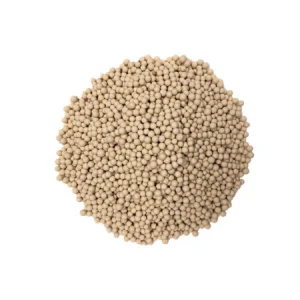
Excessive bed pressure drop directly translates to elevated compressor operating costs and risks fluidizing the top desiccant layer. Zhongtai engineers 3A beads with spherical roundness (>95%) and strict size standard deviations (e.g., 1.6–2.5 mm or 3.0–5.0 mm), perfectly balancing high external surface contact area with Ergun-equation-compliant fluid flow.
Repeated hydrothermal steaming during the regeneration step (typically 200°C–315°C with dry nitrogen or dry slipstream) can slowly destabilize the zeolite framework. Zhongtai incorporates high-purity kaolin and attapulgite clay binders with low free silica, ensuring our 3A sieves preserve > 92% of original water adsorption capacity after 2 years of intensive cyclic operation.
Examining field-proven implementations where pore aperture tolerance and static moisture capacity protect multi-million dollar assets.
In steam cracking of naphtha or ethane, cracked gas leaving acid gas scrubbers carries water saturation. Utilizing high-capacity 3A molecular sieve avoids olefin co-adsorption, preventing catastrophic runaway exotherms and eliminating bed coking while achieving effluent moisture < 0.5 ppmv ahead of the cold separation train.
Ethanol-water forms an azeotrope at 95.6% wt. Traditional ternary distillation using toxic benzene or cyclohexane entrainers has been replaced by 3A vapor-phase pressure swing/vacuum units. Because ethanol is physically excluded by the 3 Å pore boundary, Zhongtai 3A extracts water selectively to yield 99.9%+ anhydrous ethanol.
Double- and triple-glazed architectural windows require micro-bead 3A molecular sieve in the aluminum or warm-edge spacer. It rapidly strips residual assembly humidity and ongoing boundary moisture diffusion without adsorbing air (nitrogen/oxygen) or argon fill gas, preventing glass pane concave deflection and winter condensation fogging.
Modern environmentally benign refrigerants (HFC-134a, R410A, HFO-1234yf) and hydrocarbon streams (LPG/LNG) must maintain extreme dryness to prevent ice hydrate crystallization inside expansion valves and capillary tubes. Zhongtai 3A provides ultra-low equilibrium vapor pressure down to -100°C dew point without inducing refrigerant catalytic decomposition.
Why worldwide refinery contractors, chemical EPC conglomerates, and air separation operators procure their high-capacity 3A zeolite adsorbents directly from Pingxiang Zhongtai.
Pingxiang, Jiangxi Province, is universally recognized as the industrial ceramic and chemical packing capital of China. Raw materials including premium synthetic sodium aluminosilicate powder, specialized attapulgite clay binders, and potassium hydroxide are sourced within an immediate 50-kilometer industrial supply radius. This supply concentration drastically reduces inbound logistics overhead and insulates global buyers against raw chemical price volatility.
Uniform water adsorption capacity cannot be attained with rudimentary tunnel kilns. Pingxiang Zhongtai utilizes computer-monitored, multi-stage rotary activation kilns featuring PID temperature loops. The dehydration profile precisely eliminates physisorbed water at 550°C without collapsing the delicate crystalline alpha cages, producing pristine, activated molecular sieve pellets with loss on ignition (LOI) < 1.5%.
Every 5-ton production lot undergoes automated QA screening: Static water capacity (ASTM D3802), single-bead crush strength testing on computerized load-cells, ASTM D4058 attrition tumblers, and X-ray diffraction (XRD) crystal purity confirmation. Certified mill test certificates accompany every export bill of lading.
As the international process industry transitions toward green hydrogen, carbon capture, and synthetic biofuels, high-selectivity 3A adsorbents take center stage.
Electrolytic hydrogen produced via PEM (Proton Exchange Membrane) and alkaline water splitting arrives water-saturated. Because molecular hydrogen possesses a kinetic diameter of 2.89 Å, standard 4A sieves co-adsorb trace gases, whereas high-purity 3A exclusively strips moisture down to < 5 ppm H₂O, fulfilling ISO 14687 purity standards for hydrogen fuel cell vehicles (FCEV).
Traditional molecular sieves contain 15% to 20% inert binder clays that provide no adsorption capacity. Emerging low-binder and chemical-conversion technologies convert the clay phase into secondary active zeolite crystals, elevating effective static water adsorption past 24.5% wt, thereby shrinking the carbon footprint of regeneration heating cycles.
The conversion of captured CO₂ and green hydrogen into e-methanol and e-kerosene demands dehydration beds with exceptional chemical resistance against organic acids and oxygenates. Zhongtai 3A provides the precise pore exclusion required to guarantee absolute dry feedstocks without catalytically decomposing sensitive synthesis intermediates.
A rigorous quality management guide for EPC engineering contractors, procurement managers, and plant logistics directors.
Because activated 3A molecular sieve actively adsorbs atmospheric humidity, packaging integrity is critical. Zhongtai utilizes heavy-duty, airtight steel drums (55 US gallons / 125–150 kg net) with hermetically sealed interior polyethylene liners, or 500–1000 kg nitrogen-purged supersacks lined with multi-layer aluminum-foil vapor barrier membranes.
Every shipment is qualified against internationally recognized test methods: ASTM D3802 for crushing strength, ASTM D4180 for vibrated packing density, ASTM D2862 for particle size classification, and ASTM D4058 for ball-pan attrition resistance. Full 3.1 EN 10204 inspection documents are provided prior to export dispatch.
Through our established logistics partnerships operating via major Chinese deep-water container terminals (Shanghai, Shenzhen, Ningbo), Zhongtai coordinates CIF, DDP, and FOB shipments with full fumigation certification, COA, certificate of origin, and hazardous/non-hazardous chemical declarations tailored to global customs regulations.
In-depth, specification-level answers provided by the senior chemical engineering and adsorption specialists at Pingxiang Zhongtai.
Complete mass transfer equipment and specialized chemical fillers direct from Pingxiang Zhongtai Environmental Chemical Packing Co., Ltd.