Engineered ceramic, metal, and environmental packing solutions fabricated to exact ASTM, ASME, and chemical process criteria.
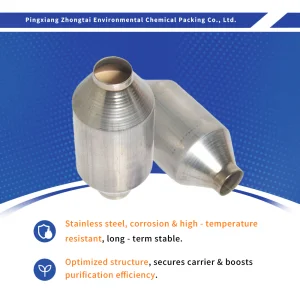
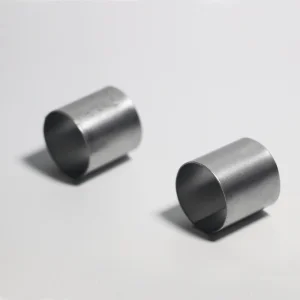
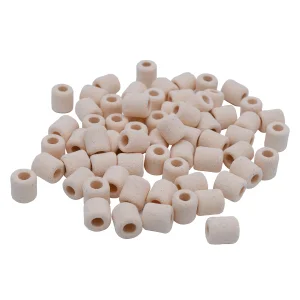
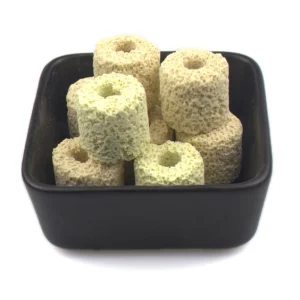
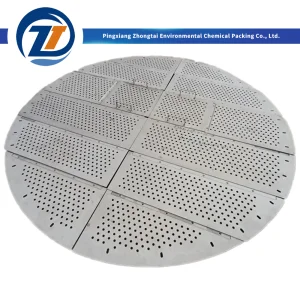
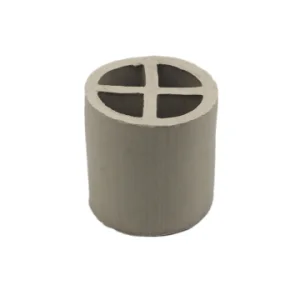
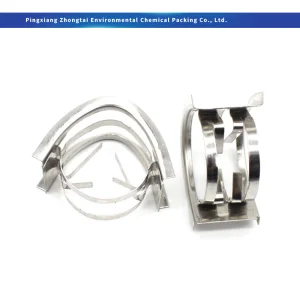
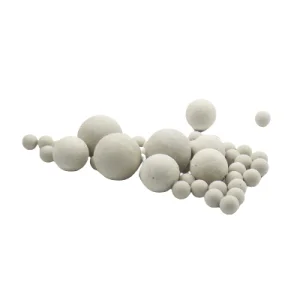
A rigorous examination of mass transfer kinetics, hydraulic capacity, and thermodynamic resilience across chemical column packing beds.
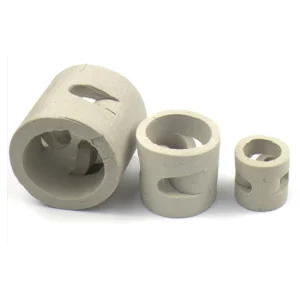
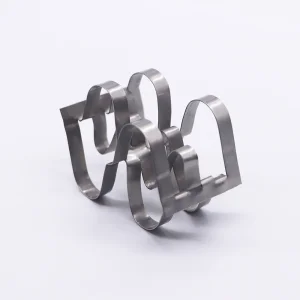
In modern chemical process engineering, Ceramic Pall Rings represent a pivotal thermodynamic breakthrough over traditional cylindrical Raschig rings. While classic Raschig packing restricts phase contact through an enclosed annular perimeter, the Pall ring configuration incorporates slotted cylindrical walls with inwardly curved bent tabs or fingers. This open geometrical design significantly increases the accessibility of internal surface areas, enabling simultaneous two-phase wetting and unhindered vapor throughput.
Formulated primarily from specialized high-purity chemical clays, feldspar, and alumina silicate precursors, ceramic Pall rings are fired under digitally controlled continuous roller and tunnel kilns at temperatures spanning 1,180°C to 1,280°C. This intense vitrification produces an impervious crystalline matrix resistant to vitriol, concentrated sulfuric acid (H&sub2;SO&sub4;), nitric acid (HNO&sub3;), hydrochloric acid (HCl), and organic solvents. The only industrial media that aggressively attack this vitrified structure are hydrofluoric acid (HF) and boiling concentrated alkali caustic solutions.
The performance of packed towers is governed by the effective interfacial surface area (ae) and the mass transfer coefficient (KLa or KGa). As descending liquid meets rising vapor in a packed bed, the internal tongue-like projections within the Ceramic Pall Ring serve as micro-distributors. Liquid droplets do not merely slide along the outer ring boundary; instead, they continually strike internal protrusions, shedding uniform liquid films and droplet cascades that renew interfacial boundaries multiple times throughout the column height.
This active film renewal mitigates channeling (maldistribution), a phenomenon common in large-diameter industrial contactors. The open structure also extends the flooding limit—the point at which liquid is blown upward by gas velocity—allowing process engineers to run columns at significantly higher vapor loading factors (Fs = ug × ρg0.5) without causing hydrodynamic choke or excessive entrainment.
| Nominal Size (mm) | Dimensions (OD × H × Thk) | Surface Area (m²/m³) | Free Volume (Voidage %) | Piece Count (/m³) | Bulk Density (kg/m³) | Packing Factor (Fp m‾¹) |
|---|---|---|---|---|---|---|
| 25 mm (1") | 25 × 25 × 3.0 mm | 215 | 72.5% | 52,000 | 680 ± 5% | 190 |
| 38 mm (1.5") | 38 × 38 × 4.0 mm | 145 | 74.0% | 15,500 | 610 ± 5% | 125 |
| 50 mm (2") | 50 × 50 × 5.0 mm | 110 | 76.0% | 6,500 | 550 ± 5% | 85 |
| 76 mm (3") | 76 × 76 × 8.0 mm | 75 | 78.5% | 1,900 | 490 ± 5% | 55 |
Leveraging vertical cluster efficiencies from raw mineral extraction to automated roller kilns in China's industrial ceramics hub.
Operating in Pingxiang, Jiangxi Province—the historical center of Chinese chemical ceramics—places high-grade kaolin clay, mineral processing labs, and specialized fabrication machinery within a 20-kilometer radius. This geographic concentration reduces logistical friction and guarantees raw material stability.
Equipped with 100-meter continuous roller and tunnel kilns featuring multi-zone temperature regulators, our factory prevents thermal shock stress. Uniform heat soaking eliminates internal voids and uneven shrinkage, delivering dimensional tolerances within ±3% and low breakages under heavy packed bed loads.
Direct factory engagement eliminates domestic trading middle layers, offering international buyers FOB or CIF pricing that is 20% to 35% lower than European or North American repackaged distribution channels. Scalable production buffers against raw mineral price spikes, ensuring stable multi-year contract rates.
Demystifying quotation dynamics, freight economics, factory auditing, and standard export packaging requirements.
Global procurement teams specify column diameter, chemical media composition, operational temperature, crush strength limits, and acid leaching constraints rather than generic codes.
Factory-direct sample runs (25mm, 38mm, 50mm) undergo third-party density, acid solubility, and crush testing. Certified Mill Test Reports (MTR) accompany pre-shipment inspections.
Shipped in 1.0 m³ heavy-duty woven polypropylene jumbo bags or double-layer corrugated cartons secured onto heat-treated, fumigated ISPM-15 wooden or plastic pallets.
Batch-coded shipping consignments align with origin certificates, bills of lading, and REACH/RoHS compliances, delivering directly to plants in Europe, the Americas, and APAC.
Every metric is tested against international chemical equipment standards to ensure safety in acid, gas, and distillation towers.
Standard Specification for Chemical-Resistant Ceramic Tower Packings. Our ceramic Pall rings conform to rigorous porosity tests, water absorption constraints (<0.5%), and an acid solubility threshold below 0.2% after boiling in 18% H&sub2;SO&sub4; for 48 consecutive hours.
Tower packing must withstand temperature surges during start-up, shutdown, and hot reflux loops. Zhongtai ceramic rings are tested by heating to 850°C followed by immediate water quenching through repeated cycles without hairline spalling or micro-crack development.
Our formulations comply with EU REACH requirements regarding Substances of Very High Concern (SVHC). Finished packing media show no toxic heavy metal leaching, allowing use in potable water decarbonators and sensitive bio-scrubbers.
Proven service life across harsh mass transfer, separation, and environmental scrubbing installations globally.
Installed inside drying towers, intermediate absorption towers (IAT), and final absorption towers (FAT) where hot, concentrated 93%–98% H&sub2;SO&sub4; would quickly corrode standard 316L stainless steel.
Essential in moist chlorine drying towers using concentrated sulfuric acid, as well as tail gas neutralization scrubbers dealing with wet chlorine gas (Cl&sub2;) and hydrogen chloride vapor.
Acts as heat exchange filler and pre-quench packing before regenerative thermal oxidizers (RTOs) handling volatile organic compounds (VOCs) and corrosive halogenated hydrocarbons.
Delivers continuous mass transfer in sour water stripping columns, ammonium sulfate saturators, and coal-to-chemical synthesis gas scrubbers under fluctuating pH regimes.
Adapting random packing geometry for post-combustion CO&sub2; capture, amine recovery, and green chemical processing.
The ongoing global shift toward net-zero emissions has elevated mass transfer equipment from conventional refining into front-line decarbonization technology. In Carbon Capture, Utilization, and Storage (CCUS), packed towers form the core of amine-based solvent scrubbing systems. When dealing with flue gases from coal-fired power plants, cement kilns, or metallurgical smelters, the gas stream often contains trace acidic components (SOx, NOx, trace HCl) alongside flue dust.
While structured metal packing provides high theoretical stage counts, it remains vulnerable to severe fouling and particulate clogging. In contrast, 50 mm and 76 mm Ceramic Pall Rings offer open hydraulic profiles, low fouling tendencies, and chemical resistance in direct contact coolers (DCC) and pre-scrubbing columns. They cool flue gas, saturate it with moisture, and strip residual acid contaminants before gas enters main absorption columns.
The open void structure of ceramic Pall rings prevents particulate bridging and tar encrustation, keeping pressure drop stable across long maintenance cycles.
Lower pressure drops reduce blower electricity demands in high-volume CCUS blowers, directly lowering the operational cost of captured CO&sub2; per ton.
Manufactured entirely from natural minerals, spent ceramic packing can be crushed for refractory grog or aggregate without creating toxic landfill waste.
Specific answers to help project engineers, plant managers, and procurement officers specify and evaluate ceramic packing.
Explore wholesale prices, physical technical sheets, and production quotes for chemical contactor installations.
Need hydrodynamics modeling, HETP sizing calculations, or volume-tiered FOB/CIF quotations for your upcoming planned turnaround? Our chemical engineers provide full data sheet support within 24 hours.
