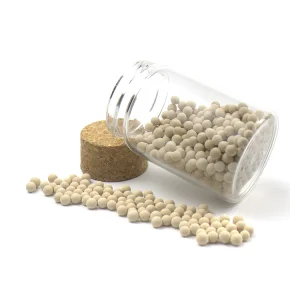
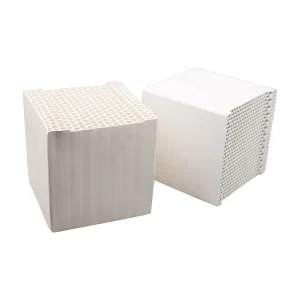
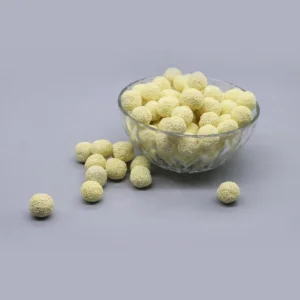
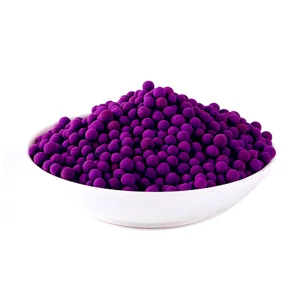
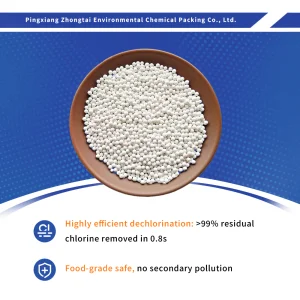
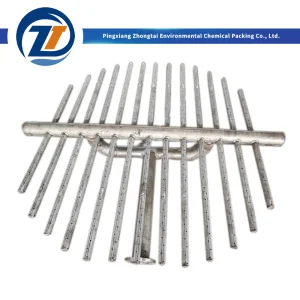
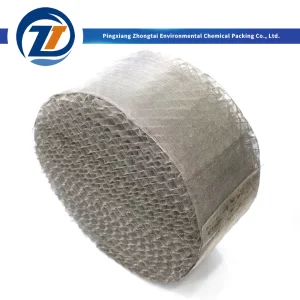
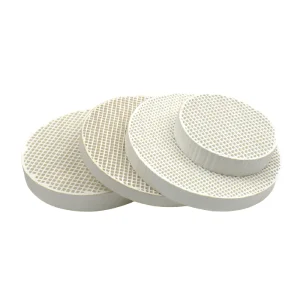
High-performance random packings, high-purity distributor trays, and catalytic media designed for seamless integration into chemical reactors and absorption systems.
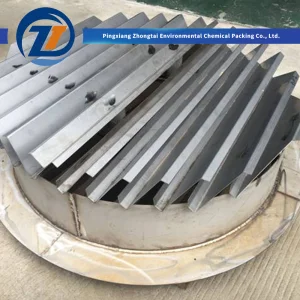
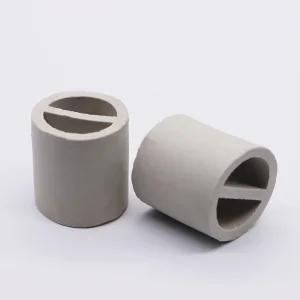
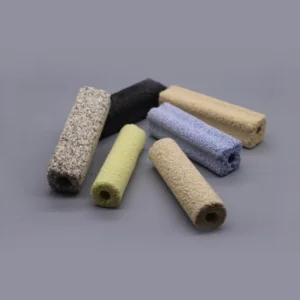
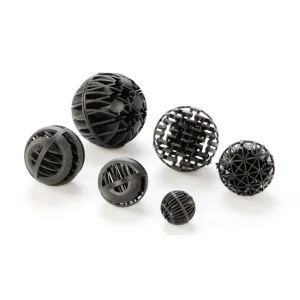
In complex petrochemical processing, acid manufacturing, and industrial off-gas absorption, selecting the optimal tower packing directly influences capital expenditure and continuous operational efficiency. The Ceramic Cascade Mini Ring (CMR)—often recognized as the third-generation random packing—was specifically synthesized to eliminate the aerodynamic limitations and fluid stagnation historically experienced with conventional cylindrical Raschig rings and symmetric saddles.
Unlike conventional Raschig rings where the height equals the external diameter (1:1), the Ceramic Cascade Ring features a height-to-diameter ratio engineered at approximately 1:3. When dumped randomly into a process column, this structural geometry causes rings to preferentially settle with their cylindrical axes oriented vertically rather than horizontally, radically lowering form drag against upward rising vapor.
The addition of an engineered tapered rim (flange) on one edge transforms fluid boundary layers. Ascending gas streams smoothly divert across external surfaces rather than creating turbulent recirculating eddies inside dead ring cavities. This flare reduces the overall column pressure drop (ΔP) by 30% to 45% compared to equal-sized cylindrical ceramic rings, substantially decreasing blower operational amperage.
Internal structural cross-ribs create multiple drip contact points, ensuring downward percolating liquid continuously detaches and re-wets neighboring surfaces. Liquid hold-up within quiescent dead-zones is completely averted. Continuous surface renewal enhances mass transfer coefficients ($K_L a$), effectively reducing the required Height Equivalent to a Theoretical Plate (HETP).
Manufactured strictly conforming to ASTM C515 (Standard Specification for Chemical-Resistant Ceramic Tower Packings) and industrial standard HG/T 4369-2012, our ceramic cascade rings utilize optimized proportions of kaolin, quartz, and feldspathic fluxes, vitrified via computerized high-temperature tunnel kilns between 1280°C and 1320°C.
| Nominal Size (mm / in) | Dimensions (OD × H × T mm) | Surface Area (m²/m³) | Void Fraction (ε %) | Bulk Density (kg/m³) | Crush Strength (kN/pc) | Dry Packing Factor (m⁻¹) |
|---|---|---|---|---|---|---|
| CMR #1 (25 mm / 1") | 25 × 12 × 3.0 | 245 | 72.5% | 660 | ≥ 7.5 | 190 |
| CMR #1.5 (38 mm / 1.5") | 38 × 18 × 3.8 | 160 | 75.2% | 590 | ≥ 9.0 | 115 |
| CMR #2 (50 mm / 2") | 50 × 24 × 5.0 | 120 | 78.0% | 530 | ≥ 11.5 | 75 |
| CMR #3 (76 mm / 3") | 76 × 36 × 7.5 | 85 | 81.5% | 470 | ≥ 15.0 | 46 |
| CMR #4 (100 mm / 4") | 100 × 48 × 10.0 | 62 | 84.0% | 410 | ≥ 22.0 | 32 |
Complete vitrification creates an impervious, zero-open-pore ceramic structure. This prevents acid migration into internal pores, eliminating spalling risks caused by expansion-crystallization cycles during cooling shutdowns.
By enforcing low iron matrix control, our cascade rings do not leach coloring or catalytic metal contaminants into high-purity fine chemicals, electronic-grade acids, or sensitive organic reagents.
Engineered to endure severe operating temperature gradients. Tested rigorously by heating to 220°C and quenching directly into 20°C ambient water without displaying micro-cracks, surface cleavage, or structural failure.
Subjected to boiling 70% sulfuric acid for 48 hours according to ASTM C279 and ISO 10545 protocols. Weight loss consistently verifies at below 0.15%, guaranteeing multi-year structural survival.
Procuring wholesale ceramic mass transfer media directly from our Pingxiang manufacturing base leverages an unmatched industrial ecosystem. Pingxiang, recognized across global process industries as the world's premier cluster for environmental chemical ceramics, combines localized raw materials, advanced continuous kilns, and comprehensive testing infrastructure.
Our plant operates within kilometers of high-grade clay, kaolinite, and feldspar reserves. This zero-mile mineral supply chain shields production from international feedstock volatility, eliminates long-distance intermediate raw material hauling costs, and guarantees identical batch-to-batch chemical ratios year-round.
Utilizing multi-chamber, natural-gas-fired continuous tunnel kilns exceeding 120 meters in length, our facilities sustain an output exceeding 15,000 metric tons per annum. Steady multi-zone thermal curves eliminate temperature fluctuations, ensuring uniform vitrification and dimensional precision across wholesale volumes.
Global engineering procurement organizations gain decisive price-performance advantages through our streamlined bulk manufacturing lines. We accommodate fast-track turnaround for emergency turnaround revamps and bulk ocean container dispatches, cutting total project expenditures by 30% to 50% relative to Western suppliers.
For multinational EPC engineering contractors, chemical processing majors, and environmental plant builders, media reliability underpins multimillion-dollar operational guarantees. Our international export division aligns production, inspection, packaging, and logistics with stringent international procurement protocols.
Every single firing lot undergoes mandatory laboratory analysis: chemical composition by XRF spectroscopy, water absorption, bulk density verification, and randomized point-crush resistance testing. Mill Test Certificates (MTC) accompany every container dispatch.
Packaged in UV-resistant, woven 1.0 m³ jumbo bags (super-sacks) equipped with inner moisture barriers, or heavy-gauge 25 kg woven polyethylene bags secured on ISPM-15 heat-treated fumigated wooden pallets. Shrink-wrapped to prevent maritime transit shifting and transit abrasion.
Full support for independent site inspections and pre-shipment lot sampling by internationally accredited auditing firms including SGS, Bureau Veritas (BV), Intertek, and TÜV Rheinland to certify compliance before customs clearance.
Comprehensive export documentation packages provided: legalized Certificates of Origin (CO, Form E, Form A), REACH and RoHS declaration statements, standard material safety data dossiers, and customs tariff classification assistance.
Ceramic Cascade Mini Rings excel precisely where polymer packings melt or deform, and where exotic stainless alloys succumb to crevice corrosion, pitting, or prohibitive capital costs.
In Double Absorption Double Contact (DADC) facilities, drying towers and interpass/final SO₃ absorption columns process hot 93% to 98.5% concentrated sulfuric acid with severe exothermic heats of solution. Ceramic cascade rings withstand aggressive sulfuric acid leaching while remaining dimensionally inert, preventing column re-packing during scheduled ten-year turnarounds.
Humid, hot chlorine gas emerging from membrane cell electrolyzers rapidly degrades conventional stainless steels and causes environmental stress-cracking in polypropylenes. Vitrified ceramic cascade rings resist wet halogen chemical attack, sustaining uniform gas distribution throughout continuous caustic soda stripping.
Off-gas scrubbers receiving hot effluent directly from hazardous chemical incinerators and regenerative thermal oxidizers require high thermal shock resilience. Cascade rings absorb incoming gas thermal swings without shattering, neutralizing volatile HCl, SOx, and nitrogen oxides with negligible liquid hold-up.
As global environmental frameworks push heavy industry toward lower emissions and reduced energetic intensity, mass transfer hardware is subject to evolving performance imperatives.
Decarbonization mandates prioritize low aerodynamic drag across industrial towers. In large-scale flue gas desulfurization (FGD) and acid gas treatment units, switching to cascade ring designs cuts continuous blower electrical energy consumption by up to 25%, directly reducing facility Scope 2 carbon footprint.
Emerging post-combustion CO₂ capture infrastructure demands chemical packings operating under intensive liquid-to-gas ratios with amine and carbonate solutions. High-capacity ceramic cascade media offer enhanced wetted contact areas that mitigate frothing and fluid foaming in carbon capture absorption towers.
Modern microelectronics, lithium processing, and semiconductor precursor chemical manufacturing require ultra-low-leaching materials. We are driving research into nano-composite ceramic additives that eliminate residual silica, iron, and sodium migration under aggressive acidic conditions.
Detailed answers addressing column sizing, hydraulic ratings, packing installation techniques, and international wholesale procurement requirements.
Expand plant performance with our specialized high-alumina adsorbents, structured packings, honeycomb ceramic heat regenerators, and industrial water filtration media.