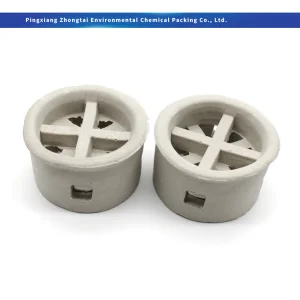
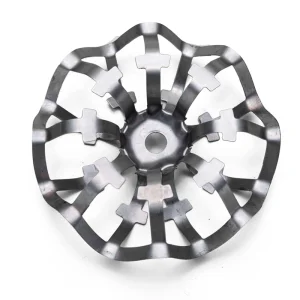
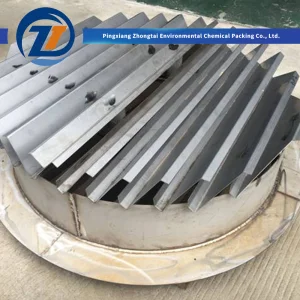
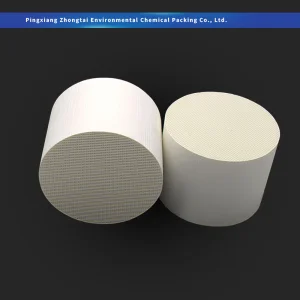
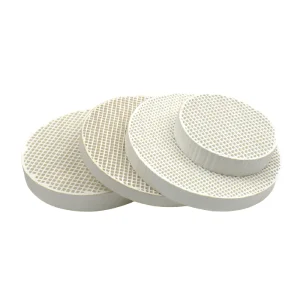
Direct factory supply of tower internals, advanced ceramic catalysts, structured substrates, and random packing components supporting industrial process treatment lines.
Accelerating environmental mandates, stringent micro-pollutant controls, and the exponential expansion of municipal desalination networks are driving unprecedented demand for specialized mineralizing and dechlorinating media.
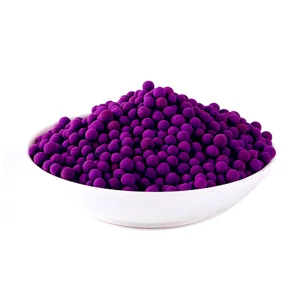
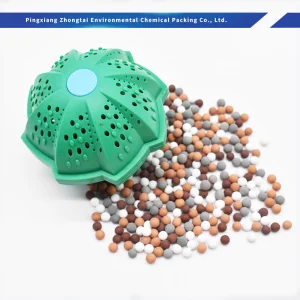
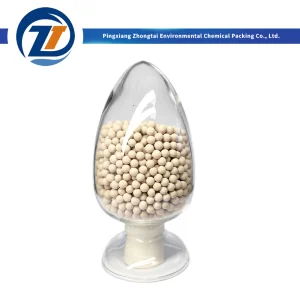
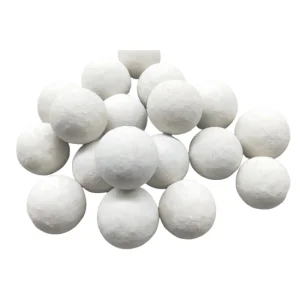
As municipal and industrial water engineering transitions beyond rudimentary sediment filtration and chlorination, the global demand for functional ceramic spheres has expanded at an estimated 8.4% CAGR through 2030. Sourced directly from our high-precision kiln complexes in Pingxiang, Jiangxi, industrial ceramic balls serve dual functional horizons: inert mechanical bed support/flow homogenization in multi-bed catalyst and ion-exchange columns, and active biochemical functionalization (dechlorination via redox catalysis, steady-state mineral reintroduction, negative Oxidation-Reduction Potential (ORP) induction, and bio-filtration immobilization).
Industrial and potable RO membranes produce ultra-pure, chemically aggressive permeate with near-zero total dissolved solids (TDS) and negative Langelier Saturation Index (LSI) values. Left unbuffered, this water aggressively leaches metallic municipal conduits. Zhongtai engineered bioceramic mineral balls release stoichiometric concentrations of ionic calcium (Ca²⁺), magnesium (Mg²⁺), and silicate ions (SiO₃²⁻), stabilizing the LSI balance to +0.1 to +0.3 without chemical injection dosing pumps.
Traditional granular activated carbon (GAC) beds suffer from slow contact requirements (Empty Bed Contact Time > 10 minutes), rapid channeling, and bacterial colonization risks. Our high-density Calcium Sulfite (CaSO₃) and composite dechlorination ceramic spheres achieve near-instantaneous (<0.2s contact) reduction of free residual chlorine (HOCl and OCl⁻) into inert chloride ions (Cl⁻), operating with 99.8% stoichiometric efficiency even under high-temperature (65°C) process regimes.
Commercial beverage lines, high-density aquaculture systems, and residential wellness devices require precise reduction potential without electrolytic cell degradation. Using micro-porous sub-micron magnesium and zinc metal matrix composites encapsulated in sintered silicate frameworks, our ORP ceramic balls sustainably drive dissolved oxygen conversion, generating molecular hydrogen (H₂) concentrations of 300–800 ppb while depressing ORP values to between -150 mV and -450 mV.
Comprehensive engineering parameters, chemical formulations, and baseline volume wholesale pricing for commercial tenders, OEM filtration integrators, and industrial treatment plants.
| Functional Classification | Active Chemical Phase | Std. Diameters (mm) | Bulk Density (g/cm³) | Crush Strength (N/p) | Target Water Metric | Wholesale Price Range (FOB Pingxiang) |
|---|---|---|---|---|---|---|
|
Dechlorination Ceramic Spheres Rapid Redox |
90–98% CaSO₃ + Food Grade Binder | 1.0–2.0, 2.0–4.0, 5.0–8.0 | 1.35 – 1.45 | >80 N | Cl₂: <0.02 ppm (99.8% Red.) | $2,850 – $3,650 / Metric Ton |
|
Alkaline & Hydrogen ORP Balls Redox Negative |
Nano-Mg, Zn, Tourmaline, Calcite | 2.0–3.0, 4.0–6.0, 8.0–10.0 | 1.25 – 1.35 | >65 N | ORP: -150 to -450 mV, pH: 8.5–9.8 | $3,400 – $4,800 / Metric Ton |
|
Maifan Stone Mineralizing Balls Electrolyte Elution |
SiO₂, Al₂O₃, Fe₂O₃, K₂O, Na₂O, CaO | 3.0–5.0, 6.0–8.0, 10.0–12.0 | 1.40 – 1.55 | >120 N | TDS bump: +20–45 ppm (Ca/Mg/K) | $1,250 – $1,850 / Metric Ton |
|
Tourmaline Far-Infrared Spheres Micro-Clustering |
Complex Borosilicate, Rare Earth Oxides | 3.0–4.0, 5.0–7.0, 8.0–10.0 | 1.45 – 1.60 | >150 N | FIR Emissivity: >92% (8–14μm) | $2,100 – $2,950 / Metric Ton |
|
Silver-Zinc Antibacterial Bioceramics Bacteriostatic |
Micro-porous Phosphate, Ag⁺/Zn²⁺ Complex | 2.0–4.0, 5.0–6.0 | 1.30 – 1.40 | >95 N | E. coli & S. aureus kill: >99.99% | $4,200 – $6,200 / Metric Ton |
|
Standard Inert Support Ceramic Balls Bed Retention |
17–23% Al₂O₃, 70–75% SiO₂ | 3, 6, 10, 13, 19, 25, 38, 50 | 1.35 – 1.42 | >450 N (1/2" ball) | Mechanical support, <1% water abs. | $450 – $750 / Metric Ton |
|
High Alumina Inert Support Balls Severe Duty |
90–99.5% High-Purity α-Al₂O₃ | 3, 6, 10, 13, 19, 25, 32, 50 | 2.05 – 2.20 | >1800 N (1/2" ball) | Zero silica leaching, harsh chemicals | $1,650 – $2,450 / Metric Ton |
Prices indicated above represent baseline commercial FOB Port of Shanghai / Shenzhen terms for order quantities between 5 and 20 Metric Tons. Zhongtai maintains flexible industrial packaging architectures:
Deep-dive chemical kinetics revealing how micro-porous ceramic synthesis controls trace mineral elution, electron transfer, and hydraulic retention integrity.
Unlike raw mineral gravels that exhibit explosive dissolution during early run hours followed by rapid calcification and exhaustion, Zhongtai functional water ceramics are fabricated using an advanced multi-temperature gradient sintering protocol (850°C to 1180°C). Raw geological minerals (Maifanite, Tourmaline, Germanite) are micronized via zirconia wet-milling down to D90 < 2.5 μm before spheroidization.
By carefully matching fluxing feldspars and pore-forming organic foaming agents, the resulting ceramic sphere exhibits a multi-modal pore size distribution:
The chemical decomposition of free residual chlorine over Zhongtai calcium sulfite spheres represents an irreversible oxidation-reduction reaction that completely avoids toxic chloramine byproducts:
Because Calcium Sulfate (gypsum, CaSO₄) exhibits extremely slight solubility in aqueous streams, the reaction products dissolve cleanly away at micro-molar levels without passivating or scaling the spherical active surface. The reaction velocity constant is nearly 120 times faster than bituminous GAC, permitting compact filter geometries in automated bottling equipment and high-flow showers.
Stringent batch-level testing and world-class drinking water certifications ensure complete risk elimination for municipal networks, international food & beverage brands, and OEM manufacturers.
Every product batch destined for potable water treatment undergoes comprehensive toxicological profiling in accordance with NSF/ANSI Standard 61 (Drinking Water System Components - Health Effects). ICP-OES and ICP-MS testing confirms trace extractables remain far below allowable limits:
For our European partners in Germany, France, Italy, and Scandinavia, all food-contact bioceramics comply fully with EU Framework Regulation (EC) No 1935/2004, German LFGB, and French DGCCRF standards. Shipments are issued with complete Declarations of Compliance (DoC) and batch-specific analytical passports.
Procurement with Zhongtai is supported by direct chemical engineering teams. We calculate empty-bed contact times (EBCT), pressure drop gradients across packed columns using Ergun's equation, and backwash expansion percentages (25% to 40%) tailored to your specific feed pump heads.
Field-proven engineering layouts detailing how our wholesale ceramic balls integrate into municipal treatment, commercial hospitality, and critical life-support recirculating ecosystems.
In municipal desalination facilities across the Middle East (GCC) and Mediterranean, permeate leaving SWRO membranes exhibits TDS < 25 ppm, alkalinity < 10 mg/L as CaCO₃, and severe calcium deficiency.
International hotel chains and wellness shower manufacturers require compact, high-flow dechlorination modules that operate without causing significant hydraulic pressure drop across municipal supply lines.
Intensive aquaculture bio-filtration requires ultra-high surface area for nitrifying autotrophic bacteria (Nitrosomonas and Nitrobacter) alongside natural pH buffering against nitric acid acidification.
Low-pressure industrial steam boilers and district cooling networks face rapid corrosion from dissolved oxygen and aggressive carbonic acid condensation.
Transforming functional water ceramics through zero-carbon manufacturing kilns, specialized heavy-metal chelating matrices, and photocatalytic self-cleaning spheres.
By Q3 2026, 85% of our high-temperature tunnel kilns will transition to renewably powered electric heating coils, reducing our scope 1 carbon footprint by 64% per metric ton of ceramic produced. This low-emission profile guarantees European and North American buyers carbon border adjustment (CBAM) resilience.
Currently entering industrial pilot testing, our forthcoming Nano-Titanate Chelating Spheres feature an ultra-dense surface coordination chemistry engineered to bind Lead (Pb²⁺), Cadmium (Cd²⁺), and persistent per- and polyfluoroalkyl substances (PFAS) without stripping essential calcium or magnesium.
Incorporating nitrogen-doped Titanium Dioxide (N-TiO₂) into the crystalline ceramic outer matrix allows our newest water-treatment balls to destroy persistent volatile organic chemicals and airborne biofilm colonies when exposed to low-energy visible LED arrays embedded within reaction chambers.
Comprehensive technical clarifications addressing bed hydrodynamic pressure drops, attrition resistance, media lifecycles, and export logistics.
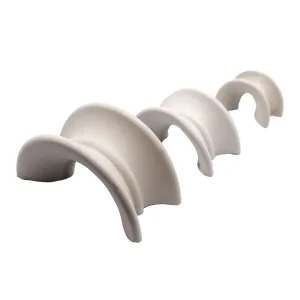
Explore our complete engineering line including acid-resistant ceramic rings, high-capacity metal packings, biological carriers, and gas-purification molecular sieves.