Explore our precision-engineered high-alumina grinding balls, tower packings, and catalytic bed media optimized for extreme mechanical stress and corrosive environments.
Analyzing the global industrial transition from traditional forged steel media to high-density sintered ceramic grinding balls for enhanced energy efficiency and contamination-free processing.
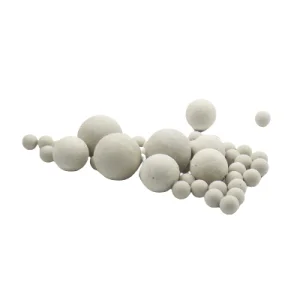
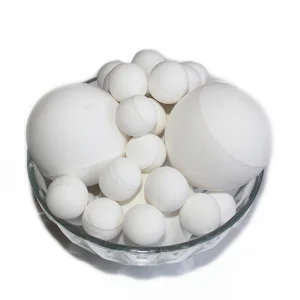
In the contemporary industrial landscape, the efficiency of comminution—the mechanical process of reducing mineral ores, ceramic glazes, battery precursor chemicals, and silica powders to ultra-fine particle sizes—directly dictates a plant’s operational profitability and carbon footprint. Historically dominated by forged carbon steel or alloy cast iron media, ball mill operations worldwide are executing a structural migration toward advanced technical ceramics. Wholesale ceramic ball mill balls manufactured from microcrystalline alpha-alumina ($\alpha-Al_2O_3$) and zirconia-toughened alumina (ZTA) now represent the gold standard for high-intensity wet and dry grinding circuits.
Comminution accounts for approximately 3% to 5% of global electrical energy consumption. Traditional steel grinding media exhibit high specific gravities (7.8 g/cm³), requiring immense torque and power input to tumble the mill load. High-density alumina ceramic balls, operating at a specific gravity of 3.60 to 3.70 g/cm³, reduce kinetic energy demand by up to 30–40% while maintaining equivalent impact forces per drop height. This mechanical advantage allows mining operations, cement processing plants, and advanced materials refiners to drastically lower kWh per ton of ground product while extending mechanical life cycles for mill liners and drive gearboxes.
For modern technological supply chains—such as Lithium Iron Phosphate ($LiFePO_4$) battery cathode production, technical electronic ceramics, titanium dioxide pigments, and premium sanitaryware glazes—metallic iron contamination is a critical failure mode. Steel ball abrasion introduces tramp iron ($Fe^0$ and $Fe^{2+/3+}$ ions), which degrades electrical conductivity, alters ceramic firing color metrics, and destroys battery charge-discharge efficiency. High-purity alumina ceramic grinding balls are chemically inert, resistant to concentrated acidic and alkaline media, and ensure that wear debris remains benign within the processed slurry.
Deep chemical breakdown, crystal phase analysis, and physical performance benchmarks for industrial ceramic grinding media produced in Chinese manufacturing hubs.
Utilizes ultra-fine calcined alumina powder sintered at 1650°C in high-temperature tunnel kilns. The resulting dense, interlocked α-alumina phase minimizes grain boundary micro-cracking during heavy impact loads.
Manufactured via Isostatic Cold Pressing (CIP) and high-speed rolling forming technologies, achieving sphericity rates exceeding 98% and uniform internal density across diameter ranges from 0.5mm to 90mm.
Engineered to withstand extreme crushing forces up to 250 kN for large sizes (60–90mm), preventing media catastrophic cracking under continuous cascades in large-scale industrial mills.
| Property Parameter | 92% Al₂O₃ Grinding Ball | 95% Al₂O₃ Grinding Ball | 99% High-Purity Ball | ZTA (Zirconia Toughened) |
|---|---|---|---|---|
| Al₂O₃ Content (%) | ≥ 92.0% | ≥ 95.0% | ≥ 99.0% | 65% - 80% |
| ZrO₂ Content (%) | N/A | N/A | N/A | 15% - 30% |
| Bulk Density (g/cm³) | ≥ 3.60 | ≥ 3.68 | ≥ 3.85 | ≥ 4.20 - 4.60 |
| Mohs Hardness | 9.0 | 9.0 | 9.0 | 9.0+ |
| Wear Loss (% per hour) | ≤ 0.010% | ≤ 0.008% | ≤ 0.005% | ≤ 0.002% |
| Water Absorption (%) | ≤ 0.01% | ≤ 0.01% | ≤ 0.01% | 0.00% |
| Primary Application | Ceramic Glaze, Clays, Minerals | Zircon Sand, Feldspar, Mining | Electronic Chemicals, Catalyst Support | Ultra-fine Battery Slurry, Nano-Grinding |
To establish verified E-E-A-T credentials for industrial engineering specifications, our factories utilize standardized laboratory wear tests adhering to national standards (GB/T 26742). The wear loss rate ($K_w$) is quantified using the following formulation:
$$K_w = \frac{M_1 - M_2}{M_1 \times T} \times 100\%$$
Where $M_1$ is the initial mass of the ceramic ball charge, $M_2$ represents the mass after high-speed planetary milling for duration $T$ (hours). Premium 92% and 95% alumina balls manufactured in Pingxiang factories maintain $K_w$ values well below 0.01‰ per hour in standard wet grinding trials, ensuring ultra-long replenishment cycles for industrial procurement teams.
Understanding the raw material advantage, energy integration, and factory cluster economics of Pingxiang, Jiangxi—the epicenter of industrial ceramics manufacturing.
The manufacturing of industrial ceramics relies heavily on proximity to high-grade bauxite deposits, cheap natural gas for continuous kiln firing, and a highly skilled technical labor pool. China produces over 70% of the world's industrial alumina grinding balls, with Pingxiang City in Jiangxi Province serving as the premier industrial cluster. Factories in Pingxiang integrate raw material calcination, slurry atomization spray drying, automatic mechanical forming, and continuous tunnel kiln firing into closed-loop production centers.
While the initial purchase cost per ton of high-alumina ceramic grinding balls can be higher than that of basic cast iron balls, the operational TCO favors ceramics by a wide margin in wet grinding circuits:
Modern Chinese ceramic ball factories operate under rigorous environmental compliance frameworks. Advanced flue gas desulfurization (FGD) and selective catalytic reduction (SCR) nitrogen oxide scrubbing systems are fitted to all high-temperature kilns. Waste ceramic powder generated during forming is recycled back into non-critical refractory ceramic ball grades, creating a circular industrial manufacturing process.
Delivering full international compliance certifications, custom packaging specifications, and on-site engineering assistance for seamless import and operational integration.
Every shipment is produced under rigorous Quality Management Systems. Full factory test certificates (COA) detailing chemical purity, bulk density, crushing strength, and grain size distribution accompany all FOB/CIF documentation.
Standardized packaging includes 25kg double-walled reinforced woven polypropylene bags nested inside 1.0–1.2 Metric Ton heavy-duty jumbo bags (FIBC), stacked on fumigated wooden or plastic pallets for safe ocean transit.
Our application engineers assist global clients with ball size grading calculations (ratio of 30mm/40mm/50mm/60mm media charges), optimum mill volume fill factors (35–45%), and rotational speed (rpm) calibration.
Tailored ceramic media grades engineered to match specific planetary, attrition, continuous, and batch ball milling systems across key industries.
In traditional ceramic body preparation and glaze fine grinding, ball mills require high-density 92% alumina balls. The media must break down hard feldspar, quartz, and kaolin clays without introducing iron specks that cause black spots or discoloration post-firing. Using 30mm to 60mm alumina balls reduces grinding time from 18 hours to under 12 hours per batch.
In modern energy storage manufacturing, $LiFePO_4$ (LFP) and Nickel-Manganese-Cobalt (NMC) precursor chemicals require particle sizes ($D_{50}$) down to the sub-micron scale (200nm - 500nm). High-purity 95% Al₂O₃ or Zirconia-Toughened Alumina (ZTA) micro-beads (0.5mm to 3.0mm) are deployed in stirred media mills and horizontal bead mills to deliver high energy density without metallic iron contamination.
Gold, copper, and molybdenum flotation concentrates frequently require fine regrinding to liberate microscopic mineral grains from gangue matrices. High-density alumina media in vertical tower mills (e.g., Vertimills) drastically lower wear costs compared to forged steel, resisting corrosive slurry environments with low pH values.
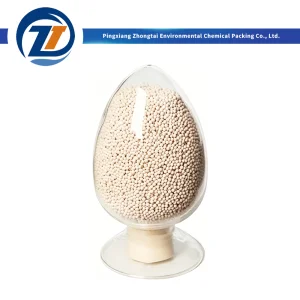
Beyond active grinding media, inert ceramic balls with 17% to 99% alumina composition serve as crucial catalyst bed support packing media in petroleum refineries, ammonia synthesis towers, and gas dehydrators. They act as top hold-down covers and bottom support beds to prevent catalyst bed fluidization and pressure drop spikes.
Transparent price metrics, minimum order thresholds, and customs HS code guidance for global procurement managers.
When evaluating wholesale ceramic ball mill ball quotes from Chinese factories, procurement teams should understand the key cost drivers that influence per-metric-ton pricing:
Detailed technical answers to common engineering questions asked by process engineers and procurement officers.
The standard filling degree ($J$) for conventional tumbling ball mills ranges between 35% and 45% of total internal mill volume. A balanced media charge typically uses a multi-size distribution—for example: 30% of 60mm, 40% of 50mm, and 30% of 40mm balls. Larger balls shatter coarse feed particles, while smaller media perform fine grinding of intermediate fractions.
Yes, but operational adjustments are required. Because ceramic media has a lower bulk density (~2.4–2.5 t/m³ loose) than steel (~4.8 t/m³ loose), the mill power draw will drop. To maintain throughput, mill speed (rpm) may need slight adjustment, or the volumetric filling load can be increased up to 45%. Rubber or ceramic mill liners should also be used instead of manganese steel liners to maximize ceramic ball life.
Rolling forming is ideal for high-volume production of small to medium sizes (0.5mm to 30mm), offering fast throughput and excellent roundness. Cold Isostatic Pressing (CIP) subject ceramic powder to uniform hydrostatic pressure from all directions, creating superior density uniformity and higher crush resistance for large diameter balls (40mm to 90mm).
In high-temperature hydrotreating, steam reforming, or ammonia synthesis reactors, low-grade inert balls containing high silica content can release free silica under high-pressure steam conditions. This silica deposits downstream, poisoning expensive catalysts or fouling heat exchangers. Therefore, 99% high-purity alumina ceramic support balls (with $SiO_2$ < 0.2%) are strictly specified for sensitive petrochemical operations.
Standard stock sizes (92% Al₂O₃, 30mm–60mm) are generally ready for dispatch within 7 to 10 days. Custom formulation orders, specialized ZTA micro-beads, or large bulk orders (100+ Tons) typically ship within 15 to 25 days from contract confirmation and deposit receipt.
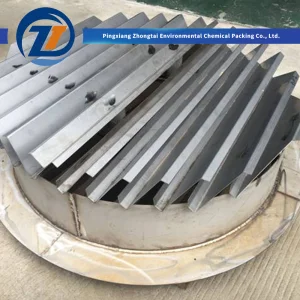
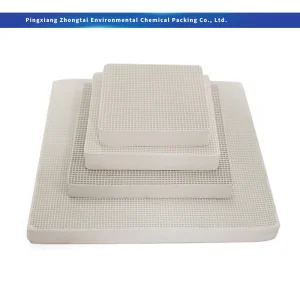
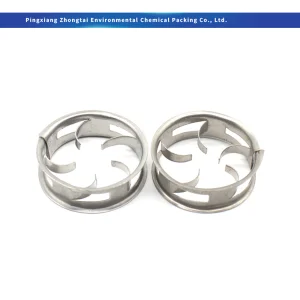
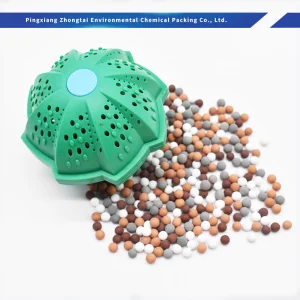
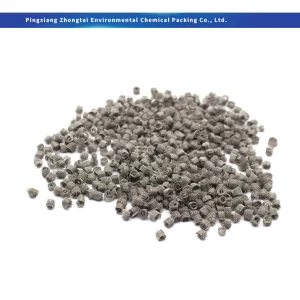
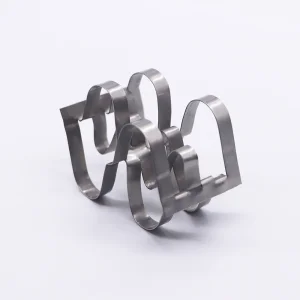
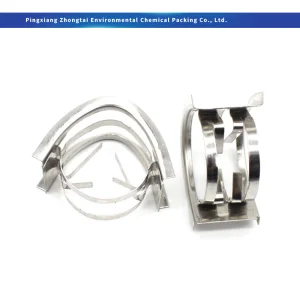
Complete chemical packing solutions including metal random packing, internal column distributors, honeycomb ceramics, and specialized laundry media.